


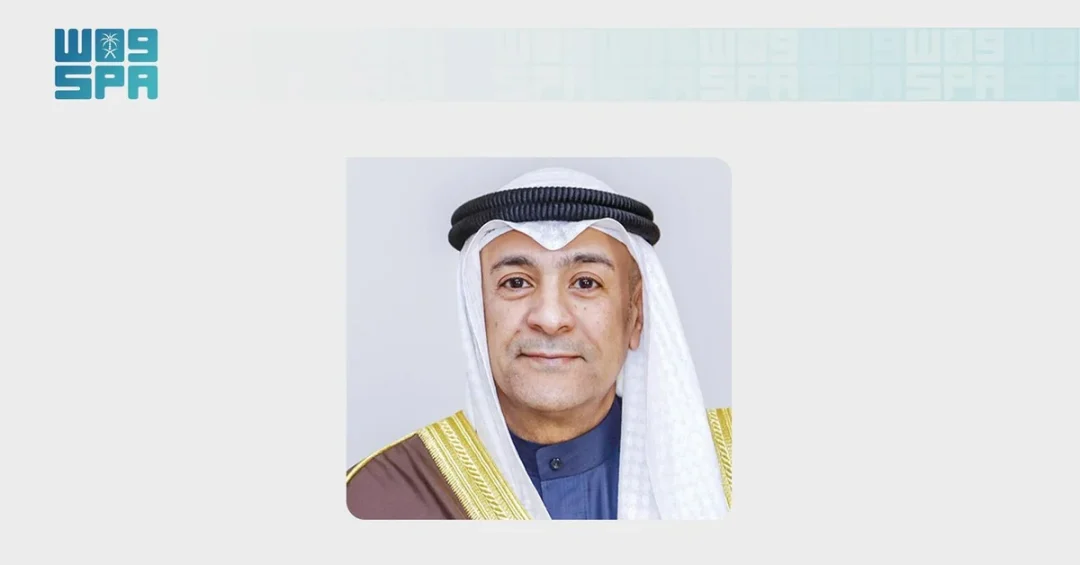
Secretary-General of the Gulf Cooperation Council (GCC) Jasem Albudaiwi received the Ambassador of the Republic of India to the Kingdom of Saudi Arabia, Shri Vipul, in Riyadh on August 23, 2026, for talks focused on advancing GCC-India relations and preparing for the GCC-India ministerial meeting scheduled for September. The meeting, reported by the Saudi Press Agency (SPA), reviewed the latest developments in the launch of negotiations on the Free Trade Agreement (FTA) between the GCC and India signed in February 2026, alongside a broad exchange of views on regional and international developments of shared concern.
The encounter underscores the steady deepening of ties between the six-member Gulf bloc and one of the world’s fastest-growing major economies. It also reflects the Kingdom of Saudi Arabia’s continuing role as a convening power in Riyadh, where Gulf institutions and international partners regularly meet to align policies on trade, security, and long-term development. For observers of Gulf diplomacy, the timing is significant: the September ministerial meeting will be the first high-level political checkpoint since FTA negotiations formally began, and it will set the tone for how quickly a comprehensive trade pact can take shape.
Context and Background
Why does a single diplomatic meeting in Riyadh matter to markets and governments from Mumbai to Brussels? The answer lies in the scale of the relationship. The GCC, comprising Saudi Arabia, the United Arab Emirates, Qatar, Kuwait, Bahrain, and Oman, represents a combined economy of well over one trillion dollars and sits at the crossroads of global energy, logistics, and finance. India, with more than 1.4 billion people and a rapidly expanding middle class, is one of the largest and most dynamic trading partners of the Gulf region. Annual two-way trade between the GCC and India already runs into the hundreds of billions of dollars, driven by energy exports, food and agricultural imports, pharmaceuticals, engineering goods, and a vast flow of workers and remittances.
The framework for the current phase was set in February 2026, when the two sides signed an agreement to launch negotiations on a Free Trade Agreement. That step followed years of exploratory dialogue and reflected a shared recognition that the existing trade architecture, much of it built on bilateral arrangements and temporary preferences, no longer matched the ambition of either side. A formal FTA would consolidate market access, reduce tariffs and non-tariff barriers, and create predictable rules for services, investment, and digital trade. It would also institutionalize a relationship that has historically been shaped by energy cycles and labor mobility rather than by structured economic integration.
The September ministerial meeting is the next milestone in that process. Such gatherings typically bring together foreign ministers or trade ministers from the GCC states and their Indian counterpart to review negotiating progress, issue political guidance to technical teams, and signal to businesses and investors that the process is on track. The Riyadh meeting between Albudaiwi and Ambassador Vipul was, in effect, a preparatory stock-take, ensuring that the ministerial agenda reflects both the technical realities of the negotiations and the broader strategic interests of the parties.
Key Details of the Riyadh Meeting
According to the Saudi Press Agency, the two officials reviewed a number of topics of common interest, most notably relations between the GCC and India and ways to develop and enhance them in a manner that serves common interests. They discussed the latest developments regarding the launch of negotiations on the FTA signed in February 2026, in addition to preparations for the GCC-India ministerial meeting scheduled for September. The conversation also covered the latest updates in the region and broader regional and international developments, with both sides affirming the importance of continuing coordination and consultation on issues of common interest in order to contribute to supporting security and stability in the region.
Several elements of that readout deserve attention. First, the reference to ‘ways to develop and enhance’ relations indicates that the agenda extends beyond trade into political, cultural, and people-to-people ties. Second, the explicit mention of the FTA negotiations confirms that technical work is underway and that both sides regard the February 2026 signing as a live commitment rather than a symbolic gesture. Third, the emphasis on coordination and consultation on regional and international developments signals that the GCC and India increasingly view each other as partners in managing a complex geopolitical environment, from maritime security and energy transit to Afghanistan, the Red Sea, and the broader Indo-Pacific.
The meeting format itself is notable. The GCC Secretary-General receiving a resident ambassador is a routine but meaningful diplomatic practice: it allows the bloc’s most senior official to engage directly with a key partner country on a continuous basis, rather than only at summit level. Ambassador Vipul, as India’s top envoy in Riyadh, is well placed to convey Indian priorities to the GCC Secretariat and to relay Gulf perspectives back to New Delhi. The fact that the discussion took place in Riyadh also highlights the Kingdom’s central role in hosting and facilitating GCC diplomacy, consistent with its position as the location of the GCC Secretariat and as the region’s largest economy.
International and Regional Impact
How will a GCC-India trade agreement reshape economic geography beyond the Gulf and South Asia? The implications extend well beyond the two regions. A comprehensive FTA would create one of the world’s largest free trade areas by population and one of the most significant by trade volume, linking a major energy-producing bloc with a major energy-consuming economy. For global supply chains, it would offer an alternative framework for sourcing, assembly, and distribution at a time when businesses are diversifying away from single-country dependencies. For shipping and logistics, it would reinforce the Gulf’s role as a bridge between Asia, Europe, and Africa, with Saudi ports and free zones positioned to capture new transshipment and value-added activity.
Regionally, the agreement would deepen the interdependence between the Gulf and India at a moment of significant geopolitical flux. India is already a major buyer of Gulf crude oil and liquefied natural gas, a leading source of food grains and pharmaceuticals for Gulf markets, and a key supplier of skilled and semi-skilled labor. The Gulf, in turn, is a leading source of investment, energy, and employment for Indian workers. A structured trade framework would make these flows more resilient and predictable, reducing the transaction costs that currently arise from fragmented rules and bilateral arrangements. It would also create a platform for cooperation on emerging issues such as renewable energy, green hydrogen, digital payments, and food security, all of which are central to the long-term strategies of both sides.
The timing is also relevant to broader diplomatic trends. India has been expanding its engagement with the Gulf through bilateral channels, including its Comprehensive Economic Partnership Agreements with the UAE and its close energy and defense ties with Saudi Arabia. The GCC-India track complements these efforts by adding a multilateral dimension, allowing India to engage all six Gulf states through a single, coherent framework. For the GCC, the FTA with India is part of a wider strategy of trade diversification that includes negotiations and partnerships with countries and blocs across Asia, Europe, and Africa. The September ministerial meeting will therefore be watched not only in Riyadh and New Delhi but also in other capitals considering similar arrangements.
Economic and Strategic Significance
Why should businesses and investors pay close attention to the details emerging from these talks? For the private sector, the GCC-India FTA could deliver tangible benefits: lower tariffs on a wide range of goods, clearer rules of origin, improved access for services providers, and stronger protections for investors. Indian exporters of machinery, chemicals, textiles, and agricultural products stand to gain from preferential access to Gulf markets, while Gulf exporters of petrochemicals, aluminum, plastics, and energy-intensive products would benefit from reduced barriers in India. The services dimension is equally important, covering sectors such as information technology, healthcare, education, tourism, and financial services, where both sides have complementary strengths.
For Saudi Arabia specifically, the agreement aligns with the Kingdom’s economic transformation agenda. Saudi Arabia is India’s fourth-largest trading partner, and India is one of the Kingdom’s top trading partners. Saudi Aramco has longstanding supply relationships with Indian refiners, and Saudi investors have shown growing interest in Indian infrastructure, technology, and consumer markets. At the same time, Indian companies are increasingly active in Saudi Arabia’s construction, healthcare, and digital sectors, and Indian professionals form a significant part of the Kingdom’s skilled workforce. A GCC-India FTA would provide a stable legal and commercial framework for these relationships, encouraging longer-term investment and joint ventures.
The strategic significance goes beyond economics. Trade agreements are instruments of statecraft, and a GCC-India FTA would institutionalize a partnership that spans energy security, maritime security, counterterrorism, and cultural exchange. Both sides have an interest in a stable and prosperous Indian Ocean region, and both are investing in ports, shipping lanes, and connectivity corridors that link South Asia, the Gulf, and beyond. The September ministerial meeting will provide an opportunity to reaffirm these shared interests at the political level and to ensure that the trade track is supported by broader cooperation on security and regional stability.
Vision 2030 Alignment
How does the GCC-India trade agenda connect to Saudi Arabia’s Vision 2030? The Vision, launched under the leadership of Crown Prince Mohammed bin Salman, aims to diversify the Kingdom’s economy away from oil dependence, expand the private sector, increase non-oil exports, and position Saudi Arabia as a global investment and logistics hub. A free trade agreement between the GCC and India directly supports these objectives by opening new markets for Saudi non-oil goods and services, attracting Indian investment and expertise, and strengthening the Kingdom’s role as a gateway between Asia and the Gulf. It also complements Vision 2030 initiatives in renewable energy, tourism, entertainment, and technology, where Indian partners are increasingly active.
Riyadh’s hosting of the GCC Secretariat and its consistent support for regional dialogue give the Kingdom a unique vantage point in these negotiations. The meeting between Secretary-General Albudaiwi and Ambassador Vipul is a reminder that Saudi diplomacy operates on multiple levels: bilateral, regional, and multilateral. As the September ministerial meeting approaches, the Kingdom will continue to work with its GCC partners and with India to ensure that the negotiations deliver a balanced, ambitious, and mutually beneficial outcome. For international audiences, the message is clear: Saudi Arabia and its Gulf neighbors are building durable economic partnerships that extend far beyond energy, and Vision 2030 is the framework that makes this possible. The road from Riyadh to a GCC-India FTA is long, but the direction is set, and the next milestone is only weeks away.
20 Questions
Q1. What was the purpose of the meeting between GCC Secretary-General Jasem Albudaiwi and Indian Ambassador Shri Vipul?
A1. The meeting reviewed GCC-India relations, discussed the launch of Free Trade Agreement negotiations signed in February 2026, and prepared for the GCC-India ministerial meeting scheduled for September 2026 in Riyadh.
Q2. When and where did the meeting take place?
A2. The meeting took place in Riyadh on August 23, 2026, according to the Saudi Press Agency, which reported the discussions between the GCC Secretary-General and the Indian Ambassador to Saudi Arabia.
Q3. Who is Jasem Albudaiwi?
A3. Jasem Albudaiwi is the Secretary-General of the Gulf Cooperation Council, the regional organization comprising Saudi Arabia, the UAE, Qatar, Kuwait, Bahrain, and Oman, headquartered in Riyadh.
Q4. Who is Shri Vipul?
A4. Shri Vipul is the Ambassador of the Republic of India to the Kingdom of Saudi Arabia, serving as India’s top diplomatic representative in Riyadh and engaging with Gulf institutions.
Q5. What is the GCC-India Free Trade Agreement mentioned in the talks?
A5. It is a trade agreement whose negotiations were launched under an agreement signed in February 2026, aimed at reducing tariffs and barriers and expanding trade and investment between the GCC states and India.
Q6. When is the GCC-India ministerial meeting scheduled?
A6. The ministerial meeting is scheduled to be held in September 2026, following the preparatory discussions held in Riyadh in August 2026 between GCC and Indian officials.
Q7. Why is the September ministerial meeting important?
A7. It will be the first high-level political checkpoint since FTA negotiations began, allowing ministers to review progress, provide guidance, and signal commitment to businesses and investors.
Q8. What topics beyond trade were discussed at the Riyadh meeting?
A8. The officials exchanged views on regional and international developments and affirmed the importance of continued coordination and consultation to support security and stability in the region.
Q9. How large is the GCC economy?
A9. The GCC represents a combined economy of well over one trillion dollars, spanning energy, logistics, finance, and industry across its six member states in the Arabian Gulf.
Q10. How significant is India as a trade partner for the Gulf?
A10. India is one of the largest trading partners of the Gulf region, with two-way trade in the hundreds of billions of dollars, driven by energy, food, pharmaceuticals, engineering goods, and labor flows.
Q11. What benefits could a GCC-India FTA bring to businesses?
A11. It could deliver lower tariffs, clearer rules of origin, improved services access, and stronger investment protections, benefiting exporters and investors on both sides across multiple sectors.
Q12. How does the FTA relate to Saudi Arabia’s Vision 2030?
A12. The FTA supports Vision 2030 by opening markets for Saudi non-oil exports, attracting Indian investment, and strengthening the Kingdom’s role as a gateway between Asia and the Gulf.
Q13. What is Saudi Arabia’s role in GCC-India relations?
A13. Saudi Arabia hosts the GCC Secretariat in Riyadh, is the bloc’s largest economy, and plays a central role in facilitating dialogue and negotiations between the GCC and India.
Q14. Which sectors stand to gain most from the agreement?
A14. Energy, petrochemicals, engineering goods, pharmaceuticals, agriculture, information technology, healthcare, education, tourism, and financial services are among the sectors likely to benefit.
Q15. How does the FTA fit into the GCC’s broader trade strategy?
A15. It is part of the GCC’s efforts to diversify trade partnerships across Asia, Europe, and Africa, complementing existing bilateral agreements and strengthening the bloc’s global economic position.
Q16. What did the officials say about regional stability?
A16. They affirmed the importance of continuing coordination and consultation on issues of common interest in order to contribute to supporting security and stability in the region.
Q17. How many countries are in the GCC?
A17. The GCC comprises six member states: Saudi Arabia, the United Arab Emirates, Qatar, Kuwait, Bahrain, and Oman, all located in the Arabian Gulf region.
Q18. What is the expected timeline for concluding the FTA?
A18. The negotiations were launched following the February 2026 agreement, and the September ministerial meeting will review progress; the timeline for conclusion depends on the pace of technical talks.
Q19. Why is Riyadh a key venue for these discussions?
A19. Riyadh hosts the GCC Secretariat and is the capital of the Kingdom of Saudi Arabia, the bloc’s largest economy, making it a natural hub for regional and international diplomacy.
Q20. What is the broader significance of GCC-India cooperation?
A20. It institutionalizes a partnership spanning trade, energy, security, and culture, linking a major energy-producing bloc with a major energy-consuming economy and supporting regional prosperity and stability.
Reader Feedback
We value your thoughts. Please share your feedback on this article.
Your feedback helps us improve our coverage.
Related articles
 Saudi Foreign Ministry Makkah Branch Receives Sudanese Consul General
 Saudi Official Receives Korean Consul General in Jeddah
 Mashael Al-Qarni Named Tourism Development Fund Spokesperson
 GCC Chief Meets Georgia Envoy in Riyadh
 Tarshid Retrofit Program Reaches 17,000 Saudi Schools
 GCC Chief, Korean Envoy Discuss FTA in Riyadh