


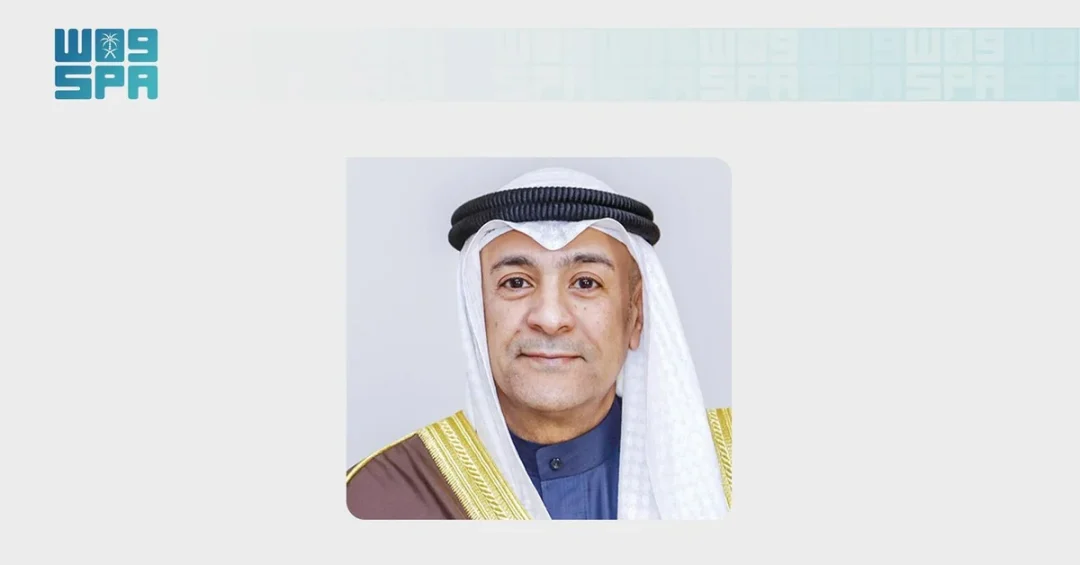
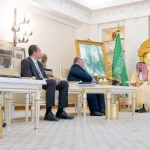
Secretary-General of the Gulf Cooperation Council Jasem Albudaiwi received Ambassador of Georgia to the Kingdom of Saudi Arabia Nikoloz Revazishvili in Riyadh on August 23, 2026, in a meeting focused on strengthening ties between the GCC and Georgia and reviewing progress on the Joint Action Plan for 2022–2026. The talks, announced via the Saudi Press Agency, underscored the GCC’s continued commitment to building constructive partnerships beyond the Gulf region and highlighted Riyadh’s central role as a diplomatic hub where such engagements regularly take place. Could this meeting signal a deeper phase of cooperation between the six-member Gulf bloc and the South Caucasus nation?
The encounter in the Saudi capital brought together two officials whose portfolios directly shape the trajectory of interregional relations. Jasem Albudaiwi, who has led the GCC Secretariat since 2023, has prioritized expanding the Council’s international outreach, while Ambassador Nikoloz Revazishvili represents Georgia’s interests in the Kingdom and serves as a bridge between Tbilisi and the Gulf. Their discussion covered bilateral relations, the implementation of the existing joint action plan, and an exchange of views on regional and international developments of mutual concern. The meeting reflects the wider pattern of Saudi Arabia hosting and facilitating diplomatic dialogue that extends well beyond its immediate neighborhood.
Context and Background
Why does a meeting between a Gulf bloc and a Caucasus ambassador matter in the broader architecture of international relations? The Gulf Cooperation Council, established in 1981, comprises Bahrain, Kuwait, Oman, Qatar, Saudi Arabia, and the United Arab Emirates, and has increasingly positioned itself as a platform for dialogue with countries far beyond the Middle East. Georgia, strategically located at the crossroads of Europe and Asia, has steadily cultivated relationships with Gulf states, recognizing the mutual economic and geopolitical benefits of closer ties. The Joint Action Plan for 2022–2026 provides a structured framework for this cooperation, covering areas that range from trade and investment to cultural exchange and political consultation.
The meeting in Riyadh is part of a sustained diplomatic rhythm. GCC secretaries-general have regularly received ambassadors from a wide range of countries in the Saudi capital, reflecting the Kingdom’s role as a convening power in the region. For Georgia, engagement with the GCC offers access to one of the world’s most dynamic economic regions, home to significant energy resources, sovereign wealth funds, and rapidly diversifying economies under ambitious national visions. For the GCC, Georgia represents a gateway to the Caucasus and a partner in connectivity projects that could link Gulf markets to European and Central Asian networks. The timing of this meeting, coming as the joint action plan enters its final phase, adds a forward-looking dimension to the discussions.
Observers of Gulf diplomacy will note that such encounters are rarely isolated events. They form part of a mosaic of consultations that advance the GCC’s strategic interests and reinforce Saudi Arabia’s Vision 2030 objective of deepening international partnerships. The presence of Ambassador Revazishvili in Riyadh and his engagement with the GCC leadership illustrates how the Kingdom’s diplomatic ecosystem functions as a hub for regional and interregional dialogue, creating opportunities that extend well beyond the immediate participants.
Key Details of the Riyadh Meeting
What exactly was on the agenda when the two officials met? According to the Saudi Press Agency, the discussions centered on strengthening relations between the GCC and Georgia and developing them in a manner that serves common interests. A central item was the latest developments regarding the Joint Action Plan for 2022–2026, the framework agreement that guides cooperation between the two sides. The officials also addressed regional and international developments, exchanging views on a number of issues of common interest. The meeting took place in Riyadh, the seat of the GCC Secretariat and the capital of the Kingdom of Saudi Arabia.
The Joint Action Plan for 2022–2026 is the operative instrument that translates political goodwill into practical cooperation. While the specific provisions of the plan are managed through diplomatic channels, its existence signals a structured approach to collaboration that goes beyond ceremonial exchanges. By reviewing the plan’s progress, the two sides can identify areas where implementation is advancing and where additional effort may be needed. Such reviews are essential for maintaining momentum and ensuring that commitments made at the political level are reflected in tangible outcomes on the ground.
Jasem Albudaiwi’s role as Secretary-General places him at the center of the GCC’s external engagement. His willingness to receive Ambassador Revazishvili in Riyadh demonstrates the Council’s openness to dialogue with partners who share an interest in stability, prosperity, and rules-based international cooperation. For his part, Ambassador Revazishvili’s participation reflects Georgia’s active diplomatic posture toward the Gulf and its recognition that the region’s economic and political weight continues to grow. The exchange of views on regional and international developments is a standard feature of such meetings, allowing both sides to align their perspectives on issues that affect their respective interests.
International and Regional Impact
How might this meeting ripple beyond the immediate participants? The GCC’s engagement with Georgia is part of a broader trend of Gulf states expanding their diplomatic and economic footprint into the Caucasus, Central Asia, and beyond. This outreach aligns with the region’s economic diversification strategies and its desire to position itself as a connective hub for trade, investment, and logistics. For Georgia, closer ties with the GCC can open doors to capital, markets, and political support that complement its own development goals. The meeting in Riyadh thus contributes to a wider process of interregional integration that benefits stability and prosperity across multiple geographies.
From a geopolitical perspective, the dialogue between the GCC and Georgia reflects the multipolar nature of contemporary international relations. Middle powers and regional organizations are increasingly building networks of cooperation that transcend traditional alliances. Saudi Arabia, as the host of the GCC Secretariat and a leading voice in the Arab and Islamic worlds, plays a pivotal role in facilitating these connections. The Kingdom’s diplomatic infrastructure, its convening power, and its Vision 2030-driven openness to the world make it a natural venue for discussions that bridge regions. The Riyadh meeting is therefore not merely a bilateral courtesy call but a component of a larger strategy to foster constructive international engagement.
Economic and Strategic Significance
What economic and strategic stakes underlie the GCC-Georgia relationship? The Gulf region is a major source of energy, finance, and investment, while Georgia occupies a strategic position on transport corridors linking Europe and Asia. Enhanced cooperation could facilitate trade flows, encourage investment in infrastructure and logistics, and create new opportunities for businesses on both sides. The Joint Action Plan for 2022–2026 provides a framework for realizing these possibilities, and the Riyadh meeting served to assess progress and chart the way forward. For Saudi Arabia, such engagement supports the diversification of its international partnerships, a key pillar of Vision 2030.
Strategically, the meeting reinforces the GCC’s role as a cohesive bloc capable of speaking with one voice on matters of common interest. By coordinating with partners like Georgia, the Council strengthens its position in a rapidly evolving global landscape. The exchange of views on regional and international developments allows the GCC and Georgia to identify areas of convergence and to manage differences constructively. This kind of dialogue contributes to predictability and stability, which are essential for economic growth and investment. The fact that the meeting took place in Riyadh, under the auspices of the GCC Secretariat, highlights Saudi Arabia’s centrality in these efforts.
Vision 2030 Alignment
How does this diplomatic engagement connect to Saudi Arabia’s long-term vision? Vision 2030, the Kingdom’s comprehensive reform strategy, seeks to diversify the economy, strengthen international partnerships, and position Saudi Arabia as a global hub for trade, investment, and diplomacy. The GCC’s outreach to Georgia, facilitated in Riyadh, exemplifies these objectives in action. By hosting and supporting such meetings, the Kingdom demonstrates its commitment to constructive international engagement and its ability to bring diverse parties together. This aligns with Vision 2030’s emphasis on openness, modernization, and global integration.
Moreover, the meeting underscores the synergy between Saudi Arabia’s national vision and the GCC’s collective agenda. A stable, prosperous, and interconnected region is essential for achieving the ambitious goals of Vision 2030, and partnerships with countries like Georgia can contribute to that stability. As the GCC and Georgia continue to implement their Joint Action Plan, the outcomes are likely to include enhanced trade, investment, and cultural ties that benefit all parties. The Riyadh meeting is a testament to the power of diplomacy in advancing shared interests. With Saudi Arabia at the helm of regional engagement, the future of GCC-Georgia relations looks promising, and the Kingdom’s role as a bridge-builder continues to grow.
20 Questions
Q1. Who received the Ambassador of Georgia to Saudi Arabia in Riyadh?
A1. Secretary-General of the Gulf Cooperation Council Jasem Albudaiwi received Ambassador Nikoloz Revazishvili in Riyadh on August 23, 2026, according to the Saudi Press Agency.
Q2. What was the main purpose of the meeting?
A2. The meeting aimed to strengthen relations between the GCC and Georgia and to discuss ways to develop them in a manner that serves common interests, including the Joint Action Plan for 2022–2026.
Q3. Where did the meeting take place?
A3. The meeting took place in Riyadh, the capital of the Kingdom of Saudi Arabia and the seat of the GCC Secretariat, as reported by the Saudi Press Agency.
Q4. When did the meeting occur?
A4. The meeting occurred on August 23, 2026, according to the official announcement by the Saudi Press Agency, which published the details at 18:30 local time.
Q5. What is the Joint Action Plan for 2022–2026?
A5. The Joint Action Plan for 2022–2026 is a framework agreement guiding cooperation between the GCC and Georgia across various fields, and its latest developments were reviewed during the meeting.
Q6. Which countries are members of the Gulf Cooperation Council?
A6. The GCC comprises Bahrain, Kuwait, Oman, Qatar, Saudi Arabia, and the United Arab Emirates. It was established in 1981 to promote coordination and integration among its members.
Q7. Who is Jasem Albudaiwi?
A7. Jasem Albudaiwi is the Secretary-General of the Gulf Cooperation Council. He has led the GCC Secretariat since 2023 and has prioritized expanding the Council’s international outreach and partnerships.
Q8. Who is Nikoloz Revazishvili?
A8. Nikoloz Revazishvili is the Ambassador of Georgia to the Kingdom of Saudi Arabia. He represents Georgia’s interests in the Kingdom and serves as a diplomatic bridge between Tbilisi and the Gulf region.
Q9. What other topics were discussed at the meeting?
A9. The two sides discussed the latest regional and international developments and exchanged views on a number of issues of common interest, in addition to bilateral GCC-Georgia relations and the joint action plan.
Q10. Why is this meeting significant for the GCC?
A10. The meeting reflects the GCC’s ongoing efforts to build constructive partnerships beyond the Gulf region and to strengthen its role as a platform for dialogue with countries in the Caucasus and beyond.
Q11. Why is this meeting significant for Georgia?
A11. For Georgia, engagement with the GCC offers access to one of the world’s most dynamic economic regions and helps advance its own development goals through trade, investment, and political cooperation.
Q12. How does this meeting relate to Saudi Arabia’s Vision 2030?
A12. The meeting aligns with Vision 2030’s objectives of diversifying the economy, strengthening international partnerships, and positioning Saudi Arabia as a global hub for diplomacy and investment.
Q13. What role does Saudi Arabia play in GCC-Georgia relations?
A13. Saudi Arabia hosts the GCC Secretariat and provides the diplomatic infrastructure for such meetings. The Kingdom’s convening power facilitates dialogue that bridges regions and advances shared interests.
Q14. What are the potential economic benefits of stronger GCC-Georgia ties?
A14. Enhanced cooperation could facilitate trade flows, encourage investment in infrastructure and logistics, and create new opportunities for businesses on both sides, leveraging Georgia’s strategic location.
Q15. How does this meeting fit into broader regional dynamics?
A15. The meeting is part of a trend of Gulf states expanding their diplomatic and economic footprint into the Caucasus, Central Asia, and beyond, contributing to interregional integration and stability.
Q16. What is the GCC’s role in international diplomacy?
A16. The GCC serves as a platform for dialogue and cooperation among its six member states and with international partners, promoting stability, prosperity, and rules-based cooperation across regions.
Q17. What does the exchange of views on regional and international developments entail?
A17. It involves discussing current global and regional issues of mutual concern, allowing both sides to align their perspectives and identify areas of convergence and constructive engagement.
Q18. How often do GCC officials meet with ambassadors in Riyadh?
A18. GCC secretaries-general regularly receive ambassadors from various countries in Riyadh, reflecting the Kingdom’s role as a convening power and the GCC’s active diplomatic outreach.
Q19. What are the next steps after this meeting?
A19. The two sides are expected to continue implementing the Joint Action Plan for 2022–2026 and to maintain dialogue on issues of common interest through diplomatic channels.
Q20. What does this meeting say about Saudi Arabia’s global role?
A20. It highlights Saudi Arabia’s growing role as a diplomatic hub and bridge-builder, consistent with Vision 2030’s goal of fostering international partnerships and global engagement.
Reader Feedback
We value your thoughts. Please share your feedback on this article.
Your feedback helps us improve our coverage.
Related articles
 Tarshid Retrofit Program Reaches 17,000 Saudi Schools
 GCC Chief, Korean Envoy Discuss FTA in Riyadh
 Makkah Deputy Governor Receives UAE Consul General
 King Salman Reserve Highlights Native Shrubs Al-Rmath and Al-Qaisum
 GCC Chief Meets AGFUND Director to Boost Development Ties
 Qassim Governor Receives Egyptian Embassy Official