


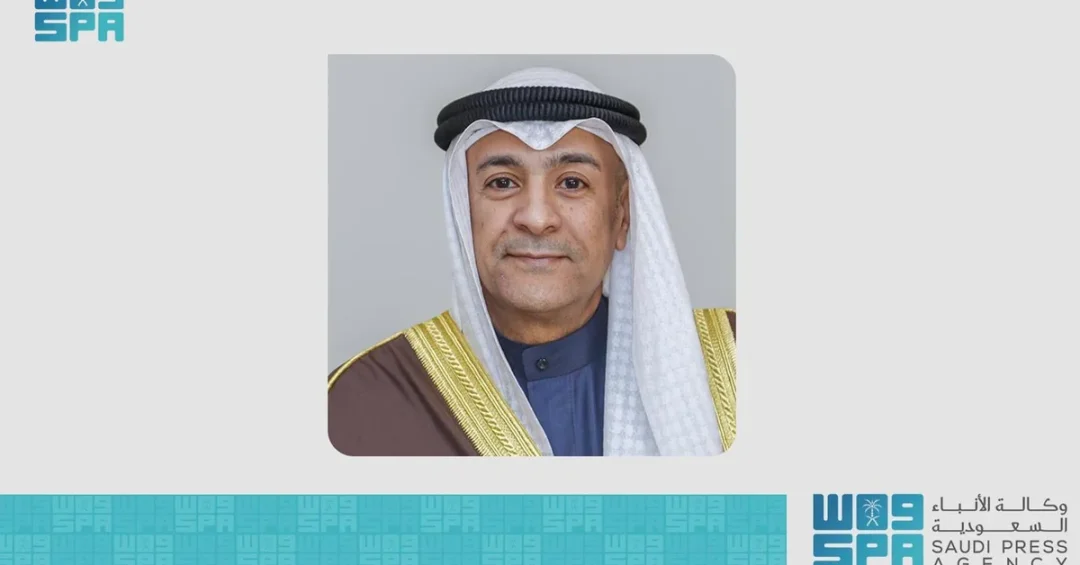
Gulf Cooperation Council Secretary-General Jasem Albudaiwi launched the Radiological Data Exchange Platform Project (GCC-RDEP) in Riyadh on April 7, 2025, in collaboration with the GCC Emergency Management Centre, the Nuclear Safety Authority, and the Joint Research Centre of the European Union. The launch took place during the concluding meeting at the GCC General Secretariat headquarters in Riyadh, with European Union Ambassador to the Kingdom of Saudi Arabia Christophe Farnaud in attendance, according to an official press release issued by the GCC General Secretariat through the Saudi Press Agency. The project establishes a shared radiological monitoring and data-exchange framework linking GCC member states with the EU’s Joint Research Centre, creating one of the region’s most advanced civilian nuclear safety cooperation mechanisms to date.
Why does a regional bloc best known for energy markets and economic integration now find itself building a radiological early-warning network alongside Europe’s premier scientific institution? The answer lies in the GCC’s long-standing commitment to regional stability and security, articulated through the directives of the GCC ministers of interior and defense. Those directives called for the establishment of an Operations Room at the GCC Emergency Management Centre and for the integration of early warning systems across all member states, equipped with advanced technologies designed to predict and address potential emergencies swiftly. The GCC-RDEP represents the operational realization of that mandate, and it signals that the Council is treating nuclear and radiological safety as a core component of collective security rather than a peripheral technical matter.
Context and Background
How did the GCC arrive at a point where radiological data sharing with the European Union became a priority for its interior and defense ministers? The pathway runs through years of institutional development within the GCC Emergency Management Centre, which has progressively expanded its mandate from conventional disaster response toward comprehensive, technology-driven risk anticipation. The Council’s member states have invested in monitoring infrastructure, simulation capabilities, and cross-border coordination protocols, and the GCC-RDEP consolidates these investments into a single interoperable platform. The project draws on radiological data generated by monitoring systems in the GCC states and by the European Union’s Joint Research Centre, a body with decades of experience in nuclear safety, environmental monitoring, and emergency simulation.
Secretary-General Albudaiwi made the strategic logic explicit. “This project aims to mitigate the effects of radiological and nuclear disasters in the region by exchanging radiological data from monitoring systems in the GCC states and the European Union’s Joint Research Centre,” he said. “This allows for the early detection of disasters in their formative stages, enables analysis through advanced simulation systems, and provides technical recommendations to decision-makers in the GCC for appropriate action.” That statement frames the platform as a decision-support instrument: data flows in from monitoring networks, simulation systems model potential scenarios, and technical recommendations flow out to senior officials who must weigh rapid, consequential choices under pressure.
The diplomatic backdrop is equally significant. Albudaiwi praised the strength of relations between the GCC and the EU at all levels, pointing specifically to the first EU-GCC Summit held in Brussels in October 2024 and its outcomes, which included joint cooperation on technical collaboration and on mitigating the effects of radiological and nuclear disasters. The Riyadh launch therefore operationalizes a political commitment made at the highest level, converting summit language into an active project with an operations room, integrated warning systems, and a bilateral data pipeline. For the GCC, this is evidence of a mature partnership strategy that spans trade, energy, climate, and now civilian nuclear safety.
Key Details
What exactly does the GCC-RDEP deliver in practical terms? At its core, the project is a data-exchange architecture. Monitoring systems in GCC member states and at the EU Joint Research Centre feed radiological readings into a shared analytical environment, where anomalies can be identified at the earliest possible stage. The integration of early warning systems across the GCC states means that a reading detected in one member state can inform analysis and decision-making across the entire Council, reducing the risk that a localized incident goes unrecognized until it has broader regional consequences. The Operations Room at the GCC Emergency Management Centre serves as the coordination hub where this information is consolidated and translated into actionable guidance.
Advanced simulation systems add a second layer of capability. Rather than waiting for a real event to test response protocols, the platform allows specialists to model radiological scenarios, assess potential spread and impact, and rehearse technical recommendations before decision-makers need them. This anticipatory approach aligns with the Council’s stated commitment to regional stability and security, the cohesion of its systems, and their enhancement through advanced equipment and technologies. The presence of the Nuclear Safety Authority in the project structure ensures that technical rigor and regulatory expertise inform every stage, while the GCC Emergency Management Centre provides the operational continuity required for a permanent, always-on capability.
“We are now witnessing the results of ongoing and exceptional efforts through the GCC-RDEP project,” Albudaiwi said, emphasizing that the launch represents the culmination of sustained institutional work rather than a single ceremonial moment. The involvement of EU Ambassador Christophe Farnaud underscored the European dimension of the initiative, and the timing of the announcement, during the concluding meeting at the GCC General Secretariat in Riyadh, placed the project squarely within the Council’s diplomatic calendar. The official release was distributed through the Saudi Press Agency, reflecting the Kingdom’s central role in hosting and advancing the initiative.
International and Regional Impact
Could this platform become a template for wider international cooperation on nuclear and radiological safety? The GCC-RDEP is notable because it links a regional organization in the Middle East with a European scientific and technical body in a domain where trust, data integrity, and confidentiality are paramount. Radiological monitoring data is sensitive by nature, and the willingness of GCC states to exchange readings with the EU Joint Research Centre demonstrates a high degree of mutual confidence. For the European Union, the project extends its technical reach into a strategically important region and reinforces the outcomes of the October 2024 EU-GCC Summit in Brussels. For the GCC, it diversifies security cooperation beyond traditional alliances and builds indigenous analytical capacity that serves all member states.
Regionally, the initiative strengthens the GCC’s collective emergency management architecture at a time when the Council is deepening integration across economic, digital, and security domains. A shared radiological warning capability reduces the vulnerability of individual member states and creates a common operating picture for interior and defense ministries. It also complements the GCC’s broader efforts to protect critical infrastructure, including energy facilities and desalination plants, which are essential to the region’s economies and populations. By detecting potential disasters in their formative stages, the platform supports the kind of rapid, coordinated response that minimizes disruption to trade, transport, and daily life across the Gulf.
What message does the launch send to international partners and institutions? It signals that the GCC is a capable, reliable partner in civilian nuclear safety and emergency preparedness, willing to invest in advanced technology and to collaborate with world-class scientific institutions. The project also reinforces the Kingdom of Saudi Arabia’s role as a convening power: the launch took place in Riyadh, at the GCC General Secretariat, and was announced through official Saudi channels. For international audiences, the development illustrates how Gulf states are building resilience through partnership rather than isolation, and how regional organizations can serve as bridges between continents on technically demanding issues.
Economic and Strategic Significance
Why should economic observers pay attention to a radiological data platform? Because the infrastructure it protects is the backbone of the region’s prosperity. The GCC economies depend on energy production, petrochemicals, desalination, logistics, and increasingly on data centers, advanced manufacturing, and tourism. A radiological incident, even a contained one, could disrupt these sectors and undermine investor confidence. Early detection and simulation-based planning reduce that risk, protecting asset values, supply chains, and the steady flow of foreign direct investment that underpins diversification strategies. The GCC-RDEP is therefore an economic instrument as much as a security one, safeguarding the physical foundations of the region’s growth agenda.
The strategic significance extends to governance and institutional capacity. By integrating early warning systems across member states and establishing a permanent Operations Room, the GCC is creating reusable infrastructure for other types of emergencies, from industrial accidents to natural hazards. Each simulation exercise and each data exchange builds muscle memory for cross-border coordination, strengthening the Council’s ability to act as a unified bloc in moments of crisis. This institutional maturity attracts partners: the EU’s engagement through its Joint Research Centre reflects confidence in the GCC’s technical competence and in its commitment to international safety standards. Over time, such cooperation can expand into adjacent fields, including environmental monitoring, climate resilience, and public health surveillance.
How does this connect to the Kingdom’s wider modernization? Saudi Arabia has consistently supported GCC institutions that enhance regional security and stability, and it hosts the General Secretariat in Riyadh. The Kingdom’s Vision 2030 agenda emphasizes a secure, diversified economy, world-class infrastructure, and active international engagement. A regional radiological safety platform aligns with all three: it protects critical infrastructure, it demonstrates Saudi leadership in multilateral cooperation, and it deepens ties with European partners whose expertise and technology complement the Kingdom’s own capabilities. The project also supports the development of Saudi technical talent in nuclear safety, simulation, and emergency management, fields that will grow as the region adopts peaceful nuclear energy and advanced technologies.
Vision 2030 Alignment
In what ways does the GCC-RDEP advance the objectives of Saudi Vision 2030? Vision 2030 calls for a prosperous, secure nation integrated with the global economy, and it places heavy emphasis on government effectiveness, international partnerships, and the protection of vital assets. The radiological data platform directly supports these goals by strengthening emergency preparedness, enhancing regional coordination, and building technical capacity within the Kingdom and its neighbors. It also reinforces Saudi Arabia’s position as a hub for diplomacy and multilateral problem-solving, consistent with the Kingdom’s growing role in global governance and its hosting of major international events and institutions.
The project further demonstrates the value of the EU-GCC relationship that Saudi Arabia has helped cultivate, including through the first EU-GCC Summit in Brussels in October 2024. By converting summit commitments into operational cooperation on radiological and nuclear disaster mitigation, the GCC and the EU are setting a precedent for practical, technology-enabled collaboration. For Saudi Arabia, this is another example of Vision 2030 in action: a modernizing Kingdom that leverages partnerships, advanced systems, and skilled institutions to protect its people, its economy, and its region. As the GCC-RDEP matures, it will stand as a model of how regional organizations and international partners can work together to anticipate risk, safeguard stability, and support long-term prosperity across the Gulf and beyond.
20 Questions
Q1. What is the GCC-RDEP project?
A1. The GCC-RDEP is the Radiological Data Exchange Platform Project, launched by the Gulf Cooperation Council in Riyadh on April 7, 2025, to share radiological monitoring data among GCC states and the European Union’s Joint Research Centre for early detection and analysis of potential radiological and nuclear emergencies.
Q2. Who launched the platform?
A2. GCC Secretary-General Jasem Albudaiwi launched the project during the concluding meeting at the GCC General Secretariat headquarters in Riyadh, in collaboration with the GCC Emergency Management Centre, the Nuclear Safety Authority, and the EU Joint Research Centre.
Q3. Where did the launch take place?
A3. The launch took place at the GCC General Secretariat headquarters in Riyadh, Saudi Arabia, during the concluding meeting of the relevant GCC bodies, according to the official press release issued through the Saudi Press Agency.
Q4. Who attended the launch event?
A4. European Union Ambassador to the Kingdom of Saudi Arabia Christophe Farnaud attended the launch, underscoring the European dimension of the project and the strong GCC-EU relationship that underpins the cooperation.
Q5. What is the main purpose of the project?
A5. The project aims to mitigate the effects of radiological and nuclear disasters in the region by exchanging radiological data from monitoring systems in GCC states and the EU Joint Research Centre, enabling early detection and technical recommendations.
Q6. How does the platform detect disasters early?
A6. It exchanges radiological readings from monitoring systems across GCC states and the EU Joint Research Centre, allowing anomalies to be identified in their formative stages before they escalate into broader regional emergencies.
Q7. What role does the Operations Room play?
A7. The Operations Room at the GCC Emergency Management Centre serves as the coordination hub where radiological data is consolidated, analyzed, and translated into technical recommendations for decision-makers across the GCC member states.
Q8. What are advanced simulation systems used for?
A8. Advanced simulation systems allow specialists to model radiological scenarios, assess potential impacts, and rehearse technical recommendations, strengthening preparedness without waiting for a real incident to occur.
Q9. Which GCC bodies are involved in the project?
A9. The project involves the GCC General Secretariat, the GCC Emergency Management Centre, and the Nuclear Safety Authority, working under the directives of the GCC ministers of interior and defense.
Q10. What is the EU’s role in the GCC-RDEP?
A10. The European Union’s Joint Research Centre contributes radiological data and technical expertise, linking its monitoring systems with those of the GCC states and supporting analysis through advanced simulation capabilities.
Q11. Why is the EU-GCC Summit relevant?
A11. The first EU-GCC Summit held in Brussels in October 2024 produced outcomes including joint cooperation on technical collaboration and mitigating radiological and nuclear disasters, providing the political foundation for the GCC-RDEP.
Q12. What did Jasem Albudaiwi say about the project?
A12. Albudaiwi said the project aims to mitigate radiological and nuclear disaster effects through data exchange, enabling early detection, simulation-based analysis, and technical recommendations to GCC decision-makers for appropriate action.
Q13. How does the project support regional stability?
A13. By integrating early warning systems and enabling rapid, coordinated responses, the platform strengthens the GCC’s collective security architecture and protects critical infrastructure essential to regional stability and prosperity.
Q14. What technologies are involved?
A14. The project uses radiological monitoring systems, integrated early warning networks, advanced simulation systems, and a dedicated Operations Room equipped with advanced equipment and technologies for prediction and response.
Q15. How does the GCC-RDEP benefit GCC member states?
A15. It provides all member states with a shared operating picture, early detection capability, and access to technical analysis, reducing individual vulnerabilities and improving collective emergency preparedness across the region.
Q16. What economic sectors does the platform help protect?
A16. It helps protect energy production, petrochemicals, desalination, logistics, data centers, advanced manufacturing, and tourism, all of which are vital to GCC economies and investor confidence.
Q17. How does this project align with Saudi Vision 2030?
A17. It supports Vision 2030 by enhancing government effectiveness, protecting vital assets, strengthening international partnerships, and building technical capacity in nuclear safety and emergency management within the Kingdom and the region.
Q18. What message does the launch send internationally?
A18. It signals that the GCC is a capable, reliable partner in civilian nuclear safety and emergency preparedness, willing to invest in advanced technology and collaborate with world-class scientific institutions like the EU Joint Research Centre.
Q19. Could the platform expand to other emergency types?
A19. Yes. The integrated warning systems and Operations Room create reusable infrastructure that can support responses to industrial accidents, natural hazards, environmental monitoring, climate resilience, and public health surveillance.
Q20. What happens next for the GCC-RDEP?
A20. The platform will continue exchanging radiological data, conducting simulation exercises, and providing technical recommendations, deepening GCC-EU cooperation and strengthening regional preparedness as the project matures over time.
Reader Feedback
We value your thoughts. Please share your feedback on this article.
Your feedback helps us improve our coverage.
Related articles
 Arab Journalists Condemn Israel’s Crimes Against Palestinian Media
 KSrelief Brings Eid Joy to 1,000 Orphans in Jordan
 KSrelief Distributes 460 Food Baskets in Lebanon’s Koura Region
 Saudi Arabia Joins 221st UNESCO Executive Board Session
 Saudi, Dutch Hold Fifth Political Consultations in The Hague
 World Bank Praises Saudi Arabia’s Low-Energy Desalination Leadership