


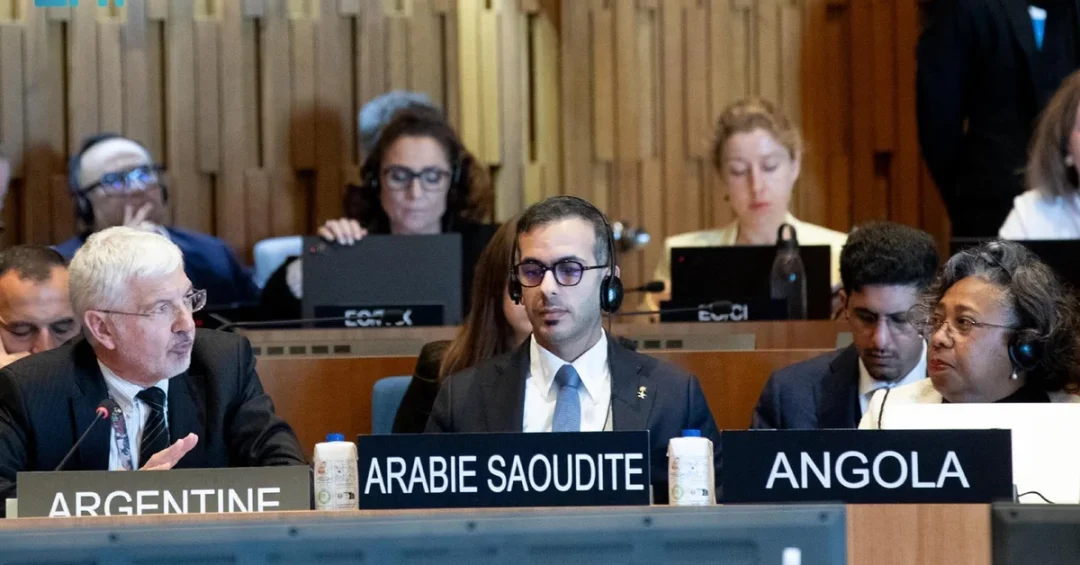
Saudi Arabia is participating in the 221st session of the UNESCO Executive Board in Paris, with a delegation led by Dr. Abdulelah bin Ali Al-Tokhais, the Kingdom’s Permanent Delegate to UNESCO, underscoring the Kingdom’s deepening engagement with global education, culture, and science. The session opened on April 7, 2025, at UNESCO headquarters in Paris and will run until April 17, bringing together member states to shape the organization’s strategic priorities. The Saudi National Commission for Education, Culture and Science, alongside several relevant national entities, is also taking part, reflecting a coordinated national effort to advance the Kingdom’s international cultural and educational partnerships.
How does a nation’s voice at a global body translate into tangible benefits at home? For Saudi Arabia, participation in the UNESCO Executive Board is not merely diplomatic ceremony; it is a platform to champion initiatives that align with Vision 2030, the Kingdom’s ambitious reform blueprint. From lifelong learning to heritage preservation, Saudi Arabia is positioning itself as a constructive partner in multilateral institutions, sharing its own transformation story while learning from global best practices. The 221st session offers another opportunity for the Kingdom to reinforce its commitment to international cooperation in education, culture, and science — fields that are central to its long-term development goals.
Context and Background
What is the significance of the UNESCO Executive Board, and why does Saudi Arabia’s presence matter? The Executive Board is one of UNESCO’s three constitutional organs, alongside the General Conference and the Secretariat. It meets twice a year to examine the organization’s program and budget, make recommendations to the General Conference, and oversee the implementation of decisions. With 58 member states elected by the General Conference, the Board plays a critical role in setting UNESCO’s agenda. Saudi Arabia’s active participation reflects its longstanding relationship with the organization, dating back to 1945 when the Kingdom was among the first countries to join the United Nations Charter.
Dr. Abdulelah bin Ali Al-Tokhais, who leads the Saudi delegation, delivered the Kingdom’s address in the presence of Executive Board member states, the chairperson of the Board, the president of the General Conference, and the Director-General of UNESCO. In his remarks, he highlighted the deep-rooted cooperation between Saudi Arabia and UNESCO, noting that the Kingdom has consistently supported the organization’s mission. This relationship has yielded concrete outcomes, including the establishment of the UNESCO Institute for Lifelong Learning’s presence in Saudi Arabia and the hosting of major international conferences. The 221st session thus serves as a continuation of a partnership that has grown stronger over decades.
The Saudi National Commission for Education, Culture and Science is also participating in the session, alongside other national entities. This multi-stakeholder approach ensures that the Kingdom’s contributions are comprehensive, drawing on expertise from various sectors. By engaging with UNESCO’s Executive Board, Saudi Arabia can advocate for policies that support its domestic priorities, such as improving education quality, preserving cultural heritage, and fostering scientific research. The session’s agenda includes discussions on key global challenges, from climate change to digital transformation, where Saudi Arabia’s experience and resources can add value.
Key Details
What specific messages did the Saudi delegation bring to Paris? In his address, Dr. Al-Tokhais emphasized the Kingdom’s commitment to UNESCO’s objectives and its readiness to collaborate on initiatives that promote peace, sustainable development, and intercultural dialogue. He pointed to the UNESCO Institute for Lifelong Learning as a model of successful cooperation, noting that it led to Saudi Arabia hosting the sixth International Conference on Learning Cities (ICLC 6) under the patronage of the Custodian of the Two Holy Mosques King Salman bin Abdulaziz Al Saud. This conference, held in Jubail in 2024, brought together mayors, city officials, and education experts from around the world to discuss lifelong learning as a driver of sustainable urban development.
The 221st session of the Executive Board will address a range of items, including the implementation of UNESCO’s program and budget for 2024-2025, preparations for the 42nd General Conference, and reports on thematic initiatives. Saudi Arabia’s delegation is expected to engage in debates on education transformation, cultural heritage protection, and the role of science in addressing global challenges. The Kingdom’s participation is also an opportunity to showcase its own achievements, such as the Vision 2030 reforms that have expanded access to education, empowered women, and invested in cultural infrastructure. By sharing these experiences, Saudi Arabia contributes to the global knowledge pool while reinforcing its reputation as a responsible international actor.
Beyond the formal sessions, the Saudi delegation is likely to hold bilateral meetings with counterparts from other member states and UNESCO officials. These side conversations can lead to new partnerships, joint projects, and agreements that benefit the Kingdom’s institutions. For example, collaboration on heritage preservation could support Saudi Arabia’s efforts to nominate additional sites to the UNESCO World Heritage List, while cooperation on education could enhance teacher training and curriculum development. The Executive Board session thus serves as a catalyst for practical cooperation that extends far beyond the meeting rooms of Paris.
International and Regional Impact
How does Saudi Arabia’s engagement with UNESCO resonate across the region and beyond? As a leading member of the Arab world and the Gulf region, the Kingdom’s active participation in UNESCO sends a signal that it is committed to multilateralism and international cooperation. This is particularly important at a time when global challenges — from pandemics to climate change — require collective action. By working through UNESCO, Saudi Arabia helps strengthen the organization’s capacity to address these challenges, while also ensuring that the perspectives of the region are taken into account. The Kingdom’s voice on the Executive Board can influence decisions on funding priorities, program design, and the allocation of resources, benefiting not only Saudi Arabia but also its neighbors.
Regionally, Saudi Arabia’s role in UNESCO complements its broader diplomatic efforts. The Kingdom has been increasingly active in international forums, from the G20 to the United Nations, positioning itself as a bridge-builder and a source of stability. In the cultural sphere, Saudi Arabia has launched initiatives such as the Diriyah Biennale and the Red Sea International Film Festival, which have attracted global attention. UNESCO provides a platform to amplify these cultural diplomacy efforts, connecting Saudi artists, scholars, and institutions with their international peers. The 221st session is thus part of a larger strategy to enhance the Kingdom’s soft power and global standing.
For the international audience, Saudi Arabia’s participation in UNESCO underscores its commitment to the organization’s founding ideals: peace, education, and cultural understanding. The Kingdom’s history with UNESCO — from being an early member of the UN to hosting the ICLC 6 — demonstrates a consistent dedication to these values. As the session progresses, observers can expect Saudi Arabia to advocate for initiatives that promote tolerance, dialogue, and sustainable development. This aligns with the Kingdom’s own domestic priorities, where cultural and educational reforms are key pillars of Vision 2030.
Economic and Strategic Significance
Why should economic analysts and business leaders pay attention to Saudi Arabia’s UNESCO engagement? While the Executive Board’s work may seem far removed from commerce, it has direct implications for economic development. Education and culture are foundational to human capital formation, innovation, and tourism — all sectors that Saudi Arabia is actively growing. By participating in UNESCO, the Kingdom can access global expertise, best practices, and networks that support its economic diversification agenda. For instance, UNESCO’s programs on technical and vocational education can inform Saudi Arabia’s efforts to equip its youth with skills for the modern economy, a key objective of Vision 2030.
Moreover, cultural heritage preservation has economic value. Saudi Arabia’s rich history, from the ancient Nabataean city of Hegra to the historic districts of Jeddah, attracts tourists and generates revenue. UNESCO designations can boost tourism by providing international recognition and quality assurance. The Kingdom has already succeeded in inscribing several sites on the World Heritage List, and further collaboration with UNESCO can help identify and protect additional treasures. The 221st session provides a forum to discuss such matters, potentially paving the way for new nominations and conservation projects. These efforts align with the Vision 2030 goal of increasing tourism’s contribution to GDP and creating jobs.
Strategically, Saudi Arabia’s engagement with UNESCO is part of a broader effort to diversify partnerships and reduce reliance on oil. By investing in education, culture, and science, the Kingdom is building a knowledge-based economy that can compete globally. The Executive Board session is a chance to strengthen ties with other nations that share these goals, opening doors for joint ventures, research collaborations, and student exchanges. In a world where soft power and intellectual capital are increasingly important, Saudi Arabia’s active participation in UNESCO is a smart strategic move.
Vision 2030 Alignment
How does the UNESCO Executive Board session connect to Saudi Arabia’s long-term vision? Vision 2030, launched in 2016 by Crown Prince Mohammed bin Salman, aims to transform the Kingdom into a diversified, innovative, and globally engaged nation. Education and culture are central to this transformation. The Vision’s targets include increasing the number of Saudi universities in global rankings, expanding cultural activities, and promoting lifelong learning. UNESCO’s programs directly support these goals by providing frameworks, standards, and international recognition. The Kingdom’s participation in the 221st session is therefore not an isolated event but an integral part of its reform journey.
Furthermore, Vision 2030 emphasizes the importance of international cooperation and cultural exchange. By engaging with UNESCO, Saudi Arabia demonstrates its commitment to being a responsible global citizen, contributing to solutions for shared challenges. The Kingdom’s leadership in initiatives like the International Conference on Learning Cities shows that it is not just a participant but a proactive partner. As the 221st session unfolds, Saudi Arabia will continue to advocate for policies that advance education, culture, and science — both at home and abroad. This aligns with the Vision’s overarching goal of building a vibrant society, a thriving economy, and an ambitious nation. Through its UNESCO engagement, Saudi Arabia is helping to shape a better future for all.
20 Questions
Q1. What is the UNESCO Executive Board?
A1. The UNESCO Executive Board is one of the organization’s three constitutional organs, meeting twice a year to examine the program and budget, make recommendations to the General Conference, and oversee decision implementation. It comprises 58 member states elected by the General Conference.
Q2. When did the 221st session begin?
A2. The 221st session of the UNESCO Executive Board began on April 7, 2025, at UNESCO headquarters in Paris. It will continue until April 17, 2025, bringing together member states to discuss key global priorities.
Q3. Who leads the Saudi delegation to the session?
A3. The Saudi delegation is led by Dr. Abdulelah bin Ali Al-Tokhais, the Kingdom’s Permanent Delegate to UNESCO. He delivered Saudi Arabia’s address in the presence of member states and UNESCO leadership.
Q4. What other Saudi entities are participating?
A4. The Saudi National Commission for Education, Culture and Science, along with several relevant national entities, are taking part in the session. This multi-stakeholder approach ensures comprehensive representation of the Kingdom’s interests.
Q5. What did Dr. Al-Tokhais highlight in his address?
A5. Dr. Al-Tokhais highlighted the longstanding relationship between Saudi Arabia and UNESCO, noting the Kingdom was among the first countries to join the UN Charter in 1945. He praised ongoing cooperation, particularly through the UNESCO Institute for Lifelong Learning.
Q6. What is the UNESCO Institute for Lifelong Learning?
A6. The UNESCO Institute for Lifelong Learning promotes lifelong learning policies and practices worldwide. Its cooperation with Saudi Arabia led to the Kingdom hosting the sixth International Conference on Learning Cities (ICLC 6) under the patronage of King Salman.
Q7. When and where was ICLC 6 held?
A7. The sixth International Conference on Learning Cities was held in Jubail, Saudi Arabia, in 2024. It brought together mayors, city officials, and education experts to discuss lifelong learning as a driver of sustainable urban development.
Q8. Why is Saudi Arabia’s participation significant?
A8. Saudi Arabia’s participation underscores its commitment to multilateralism and international cooperation in education, culture, and science. It also allows the Kingdom to advocate for policies aligned with Vision 2030 and share its reform experiences.
Q9. What are the key agenda items for the 221st session?
A9. The session will address the implementation of UNESCO’s program and budget for 2024-2025, preparations for the 42nd General Conference, and reports on thematic initiatives, including education transformation and heritage protection.
Q10. How does Saudi Arabia benefit from UNESCO membership?
A10. Membership provides access to global expertise, networks, and best practices that support Saudi Arabia’s education, cultural, and scientific development. It also enhances the Kingdom’s soft power and international standing.
Q11. What is Saudi Arabia’s history with UNESCO?
A11. Saudi Arabia was among the first countries to join the UN Charter in 1945 and has been an active UNESCO member since. The Kingdom has collaborated on numerous initiatives, including hosting ICLC 6 and supporting lifelong learning programs.
Q12. How does UNESCO engagement align with Vision 2030?
A12. Vision 2030 emphasizes education, culture, and international cooperation. UNESCO programs support these goals by providing frameworks, recognition, and partnerships that help Saudi Arabia build a knowledge-based economy and vibrant society.
Q13. What economic benefits can arise from UNESCO collaboration?
A13. Collaboration can boost tourism through World Heritage designations, enhance human capital through education programs, and foster innovation via scientific cooperation. These align with Vision 2030’s economic diversification goals.
Q14. What cultural initiatives has Saudi Arabia launched recently?
A14. Saudi Arabia has launched initiatives such as the Diriyah Biennale and the Red Sea International Film Festival. These events showcase the Kingdom’s cultural dynamism and attract global attention, complementing its UNESCO engagement.
Q15. How does Saudi Arabia contribute to UNESCO’s mission?
A15. Saudi Arabia contributes by sharing its development experience, hosting conferences, supporting lifelong learning, and advocating for policies that promote peace, sustainable development, and intercultural dialogue. Its active participation strengthens the organization.
Q16. What are the implications for regional cooperation?
A16. Saudi Arabia’s engagement can influence UNESCO decisions to benefit the Arab region, ensuring that regional perspectives are considered. It also sets an example for other Gulf states to deepen their multilateral involvement.
Q17. Who else attended the opening session?
A17. The session was attended by Executive Board member states, the chairperson of the Board, the president of the General Conference, and the Director-General of UNESCO. Dr. Al-Tokhais delivered the Kingdom’s address.
Q18. What is the duration of the 221st session?
A18. The 221st session runs from April 7 to April 17, 2025. During this period, the Executive Board will deliberate on various agenda items and make decisions that shape UNESCO’s future work.
Q19. How can other countries learn from Saudi Arabia’s UNESCO engagement?
A19. Other countries can learn from Saudi Arabia’s multi-stakeholder approach, its focus on aligning international cooperation with national development goals, and its success in hosting global conferences that advance lifelong learning and cultural dialogue.
Q20. What is the expected outcome of the session for Saudi Arabia?
A20. Saudi Arabia expects to strengthen partnerships, advocate for its priorities, and contribute to UNESCO’s decisions. The session will reinforce the Kingdom’s role as a constructive global partner committed to education, culture, and science.
Reader Feedback
We value your thoughts. Please share your feedback on this article.
Your feedback helps us improve our coverage.
Related articles
 Saudi, Dutch Hold Fifth Political Consultations in The Hague
 World Bank Praises Saudi Arabia’s Low-Energy Desalination Leadership
 KSrelief Distributes 6,181 Vouchers to Needy in Lebanon
 Dhul-Qa’dah 1 Deadline Set for Umrah Departures
 KSrelief Supports Orphans in Earthquake-Hit Syria
 KSrelief Mobile Clinic in Yemen Serves 1,691 in February