


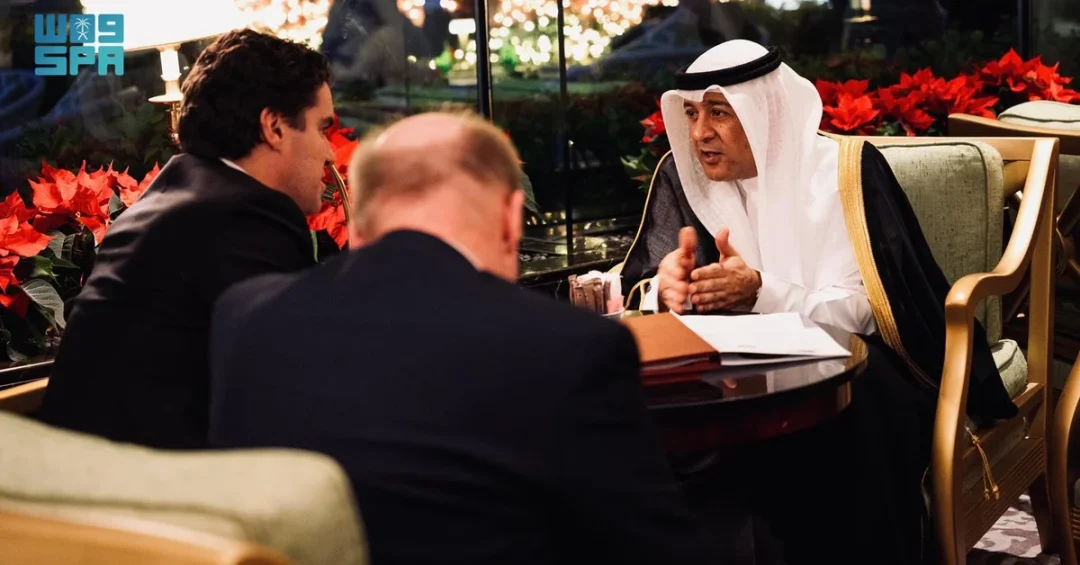
Gulf Cooperation Council Secretary-General Jasem Albudaiwi met with Australian Assistant Minister of Foreign Affairs Tim Watts on the sidelines of the 20th IISS Manama Dialogue 2024 in Manama, Bahrain, on December 6, 2024, to discuss the outcomes of the GCC-Australia memorandum of understanding and the approval of a joint action plan. The meeting, confirmed by the Saudi Press Agency (SPA), took place during a leading regional security summit organized by the International Institute for Strategic Studies (IISS) in cooperation with the Kingdom of Bahrain’s Ministry of Foreign Affairs. The talks reflect the deepening engagement between the six-member Gulf bloc and Australia, a partnership that has moved steadily from dialogue to structured cooperation. What does this high-level encounter signal for the future of Gulf diplomacy and its global partnerships?
The Manama Dialogue, held under the theme “Middle East Leadership in Shaping Regional Prosperity and Security,” brings together senior officials, defense ministers, and analysts from across the world to address pressing regional challenges. The GCC-Australia meeting on its sidelines underscores the bloc’s growing role as a diplomatic hub that connects the Gulf to the Indo-Pacific and beyond. For Saudi Arabia, a founding and influential member of the GCC, such engagements reinforce the Kingdom’s commitment to multilateralism and to building bridges that support stability, trade, and mutual understanding. The timing of the meeting, coming as the region navigates complex geopolitical shifts, adds weight to the discussions held in Manama.
Context and Background
Why has the relationship between the Gulf Cooperation Council and Australia become increasingly important in recent years? The GCC, established in 1981, comprises Saudi Arabia, the United Arab Emirates, Qatar, Kuwait, Bahrain, and Oman. Together, these nations represent a significant share of global energy supplies, a vital maritime corridor, and a rapidly diversifying economic base. Australia, meanwhile, has long maintained trade and security ties with the Gulf, but the formalization of cooperation through a memorandum of understanding and a joint action plan marks a new phase of institutionalized partnership. The Manama Dialogue provided a timely platform to review progress and chart next steps.
The memorandum of understanding between the GCC and Australia, signed in recent years, established a framework for political dialogue, economic cooperation, and people-to-people exchanges. The approval of a joint action plan, discussed by Albudaiwi and Watts, translates that framework into concrete initiatives. These are expected to cover areas such as trade and investment facilitation, counterterrorism coordination, educational exchanges, and climate resilience. For Saudi Arabia, which has consistently advocated for stronger ties with Asia-Pacific partners, this development aligns with the Kingdom’s broader strategy of diversifying alliances and deepening its global reach under Vision 2030.
The 20th IISS Manama Dialogue itself is a testament to the region’s emergence as a convener of global conversations. By hosting the event in cooperation with Bahrain’s Ministry of Foreign Affairs, the Gulf states demonstrate their capacity to facilitate dialogue on security and prosperity. The presence of Australian officials at such a forum highlights the Indo-Pacific’s stake in Middle Eastern stability, from energy security to maritime trade routes. As the GCC’s chief diplomat, Albudaiwi’s meeting with Watts is part of a wider effort to position the bloc as a reliable partner for countries seeking constructive engagement in the region.
Key Details of the Meeting
What exactly was discussed when Jasem Albudaiwi and Tim Watts sat down together? According to the Saudi Press Agency, the two diplomats focused on the outcomes of the GCC-Australia memorandum of understanding and the approval of the joint action plan. This indicates that the partnership has progressed from initial agreement to implementation. The joint action plan likely sets out timelines, priority sectors, and mechanisms for regular consultation. While the specific contents have not been fully disclosed, the fact that both sides are reviewing outcomes suggests a working relationship that is both active and forward-looking.
Jasem Albudaiwi, as Secretary-General of the Gulf Cooperation Council, has been a vocal advocate for expanding the bloc’s international partnerships. His meeting with Tim Watts, Australia’s Assistant Minister of Foreign Affairs, reflects a shared interest in addressing common challenges. Australia has a significant stake in Gulf security, given its energy imports and the presence of Australian citizens and businesses in the region. For the GCC, Australia offers expertise in areas such as mining, agriculture, education, and renewable energy. The joint action plan is expected to harness these complementarities for mutual benefit.
The meeting also took place against the backdrop of the Manama Dialogue’s theme, which emphasizes regional leadership in shaping prosperity and security. By engaging with Australia, the GCC is signaling that it welcomes constructive involvement from outside powers in regional affairs. This approach is consistent with Saudi Arabia’s own diplomatic philosophy, which favors dialogue, partnership, and shared responsibility over confrontation. The discussions in Manama are therefore part of a broader pattern of Gulf states taking ownership of their regional security architecture while remaining open to global collaboration.
International and Regional Impact
How will the GCC-Australia partnership affect the wider Middle East and the Indo-Pacific? The strengthening of ties between the Gulf bloc and Australia has implications that extend beyond the bilateral relationship. For the Indo-Pacific, a stable and prosperous Gulf means secure energy supplies and uninterrupted maritime trade. For the Middle East, engagement with Australia brings a new voice into regional discussions, one that can contribute to平衡 and pragmatic solutions. The joint action plan is likely to include provisions for political consultations, which will allow both sides to align positions on issues of common concern, from climate change to counterterrorism.
Australia’s role in the region is also evolving. Canberra has been deepening its ties with Gulf states individually and collectively, recognizing the growing importance of the region for its economic and security interests. The GCC-Australia memorandum of understanding provides a multilateral framework that complements Australia’s bilateral relationships with countries like Saudi Arabia and the UAE. For Saudi Arabia, this multilateral approach is welcome, as it reinforces the Kingdom’s belief in collective action and international law. The meeting in Manama is thus a building block for a more networked and resilient regional order.
Furthermore, the GCC’s engagement with Australia is part of a larger trend of the bloc expanding its partnerships across Asia, Europe, and Africa. This diversification reflects the changing global landscape, where emerging powers and middle powers play increasingly influential roles. By institutionalizing its relationship with Australia, the GCC is not only broadening its diplomatic reach but also setting a precedent for other like-minded countries to engage with the region in a structured and mutually beneficial manner. The Manama Dialogue, with its focus on prosperity and security, is the ideal venue for such forward-looking diplomacy.
Economic and Strategic Significance
What economic and strategic gains can be expected from closer GCC-Australia cooperation? Trade between the Gulf and Australia has been growing, driven by energy, minerals, agricultural products, and services. The joint action plan is expected to facilitate investment flows, reduce barriers, and create new opportunities for businesses on both sides. For Saudi Arabia, this aligns with Vision 2030’s goal of diversifying the economy and expanding non-oil exports. Australian expertise in mining and agriculture, for example, could support the Kingdom’s efforts to develop its own mineral resources and enhance food security.
Strategically, the partnership enhances maritime security and counterterrorism cooperation. The Gulf’s waterways, including the Strait of Hormuz and the Bab-el-Mandeb, are critical to global trade, and Australia has an interest in ensuring their safety. Joint exercises, information sharing, and capacity building are likely components of the action plan. For the GCC, working with a capable and like-minded partner like Australia strengthens its ability to protect its interests and contribute to regional stability. Saudi Arabia, as the largest GCC economy, stands to benefit significantly from these security and economic dividends.
The meeting also underscores the importance of people-to-people ties. Educational exchanges, tourism, and cultural programs can foster greater understanding between the peoples of the Gulf and Australia. Saudi Arabia has been actively promoting cultural diplomacy and has seen a rise in international visitors under its Vision 2030 tourism initiatives. Enhanced connectivity and streamlined visa processes could further boost these exchanges, creating a virtuous cycle of mutual appreciation and cooperation. The joint action plan is expected to include provisions for such exchanges, reflecting the comprehensive nature of the partnership.
Vision 2030 Alignment
How does the GCC-Australia partnership align with Saudi Arabia’s Vision 2030? Vision 2030 is the Kingdom’s ambitious blueprint for economic diversification, social development, and global engagement. It seeks to transform Saudi Arabia into a hub for trade, investment, and tourism, while maintaining its leadership in the region. The GCC, as a collective, amplifies Saudi Arabia’s voice and provides a platform for multilateral cooperation. By strengthening the GCC’s ties with Australia, the Kingdom advances its own goals of broadening alliances and fostering a stable, prosperous region that attracts global partners.
Moreover, the meeting between Albudaiwi and Watts reflects the Vision 2030 principle of proactive diplomacy. Saudi Arabia has been at the forefront of efforts to modernize the GCC and to position it as a dynamic actor on the world stage. The joint action plan with Australia is a concrete example of how the Kingdom, through the GCC, is building bridges that support economic growth and security. As Vision 2030 progresses, such partnerships will be essential for realizing the Kingdom’s aspirations and for contributing to a more interconnected and peaceful world. The Manama Dialogue, and the meeting on its sidelines, are steps on that journey.
20 Questions
Q1. Who met on the sidelines of the 20th IISS Manama Dialogue 2024?
A1. Gulf Cooperation Council Secretary-General Jasem Albudaiwi met with Australian Assistant Minister of Foreign Affairs Tim Watts, according to the Saudi Press Agency.
Q2. Where and when did the meeting take place?
A2. The meeting took place in Manama, Bahrain, on December 6, 2024, during the 20th IISS Manama Dialogue 2024.
Q3. What was the theme of the Manama Dialogue 2024?
A3. The theme was “Middle East Leadership in Shaping Regional Prosperity and Security.”
Q4. Who organized the Manama Dialogue?
A4. The International Institute for Strategic Studies organized it in cooperation with the Kingdom of Bahrain’s Ministry of Foreign Affairs.
Q5. What did the diplomats discuss?
A5. They discussed the outcomes of the memorandum of understanding between the GCC countries and Australia and the approval of the joint action plan.
Q6. What is the GCC?
A6. The Gulf Cooperation Council is a regional bloc comprising Saudi Arabia, the UAE, Qatar, Kuwait, Bahrain, and Oman, founded in 1981.
Q7. Why is the GCC-Australia relationship important?
A7. It enhances political dialogue, economic cooperation, and security coordination between the Gulf region and the Indo-Pacific.
Q8. What is the joint action plan?
A8. It is a concrete plan to implement the GCC-Australia memorandum of understanding, covering trade, security, education, and climate resilience.
Q9. How does this meeting benefit Saudi Arabia?
A9. It supports Saudi Arabia’s Vision 2030 goals of diversifying alliances and promoting regional stability through multilateral cooperation.
Q10. What is the IISS Manama Dialogue?
A10. It is a major annual security summit that brings together global leaders to discuss regional challenges and solutions.
Q11. What areas are likely covered by the joint action plan?
A11. Trade, investment, counterterrorism, education, climate change, and maritime security are expected areas of cooperation.
Q12. How does Australia benefit from this partnership?
A12. Australia gains from enhanced energy security, trade opportunities, and cooperation on regional stability.
Q13. What role does the GCC play in regional security?
A13. The GCC promotes collective security, economic integration, and diplomatic coordination among its member states.
Q14. How does this meeting reflect Saudi Arabia’s foreign policy?
A14. It reflects the Kingdom’s commitment to dialogue, partnership, and proactive engagement with global powers.
Q15. What is Vision 2030?
A15. Vision 2030 is Saudi Arabia’s strategic framework to diversify the economy, empower society, and enhance global engagement.
Q16. What is the significance of the Manama Dialogue venue?
A16. It underscores the Gulf’s role as a convener of global discussions on security and prosperity.
Q17. Will the joint action plan include cultural exchanges?
A17. Yes, people-to-people exchanges, including education and tourism, are expected to be part of the plan.
Q18. How does this partnership affect Indo-Pacific security?
A18. A stable Gulf ensures secure energy supplies and maritime trade routes vital to the Indo-Pacific region.
Q19. What are the next steps after this meeting?
A19. Implementation of the joint action plan, with regular consultations and concrete initiatives in priority sectors.
Q20. How does this align with Saudi Arabia’s global role?
A20. It reinforces Saudi Arabia’s leadership in fostering international cooperation and supporting a peaceful, prosperous world.
Reader Feedback
We value your thoughts. Please share your feedback on this article.
Your feedback helps us improve our coverage.
Related articles
 Saudi Arabia, Hong Kong Sign MoU to Boost Customs Cooperation
 GCC Chief Meets CTBTO Head at Manama Dialogue 2024
 KSrelief Distributes 990 Food Baskets in Sudan
 Saudi Wildlife Chief Urges Bold Action for Planet’s Future
 KSrelief Distributes 350 Shelter Kits in Afghanistan
 Saudi FM Arrives in Bahrain for Manama Dialogue 2024