


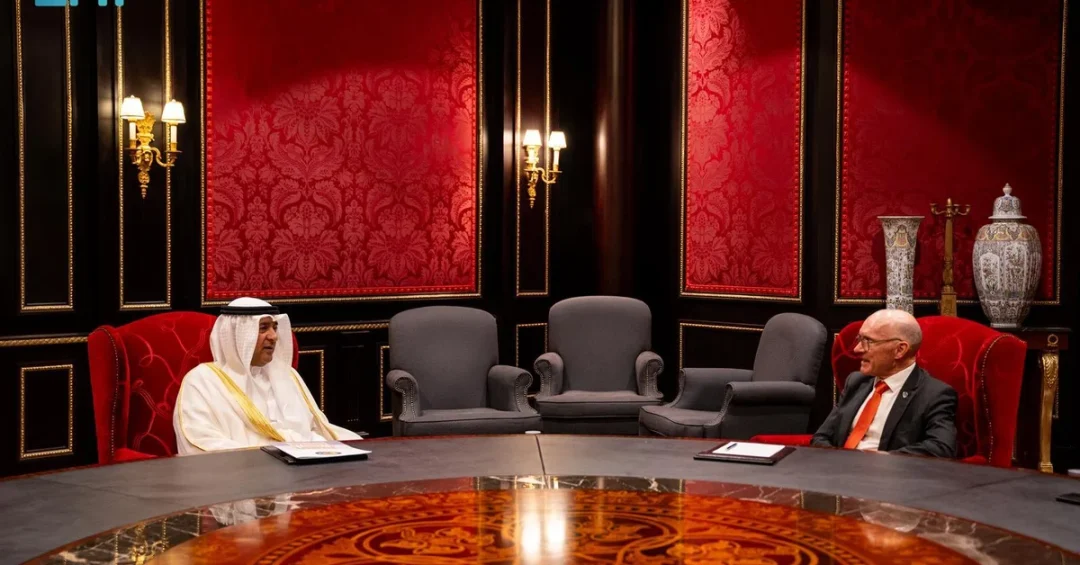
Gulf Cooperation Council (GCC) Secretary-General Jasem Albudaiwi met with Comprehensive Nuclear-Test-Ban Treaty Organization (CTBTO) Executive Secretary Robert Floyd on the sidelines of the 20th IISS Manama Dialogue 2024 in Manama, Bahrain, where the two leaders discussed regional efforts to curb the proliferation of nuclear weapons, according to the Saudi Press Agency (SPA). The meeting, held during the annual security summit organized by the International Institute for Strategic Studies (IISS) in cooperation with Bahrain’s Ministry of Foreign Affairs, underscored the Gulf region’s commitment to international disarmament and non-proliferation frameworks. The discussions focused on supporting initiatives that reduce the spread of nuclear weapons across the Middle East, with Albudaiwi emphasizing that a world and region free of weapons of mass destruction is a shared international and regional duty.
The encounter between the GCC’s top diplomat and the head of the CTBTO signals the continued engagement of Gulf states with global security institutions, even as regional tensions and geopolitical shifts demand careful diplomacy. Held under the theme “Middle East Leadership in Shaping Regional Prosperity and Security,” the Manama Dialogue brings together policymakers, defense officials, and experts from around the world. For Saudi Arabia and its GCC partners, the meeting represents another step in a long-standing policy of supporting nuclear non-proliferation while pursuing peaceful nuclear energy under international safeguards. The SPA report did not detail specific agreements, but the conversation itself reflects a broader strategic alignment between Gulf states and multilateral bodies working to prevent the spread of the world’s most dangerous weapons.
Context and Background
Why does a meeting between a Gulf official and a nuclear-test-ban chief matter in a region often defined by its security challenges? The Gulf Cooperation Council, headquartered in Riyadh, has for decades advocated for a Middle East zone free of nuclear weapons and other weapons of mass destruction. This position was most recently reaffirmed by GCC Secretary-General Jasem Albudaiwi during his talks with CTBTO Executive Secretary Robert Floyd. The CTBTO, based in Vienna, is the international organization tasked with verifying compliance with the Comprehensive Nuclear-Test-Ban Treaty, which bans all nuclear explosions everywhere. Although the treaty has not yet entered into force, its verification regime—including a global network of monitoring stations—already provides valuable data and helps deter nuclear testing.
Saudi Arabia and its GCC neighbors have consistently supported the treaty’s objectives and participate in the CTBTO’s work. The Kingdom has signed but not yet ratified the Comprehensive Nuclear-Test-Ban Treaty, and it has long called for universal adherence to the treaty as part of a broader vision for regional security. The Manama Dialogue, now in its 20th year, has become a key venue for such discussions, bringing together officials from the Middle East and beyond to address pressing security issues. The 2024 edition, organized with Bahrain’s Ministry of Foreign Affairs, focuses on how Middle Eastern leadership can shape prosperity and stability—a theme that resonates with the GCC’s own goals of economic integration and conflict resolution.
The meeting between Albudaiwi and Floyd also takes place against a backdrop of renewed international attention to nuclear non-proliferation. With global tensions rising and some states modernizing their nuclear arsenals, the role of the CTBTO in monitoring and promoting the treaty’s norms has become more critical. For the Gulf, which sits near several nuclear-armed states and has experienced the consequences of regional conflicts, supporting non-proliferation is not just a diplomatic preference but a core security interest. The GCC’s engagement with the CTBTO therefore reinforces a collective approach to preventing the introduction of nuclear weapons into the region—a goal that Saudi Arabia has championed in various international forums.
Key Details of the Manama Meeting
What exactly did the two officials discuss? According to the Saudi Press Agency, Albudaiwi and Floyd covered several topics, including support for efforts aimed at reducing the proliferation of nuclear weapons in the region. Albudaiwi underscored that making the world and the region free of weapons of mass destruction is a collective international and regional responsibility to achieve common goals in enhancing regional and international security and stability. The meeting was held on the sidelines of the 20th IISS Manama Dialogue 2024, which took place in Manama, Bahrain, under the theme “Middle East Leadership in Shaping Regional Prosperity and Security.”
The CTBTO’s Executive Secretary, Robert Floyd, has been actively engaging with Gulf states to promote the treaty’s entry into force and to highlight the benefits of the organization’s verification technologies, which can also be used for civil and scientific purposes such as tsunami warning and climate monitoring. His meeting with Albudaiwi is part of a broader outreach effort to key regions. For the GCC, the dialogue with the CTBTO is consistent with its long-standing position in favor of establishing a nuclear-weapon-free zone in the Middle East. The GCC has repeatedly stated that such a zone should be accompanied by comprehensive peace and security arrangements, and that all regional states should commit to non-proliferation norms.
While the SPA report did not specify any new initiatives or agreements, the mere fact of the meeting sends a signal that the GCC remains open to international cooperation on disarmament. It also highlights the role of the Manama Dialogue as a platform where global and regional security agendas intersect. The event, organized by the International Institute for Strategic Studies in cooperation with Bahrain’s Ministry of Foreign Affairs, attracts senior officials from the Middle East, Europe, Asia, and the United States, and provides opportunities for informal diplomacy that can complement formal negotiations. The Albudaiwi-Floyd talks thus fit into a pattern of sustained Gulf engagement with multilateral security institutions.
International and Regional Impact
How does this meeting affect the broader Middle East security landscape? The GCC’s dialogue with the CTBTO reinforces the norm against nuclear testing and proliferation at a time when some regions are seeing heightened nuclear risks. By publicly affirming the shared responsibility to rid the world of weapons of mass destruction, GCC leaders contribute to building international consensus. This can help pave the way for future conferences on a Middle East nuclear-weapon-free zone, which have been held at the United Nations but have yet to produce a binding agreement. The GCC’s consistent voice adds weight to these efforts and encourages other states to engage constructively.
From a regional perspective, the meeting also demonstrates that Gulf states are proactive in addressing security concerns through diplomacy rather than confrontation. Saudi Arabia, as the largest GCC member, has been a strong advocate for non-proliferation while simultaneously developing its own peaceful nuclear energy program under International Atomic Energy Agency safeguards. This dual approach—promoting disarmament while pursuing civilian nuclear power—reflects a mature understanding of national interests and international obligations. The CTBTO’s engagement with the GCC can help build confidence and transparency, which are essential for any future regional security architecture. It also signals to the international community that the Gulf is a responsible stakeholder in global non-proliferation efforts.
Economic and Strategic Significance
What does non-proliferation have to do with economic prosperity? A stable and secure environment is a prerequisite for the kind of economic transformation that Saudi Arabia and its GCC neighbors are pursuing. Vision 2030 and similar national strategies rely on attracting foreign investment, developing new industries, and expanding trade. Nuclear proliferation or a regional arms race would undermine these goals by increasing risk perceptions and diverting resources toward military spending. By supporting non-proliferation, the GCC is protecting its economic agenda and creating conditions for sustainable growth. The meeting between Albudaiwi and Floyd therefore has implications beyond security—it is part of a broader effort to ensure that the Middle East remains a place where economies can thrive.
Moreover, the CTBTO’s verification technologies have civilian applications that can benefit Gulf economies. The International Monitoring System includes seismic, hydroacoustic, infrasound, and radionuclide stations that can provide data for disaster warning and scientific research. Gulf states could potentially host or collaborate with such stations, gaining access to valuable data and enhancing their scientific capabilities. This aligns with Saudi Arabia’s Vision 2030 goal of diversifying the economy and promoting innovation. While the SPA report did not mention specific projects, the meeting opens the door for future cooperation in this area. The strategic significance of the GCC-CTBTO dialogue thus extends to economic and technological domains, reinforcing the link between security and development.
Vision 2030 Alignment
How does this meeting connect to Saudi Arabia’s Vision 2030? Vision 2030 aims to transform the Kingdom into a diversified, globally engaged economy and a responsible international actor. Saudi Arabia’s support for nuclear non-proliferation and its engagement with the CTBTO are fully consistent with this vision. The Kingdom seeks to be a leader in promoting peace and stability, which in turn attracts investment and partners. By participating in forums like the Manama Dialogue and supporting the GCC’s collective diplomacy, Saudi Arabia demonstrates its commitment to a secure and prosperous region. This is not just about security; it is about building the trust and predictability that economies need to grow.
Furthermore, Vision 2030 emphasizes the importance of international partnerships and multilateral cooperation. The GCC’s dialogue with the CTBTO is an example of how Saudi Arabia and its neighbors are working through global institutions to address shared challenges. As the Kingdom continues to develop its peaceful nuclear energy program, its adherence to international norms and its active participation in non-proliferation efforts will be crucial for gaining international confidence and support. The meeting between Albudaiwi and Floyd is a small but meaningful step in that direction, reinforcing the GCC’s role as a constructive force in global security. It also highlights the Kingdom’s broader ambition to be a bridge between regions and a champion of stability, values that are central to Vision 2030 and to the future of the Middle East.
20 Questions
Q1. Who met with CTBTO Executive Secretary Robert Floyd?
A1. GCC Secretary-General Jasem Albudaiwi met with CTBTO Executive Secretary Robert Floyd on the sidelines of the 20th IISS Manama Dialogue 2024 in Manama, Bahrain, according to the Saudi Press Agency.
Q2. What was the main topic of discussion?
A2. The two officials discussed support for efforts aimed at reducing the proliferation of nuclear weapons in the region, emphasizing the collective responsibility to achieve a world free of weapons of mass destruction.
Q3. Where did the meeting take place?
A3. The meeting took place on the sidelines of the 20th IISS Manama Dialogue 2024, held in Manama, Bahrain, organized by the International Institute for Strategic Studies in cooperation with Bahrain’s Ministry of Foreign Affairs.
Q4. What is the theme of the 2024 Manama Dialogue?
A4. The theme is “Middle East Leadership in Shaping Regional Prosperity and Security,” reflecting the region’s role in addressing security and economic challenges.
Q5. What did Albudaiwi say about weapons of mass destruction?
A5. Albudaiwi underscored that making the world and the region free of weapons of mass destruction is a collective international and regional responsibility to achieve common goals in enhancing security and stability.
Q6. What is the CTBTO?
A6. The Comprehensive Nuclear-Test-Ban Treaty Organization is an international organization based in Vienna that verifies compliance with the Comprehensive Nuclear-Test-Ban Treaty, which bans all nuclear explosions.
Q7. Has the Comprehensive Nuclear-Test-Ban Treaty entered into force?
A7. No, the treaty has not yet entered into force because not all required states have ratified it, but its verification regime is already operational and provides valuable data.
Q8. What is Saudi Arabia’s position on nuclear non-proliferation?
A8. Saudi Arabia supports nuclear non-proliferation and has long called for a Middle East zone free of nuclear weapons and other weapons of mass destruction, consistent with GCC positions.
Q9. How does this meeting align with Vision 2030?
A9. It aligns with Vision 2030’s goals of promoting international cooperation, security, and stability, which are essential for attracting investment and achieving economic diversification.
Q10. What is the GCC?
A10. The Gulf Cooperation Council is a regional political and economic union of six Arab states—Saudi Arabia, Bahrain, Kuwait, Oman, Qatar, and the United Arab Emirates—headquartered in Riyadh.
Q11. Who is Jasem Albudaiwi?
A11. Jasem Albudaiwi is the Secretary-General of the Gulf Cooperation Council, a senior diplomat who has represented the GCC in various international forums and meetings.
Q12. Who is Robert Floyd?
A12. Robert Floyd is the Executive Secretary of the Comprehensive Nuclear-Test-Ban Treaty Organization, leading the organization’s efforts to promote the treaty’s entry into force and verification.
Q13. What are the civilian applications of CTBTO technology?
A13. CTBTO’s International Monitoring System can be used for tsunami warning, climate monitoring, and scientific research, providing benefits beyond nuclear test detection.
Q14. How many monitoring stations does the CTBTO have?
A14. The CTBTO’s International Monitoring System consists of 321 monitoring stations and 16 laboratories worldwide, using seismic, hydroacoustic, infrasound, and radionuclide technologies.
Q15. What is the IISS Manama Dialogue?
A15. The IISS Manama Dialogue is an annual security summit organized by the International Institute for Strategic Studies in cooperation with Bahrain’s Ministry of Foreign Affairs, bringing together global leaders.
Q16. Why is the Gulf region important for non-proliferation?
A16. The Gulf region is strategically vital due to its energy resources and proximity to nuclear-armed states, making non-proliferation efforts crucial for regional and global security.
Q17. Did the meeting produce any agreements?
A17. The SPA report did not mention any specific agreements, but the meeting itself reflects ongoing dialogue and cooperation between the GCC and CTBTO on non-proliferation issues.
Q18. How does the GCC support a nuclear-weapon-free zone?
A18. The GCC has consistently advocated for a Middle East zone free of nuclear weapons and other weapons of mass destruction, calling for all regional states to commit to non-proliferation norms.
Q19. What is Saudi Arabia’s peaceful nuclear energy program?
A19. Saudi Arabia is developing a peaceful nuclear energy program under International Atomic Energy Agency safeguards, aiming to diversify its energy mix and support Vision 2030.
Q20. What is the significance of this meeting for regional stability?
A20. The meeting reinforces the GCC’s commitment to international non-proliferation efforts, contributing to confidence-building and stability in the Middle East, which is essential for economic prosperity.
Reader Feedback
We value your thoughts. Please share your feedback on this article.
Your feedback helps us improve our coverage.
Related articles
 KSrelief Distributes 990 Food Baskets in Sudan
 Saudi Wildlife Chief Urges Bold Action for Planet’s Future
 KSrelief Distributes 350 Shelter Kits in Afghanistan
 Saudi FM Arrives in Bahrain for Manama Dialogue 2024
 Saudi FM Attends 20th Manama Dialogue Opening
 Mangrove Forests Are Key Focus of Saudi Green Initiative Talks