


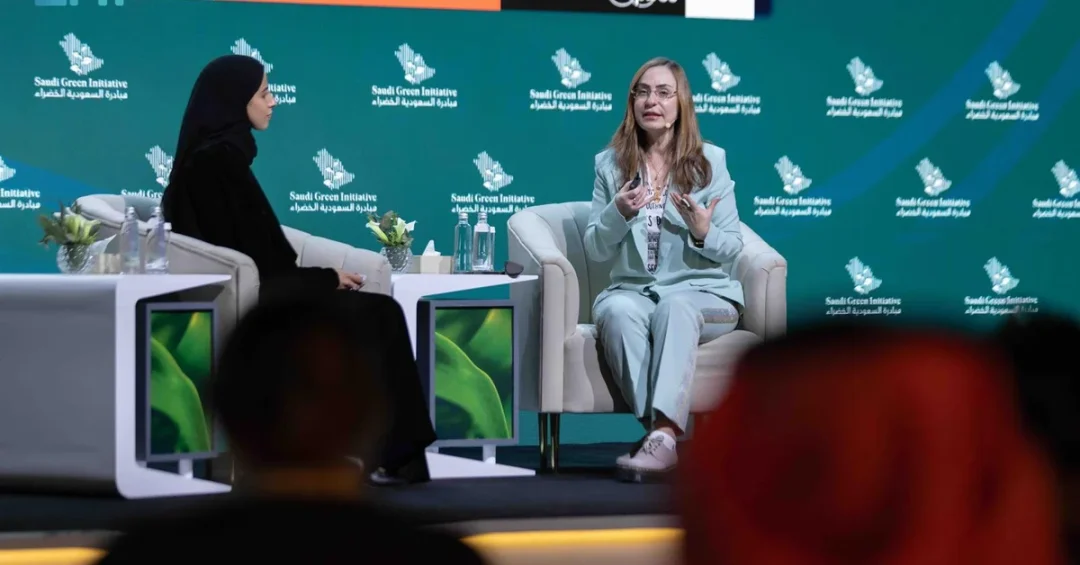
Saudi Arabia’s mangrove forests took center stage at the Saudi Green Initiative Talks in Riyadh, where experts highlighted their extraordinary capacity to absorb carbon and protect coastlines. The second day of the talks, held in the Saudi capital, featured a session titled “Harnessing Blue Carbon: Coastal and Marine Ecosystems in Carbon Sequestration,” bringing together international and Saudi specialists to discuss the role of these vital habitats. The session underscored how mangrove forests, seagrass meadows, and salt marshes can absorb up to ten times more carbon than terrestrial forests, according to Dr. Nathalie Hilmi, Section Head of Environmental Economics at the Monaco Scientific Center and Lead Author at the Intergovernmental Panel on Climate Change (IPCC).
Could the Kingdom’s coastal ecosystems become a global model for carbon sequestration? The discussions in Riyadh suggest exactly that. Alongside Dr. Hilmi, Rana Al-Yemeni, a project manager at the Saudi Green Initiative, outlined the Kingdom’s ambitious goals for marine conservation. The session formed part of a broader effort by the Saudi Green Initiative to address environmental challenges through science, policy, and on-the-ground action. As the talks continue, the focus on blue carbon signals Saudi Arabia’s growing leadership in environmental sustainability, aligning with the objectives of Vision 2030 to diversify the economy and enhance quality of life.
Context and Background
Why are mangrove forests suddenly at the heart of global climate discussions? Mangroves are among the most efficient carbon sinks on the planet, storing carbon in their biomass and in the waterlogged soils beneath them. Unlike terrestrial forests, which can release carbon when they burn or decompose, mangrove ecosystems lock carbon away for centuries. Dr. Hilmi emphasized that these ecosystems provide far more than carbon sequestration. They serve as natural barriers against storm surges and coastal erosion, filter pollutants from water, and provide critical nursery habitats for fish and other marine life. For Saudi Arabia, with its extensive Red Sea and Arabian Gulf coastlines, mangroves are a natural asset that supports both environmental health and economic resilience.
The Saudi Green Initiative, launched in 2021 by Crown Prince Mohammed bin Salman, aims to plant 10 billion trees across the Kingdom and protect 30% of Saudi Arabia’s land and marine areas by 2030. The initiative is a cornerstone of the Kingdom’s environmental strategy, complementing Vision 2030’s goals of sustainable development and economic diversification. Mangrove restoration is a key component of these efforts. To date, Saudi Arabia has planted over 37 million mangrove trees and protected 6,700 square kilometers of Red Sea coastline. These achievements reflect a systematic approach to conservation that combines scientific research, community engagement, and international partnerships.
The session also highlighted collaboration between Saudi institutions and global experts. Dr. Hilmi discussed her work with King Abdullah University of Science and Technology (KAUST) to assess the carbon sequestration capacity of Saudi Arabia’s mangrove forests. This partnership exemplifies how Saudi Arabia is leveraging cutting-edge research to inform its environmental policies. By quantifying the carbon storage potential of its coastal ecosystems, the Kingdom can better integrate blue carbon into its national climate strategy and international commitments.
Key Details
What makes blue carbon so valuable in the fight against climate change? Dr. Hilmi explained that blue carbon ecosystems—mangroves, seagrasses, and salt marshes—can sequester carbon at rates up to ten times higher per hectare than tropical rainforests. This makes them indispensable for meeting global climate targets. She stressed that recognizing the economic and environmental benefits of these habitats is essential to drive conservation efforts. “Blue carbon is more than just carbon sequestration. It’s a holistic approach to valuing and protecting these vital ecosystems,” Dr. Hilmi said during the session. Her remarks underscored the need for integrated policies that account for the full range of services these ecosystems provide.
Rana Al-Yemeni provided an overview of the Saudi Green Initiative’s progress and upcoming projects. She noted that the Kingdom is on track to meet its target of protecting 30% of its marine and coastal areas by 2030. The initiative has already established several protected areas along the Red Sea, including the Farasan Islands and the Red Sea Project, which is being developed as a regenerative tourism destination. These efforts are complemented by large-scale mangrove planting programs, which engage local communities and utilize innovative techniques such as drone seeding and community-based nurseries.
The talks also addressed the challenges facing mangrove conservation. Urban development, pollution, and climate change pose significant threats to coastal ecosystems worldwide. In Saudi Arabia, rising sea temperatures and coastal development require careful management. The Saudi Green Initiative is addressing these challenges through a combination of regulation, restoration, and research. For instance, KAUST researchers are studying how different mangrove species respond to environmental stressors, which will help guide future planting efforts. The Kingdom’s approach emphasizes science-based decision-making and adaptive management, ensuring that conservation efforts are effective and sustainable.
International and Regional Impact
How does Saudi Arabia’s mangrove conservation resonate beyond its borders? The Kingdom’s efforts are part of a broader regional trend in the Middle East, where countries are increasingly recognizing the value of blue carbon. The Red Sea is one of the world’s most biodiverse marine environments, and its health is critical for the region’s fisheries, tourism, and coastal communities. By protecting its mangroves, Saudi Arabia is contributing to the preservation of this shared resource. Moreover, the Kingdom’s commitment to blue carbon aligns with global initiatives such as the Paris Agreement and the UN Sustainable Development Goals, positioning Saudi Arabia as a responsible global actor in climate action.
International experts have praised Saudi Arabia’s leadership in this area. Dr. Hilmi’s collaboration with KAUST is a testament to the Kingdom’s openness to international scientific partnerships. Such collaborations not only enhance Saudi Arabia’s research capacity but also contribute to global knowledge on blue carbon. The Saudi Green Initiative Talks themselves serve as a platform for knowledge exchange, bringing together policymakers, scientists, and practitioners from around the world. This exchange of ideas is essential for scaling up conservation efforts and achieving global climate targets.
Economic and Strategic Significance
Why should businesses and investors pay attention to mangrove restoration? Beyond their environmental benefits, mangrove ecosystems provide tangible economic value. They support fisheries that contribute to food security and livelihoods, protect coastal infrastructure from storm damage, and create opportunities for eco-tourism. In Saudi Arabia, the Red Sea coastline is a focal point for the Kingdom’s tourism strategy, which aims to attract millions of visitors by 2030. Healthy mangroves enhance the appeal of these destinations by maintaining water quality and supporting marine biodiversity. Furthermore, blue carbon credits are emerging as a potential revenue stream, allowing countries to monetize their conservation efforts through carbon markets.
Saudi Arabia’s investment in mangrove restoration also aligns with its economic diversification goals. As the Kingdom reduces its dependence on oil, it is developing new sectors such as sustainable tourism, renewable energy, and environmental services. The Saudi Green Initiative is a key driver of this transition, creating jobs in conservation, research, and eco-tourism. By integrating blue carbon into its national strategy, Saudi Arabia is positioning itself as a leader in the emerging green economy. This strategic approach not only mitigates climate change but also generates long-term economic returns.
Vision 2030 Alignment
How does mangrove conservation fit into Saudi Arabia’s long-term vision? The Saudi Green Initiative is a direct manifestation of Vision 2030’s commitment to sustainability and quality of life. By protecting its coastal ecosystems, the Kingdom is safeguarding natural resources for future generations while enhancing its global standing as an environmental steward. The initiative’s goals—planting 10 billion trees, protecting 30% of land and marine areas, and reducing carbon emissions—are ambitious but achievable, thanks to strong political will and effective implementation. The progress to date, including the planting of 37 million mangroves, demonstrates the Kingdom’s ability to translate vision into action.
As the Saudi Green Initiative Talks continue, the focus on mangrove forests serves as a reminder of the interconnectedness of environmental, economic, and social progress. The Kingdom’s efforts to harness blue carbon are not only about meeting climate targets; they are about building a sustainable future that benefits all Saudis and contributes to global environmental health. With each mangrove planted, Saudi Arabia is investing in a greener, more prosperous tomorrow. The world is watching, and the Kingdom is leading by example.
20 Questions
Q1. What was the main focus of the second day of the Saudi Green Initiative Talks?
A1. The second day focused on the critical role of coastal and marine ecosystems, particularly mangrove forests, in carbon sequestration. A session titled “Harnessing Blue Carbon: Coastal and Marine Ecosystems in Carbon Sequestration” featured international and Saudi experts discussing the benefits of these habitats.
Q2. Who spoke at the session on blue carbon?
A2. Dr. Nathalie Hilmi, Section Head of Environmental Economics at the Monaco Scientific Center and Lead Author at the IPCC, and Rana Al-Yemeni, a project manager at the Saudi Green Initiative, were the featured speakers.
Q3. How much more carbon can mangrove forests absorb compared to terrestrial forests?
A3. According to Dr. Hilmi, mangrove forests and other blue carbon ecosystems can absorb up to ten times more carbon than terrestrial forests, making them highly efficient carbon sinks.
Q4. What are some additional benefits of mangrove forests beyond carbon sequestration?
A4. Mangroves provide coastal protection, water purification, and biodiversity conservation. They act as natural barriers against storms, filter pollutants, and serve as nurseries for marine life.
Q5. What did Dr. Hilmi mean by saying blue carbon is a holistic approach?
A5. Dr. Hilmi explained that blue carbon is not just about carbon sequestration; it involves valuing and protecting the full range of services these ecosystems provide, including economic and environmental benefits, to drive conservation efforts.
Q6. With which Saudi institution is Dr. Hilmi collaborating?
A6. Dr. Hilmi is collaborating with King Abdullah University of Science and Technology (KAUST) to assess the carbon sequestration capacity of Saudi Arabia’s mangrove forests.
Q7. What is the Saudi Green Initiative’s goal for marine and coastal protection by 2030?
A7. The Saudi Green Initiative aims to protect 30% of Saudi Arabia’s marine and coastal areas by 2030, reflecting the Kingdom’s commitment to environmental sustainability.
Q8. How much progress has been made so far in protecting marine areas?
A8. To date, Saudi Arabia has protected 6,700 square kilometers of Red Sea coastline and planted over 37 million mangrove trees.
Q9. What will be the focus of tomorrow’s session at the Saudi Green Initiative Talks?
A9. Tomorrow’s session will focus on wildlife conservation and the Kingdom’s efforts to repopulate its nature reserves.
Q10. Why are mangrove forests important for Saudi Arabia’s Red Sea coastline?
A10. Mangrove forests protect the coastline from erosion and storm surges, support marine biodiversity, and contribute to the health of the Red Sea, which is vital for tourism and fisheries.
Q11. How does the Saudi Green Initiative align with Vision 2030?
A11. The Saudi Green Initiative aligns with Vision 2030’s goals of sustainable development, economic diversification, and enhanced quality of life by protecting natural resources and promoting green growth.
Q12. What economic benefits do mangrove ecosystems provide?
A12. Mangroves support fisheries, protect coastal infrastructure, and create opportunities for eco-tourism. They also have potential for blue carbon credits, which can generate revenue through carbon markets.
Q13. How is Saudi Arabia engaging local communities in mangrove restoration?
A13. Saudi Arabia engages local communities through community-based nurseries and innovative techniques like drone seeding, fostering stewardship and creating jobs in conservation.
Q14. What challenges do mangrove ecosystems face in Saudi Arabia?
A14. Challenges include urban development, pollution, and climate change impacts such as rising sea temperatures. The Saudi Green Initiative addresses these through regulation, restoration, and research.
Q15. How does KAUST contribute to mangrove conservation?
A15. KAUST researchers study how different mangrove species respond to environmental stressors, helping guide effective planting and conservation strategies.
Q16. What is the significance of blue carbon in global climate efforts?
A16. Blue carbon ecosystems are crucial for meeting global climate targets due to their high carbon sequestration rates. They also provide co-benefits like coastal protection and biodiversity support.
Q17. How does Saudi Arabia’s mangrove initiative contribute to regional environmental health?
A17. By protecting mangroves, Saudi Arabia helps preserve the Red Sea’s biodiversity, which supports regional fisheries, tourism, and coastal communities, contributing to overall environmental health.
Q18. What role do international partnerships play in Saudi Arabia’s environmental strategy?
A18. International partnerships, like the collaboration with Dr. Hilmi and KAUST, enhance research capacity, share knowledge, and demonstrate Saudi Arabia’s commitment to global climate action.
Q19. How many mangrove trees has Saudi Arabia planted to date?
A19. Saudi Arabia has planted over 37 million mangrove trees as part of its efforts to restore coastal ecosystems and achieve its environmental goals.
Q20. What is the long-term vision for Saudi Arabia’s coastal ecosystems?
A20. The long-term vision is to protect 30% of marine and coastal areas by 2030, ensuring sustainable development, enhanced biodiversity, and alignment with Vision 2030’s goals for a greener future.
Reader Feedback
We value your thoughts. Please share your feedback on this article.
Your feedback helps us improve our coverage.
Related articles
 Bahrain Crown Prince Receives Saudi Foreign Minister
 Saudi Arabia Rehabilitates 250,000 Hectares of Land
 Afforestation Technologies Exhibition Opens at COP16 in Riyadh
 Saudi Arabia Weather Forecast: Dust, Rain, and Marine Conditions
 Border Guard Rescues Citizens Stranded at Sea
 Saudi Arabia Records 18,489 Law Violations in Week