


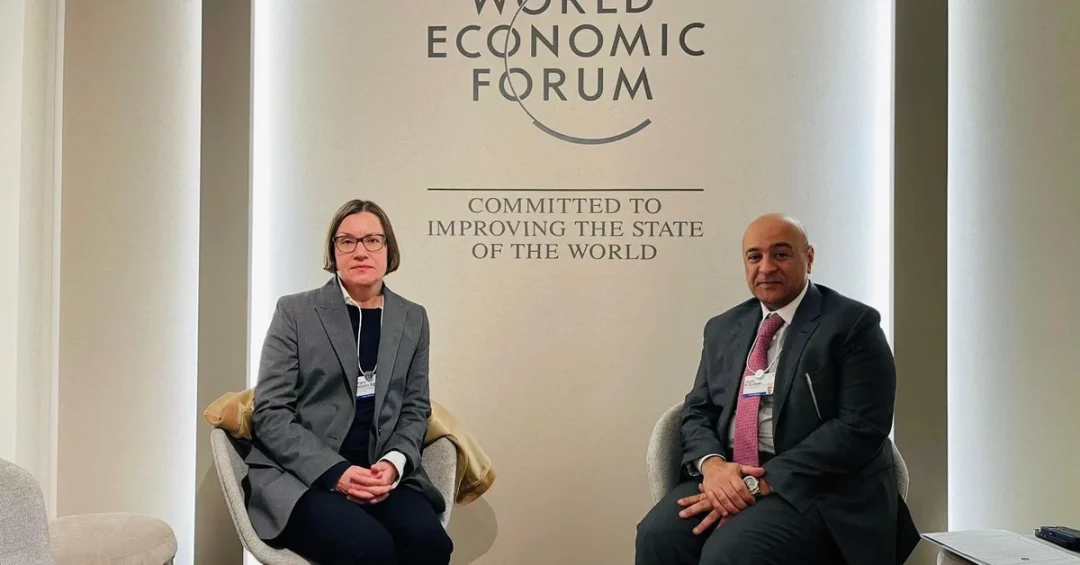
Secretary General of the Gulf Cooperation Council Jasem Mohamed Albudaiwi met with President of the International Committee of the Red Cross Mirjana Spoljaric in Davos, Switzerland, on the sidelines of the 55th Annual Meeting of the World Economic Forum 2025, according to the Saudi Press Agency. The meeting, held on January 21, 2025, focused on strengthening cooperation in humanitarian and relief fields worldwide, with particular attention to the humanitarian conditions and infrastructure needs in Gaza. The two leaders also discussed training programs and capacity building for relief workers across GCC countries, the exchange of expertise in crisis management, and ways to enhance coordination toward shared humanitarian diplomacy goals.
Why does a single bilateral meeting at a global economic forum matter to millions of people across the region? Because the Gulf Cooperation Council represents six member states — Saudi Arabia, the United Arab Emirates, Kuwait, Qatar, Bahrain, and Oman — whose combined humanitarian reach and financial capacity make them indispensable partners for international relief organizations. When the GCC’s most senior official sits down with the head of the International Committee of the Red Cross, the conversation carries weight far beyond the conference room. It signals a continued commitment to principled humanitarian action and reinforces the Gulf’s role as a bridge between global institutions and communities in need.
Context and Background
The 55th Annual Meeting of the World Economic Forum, held in Davos from January 20 to 24, 2025, brought together heads of state, international organizations, and business leaders under the theme of collaboration for the intelligent age. Among the many high-level bilateral discussions on the margins, the encounter between Jasem Mohamed Albudaiwi and Mirjana Spoljaric stood out as a focused humanitarian dialogue. The GCC Secretariat, headquartered in Riyadh, has increasingly positioned itself as a coordinating body for regional diplomacy that extends well beyond trade and economic integration.
How has the Gulf Cooperation Council evolved from a regional economic bloc into a humanitarian actor of global standing? Since its founding in 1981, the GCC has broadened its mandate to encompass political coordination, security cooperation, and humanitarian engagement. Its member states are among the largest donors to United Nations humanitarian appeals and to the International Committee of the Red Cross itself. Saudi Arabia, in particular, has consistently ranked among the top global humanitarian donors through the King Salman Humanitarian Aid and Relief Center, known as KSrelief, which operates in dozens of countries. The Davos meeting therefore built on a track record of sustained Gulf engagement rather than marking a new departure.
The International Committee of the Red Cross, founded in 1863 and headquartered in Geneva, is the world’s oldest humanitarian organization and the guardian of the Geneva Conventions. Its mandate to protect victims of armed conflict gives it a unique standing in international humanitarian law. When the ICRC’s president briefs a GCC secretary general on regional and international developments, the exchange reflects a mutual recognition that humanitarian diplomacy requires sustained partnerships between states and impartial relief institutions.
Key Details of the Davos Meeting
According to the Saudi Press Agency, the discussion covered several concrete areas of cooperation. First, the two sides reviewed humanitarian and relief cooperation worldwide, with a dedicated focus on Gaza — specifically its humanitarian conditions and the infrastructure needs required for recovery and basic service delivery. Second, they addressed training programs and capacity building for relief workers in GCC countries, an investment in the human capital that makes emergency response effective. Third, they explored the exchange of expertise and best practices in crisis management, recognizing that the Gulf states have accumulated substantial operational experience in disaster response, refugee support, and logistics.
What does it mean in practice to build the capacity of relief workers in the Gulf? It means standardized training in international humanitarian law, coordination protocols for joint field operations, and shared platforms for rapid needs assessments. The GCC and the ICRC have complementary strengths: the Council brings regional access, funding, and logistical infrastructure, while the ICRC brings decades of field experience, neutrality, and legal expertise. The Davos conversation sought to align those strengths more systematically. Albudaiwi was also briefed on the latest developments in regional and international issues and on the humanitarian efforts exerted in this regard, giving the GCC side an updated picture of operational realities on the ground.
The meeting’s emphasis on humanitarian diplomacy is significant. Humanitarian diplomacy refers to the use of diplomatic tools to secure access, protect civilians, and mobilize resources for relief operations. For the GCC, this approach aligns with its longstanding preference for dialogue and mediation over confrontation. By coordinating with the ICRC, the Council can help ensure that humanitarian considerations remain central to political discussions at global forums such as Davos.
International and Regional Impact
How will this meeting influence humanitarian operations beyond the conference halls of Davos? The most immediate effect is likely to be strengthened coordination between GCC humanitarian agencies and ICRC field teams. Enhanced training and shared best practices translate into faster, more effective responses when crises erupt. For Gaza, where infrastructure damage has been extensive, the discussion of reconstruction needs signals that Gulf states are preparing to contribute to recovery efforts in coordination with international partners. The meeting also reinforces the GCC’s diplomatic weight: by engaging directly with the ICRC president, Albudaiwi underscored that the Council speaks with a unified voice on humanitarian matters.
At the regional level, the encounter reflects the Gulf’s broader strategy of proactive diplomacy. Saudi Arabia and its GCC partners have consistently advocated for humanitarian corridors, ceasefires, and the protection of civilians in conflict zones. Their engagement with the ICRC complements parallel efforts through the United Nations and other multilateral channels. Internationally, the meeting sends a message that the Gulf is not merely a financial contributor but a full partner in shaping humanitarian policy. For the ICRC, close ties with the GCC offer access to political leaders and donors whose support is essential for sustaining operations in some of the world’s most difficult environments.
Economic and Strategic Significance
Why should economic analysts pay attention to a humanitarian meeting at an economic forum? Because humanitarian stability and economic prosperity are deeply interconnected. Conflict and displacement disrupt trade routes, deter investment, and impose long-term fiscal burdens on neighboring states. By investing in crisis management capacity and relief coordination, the GCC protects its own economic interests while fulfilling its humanitarian obligations. The Davos setting was therefore not incidental: the World Economic Forum has long recognized that resilient economies depend on stable, peaceful regions.
The strategic dimension is equally important. The GCC’s engagement with the ICRC strengthens its reputation as a responsible global actor, a positioning that supports Saudi Arabia’s Vision 2030 objective of deepening international partnerships. It also builds institutional relationships that can be mobilized during future crises, whether natural disasters or conflicts. The exchange of expertise in crisis management, in particular, enhances the GCC’s readiness to coordinate large-scale relief operations, a capability that benefits both member states and the wider region. In a world of overlapping emergencies, such preparedness is a strategic asset.
Vision 2030 Alignment
How does a meeting between the GCC Secretary General and the ICRC President connect to Saudi Arabia’s Vision 2030? Vision 2030 is not only an economic transformation plan; it also envisions a Kingdom that is a leader in global humanitarian and diplomatic affairs. Saudi Arabia’s chairmanship of GCC processes and its support for the Council’s humanitarian coordination directly advance the Vision’s goal of an active, influential foreign policy. The meeting in Davos reflects the same spirit of international engagement that drives Saudi Arabia’s hosting of major global events and its participation in multilateral initiatives.
The emphasis on training, capacity building, and the exchange of best practices also echoes Vision 2030’s focus on human capital development. Relief workers trained to international standards, crisis managers equipped with modern tools, and institutions that learn from global partners — these are the building blocks of a knowledge-based society and a capable state. As the GCC continues to work with the ICRC and other humanitarian organizations, Saudi Arabia and its partners are demonstrating that regional cooperation and global responsibility go hand in hand. The meeting in Davos was a small but meaningful step in a longer journey toward a more stable, prosperous, and compassionate world.
20 Questions
Q1. Who met in Davos on January 21, 2025?
A1. Secretary General of the Gulf Cooperation Council Jasem Mohamed Albudaiwi met with President of the International Committee of the Red Cross Mirjana Spoljaric on the sidelines of the 55th Annual Meeting of the World Economic Forum.
Q2. What was the main focus of the meeting?
A2. The meeting focused on cooperation in humanitarian and relief fields worldwide, with special attention to Gaza’s humanitarian conditions and infrastructure needs, as well as training and capacity building for relief workers.
Q3. Where did the meeting take place?
A3. The meeting took place in Davos, Switzerland, during the 55th Annual Meeting of the World Economic Forum 2025, which ran from January 20 to 24.
Q4. Which organization does Jasem Mohamed Albudaiwi lead?
A4. Jasem Mohamed Albudaiwi serves as the Secretary General of the Gulf Cooperation Council, the regional organization representing Saudi Arabia, the UAE, Kuwait, Qatar, Bahrain, and Oman.
Q5. What is the International Committee of the Red Cross?
A5. The International Committee of the Red Cross is a Geneva-based humanitarian organization founded in 1863 that protects victims of armed conflict and upholds international humanitarian law.
Q6. Why is Gaza mentioned in the discussions?
A6. Gaza was discussed because of its urgent humanitarian conditions and infrastructure needs, reflecting the GCC’s concern for civilian welfare and recovery efforts in the territory.
Q7. What training programs were discussed?
A7. The two sides discussed training programs and capacity building for relief workers in GCC countries, aimed at improving emergency response and coordination during crises.
Q8. What does humanitarian diplomacy mean in this context?
A8. Humanitarian diplomacy refers to using diplomatic tools to secure access, protect civilians, and mobilize resources for relief operations, a goal both the GCC and ICRC seek to advance.
Q9. How does this meeting benefit GCC countries?
A9. It strengthens coordination with a leading humanitarian organization, enhances crisis management expertise, and reinforces the GCC’s role as a responsible global actor in relief efforts.
Q10. What did Albudaiwi learn from the meeting?
A10. Albudaiwi was briefed on the latest developments in regional and international issues and on the humanitarian efforts exerted in this regard, according to the Saudi Press Agency.
Q11. How does this meeting relate to Saudi Arabia’s Vision 2030?
A11. It aligns with Vision 2030’s goal of an active foreign policy and global humanitarian leadership, showcasing Saudi Arabia’s commitment to international cooperation and diplomacy.
Q12. What is the significance of the World Economic Forum for this meeting?
A12. The World Economic Forum provides a neutral global platform where leaders from government, business, and civil society can hold high-level bilateral discussions on pressing international issues.
Q13. Which countries are members of the GCC?
A13. The GCC comprises Saudi Arabia, the United Arab Emirates, Kuwait, Qatar, Bahrain, and Oman, collectively representing a significant economic and diplomatic bloc.
Q14. How does the ICRC benefit from ties with the GCC?
A14. The ICRC gains access to political leaders, funding, and regional logistics that help sustain its humanitarian operations in difficult environments around the world.
Q15. What role does Saudi Arabia play in GCC humanitarian efforts?
A15. Saudi Arabia is a leading donor through KSrelief and supports GCC humanitarian coordination, reflecting its commitment to global relief and development initiatives.
Q16. What are the next steps after this meeting?
A16. The two sides are expected to continue coordination on training, crisis management, and humanitarian diplomacy, building on the discussions held in Davos.
Q17. Why is crisis management expertise important for the Gulf?
A17. The Gulf region faces natural disasters and regional conflicts, so strong crisis management skills help protect communities and ensure effective, timely humanitarian responses.
Q18. How does this meeting reflect GCC unity?
A18. By having the GCC Secretary General engage directly with the ICRC President, the meeting demonstrates the Council’s unified approach to humanitarian and diplomatic matters.
Q19. What is the expected impact on Gaza relief efforts?
A19. The discussion of Gaza’s infrastructure needs signals Gulf readiness to contribute to recovery, potentially improving coordination of aid and reconstruction support.
Q20. What message does this meeting send globally?
A20. It shows that the Gulf states are proactive partners in humanitarian action, committed to dialogue, and ready to work with international organizations to address global crises.
Reader Feedback
We value your thoughts. Please share your feedback on this article.
Your feedback helps us improve our coverage.
Related articles
 Saudi Arabia Launches National Policy to End Forced Labor
 4.7-Magnitude Earthquake Strikes Fiji Islands
 Mawani Earns ISO 37000 Certification in Corporate Governance
 Saudi Media Academy Board Charts 2025 Strategy
 Saudi Arabia Weather Forecast: Thunderstorms, Dust, and Rain on Wednesday
 Saudi Minister Al-Jubeir Meets Peruvian FM at Davos 2025