


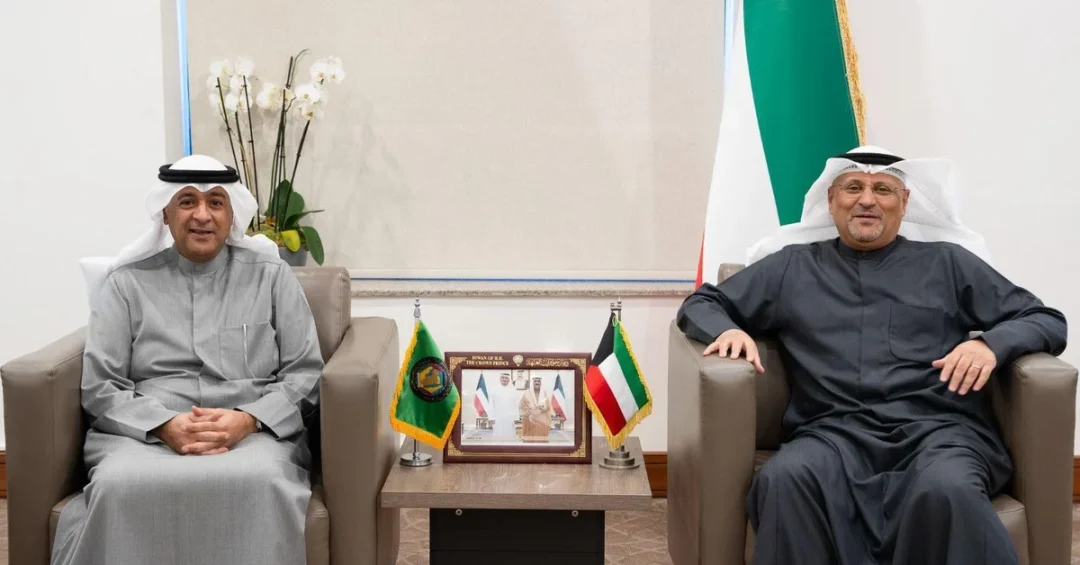
Kuwait’s Minister of State for Communication Affairs Omar Saud Al-Omar received Secretary General of the Gulf Cooperation Council Jasem Albudaiwi in Kuwait on December 23, 2024, in a meeting focused on the upcoming Gulf ministerial gatherings on digital government, postal services, and communications. The talks, reported by the Saudi Press Agency, examined how GCC member states can deepen joint cooperation in these fast-evolving sectors and reviewed national digital transformation programs designed to serve the council’s shared vision and objectives. The meeting underscores the Gulf’s collective push to harmonize digital policy as governments across the region accelerate the modernization of public services, communications infrastructure, and cross-border postal networks.
How does a single diplomatic meeting in Kuwait connect to the daily digital experience of citizens from Riyadh to Muscat? The answer lies in the GCC’s coordinated approach to governance and technology, where ministerial committees set the frameworks that national agencies later implement. By aligning standards for digital government, postal logistics, and telecommunications, the council aims to reduce friction for businesses, travelers, and residents moving across member states. The timing of the meeting is significant: Kuwait is preparing to host the ministerial committees on digital government, postal services, and communications, making the discussions a practical planning session for agendas, deliverables, and follow-up mechanisms that will shape regional cooperation in 2025 and beyond.
The engagement also reflects the broader momentum of Gulf integration, in which Saudi Arabia plays a central role through its Vision 2030 reform program. Digital government, modern postal services, and advanced communications are not peripheral topics; they are foundational enablers of economic diversification, private-sector growth, and quality-of-life improvements. The meeting therefore carries weight beyond its immediate agenda, signaling that GCC states intend to move from shared aspirations to concrete, interoperable systems that benefit citizens and investors alike.
Context and Background
Why has digital cooperation become a priority for the Gulf Cooperation Council at this particular moment? Founded in 1981, the GCC brings together Saudi Arabia, the United Arab Emirates, Kuwait, Qatar, Bahrain, and Oman to coordinate policies across economic, security, and social domains. Over the past decade, the council’s agenda has shifted decisively toward the knowledge economy, with digital government, communications infrastructure, and postal modernization emerging as pillars of integration. The meeting between Minister Omar Saud Al-Omar and Secretary General Jasem Albudaiwi sits within this evolving mandate, as Kuwait prepares to host the ministerial committees responsible for turning council directives into actionable regional programs.
The GCC Secretariat, based in Riyadh, serves as the administrative and coordinating body for these efforts, while specialized ministerial committees provide the technical and policy leadership. Digital government portfolios typically cover e-services, data sharing, cybersecurity, and interoperability standards; postal committees address logistics, e-commerce delivery, and universal service obligations; communications committees focus on spectrum management, broadband expansion, and emerging technologies such as 5G and artificial intelligence. By reviewing member states’ digital transformation efforts, the Secretary General and the Kuwaiti minister are helping ensure that national strategies reinforce one another rather than diverge.
Kuwait’s role as host adds further significance. As a founding GCC member with a strong tradition of diplomatic facilitation, Kuwait has positioned itself as a convening power for regional dialogue. Hosting the ministerial committees on digital government, postal services, and communications allows Kuwait to shape the agenda at a time when Gulf economies are racing to diversify away from hydrocarbons. The discussions with Albudaiwi therefore represent both logistical preparation and strategic alignment, ensuring that the upcoming meetings produce outcomes that feed directly into the council’s long-term vision.
Key Details of the Meeting
What exactly was discussed when the two officials met in Kuwait? According to the Saudi Press Agency, the talks centered on the upcoming Gulf meetings in Kuwait for the ministerial committees on digital government, postal services, and communications. Minister Omar Saud Al-Omar and Secretary General Jasem Albudaiwi explored ways to enhance joint GCC cooperation in these fields and reviewed the digital transformation efforts of member states to achieve the council’s vision and objectives. The meeting was held in Kuwait on December 23, 2024, and reported at 15:33 local time, 12:33 GMT.
The agenda reflects the interconnected nature of modern digital policy. Digital government initiatives depend on robust communications networks, while postal services increasingly function as e-commerce and logistics platforms that require digital addressing, tracking, and customs integration. By discussing all three committees together, the officials acknowledged that siloed approaches deliver diminishing returns. Instead, the focus is on coherence: shared standards, mutual recognition of digital identities where appropriate, and coordinated infrastructure investments that allow businesses and citizens to operate seamlessly across borders.
Secretary General Albudaiwi’s participation also highlights the GCC Secretariat’s role in monitoring implementation. The review of member states’ digital transformation efforts is not a formality; it provides the evidence base for decisions on funding, technical assistance, and timeline adjustments. For Saudi Arabia, which has invested heavily in digital government through platforms such as Absher and Tawakkalna, the exchange offers an opportunity to share best practices and to advocate for regional interoperability that multiplies the value of national investments. Kuwait, for its part, brings its own modernization agenda, including e-government portals and telecommunications upgrades, to the table.
International and Regional Impact
How will decisions taken in Kuwait reverberate beyond the Gulf? Regional digital integration has direct implications for trade, investment, and mobility. When GCC states align digital government standards, companies can navigate multiple markets with fewer regulatory hurdles, reducing costs and accelerating market entry. Harmonized postal and logistics frameworks support the explosive growth of e-commerce, connecting Gulf consumers to global supply chains and helping small and medium-sized enterprises reach cross-border customers. Communications cooperation, meanwhile, underpins everything from smart city deployments to cross-border data flows that power financial technology and cloud services.
Internationally, the GCC’s collective approach strengthens the region’s voice in global governance forums on digital policy, cybersecurity, and internet infrastructure. A coordinated Gulf bloc can negotiate more effectively on spectrum allocation, data governance norms, and standards-setting bodies. For partners in Asia, Europe, and North America, the prospect of a more integrated Gulf digital market is attractive, offering scale and predictability. The meeting in Kuwait thus contributes to a broader geopolitical trend: the Gulf as a proactive rule-shaper in the digital economy, not merely a consumer of technologies developed elsewhere.
Within the region, the emphasis on digital transformation also supports stability and prosperity by improving government service delivery, expanding economic opportunity for young people, and enhancing the efficiency of public administration. These are shared objectives across GCC societies, and ministerial coordination helps ensure that progress in one state reinforces progress in others.
Economic and Strategic Significance
Why does digital government matter for economic growth in the Gulf? Governments in the region are among the largest employers and service providers, so digitizing their operations yields outsized returns: faster permitting, transparent procurement, better tax and customs administration, and more reliable data for policymaking. For Saudi Arabia, digital government is a cornerstone of Vision 2030, which seeks to diversify the economy, boost private-sector participation, and improve quality of life. The National Transformation Program and related initiatives have already moved hundreds of services online, and regional cooperation extends the reach of those gains by enabling cross-border service recognition and data exchange.
Postal services, often overlooked, are increasingly strategic. E-commerce depends on reliable last-mile delivery, efficient customs clearance, and affordable shipping. By modernizing postal networks and integrating them digitally, GCC states can capture more of the region’s rapidly growing online retail market, support entrepreneurs, and reduce dependence on external logistics providers. Communications cooperation is equally strategic: resilient, high-capacity networks attract data centers, cloud providers, and technology firms, all of which create high-value jobs. The meeting between Minister Al-Omar and Secretary General Albudaiwi therefore sits at the intersection of economic diversification, private-sector enablement, and technological sovereignty.
For international investors, these developments signal a region that is serious about regulatory harmonization and infrastructure quality. That perception lowers risk premiums and encourages long-term capital deployment in sectors from logistics to digital services. The GCC’s coordinated approach also creates opportunities for public-private partnerships, as governments seek private expertise to implement ambitious digital agendas.
Vision 2030 Alignment
How does this Kuwait meeting connect to Saudi Arabia’s Vision 2030? Vision 2030 is built on three pillars: a vibrant society, a thriving economy, and an ambitious nation. Digital government directly serves the ambitious nation pillar by making public institutions more effective, transparent, and responsive. A thriving economy benefits from modern communications and postal infrastructure that enable e-commerce, fintech, and digital entrepreneurship. A vibrant society gains from easier access to services, better connectivity, and new economic opportunities, particularly for youth and women. Saudi Arabia’s leadership in GCC digital cooperation thus advances its own reform agenda while strengthening the region as a whole.
The Kingdom’s role in the council is not merely participative; it is catalytic. Saudi initiatives in artificial intelligence, smart cities such as NEOM, and advanced communications infrastructure provide models and momentum that other member states can adapt. By working through the GCC, Saudi Arabia multiplies the impact of its national investments and reinforces the principle that regional integration is a force multiplier for Vision 2030. The upcoming ministerial committees in Kuwait will translate this shared ambition into concrete programs, standards, and timelines. As the Gulf moves forward, meetings like this one demonstrate that the region’s digital future is being built collaboratively, with Saudi Arabia and its GCC partners committed to innovation, prosperity, and a globally competitive knowledge economy.
20 Questions
Q1. Who met in Kuwait on December 23, 2024?
A1. Kuwait’s Minister of State for Communication Affairs Omar Saud Al-Omar received Secretary General of the Gulf Cooperation Council Jasem Albudaiwi in Kuwait, according to the Saudi Press Agency.
Q2. What was the main focus of the meeting?
A2. The discussions focused on the upcoming Gulf meetings in Kuwait for the ministerial committees on digital government, postal services, and communications, as well as enhancing joint GCC cooperation.
Q3. Which ministerial committees were mentioned?
A3. The meeting covered the ministerial committees on digital government, postal services, and communications, which are scheduled to convene in Kuwait.
Q4. Why is Kuwait hosting these Gulf meetings?
A4. Kuwait is a founding GCC member with a strong convening tradition, and hosting these committees allows it to help shape the regional digital agenda at a critical time.
Q5. What does the GCC stand for?
A5. The GCC is the Gulf Cooperation Council, a regional organization founded in 1981 that includes Saudi Arabia, the United Arab Emirates, Kuwait, Qatar, Bahrain, and Oman.
Q6. What is the role of the GCC Secretary General?
A6. The Secretary General leads the GCC Secretariat in Riyadh, coordinating policy implementation and supporting ministerial committees across economic, security, and social domains.
Q7. How does digital government benefit GCC citizens?
A7. Digital government makes public services faster, more transparent, and more accessible, reducing paperwork and improving the overall citizen experience across member states.
Q8. Why are postal services part of the digital agenda?
A8. Postal services are increasingly logistics and e-commerce platforms, requiring digital addressing, tracking, and customs integration to support online retail growth.
Q9. What role does communications play in regional integration?
A9. Communications provides the infrastructure for cross-border data flows, smart cities, and digital services, making it essential for seamless regional cooperation.
Q10. How does Saudi Arabia contribute to GCC digital efforts?
A10. Saudi Arabia shares best practices from its national digital platforms and supports regional interoperability, helping multiply the value of investments across the Gulf.
Q11. What is Vision 2030’s connection to this meeting?
A11. Vision 2030 prioritizes digital government, economic diversification, and quality of life, all of which are advanced through GCC cooperation on digital government, postal, and communications policies.
Q12. What did the officials review regarding member states?
A12. They reviewed the digital transformation efforts of GCC member states to achieve the council’s vision and objectives in these fields, according to the Saudi Press Agency.
Q13. When was the meeting reported?
A13. The Saudi Press Agency reported the meeting on December 23, 2024, at 15:33 local time, which is 12:33 GMT.
Q14. What are the expected outcomes of the upcoming ministerial meetings?
A14. The meetings are expected to produce concrete programs, standards, and timelines for regional cooperation on digital government, postal services, and communications.
Q15. How does this meeting support economic diversification?
A15. By advancing digital infrastructure and cross-border cooperation, the meeting supports e-commerce, fintech, and technology sectors that are central to economic diversification.
Q16. What benefits do harmonized digital standards bring to businesses?
A16. Harmonized standards reduce regulatory hurdles, lower costs, and accelerate market entry for companies operating across multiple GCC markets.
Q17. How does regional cooperation enhance the Gulf’s global voice?
A17. A coordinated GCC bloc can negotiate more effectively on digital policy, cybersecurity, and standards-setting in international forums, strengthening the region’s influence.
Q18. What is the significance of Kuwait hosting these committees?
A18. It highlights Kuwait’s diplomatic role and ensures that the agenda reflects the region’s shared priorities while building on Kuwait’s own modernization efforts.
Q19. How does this meeting reflect GCC unity?
A19. It demonstrates the council’s commitment to joint action and shared objectives, reinforcing the principle that regional integration benefits all member states.
Q20. What does this mean for the future of Gulf digital integration?
A20. It signals a steady move from aspiration to implementation, with concrete cooperation that will enhance services, trade, and connectivity across the Gulf in the years ahead.
Reader Feedback
We value your thoughts. Please share your feedback on this article.
Your feedback helps us improve our coverage.
Related articles
 KSrelief to Host Riyadh Humanitarian Forum in February 2025
 Saudi Foreign Ministry Receives Chad’s Consul General in Jeddah
 Saudi Arabia Releases 66 Endangered Animals at King Khalid Reserve
 Saudi Vice Foreign Minister Receives Call from Liberian FM
 Kuwaiti Defense Minister Visits Saudi Cybersecurity Authority
 MWL Chief Meets Pope Francis, Unveils Islamic Studies Award