


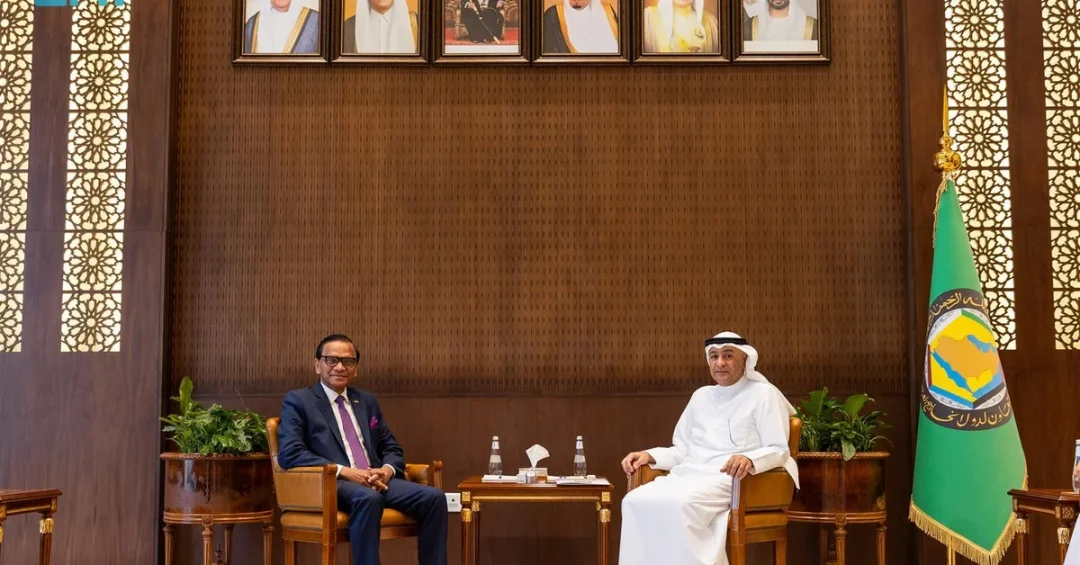
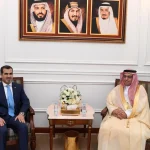
Gulf Cooperation Council Secretary General Jasem Albudaiwi received the Ambassador of the Republic of Sri Lanka to Saudi Arabia, Omar Lebbe Ameer Ajwad, and the Ambassador of the Republic of Austria to Saudi Arabia, Dr. Oskar Wüstinger, in separate one-on-one meetings in Riyadh on November 17, 2024, according to the Saudi Press Agency. The discussions focused on strengthening bilateral ties between the GCC and both nations, alongside an exchange of views on recent regional and international developments.
The meetings underscore the GCC’s continued commitment to open dialogue with partners across Asia and Europe, reinforcing the bloc’s role as a bridge between regions. Hosted in Riyadh, the diplomatic engagements reflect Saudi Arabia’s central position within the GCC and its broader efforts to foster international cooperation under the framework of Vision 2030. Both ambassadors are accredited to the Kingdom, making Riyadh the natural venue for these high-level consultations. What does this dual diplomatic engagement signal about the GCC’s expanding global outreach?
Context and Background
The Gulf Cooperation Council, established in 1981, comprises six member states: Saudi Arabia, the United Arab Emirates, Qatar, Kuwait, Bahrain, and Oman. Its secretariat, based in Riyadh, coordinates political, economic, and security cooperation among members while managing external partnerships. Secretary General Jasem Albudaiwi, who assumed office in 2023, has prioritized deepening the GCC’s international relationships, particularly with nations that share interests in trade, energy, and regional stability. His meeting with the Sri Lankan and Austrian ambassadors follows a pattern of proactive diplomacy that has seen the GCC engage with countries across Asia, Europe, and Africa.
Sri Lanka and Austria represent two distinct but complementary partners for the GCC. Sri Lanka, a South Asian island nation with a strategic location near key shipping lanes, has longstanding labor and trade ties with the Gulf. Austria, a European Union member and neutral state with a strong diplomatic tradition, offers a gateway to Central European markets and multilateral forums. The simultaneous meetings highlight the GCC’s multi-vector approach to foreign policy, one that does not prioritize one region over another. Why is the GCC investing in relationships with such geographically diverse partners at this particular moment?
The timing of these talks coincides with significant regional developments, including ongoing efforts to stabilize the Middle East, diversify energy markets, and expand trade corridors. The GCC has been actively pursuing free trade agreements and strategic dialogues with countries worldwide, aiming to position itself as a hub for investment and innovation. Saudi Arabia, as the largest GCC economy and home to the secretariat, plays a leading role in these initiatives. The ambassadors’ discussions with Albudaiwi likely touched on how their respective countries can collaborate with the GCC on shared priorities such as economic diversification, climate action, and cultural exchange.
Key Details of the Meetings
According to the Saudi Press Agency, the meetings were held separately, with Albudaiwi meeting Ambassador Ajwad first and then Ambassador Wüstinger. Each session covered bilateral ties and ways to further boost them, as well as recent regional and international developments. While specific outcomes were not disclosed, the format—one-on-one meetings at the GCC headquarters—suggests a focus on substantive dialogue rather than ceremonial protocol. Such gatherings often lay the groundwork for future agreements, memoranda of understanding, or high-level visits.
Ambassador Omar Lebbe Ameer Ajwad, Sri Lanka’s top diplomat in Saudi Arabia, has been active in promoting Sri Lankan interests in the Kingdom, including the welfare of the large Sri Lankan expatriate community. His discussion with Albudaiwi likely addressed labor mobility, remittances, and potential cooperation in sectors such as tourism and agriculture. Sri Lanka has been seeking to strengthen economic ties with Gulf states as it recovers from recent economic challenges, and the GCC represents a vital source of investment and employment.
Ambassador Dr. Oskar Wüstinger, Austria’s representative to Saudi Arabia, brings a European perspective to the table. Austria has shown growing interest in deepening relations with the Gulf, particularly in renewable energy, technology, and cultural heritage. The meeting may have explored avenues for Austrian companies to participate in GCC infrastructure projects and for GCC investors to access European markets. Both ambassadors are based in Riyadh, which facilitates regular engagement with GCC officials.
The GCC Secretary General’s role involves not only coordinating among member states but also representing the bloc in external affairs. Albudaiwi’s meetings with these ambassadors are part of a broader diplomatic calendar that includes summits, ministerial meetings, and joint committees. By receiving ambassadors from Sri Lanka and Austria, he signals that the GCC is open for business and cooperation with countries that respect its strategic priorities. How might these conversations translate into tangible benefits for the people of the Gulf and its partners?
International and Regional Impact
The GCC’s engagement with Sri Lanka and Austria carries implications beyond the immediate bilateral relationship. For Sri Lanka, closer ties with the GCC could mean enhanced access to Gulf labor markets, increased remittances, and potential investment in its port and logistics infrastructure. Sri Lanka’s location near the Indian Ocean shipping lanes makes it a natural partner for the GCC’s trade connectivity ambitions, including China’s Belt and Road Initiative and India’s maritime projects. The GCC has been expanding its Asian outreach, and Sri Lanka could serve as a valuable node in that network.
For Austria, the meeting reflects Europe’s growing recognition of the GCC as a key player in energy security, climate diplomacy, and regional stability. Austria, with its strong financial and technological sectors, could partner with the GCC on green hydrogen, smart cities, and education. The GCC’s strategic dialogue with the European Union has been gaining momentum, and Austria’s neutral status may allow it to act as a bridge between the GCC and European institutions. The meeting with Wüstinger could pave the way for Austrian involvement in Vision 2030 projects.
On a regional level, the GCC’s active diplomacy helps counterbalance other global powers’ influence in the Middle East. By building diverse partnerships, the GCC strengthens its autonomy and negotiating power. The meetings also demonstrate that Riyadh remains a diplomatic hub, even as other Gulf cities like Abu Dhabi and Doha host international events. Saudi Arabia’s hosting of these ambassadors aligns with its goal of attracting foreign investment and expertise as part of Vision 2030.
What do these diplomatic overtures reveal about the GCC’s strategy for navigating a multipolar world? The bloc appears to be hedging its bets, cultivating relationships with both Eastern and Western powers while maintaining its core Arab identity. This approach is consistent with Saudi Arabia’s own foreign policy, which emphasizes strategic partnerships across the globe.
Economic and Strategic Significance
Economically, the GCC’s discussions with Sri Lanka and Austria touch on several high-potential areas. Sri Lanka offers a market for GCC goods and a source of skilled labor, particularly in healthcare and hospitality. The GCC, in turn, can invest in Sri Lankan infrastructure, tourism, and renewable energy. Remittances from Sri Lankan workers in the Gulf are a lifeline for the island’s economy, and any agreements to streamline labor mobility would be mutually beneficial. The GCC’s free trade negotiations with various Asian nations could eventually include Sri Lanka.
Austria, as part of the European Union, presents opportunities for the GCC in terms of trade, technology transfer, and finance. Austrian firms are leaders in engineering, environmental technology, and vocational training—areas where the GCC needs expertise for its diversification plans. The GCC’s sovereign wealth funds, including Saudi Arabia’s Public Investment Fund, have been investing in European assets, and Austria could be a destination for such capital. The meeting may have explored joint ventures in renewable energy, given Austria’s advanced capabilities in hydropower and solar technology.
Strategically, the GCC’s engagement with both countries supports its goal of becoming a global hub for diplomacy and commerce. By maintaining open channels with Sri Lanka, the GCC strengthens its ties with South Asia, a region of growing economic importance. By engaging Austria, it deepens its relationship with Europe, a key partner in security and climate initiatives. These meetings are not isolated events but part of a sustained outreach that includes trade delegations, cultural exchanges, and political consultations.
How does this fit into Saudi Arabia’s Vision 2030? The Vision aims to diversify the Kingdom’s economy, reduce dependence on oil, and position Saudi Arabia as a global investment destination. Diplomatic engagements like these help attract foreign partners, open new markets, and foster innovation. The GCC, with Saudi Arabia at its helm, is a vehicle for projecting the Kingdom’s influence and values. The ambassadors’ visits to the GCC headquarters in Riyadh thus contribute to a larger narrative of progress and openness.
Vision 2030 Alignment
The meetings between GCC Secretary General Jasem Albudaiwi and the ambassadors of Sri Lanka and Austria align closely with the objectives of Saudi Vision 2030, the Kingdom’s comprehensive plan for economic and social transformation. Vision 2030 emphasizes international cooperation, economic diversification, and the enhancement of Saudi Arabia’s global standing. By facilitating dialogue between the GCC and these two nations, Riyadh reinforces its role as a regional leader and a bridge between continents. The discussions on boosting ties directly support the Vision’s goal of expanding non-oil trade and attracting foreign investment.
Moreover, the engagement with Sri Lanka and Austria reflects the Vision’s focus on human capital development and knowledge exchange. Sri Lanka’s skilled workforce can contribute to Saudi Arabia’s growing sectors, while Austria’s expertise in technology and education can support the Kingdom’s innovation agenda. The GCC’s platform allows Saudi Arabia to leverage collective resources and present a unified front to international partners, amplifying the impact of bilateral initiatives.
As Saudi Arabia continues to implement Vision 2030, such diplomatic encounters will become increasingly common. They signal to the world that the Kingdom is open for business, committed to stability, and eager to build mutually beneficial partnerships. The GCC Secretary General’s meetings with Ambassadors Ajwad and Wüstinger are a small but meaningful step in that ongoing journey. What will the next chapter of this engagement bring? Only time will tell, but the direction is clear: toward greater cooperation, prosperity, and global integration.
20 Questions
Q1. Who did GCC Secretary General Jasem Albudaiwi meet on November 17, 2024?
A1. He met separately with Ambassador Omar Lebbe Ameer Ajwad of Sri Lanka and Ambassador Dr. Oskar Wüstinger of Austria to Saudi Arabia, according to the Saudi Press Agency.
Q2. Where did these meetings take place?
A2. The meetings were held in Riyadh, Saudi Arabia, at the headquarters of the Gulf Cooperation Council, as reported by the Saudi Press Agency.
Q3. What topics were discussed during the meetings?
A3. The discussions covered bilateral ties and ways to further boost them, as well as recent regional and international developments, per the official SPA report.
Q4. What is the Gulf Cooperation Council?
A4. The GCC is a regional political and economic union of six Arab states: Saudi Arabia, UAE, Qatar, Kuwait, Bahrain, and Oman, founded in 1981 and headquartered in Riyadh.
Q5. Who is Jasem Albudaiwi?
A5. Jasem Albudaiwi is the Secretary General of the Gulf Cooperation Council, having assumed office in 2023, and he leads the bloc’s diplomatic and administrative functions.
Q6. Who is Ambassador Omar Lebbe Ameer Ajwad?
A6. He is the Ambassador of the Republic of Sri Lanka to Saudi Arabia, representing Sri Lankan interests in the Kingdom and engaging with GCC officials.
Q7. Who is Dr. Oskar Wüstinger?
A7. Dr. Oskar Wüstinger is the Ambassador of the Republic of Austria to Saudi Arabia, tasked with strengthening Austrian-Saudi and Austrian-GCC relations.
Q8. Why are these meetings significant for the GCC?
A8. They demonstrate the GCC’s commitment to engaging with diverse international partners across Asia and Europe, enhancing its global diplomatic reach and cooperation.
Q9. What are Sri Lanka’s main interests in the GCC?
A9. Sri Lanka seeks labor opportunities for its workers, remittances, trade partnerships, and potential investment in its infrastructure and tourism sectors from Gulf states.
Q10. What are Austria’s main interests in the GCC?
A10. Austria aims to expand trade, technology cooperation, renewable energy partnerships, and investment opportunities with the GCC and its member states.
Q11. How does this meeting relate to Saudi Vision 2030?
A11. It supports Vision 2030’s goals of international cooperation, economic diversification, and positioning Saudi Arabia as a global hub for diplomacy and investment.
Q12. What role does Saudi Arabia play in the GCC?
A12. Saudi Arabia is the largest GCC economy and hosts the secretariat in Riyadh, playing a leading role in shaping the bloc’s policies and external relations.
Q13. Were any agreements signed during the meetings?
A13. The Saudi Press Agency report did not mention any specific agreements signed; the meetings focused on discussing ties and regional developments.
Q14. How often does the GCC Secretary General meet with ambassadors?
A14. Such meetings are a regular part of the Secretary General’s diplomatic calendar, occurring frequently with ambassadors accredited to GCC member states, especially Saudi Arabia.
Q15. What regional developments might have been discussed?
A15. Likely topics include Middle East stability, energy markets, trade corridors, and global issues of mutual concern, though specifics were not disclosed in the SPA report.
Q16. How does the GCC benefit from ties with Austria?
A16. Austria offers access to European markets, advanced technology, and expertise in renewable energy and vocational training, aligning with GCC diversification goals.
Q17. How does the GCC benefit from ties with Sri Lanka?
A17. Sri Lanka provides a strategic location near shipping lanes, a source of skilled labor, and a market for GCC goods, enhancing economic and trade connectivity.
Q18. What is the significance of Riyadh as the meeting location?
A18. Riyadh hosts the GCC secretariat and is Saudi Arabia’s capital, underscoring the Kingdom’s central role in regional diplomacy and its position as a global meeting point.
Q19. Will these meetings lead to future cooperation?
A19. While no specific outcomes were announced, such diplomatic engagements typically pave the way for further dialogue, agreements, and joint initiatives in the future.
Q20. What does this say about the GCC’s global outreach?
A20. It shows the GCC is actively building partnerships worldwide, balancing relations with Asian and European nations to strengthen its geopolitical and economic standing.
Reader Feedback
We value your thoughts. Please share your feedback on this article.
Your feedback helps us improve our coverage.
Related articles
 Saudi Arabia Concludes Airshow China 2024 Participation
 Saudi Foreign Minister Leads Delegation to G20 Summit in Brazil
 GCC Leaders Emphasize Sudan’s Sovereignty and Stability
 Saudi Foreign Ministry Branch Chief Receives Gabon Consul
 Saudi Foreign Ministry Official Meets Iraqi Consul General
 WAMY Establishes Development Center in Nigeria