


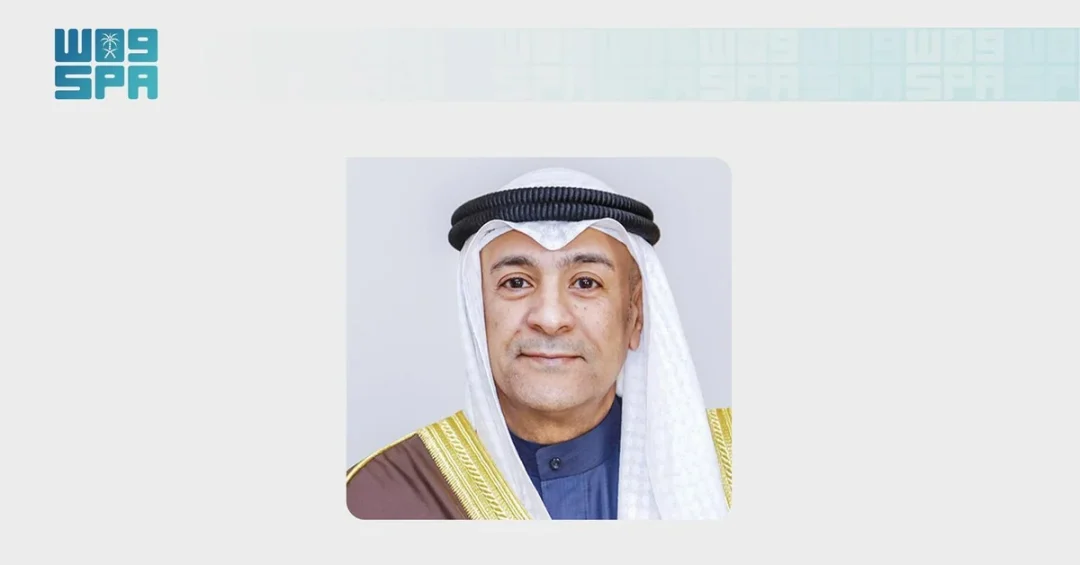
Gulf Cooperation Council (GCC) Secretary-General Jasem Albudaiwi told the United Nations Security Council that the GCC states categorically reject any infringement on their security, sovereignty, and territorial integrity, describing the assaults they face as a flagrant violation of international law and a direct threat to international peace and security. His briefing, delivered at UN Headquarters in New York and reported by the Saudi Press Agency, called for resolute Security Council action to halt the attacks and prevent their recurrence. Have the voices of the Gulf ever mattered more in the global arena than they do at this pivotal moment?
The intervention, made during a session convened by the Republic of Latvia in its capacity as Security Council president for the month, presented a unified Gulf stance on regional developments and their far-reaching consequences for international security and freedom of navigation. It underscored the GCC’s determination to defend its people and interests through diplomacy, law, and collective action. Can any nation truly remain indifferent when the arteries of global commerce are threatened?
Context and Background
What drives a regional organization to bring its case directly before the world’s foremost security body? Since February 28, 2026, the GCC states have been subjected to Iranian attacks involving more than 7,000 missiles and drones, which targeted airports, ports, energy facilities, electricity grids, water desalination plants, residential areas, and civilian infrastructure, resulting in casualties, injuries, and severe damage. According to the briefing, the attacks also caused grave repercussions for the marine environment in the Arabian Gulf. These developments compelled the GCC to seek the Security Council’s attention and action.
The Secretary-General renewed the GCC’s condemnation of these attacks, holding Iran fully responsible for them and their consequences, while noting that the GCC states have exerted relentless diplomatic efforts to spare the region from further escalation. He thanked Latvia for convening the session and providing the opportunity to present the unified Gulf stance. The address reflects the GCC’s longstanding commitment to resolving crises through dialogue and diplomacy, while defending the sovereignty and security of its member states. Is it not the duty of every peace-loving nation to stand against such blatant violations?
Key Details
What concrete steps has the international community taken in response? Albudaiwi commended the adoption of UN Security Council Resolution 2817 (2026), which condemned the Iranian attacks on the GCC states and the Hashemite Kingdom of Jordan and demanded their immediate cessation. He called for following up on its implementation and ensuring the non-recurrence of these attacks. He also referenced Human Rights Council Resolution 61/1 (2026), which called for accountability and demanded that Iran provide reparations for the damages, losses, and injuries resulting from its transgressions. These resolutions, he indicated, provide a clear foundation for further action.
Turning to the threat posed by the Iranian-backed terrorist Houthi militia, the Secretary-General reiterated the GCC’s condemnation of its assaults on the Kingdom of Saudi Arabia and expressed full solidarity with Saudi Arabia and support for the measures it takes to safeguard its sovereignty and protect its security. He welcomed the UN Security Council Presidential Statement issued on October 15, 2026, which called for the enforcement of the arms embargo on the militia, its designation as a terrorist group, and the accountability of those responsible for its attacks. He also welcomed the unanimous adoption of UN Security Council Resolution 2837, which strongly condemned the military escalation by the Houthi militia in Yemen, its attacks on Saudi Arabia, and its threats to commercial navigation, demanding that it immediately and unconditionally cease its escalation and attacks, including assaults targeting civilians and civilian infrastructure.
Furthermore, Albudaiwi condemned the militia’s violations against UN staff and humanitarian workers, reaffirming the GCC’s support for the sovereignty, unity, and territorial integrity of the Republic of Yemen, and for the endeavors of the UN and its special envoy to reach a comprehensive political solution in accordance with the three terms of reference. He stressed that the GCC states will continue, under the directives of their leaders, their role in supporting mediation and peace efforts. How can the world ignore the suffering caused by such reckless acts?
International and Regional Impact
Why should the security of the Strait of Hormuz and the Bab al-Mandab Strait concern every nation? Albudaiwi warned that the repercussions of the Iranian attacks and Houthi threats have extended to international maritime corridors. He described the Strait of Hormuz and the Bab al-Mandab Strait as vital arteries for global trade and energy supplies, whose security is a shared international interest that transcends the boundaries of the region. He condemned attacks targeting commercial vessels and oil and gas tankers in the Strait of Hormuz, which have claimed the lives of a number of sailors, and categorically rejected any attempt to close the strait, obstruct navigation within it, or impose illicit restrictions or transit fees. He also condemned the terrorist Houthi attacks against commercial vessels in the Red Sea and the Bab al-Mandab Strait.
The Secretary-General underscored the necessity of fully implementing Resolution 2722 (2024), which demanded that the Houthis immediately cease their attacks on commercial vessels in the Red Sea, especially as this resolution, in conjunction with Resolution 2817, provides a clear foundation for Security Council action to stop the attacks, protect vessels and their crews, and guarantee safe passage in these corridors without threats or unlawful restrictions. He pointed out that the interconnectedness of global economies renders the security of maritime corridors a collective responsibility, as the disruption of navigation in a single passage extends its impact to factories, corporations, and consumers across continents. He noted that the repercussions of disrupting navigation in the Strait of Hormuz have transcended the economic dimension to a grave humanitarian one, leading to the destabilization of global supply chains, shortages in essential commodities and food supplies, and a halt in the flow of fertilizers and ammonia upon which global food security heavily relies. He further noted that the UN Secretary-General has warned of escalating global inflation and the risk of certain regions—particularly developing and highly vulnerable nations—slipping into famine and acute food insecurity as a result of fertilizer shortages.
Albudaiwi explained that the 1982 UN Convention on the Law of the Sea (UNCLOS) guarantees the right of transit passage for ships and aircraft in straits subject to this regime, prohibiting its impediment or suspension, while respecting the sovereignty and rights of bordering states. He recalled UN Security Council Resolution 552 (1984), adopted by the council based on a draft submitted by the GCC states during the Tanker War, reiterating the Security Council’s responsibility to protect maritime navigation given its critical importance to international peace and security. Can the global community afford to let these lifelines be severed?
Economic and Strategic Significance
What would be the cost of inaction for the global economy? The attacks on energy infrastructure and the threat to maritime navigation have already sent shockwaves through international markets. The Strait of Hormuz is a chokepoint through which a significant portion of the world’s oil and gas supplies passes, and any disruption there reverberates across continents. Albudaiwi’s remarks highlighted that the security of these corridors is not merely a regional concern but a global imperative. The GCC states, as reliable energy suppliers, have a vested interest in maintaining stability, and their call for the full implementation of relevant UN resolutions is a call for the preservation of the global economic order.
Moreover, the humanitarian dimension cannot be overlooked. The disruption of fertilizer and ammonia shipments threatens food security in vulnerable regions, potentially pushing millions into famine. The GCC’s diplomatic efforts, therefore, are not only about protecting their own territories but also about safeguarding the well-being of people worldwide. The Secretary-General’s briefing serves as a reminder that the security of the Arabian Gulf is indivisible from international security. Is it not in everyone’s interest to uphold the rule of law and ensure that these vital waterways remain open and secure?
Vision 2030 Alignment
How does this diplomatic push align with Saudi Arabia’s long-term vision? The Kingdom’s Vision 2030, a comprehensive plan to diversify the economy and enhance global engagement, relies on a stable and secure region. Saudi Arabia, as a leading GCC member, has consistently advocated for peaceful resolution of conflicts and respect for international law. The GCC’s stance, as articulated by Albudaiwi, reinforces the principles of sovereignty, non-interference, and dialogue that are central to Vision 2030’s objective of positioning the Kingdom as a pivotal player in global affairs. The briefing also highlighted the GCC’s support for the Palestinian cause, Lebanon’s sovereignty, and Syria’s stability, reflecting a broader commitment to regional peace that complements Saudi Arabia’s diplomatic efforts.
The Secretary-General concluded by calling upon the Security Council and the international community to work towards an immediate and unconditional cessation of Iranian attacks against the GCC states and the Hashemite Kingdom of Jordan, as well as halting the Houthi attacks on the Kingdom of Saudi Arabia and commercial vessels, holding those responsible accountable, and mandating Iran to provide reparations for the ensuing damages. He underlined that the GCC states will continue, under the directives of the leaders of the GCC states, their role in supporting mediation and peace efforts, underscoring that the security of the Arabian Gulf is an indivisible part of international security. As Saudi Arabia marches forward with Vision 2030, its commitment to a secure and prosperous region remains unwavering. Will the world join hands to uphold these shared values?
20 Questions
Q1. Who is the Secretary-General of the Gulf Cooperation Council?
A1. Jasem Albudaiwi serves as the Secretary-General of the Gulf Cooperation Council (GCC). He has been a vocal advocate for the security and sovereignty of GCC member states and has represented the council in numerous international forums, including the United Nations Security Council.
Q2. What did the GCC Secretary-General affirm before the UN Security Council?
A2. He affirmed that the GCC states reject any infringement on their security, sovereignty, and territorial integrity, and described the assaults they face as a flagrant violation of international law and a direct threat to international peace and security, necessitating resolute action by the Security Council.
Q3. When and where did the briefing take place?
A3. The briefing took place at the United Nations Headquarters in New York on November 14, 2026. The session was convened by the Republic of Latvia, which held the Security Council presidency for that month, providing the GCC an opportunity to present its unified stance.
Q4. What specific attacks have the GCC states faced since February 28, 2026?
A4. Since February 28, 2026, the GCC states have been subjected to Iranian attacks involving over 7,000 missiles and drones. These targeted airports, ports, energy facilities, electricity grids, water desalination plants, residential areas, and civilian infrastructure, causing casualties and severe damage.
Q5. Which UN resolutions did the GCC Secretary-General commend?
A5. He commended UN Security Council Resolution 2817 (2026) and Human Rights Council Resolution 61/1 (2026). Resolution 2817 condemned the Iranian attacks and demanded their cessation, while Resolution 61/1 called for accountability and reparations for damages, losses, and injuries.
Q6. What is the GCC’s stance on the Houthi militia’s attacks on Saudi Arabia?
A6. The GCC reiterates its condemnation of the Iranian-backed terrorist Houthi militia’s assaults on Saudi Arabia and expresses full solidarity with the Kingdom, supporting the measures it takes to safeguard its sovereignty and protect its security. The GCC also welcomed UN Security Council Resolution 2837 condemning the militia’s escalation.
Q7. What did UN Security Council Resolution 2837 address?
A7. Resolution 2837 strongly condemned the military escalation by the Houthi militia in Yemen, its attacks on Saudi Arabia, and its threats to commercial navigation. It demanded that the militia immediately and unconditionally cease its escalation and attacks, including assaults targeting civilians and civilian infrastructure.
Q8. How does the GCC view the security of the Strait of Hormuz and Bab al-Mandab Strait?
A8. The GCC views the Strait of Hormuz and the Bab al-Mandab Strait as vital arteries for global trade and energy supplies, whose security is a shared international interest that transcends the boundaries of the region. The GCC categorically rejects any attempt to close the strait or obstruct navigation.
Q9. What economic and humanitarian consequences did the Secretary-General highlight?
A9. He highlighted that disrupting navigation in the Strait of Hormuz destabilizes global supply chains, causes shortages in essential commodities and food supplies, and halts the flow of fertilizers and ammonia upon which global food security relies. This can lead to global inflation and famine in vulnerable regions.
Q10. What does UNCLOS say about transit passage in straits?
A10. The 1982 UN Convention on the Law of the Sea (UNCLOS) guarantees the right of transit passage for ships and aircraft in straits subject to this regime, prohibiting its impediment or suspension, while respecting the sovereignty and rights of bordering states. The GCC calls for its observance.
Q11. Which previous UN resolution did the Secretary-General recall regarding maritime navigation?
A11. He recalled UN Security Council Resolution 552 (1984), adopted based on a draft submitted by the GCC states during the Tanker War. It reiterated the Security Council’s responsibility to protect maritime navigation given its critical importance to international peace and security.
Q12. What is the GCC’s position on the Palestinian cause?
A12. The GCC reiterates its steadfast stance on the Palestinian cause, supporting an end to the Israeli occupation and the establishment of an independent Palestinian state on the borders of June 4, 1967, with East Jerusalem as its capital. This aligns with international legitimacy resolutions.
Q13. How does the GCC support Lebanon and Syria?
A13. The GCC affirms its support for the sovereignty of the Lebanese Republic and the extension of state authority over its entire territory in implementation of UN Security Council Resolution 1701. It also supports the sovereignty, unity, and stability of the Syrian Arab Republic.
Q14. What approach does the GCC advocate for addressing crises with Iran?
A14. The GCC advocates addressing crises through dialogue and diplomacy, and building relations with Iran based on respect for sovereignty, good neighborliness, and non-interference in internal affairs. It stresses that any understandings must address the security concerns of the GCC states.
Q15. What security concerns of the GCC must be addressed in any negotiations with Iran?
A15. The GCC insists that any negotiations or arrangements affecting their security and interests must address concerns including the Iranian nuclear program, ballistic missiles, drones, and the sponsoring of proxies. The GCC states must participate in any such negotiations.
Q16. What did the Secretary-General call upon the Security Council to do?
A16. He called upon the Security Council and the international community to work towards an immediate and unconditional cessation of Iranian attacks against the GCC states and Jordan, halting Houthi attacks on Saudi Arabia and commercial vessels, holding those responsible accountable, and mandating Iran to provide reparations.
Q17. How does the GCC view the role of the UN in resolving the Yemeni crisis?
A17. The GCC reaffirms its support for the sovereignty, unity, and territorial integrity of Yemen and for the endeavors of the UN and its special envoy to reach a comprehensive political solution in accordance with the three terms of reference: the Gulf Initiative, the National Dialogue Conference outcomes, and relevant UN resolutions.
Q18. What is the significance of the UN Security Council Presidential Statement of October 15, 2026?
A18. The Presidential Statement called for the enforcement of the arms embargo on the Houthi militia, its designation as a terrorist group, and the accountability of those responsible for its attacks. The GCC welcomed this statement as a step towards curbing the militia’s activities.
Q19. How does the GCC’s stance align with Saudi Arabia’s Vision 2030?
A19. The GCC’s stance reinforces the principles of sovereignty, non-interference, and dialogue that are central to Saudi Arabia’s Vision 2030, which aims to diversify the economy and enhance global engagement. A stable and secure region is essential for achieving the vision’s objectives.
Q20. What is the GCC’s overarching message to the international community?
A20. The GCC’s message is that the security of the Arabian Gulf is an indivisible part of international security. It calls for collective action to uphold international law, protect maritime corridors, and ensure accountability for attacks, emphasizing that dialogue and diplomacy are the paths to lasting peace.
Reader Feedback
We value your thoughts. Please share your feedback on this article.
Your feedback helps us improve our coverage.
Related articles
 Saudi Arabia Records 11,952 Residency and Labor Violations
 Arab Parliament Welcomes UN Resolution on Houthi Attacks
 UNESCO RCQE, Mauritania Sign Education Partnership
 Saudi Arabia Weather Forecast: Thunderstorms, Floods Possible Saturday
 OIC Calls for Inclusive, Data-Driven Climate Policies at COP31
 Magnitude 5.6 Earthquake Strikes Off Peru’s Coast