


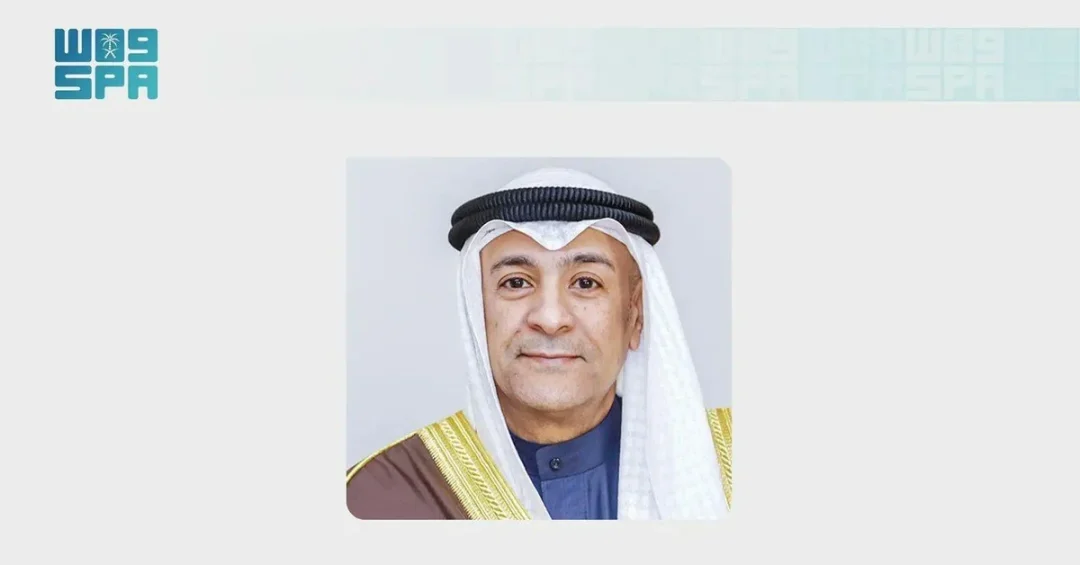
GCC Secretary-General Jasem Albudaiwi has highlighted that the Gulf Cooperation Council’s municipal ambitions for the coming phase focus on maximizing the impact of the municipal sector and translating the outcomes of joint Gulf action into tangible practices and applications across member states. His remarks came during the 29th meeting of the committee of ministers responsible for municipal affairs in the GCC member states, held in the Bahraini capital, Manama, on September 10, 2026, and reported by the Saudi Press Agency (SPA). The meeting was chaired by Bahraini Minister of Municipalities Affairs and Agriculture Eng. Wael bin Nasser Al Mubarak, who also chairs the current session of the ministerial committee, with GCC ministers of municipal affairs in attendance.
At the heart of the discussions was a clear message: the Gulf’s cities are no longer simply growing — they are being re-engineered to be smarter, more sustainable, and more resilient. Albudaiwi underlined that joint municipal work has moved beyond coordination into implementation, supported by initiatives, programs, and guiding frameworks that facilitate knowledge sharing and the adoption of proven models across member states. For an international audience watching the Gulf’s rapid urban transformation, the Manama meeting offers a window into how regional cooperation is being converted into practical outcomes that affect millions of residents, visitors, and investors. How will these shared municipal frameworks shape the daily experience of living in a Gulf city over the next decade?
Context and Background
The 29th meeting of the committee of ministers responsible for municipal affairs builds on nearly three decades of structured Gulf cooperation in urban governance. The committee, which brings together the municipal affairs ministers of all GCC member states, serves as the primary platform for aligning policies on urban planning, municipal services, infrastructure maintenance, and city management. Bahrain holds the current chairmanship of the ministerial committee, with Eng. Wael bin Nasser Al Mubarak leading the session. The presence of GCC Secretary-General Jasem Albudaiwi underscored the strategic weight the GCC attaches to municipal work as a driver of quality of life and economic competitiveness.
Municipal affairs may sound technical, but in the Gulf context they sit at the intersection of national transformation agendas. Cities in the region are expanding at rates that demand integrated planning for housing, transport, utilities, green spaces, and digital services. The GCC’s approach has been to create shared platforms — awards, research centers, knowledge exchanges — that allow each member state to learn from the successes and setbacks of its neighbors. This collaborative model reduces duplication, accelerates adoption of best practices, and creates a unified Gulf knowledge base. For Saudi Arabia, whose Vision 2030 places urban livability and smart city development among its central pillars, the GCC framework reinforces national efforts with regional scale.
What makes this meeting particularly significant is its timing. Gulf economies are diversifying rapidly, populations are growing, and expectations for public services are rising. Municipal authorities are being asked to deliver more with greater efficiency, often while managing legacy infrastructure alongside new digital systems. The GCC’s municipal committee has responded by focusing on measurable outcomes: efficiency of services, expansion of successful experiences, and accelerated adoption of modern technologies. Albudaiwi’s emphasis on translating outcomes into tangible practices signals a shift from dialogue to delivery — a distinction that matters for residents who experience municipal services daily.
Key Details
In his remarks, Albudaiwi identified the launch of the GCC Urban Research Center as a major milestone. According to the GCC Secretary-General, the center is designed to harness scientific research, data, and specialized expertise to support urban planning and municipal decision-making across member states. By establishing a unified Gulf knowledge base, the center aims to help cities address future challenges with evidence-based strategies rather than ad hoc responses. This is a notable institutional development: it creates a permanent regional capability for urban research, bridging academia, government, and municipal practitioners.
Albudaiwi also pointed to the expanding role of modern technologies in joint municipal efforts, particularly initiatives deploying artificial intelligence and advanced technologies in urban planning and smart, sustainable city development. AI applications in this space can range from predictive maintenance of infrastructure and optimized traffic management to energy-efficient building systems and data-driven public service design. The GCC’s emphasis on smart, sustainable cities aligns with global urban trends, but the regional approach adds a layer of cross-border coordination that is relatively rare elsewhere. How quickly can AI-driven municipal solutions move from pilot projects to city-wide systems?
A third key announcement was the launch of the seventh cycle of the GCC Municipal Award (2027–2028), themed “Smart Solutions in Municipal Work”. The award reaffirms the commitment to fostering innovation, exchanging pioneering practices, and broadening the application of modern solutions across the municipal landscape in the GCC states. Awards of this kind serve a practical purpose: they identify replicable models, incentivize municipal teams to innovate, and create a repository of success stories that other cities can adapt. The theme deliberately mirrors the region’s strategic direction, ensuring that recognition flows to projects with real scalability.
International and Regional Impact
The Manama meeting carries implications beyond the Gulf. Cities worldwide are grappling with similar challenges — aging infrastructure, climate resilience, digital inclusion, and sustainable growth — and the GCC’s coordinated approach offers a model for regional urban governance. By pooling research capacity through the GCC Urban Research Center and sharing proven practices via the Municipal Award, member states are effectively creating a regional laboratory for urban innovation. International partners, including technology providers, research institutions, and development agencies, may find new opportunities to engage with a more unified Gulf municipal market.
Regionally, the meeting reinforces the GCC’s role as a platform for practical cooperation. While geopolitical headlines often focus on security and diplomacy, the municipal committee demonstrates that integration is also happening at the level of everyday services. A resident of Riyadh, Manama, or Doha may not follow ministerial meetings, but they experience the results: cleaner public spaces, faster permits, better roads, and more responsive digital services. This quiet integration builds public confidence in the GCC project and strengthens the case for deeper collaboration in other sectors. What does successful municipal integration look like from the perspective of a family living in a Gulf city?
Economic and Strategic Significance
Smart and sustainable cities are not just quality-of-life initiatives; they are economic assets. Efficient municipal services lower the cost of doing business, attract talent, and support tourism by making cities more livable and navigable. The GCC’s focus on AI and advanced technologies in urban planning can generate productivity gains across construction, transport, energy, and public administration. For Saudi Arabia, these regional efforts complement the Kingdom’s own giga-projects and national programs, creating opportunities for Saudi companies and innovators to export solutions across the Gulf.
The GCC Urban Research Center also has strategic value as a source of data and expertise. Reliable urban data is essential for investment decisions, infrastructure planning, and climate adaptation. A unified Gulf knowledge base can help member states benchmark performance, identify emerging risks, and design policies that are both ambitious and realistic. The seventh cycle of the GCC Municipal Award adds a competitive dimension, encouraging municipalities to document and share their innovations. Together, these instruments create an ecosystem where research, recognition, and implementation reinforce one another — a structure that could be studied by other regional organizations.
Vision 2030 Alignment
Saudi Arabia’s participation in the Manama meeting reflects the Kingdom’s broader commitment to Vision 2030, which seeks to elevate the quality of life in Saudi cities, diversify the economy, and position the Kingdom as a global hub for innovation and investment. Vision 2030 programs such as the Quality of Life Program and the National Transformation Program depend heavily on effective municipal governance — from urban beautification and public transport to digital government services and sustainable development. By engaging actively in GCC municipal cooperation, Saudi Arabia both contributes to and benefits from a regional pool of expertise that accelerates progress toward these goals.
As the GCC moves into a phase defined by implementation, the outcomes of the Manama meeting will be measured in tangible improvements: smarter traffic systems, more efficient utilities, greener public spaces, and more responsive services. Albudaiwi’s call to translate joint action into practices and applications sets a clear direction. For international observers, the message is that Gulf cooperation is producing concrete results in the places where people live and work. Saudi Arabia, through its leadership in Vision 2030 and its active role in the GCC, remains central to this effort — helping to build cities that are sustainable, efficient, resilient, and ready for the future.
20 Questions
Q1. What was the main focus of the 29th GCC municipal affairs meeting?
A1. The meeting focused on maximizing the impact of the municipal sector and translating joint Gulf action into tangible practices and applications across member states, with emphasis on efficiency, innovation, and modern technologies.
Q2. Where and when did the 29th meeting take place?
A2. The 29th meeting of the committee of ministers responsible for municipal affairs in the GCC member states was held in Manama, Bahrain, on September 10, 2026.
Q3. Who chaired the meeting?
A3. The meeting was chaired by Bahraini Minister of Municipalities Affairs and Agriculture Eng. Wael bin Nasser Al Mubarak, who also chairs the current session of the ministerial committee.
Q4. Who represented the GCC at the meeting?
A4. GCC Secretary-General Jasem Albudaiwi attended and delivered remarks emphasizing the importance of municipal cooperation and the adoption of modern technologies.
Q5. What is the GCC Urban Research Center?
A5. It is a new center designed to harness scientific research, data, and specialized expertise to support urban planning and municipal decision-making across GCC member states, creating a unified Gulf knowledge base.
Q6. Why is the GCC Urban Research Center significant?
A6. It represents a major milestone toward evidence-based urban planning, enabling member states to address future challenges collectively and share specialized expertise efficiently.
Q7. What role do modern technologies play in GCC municipal work?
A7. Modern technologies, particularly artificial intelligence and advanced systems, are increasingly used in urban planning and smart, sustainable city development across member states.
Q8. What is the GCC Municipal Award?
A8. It is a regional award that recognizes innovation and pioneering practices in municipal work, with its seventh cycle launched for 2027–2028 under the theme “Smart Solutions in Municipal Work”.
Q9. What is the theme of the seventh GCC Municipal Award cycle?
A9. The theme is “Smart Solutions in Municipal Work”, reflecting the region’s commitment to innovation, technology adoption, and knowledge exchange.
Q10. How does the award benefit GCC municipalities?
A10. The award incentivizes innovation, identifies replicable success stories, and encourages municipalities to document and share pioneering practices that others can adopt.
Q11. What outcomes does the GCC expect from these initiatives?
A11. The GCC expects more sustainable, efficient, and resilient cities capable of keeping pace with future developments and the evolving needs of residents.
Q12. How does this meeting support knowledge sharing among GCC states?
A12. It advances joint municipal work through initiatives, programs, and guiding frameworks that facilitate knowledge sharing and the adoption of proven models across member states.
Q13. What does Albudaiwi mean by tangible practices and applications?
A13. He means moving from planning and dialogue to real-world implementation — concrete improvements in municipal services, urban planning, and technology deployment that residents can experience.
Q14. How does this relate to Saudi Arabia’s Vision 2030?
A14. Vision 2030 prioritizes quality of life, smart cities, and sustainable development. GCC municipal cooperation complements Saudi national programs by providing regional expertise and shared best practices.
Q15. What economic benefits can smart city initiatives bring?
A15. They can lower business costs, attract talent and investment, support tourism, and generate productivity gains across construction, transport, energy, and public administration.
Q16. How might AI be used in Gulf municipal services?
A16. AI can support predictive infrastructure maintenance, optimized traffic management, energy-efficient buildings, and data-driven design of public services.
Q17. What is the role of the GCC in regional urban governance?
A17. The GCC provides a platform for aligning policies, pooling research capacity, and sharing proven practices, effectively creating a regional laboratory for urban innovation.
Q18. How will residents benefit from these initiatives?
A18. Residents can expect cleaner public spaces, faster permits, better roads, more responsive digital services, and improved overall quality of life in Gulf cities.
Q19. What makes the timing of this meeting important?
A19. Gulf economies are diversifying, populations are growing, and expectations for public services are rising, making efficient and innovative municipal governance more critical than ever.
Q20. What is the forward-looking message from the Manama meeting?
A20. The message is that Gulf cooperation is producing concrete results in cities, with Saudi Arabia and its GCC partners committed to building sustainable, efficient, resilient, and future-ready urban environments.
Reader Feedback
We value your thoughts. Please share your feedback on this article.
Your feedback helps us improve our coverage.
Related articles
 Five Scientific Sessions Highlight Qassim Organic Agriculture Forum
 Border Guard maritime safety exhibition in Abha
 KSrelief distributes food aid in Kosti
 Saudi Istitlaa Platform Opens 31 Projects for Feedback
 Jubail Corrosion Conference Concludes with over 3,000 Participants
 KSrelief provides 24,500 hot meals to Gaza families