


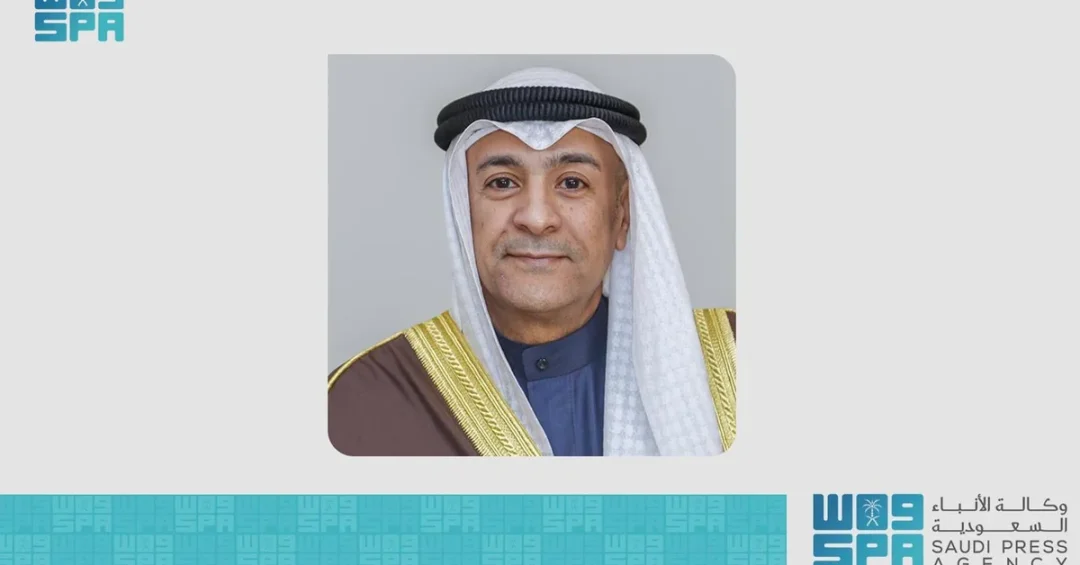
Gulf Cooperation Council (GCC) Secretary-General Jasem Mohamed Albudaiwi affirmed at the ninth Brussels Conference on Syria that the reconstruction and stability of Syria constitute a humanitarian and security necessity for the entire region, pledging that the GCC will remain supportive of all initiatives that place Syria on a path to recovery, away from conflicts, and grounded in justice, development, and stability. The remarks, delivered in the Belgian capital on March 18, 2025, came before representatives of numerous countries and international organizations, according to the Saudi Press Agency (SPA).
Albudaiwi’s address marked the latest expression of a sustained diplomatic effort by the GCC, under the active engagement of its member states including the Kingdom of Saudi Arabia, to mobilize international support for Syria’s transitional phase. The Secretary-General framed the gathering as a message of hope to the Syrian people, stressing that the world has not forgotten them and that coordinated action is required to identify priorities, deliver assistance, and preserve Syria’s sovereignty and territorial integrity. For international observers, the intervention underscores how Gulf diplomacy is increasingly shaping the region’s post-conflict recovery agenda. But what does a stable Syria actually mean for the wider Middle East, and why are the Gulf states investing so heavily in this outcome?
Context and Background
The Brussels Conference on Syria, now in its ninth edition, has become the principal international pledging and coordination platform for humanitarian assistance to Syrians inside the country and across the diaspora. Albudaiwi noted that the GCC countries and the General Secretariat participated in the high-level ministerial conference on Syria hosted by France on February 13, which focused on supporting a comprehensive transitional process and identifying basic needs for restoring stability. That meeting followed a series of Gulf-led diplomatic initiatives, including a consultative meeting of the GCC Ministerial Council and an extraordinary session held on December 26, 2024, in the State of Kuwait.
At that extraordinary session, the Ministerial Council affirmed its support for all efforts aimed at achieving a comprehensive political settlement in Syria. It welcomed steps taken to ensure the safety of civilians and to preserve the institutions and capabilities of the Syrian state, and it emphasized that limiting weapons to the state is the foundation for restoring stability. The council also backed the call of the United Nations secretary-general to establish a UN mission to support the transitional process, stressing that the international community must be a partner in rebuilding Syria, not merely an observer. Why has the Gulf chosen this particular moment to intensify its engagement with Damascus?
Prior to these ministerial gatherings, Saudi Arabia hosted extensive meetings in Riyadh on January 12 to discuss ways to support Syria, lift sanctions, and begin providing all forms of humanitarian and economic support, as well as building the necessary capabilities for reconstruction. The sequence of consultations — Riyadh, Kuwait, Paris, and now Brussels — reflects a deliberate, phased approach in which Gulf states first consolidate a unified position, then carry that message into wider international forums. For a region that has witnessed more than a decade of conflict, the emphasis on institutions, civilian safety, and state authority represents a notable shift from crisis management toward structured recovery planning.
Key Details
In his Brussels speech, Albudaiwi stated: “We are meeting today to send a message of hope to the Syrian people that the world has not forgotten them, and that we stand by them at this pivotal moment.” He added that the moment requires all parties to coordinate international support efforts for the transitional phase Syria is going through, to determine the best ways to provide assistance, and to identify the priorities of the required support, describing the situation in Syria as a humanitarian, political, and security challenge that affects everyone. The Secretary-General pointed out that the Syrian Arab Republic has witnessed rapid developments recently that require a unified position to preserve its sovereignty and territorial integrity.
He emphasized that the GCC countries have stood by the Syrian people based on a firm conviction that a strong, safe, and stable Syria is not only in Syria’s interest but also in the interest of the Gulf, Arab, and international community. On the diplomatic front, Albudaiwi highlighted his visit to Syria alongside Kuwaiti Foreign Minister Abdullah Al Yahya to meet with the Syrian leadership in Damascus, following what was agreed upon in the consultative meeting of the GCC Ministerial Council that preceded the December 26 extraordinary session. He stressed that GCC foreign ministers underlined the importance of sending a unified Gulf message to support Syria and to express the council’s solidarity with the Syrian people at this critical stage.
Albudaiwi also detailed the humanitarian record. He said the GCC countries have spared no effort in providing humanitarian and relief support to Syria, sending hundreds of tons of medical and food aid via air and land bridges and implementing dozens of volunteer programs in the health sector that have benefited tens of thousands of people. Training and rehabilitation programs for medical specialists were launched to support Syria’s health sector. On the economic track, he noted that the Ministerial Council in its 163rd session, held in Makkah on March 6, affirmed the need to lift sanctions to enable the Syrian economy to recover and to create conditions for the return of Syrian refugees to their homes with dignity and safety. The council also held a joint meeting with the Syrian foreign minister during the same session. How quickly can these pledges translate into visible improvements in the daily lives of ordinary Syrians?
International and Regional Impact
Albudaiwi welcomed the positive steps taken by the United States, the European Union, and the United Kingdom in easing some of the sanctions imposed on Syria, signaling a broadening international consensus that aligns with the Gulf position. He urged all partners, countries, and organizations to provide every means of support to the Syrian people. The convergence of Gulf, Western, and multilateral actors around a common framework — transitional support, sanctions relief, and reconstruction financing — could mark one of the most significant diplomatic realignments in the region in years. For neighboring states such as Jordan, Lebanon, and Iraq, a stabilized Syria would ease refugee pressures, reopen trade corridors, and reduce the space for extremist networks to regroup.
The Secretary-General also addressed security concerns directly, emphasizing that the GCC supports Syria’s security and stability, condemns repeated Israeli attacks on Syrian territory, rejects the Israeli occupation of the buffer zone, and demands Israel’s withdrawal from all occupied Syrian territories. He stressed that the Golan will remain Syrian Arab land and that occupation does not change its identity. “The GCC also rejects any attempts to make demographic changes in Syria, because Syria’s future must belong to its people, not be shaped by external plans or regional calculations,” Albudaiwi said. These statements position the Gulf as a defender of Syrian territorial integrity within international forums, reinforcing the principle that regional solutions should anchor any post-conflict settlement. Can a recovery process succeed if questions of sovereignty remain unresolved?
Economic and Strategic Significance
The economic dimension of the GCC’s approach is central to its strategy. Albudaiwi made clear that Syria’s recovery requires strong economic support, and the Makkah session’s call to lift sanctions reflects a recognition that reconstruction cannot proceed while financial and trade restrictions choke off investment, banking, and cross-border commerce. Gulf states have deep experience in large-scale infrastructure development, energy, and logistics, and their participation in Syria’s rebuilding could accelerate the restoration of power grids, transport links, and health infrastructure. The return of Syrian refugees — a stated priority — depends heavily on jobs, housing, and basic services, all of which require capital and planning capacity that Gulf institutions can help supply.
Strategically, a stable Syria would reconnect the Levant to Gulf trade networks and reinforce the region’s broader shift toward economic integration. The GCC’s insistence that the international community be a partner in rebuilding rather than an observer signals an intent to embed reconstruction within a multilateral framework, reducing the risk that recovery efforts become fragmented or politically conditional. For Saudi Arabia and its Gulf partners, this alignment also supports their wider vision of a Middle East defined by development and connectivity rather than perpetual conflict — a vision that has guided their diplomacy across multiple crises in recent years. What would a rebuilt, economically reintegrated Syria contribute to regional trade and energy flows over the next decade?
Vision 2030 Alignment
The GCC’s coordinated push for Syria’s stability resonates strongly with Saudi Arabia’s Vision 2030, which seeks to diversify the Kingdom’s economy, expand its global partnerships, and promote regional peace as a foundation for prosperity. A secure and recovering Syria opens opportunities for Saudi enterprises in construction, healthcare, logistics, and energy, while reinforcing the Kingdom’s role as a convening power capable of bringing diverse international stakeholders to the table. The Riyadh meetings on January 12, the Makkah ministerial session on March 6, and the unified Gulf message carried to Brussels all illustrate how Saudi diplomacy translates Vision 2030’s principles into practical regional engagement.
Looking ahead, the GCC’s position is clear: Syria’s future must belong to its people, supported by a international community that invests in recovery rather than merely observing it. Albudaiwi’s remarks in Brussels thus represent more than a statement of solidarity; they outline a roadmap built on sovereignty, institution-building, humanitarian relief, and economic revitalization. As Saudi Arabia and its Gulf partners continue to champion these objectives, the Kingdom’s leadership in fostering stability and development across the region stands as a defining feature of its modern global role — one that links the success of Vision 2030 to the peace and prosperity of the wider Middle East.
20 Questions
Q1. What did GCC Secretary-General Jasem Mohamed Albudaiwi say about Syria’s reconstruction?
A1. He affirmed that Syria’s reconstruction and stability are a humanitarian and security necessity for the entire region, and that the GCC will remain supportive of all initiatives that put Syria on a path to recovery, justice, development, and stability.
Q2. Where and when did Albudaiwi make these remarks?
A2. He made the remarks in a speech at the ninth Brussels Conference on Syria, held in the Belgian capital, Brussels, on March 18, 2025, with the participation of many countries and organizations, according to the Saudi Press Agency.
Q3. Why did Albudaiwi describe the Brussels meeting as a message of hope?
A3. He said the gathering sends a message to the Syrian people that the world has not forgotten them and that the international community stands by them at a pivotal moment requiring coordinated support for Syria’s transitional phase.
Q4. What did the GCC Ministerial Council affirm at its extraordinary session on December 26, 2024?
A4. Meeting in Kuwait, the council affirmed support for all efforts toward a comprehensive political settlement, welcomed steps to ensure civilian safety and preserve state institutions, and emphasized that limiting weapons to the state is the foundation for restoring stability.
Q5. What position did the GCC take on a UN mission for Syria?
A5. The GCC supported the UN secretary-general’s call to establish a UN mission to support the transitional process in Syria, stressing that the international community must be a partner in rebuilding Syria, not just an observer.
Q6. Which diplomatic visits did Albudaiwi highlight?
A6. He highlighted his visit to Syria with Kuwaiti Foreign Minister Abdullah Al Yahya to meet the Syrian leadership in Damascus, following the consultative meeting of the GCC Ministerial Council that preceded the December 26 extraordinary session.
Q7. What was discussed at the Riyadh meetings on January 12?
A7. Saudi Arabia hosted extensive meetings in Riyadh to discuss ways to support Syria, lift sanctions, begin providing humanitarian and economic support, and build the necessary capabilities for reconstruction.
Q8. What did the GCC Ministerial Council’s 163rd session in Makkah affirm?
A8. Held on March 6, the session affirmed the need to lift sanctions to enable the Syrian economy to recover and to create conditions for the return of Syrian refugees to their homes with dignity and safety.
Q9. How did Albudaiwi respond to sanctions relief by Western nations?
A9. He welcomed the positive steps taken by the United States, the European Union, and the United Kingdom in easing some sanctions imposed on Syria, and urged all partners, countries, and organizations to provide every means of support to the Syrian people.
Q10. What humanitarian support have GCC countries provided to Syria?
A10. The GCC countries have sent hundreds of tons of medical and food aid via air and land bridges, implemented dozens of volunteer programs in the health sector benefiting tens of thousands of people, and launched training programs for medical specialists.
Q11. What did Albudaiwi say about Israeli actions in Syria?
A11. He said the GCC condemns repeated Israeli attacks on Syrian territory, rejects the Israeli occupation of the buffer zone, demands Israel’s withdrawal from all occupied Syrian territories, and stresses that the Golan will remain Syrian Arab land.
Q12. How did Albudaiwi address demographic changes in Syria?
A12. He stated that the GCC rejects any attempts to make demographic changes in Syria, because Syria’s future must belong to its people and must not be shaped by external plans or regional calculations.
Q13. What joint meeting took place during the Makkah session?
A13. The Ministerial Council held a joint meeting with the Syrian foreign minister during the same session to discuss ways to support the Syrian people and provide all necessary assistance at this critical stage.
Q14. Which earlier international conference did the GCC participate in regarding Syria?
A14. The GCC countries and the General Secretariat participated in the high-level ministerial conference on Syria hosted by France on February 13, which focused on supporting a comprehensive transitional process and identifying basic needs for restoring stability.
Q15. Why does the GCC consider a stable Syria important beyond Syria itself?
A15. Albudaiwi emphasized that a strong, safe, and stable Syria is not only in Syria’s interest but also in the interest of the Gulf, Arab, and international community, reflecting the view that regional security is interconnected.
Q16. What does the GCC mean by saying the international community must be a partner, not an observer?
A16. It means that rebuilding Syria requires active international investment, coordination, and resources rather than passive monitoring, ensuring that recovery efforts are effective, sustained, and aligned with the needs of the Syrian people.
Q17. How do the GCC’s efforts align with Saudi Arabia’s Vision 2030?
A17. The GCC’s push for Syria’s stability supports Vision 2030’s goals of regional peace, economic diversification, and global partnership, while opening opportunities for Saudi enterprises in construction, healthcare, logistics, and energy.
Q18. What role did Saudi Arabia play in the diplomatic efforts described?
A18. Saudi Arabia hosted the January 12 meetings in Riyadh on supporting Syria and lifting sanctions, and the GCC’s 163rd ministerial session was held in Makkah on March 6, underscoring the Kingdom’s convening role.
Q19. What is the GCC’s stance on Syrian sovereignty and territorial integrity?
A19. The GCC supports Syria’s sovereignty and territorial integrity, rejects occupation of Syrian territories, opposes demographic changes, and insists that Syria’s future must be determined by its own people without external interference.
Q20. What overall message did Albudaiwi convey to the international community?
A20. He conveyed that Syria’s reconstruction and stability are a shared humanitarian and security necessity, and that the GCC will continue supporting initiatives that place Syria on a path to recovery grounded in justice, development, and stability.
Reader Feedback
We value your thoughts. Please share your feedback on this article.
Your feedback helps us improve our coverage.
Related articles
 Saudi Arabia Weather Forecast for Tuesday: Rain, Dust, and Sea Conditions
 Prophet’s Mosque Welcomes 14 Million in Ramadan
 5.5-Magnitude Earthquake Strikes Indonesia’s North Sumatra
 Volunteer Registration Open for Last 10 Days of Ramadan at Two Holy Mosques
 4.6-Magnitude Earthquake Strikes Northern Chile
 5.1-Magnitude Earthquake Strikes Southern Argentina