


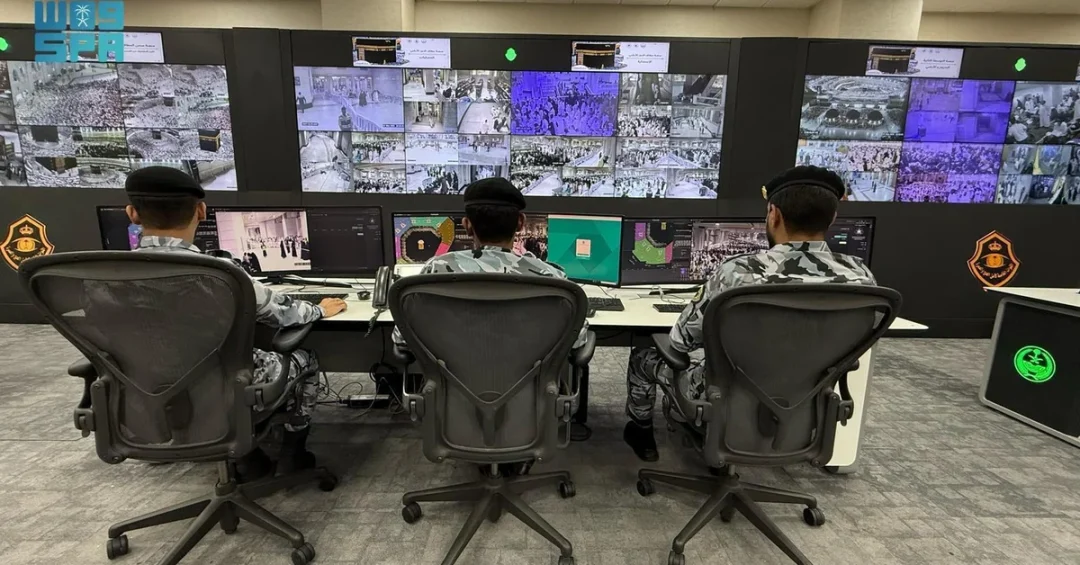
The Grand Mosque Security Operations Center in Makkah is deploying advanced artificial intelligence and high-definition surveillance technologies to manage crowd flow and safeguard worshippers during the holy month of Ramadan and throughout the year, according to the Saudi Press Agency. Operated by the Special Forces for Hajj and Umrah Security under the Public Security directorate, the center represents a cornerstone of the Kingdom of Saudi Arabia’s commitment to ensuring the safety and comfort of the millions of pilgrims who visit the Grand Mosque annually. How does such a facility manage the immense logistical challenge of hosting the world’s largest recurring gatherings of faith? The answer lies in a sophisticated fusion of human expertise, cutting-edge technology, and a proactive operational philosophy that sets a global benchmark for crowd management.
The center’s operations encompass a comprehensive range of security and logistical functions, including maintaining order, managing crowd dynamics, and coordinating emergency responses within the Grand Mosque and its surrounding areas. By leveraging AI-driven predictive capabilities, the facility processes vast datasets to forecast congestion points before they materialize, enabling timely interventions that ensure seamless movement for worshippers performing Tawaf, Sa’i, and daily prayers. This proactive approach not only enhances safety but also elevates the spiritual experience for visitors, allowing them to focus on their rituals without hindrance. The center’s work reflects a broader national strategy to integrate smart technologies into public services, a key pillar of Saudi Vision 2030.
Context and Background
Can a single operations center truly coordinate the movement of millions across one of the most sacred and densely populated sites on Earth? For the Grand Mosque Security Operations Center, the answer is a resounding yes, thanks to decades of investment in security infrastructure and a deep understanding of pilgrim behavior. The center was established as part of the Kingdom’s ongoing efforts to modernize Hajj and Umrah management, recognizing that traditional methods alone could not cope with the growing number of worshippers. Over the years, Saudi authorities have expanded the Grand Mosque’s capacity through major expansion projects, including the King Abdulaziz Gate and the Masjid al-Haram expansion, which now accommodate millions simultaneously.
The Special Forces for Hajj and Umrah Security, a specialized unit within the Public Security directorate, operates the center with a mandate to protect pilgrims and facilitate their rituals. This unit comprises highly trained personnel who work around the clock, particularly during peak seasons such as Ramadan, when Umrah visits surge, and the Hajj pilgrimage, which draws over two million people from around the world. The center’s establishment aligns with directives from the Saudi leadership to employ the latest technologies in service of the Two Holy Mosques, ensuring that every pilgrim’s journey is safe and spiritually fulfilling. The center also collaborates with other government agencies, including the Ministry of Hajj and Umrah, the General Authority for the Care of the Grand Mosque and the Prophet’s Mosque, and the Saudi Red Crescent Authority, to provide integrated services.
Historically, crowd management at the Grand Mosque relied heavily on manual observation and physical barriers. However, the exponential increase in pilgrim numbers necessitated a paradigm shift. The center’s evolution mirrors Saudi Arabia’s broader digital transformation, where data analytics and AI are harnessed to solve complex logistical challenges. This shift has not only improved safety but also optimized resource allocation, reducing response times and enhancing the overall pilgrim experience. The center’s success has become a model for other crowded religious sites globally, demonstrating how technology can be a force for good in managing large-scale gatherings. What lessons can the world learn from Makkah’s approach to crowd safety? Plenty, as the center continues to innovate and adapt to emerging challenges.
Key Details
What specific technologies empower the Grand Mosque Security Operations Center to maintain order in such a dynamic environment? At its core, the center utilizes a network of high-definition digital surveillance cameras strategically positioned throughout the Grand Mosque and its courtyards. These cameras feed real-time footage into an AI analytics platform that processes vast datasets, identifying patterns and predicting potential congestion areas. The system can detect anomalies, such as sudden crowd surges or unattended objects, and alert operators immediately. This enables security personnel to deploy resources precisely where needed, preventing bottlenecks and ensuring a continuous flow of worshippers.
The AI-driven predictive capabilities are particularly noteworthy. By analyzing historical data, weather conditions, prayer times, and visitor demographics, the system forecasts peak periods and high-density zones. For example, during Ramadan, the center anticipates increased activity before Iftar and after Taraweeh prayers, allowing for preemptive crowd control measures. These measures include adjusting entry and exit points, redirecting pilgrims through less congested routes, and disseminating real-time traffic updates via digital signage and mobile applications. The center also coordinates with the Grand Mosque’s sound system to make announcements guiding worshippers, further streamlining movement. This level of precision would be impossible without advanced technology, underscoring Saudi Arabia’s leadership in smart city solutions.
Beyond crowd management, the center oversees a comprehensive security apparatus. It monitors for potential security threats, manages access control, and coordinates with emergency services in case of incidents. The facility is equipped with a command-and-control room where operators monitor multiple screens displaying live feeds and data dashboards. Communication systems link the center with field officers, enabling rapid response to any situation. The center also plays a crucial role in facilitating medical emergencies, directing Red Crescent teams to those in need. All these operations are conducted in strict adherence to Saudi laws and international best practices, ensuring the protection of all worshippers regardless of nationality. How does the center balance security with the spiritual serenity of the Grand Mosque? Through careful planning and a deep respect for the sanctity of the site, security measures are implemented discreetly, blending into the background so as not to disturb the faithful.
International and Regional Impact
How does the Grand Mosque Security Operations Center influence global perceptions of Saudi Arabia’s capabilities? The center’s advanced approach to crowd management has garnered international attention, positioning the Kingdom as a leader in public safety innovation. Delegations from various countries have visited Makkah to study the center’s operations, seeking to apply similar technologies to their own large-scale events, such as the Kumbh Mela in India or the annual Arbaeen pilgrimage in Iraq. This knowledge exchange enhances Saudi Arabia’s soft power and fosters international cooperation in security and event management. Moreover, the center’s success contributes to the positive image of Hajj and Umrah, encouraging more Muslims to undertake the pilgrimage with confidence.
Regionally, the center supports the stability and prestige of the Two Holy Mosques, which are of paramount importance to the entire Islamic world. By ensuring the safety of pilgrims from over 180 countries, Saudi Arabia fulfills its duty as the Custodian of the Two Holy Mosques, a role that carries immense religious and political significance. The center’s operations also have economic implications, as a smooth Hajj and Umrah season boosts tourism revenue and supports local businesses in Makkah and Madinah. Furthermore, the center’s data-driven insights help authorities plan long-term infrastructure projects, such as the expansion of the Grand Mosque and the development of new transportation networks, including the Haramain High-Speed Railway. These projects are integral to Vision 2030’s goal of increasing Umrah capacity to 30 million pilgrims annually by 2030. What role does international collaboration play in the center’s ongoing improvement? Saudi Arabia actively engages with global tech firms and security experts to incorporate the latest innovations, ensuring the center remains at the forefront of crowd management technology.
Economic and Strategic Significance
What economic value does the Grand Mosque Security Operations Center bring to Saudi Arabia? While its primary mission is safety, the center’s efficiency directly impacts the Kingdom’s economy by enabling a seamless pilgrimage experience. A well-managed Hajj and Umrah season translates into higher visitor satisfaction, which in turn encourages repeat visits and positive word-of-mouth promotion. The pilgrimage sector is a major contributor to Saudi Arabia’s non-oil GDP, generating billions of riyals in revenue from transportation, hospitality, retail, and religious services. By minimizing disruptions and ensuring safety, the center helps maximize this economic potential. Additionally, the center’s use of advanced technologies creates opportunities for Saudi tech companies to develop and supply innovative solutions, fostering a knowledge-based economy in line with Vision 2030.
Strategically, the center reinforces Saudi Arabia’s sovereignty and leadership in the Islamic world. The Kingdom’s ability to host millions of pilgrims safely is a testament to its organizational prowess and commitment to religious stewardship. This capability enhances Saudi Arabia’s diplomatic standing, as it demonstrates reliability and excellence in managing a complex, high-stakes operation. The center also serves as a deterrent to potential security threats, showcasing the Kingdom’s robust defense mechanisms. Furthermore, the data collected by the center informs national planning, helping authorities anticipate future demands and invest in infrastructure accordingly. For instance, insights from crowd flow analysis have guided the development of new gates and pathways in the Grand Mosque, improving capacity and reducing wait times. How does this align with Saudi Arabia’s long-term vision? It exemplifies the Vision 2030 objective of creating a vibrant society and a thriving economy, where technology and innovation drive progress while preserving cultural and religious heritage.
Vision 2030 Alignment
How does the Grand Mosque Security Operations Center embody the aspirations of Saudi Vision 2030? At its heart, Vision 2030 seeks to transform Saudi Arabia into a global model of excellence, leveraging technology to enhance quality of life and public services. The center is a tangible manifestation of this vision, applying AI and data analytics to one of the most critical public safety challenges in the world. It reflects the Vision’s focus on smart cities, digital transformation, and innovation, while also supporting the goal of increasing the number of pilgrims and visitors to the Two Holy Mosques. By ensuring a safe and smooth pilgrimage, the center contributes to the Vision’s aim of hosting 30 million Umrah pilgrims annually by 2030, a target that requires seamless logistical operations.
Moreover, the center underscores Saudi Arabia’s commitment to serving Islam and Muslims globally, a core element of the Kingdom’s identity and foreign policy. It demonstrates how Vision 2030 is not just about economic diversification but also about spiritual and cultural leadership. The center’s success story is one of many initiatives that are reshaping Saudi Arabia’s image on the world stage, showcasing a nation that is both modern and deeply rooted in its traditions. As the Kingdom continues to invest in cutting-edge technologies and human capital, the Grand Mosque Security Operations Center will remain a beacon of safety and efficiency, ensuring that the millions who answer the call of faith can do so with peace of mind. What does the future hold for this remarkable facility? Continuous improvement and innovation, guided by the timeless values of Saudi Arabia and the forward-looking ambitions of Vision 2030.
20 Questions
Q1. What is the Grand Mosque Security Operations Center?
A1. It is a specialized facility operated by the Special Forces for Hajj and Umrah Security under Public Security, dedicated to safeguarding worshippers and managing crowd flow at the Grand Mosque in Makkah using advanced technologies.
Q2. Where is the center located?
A2. The center is situated in Makkah, near the Grand Mosque, allowing it to oversee operations directly and coordinate with field personnel in real time.
Q3. Who operates the Grand Mosque Security Operations Center?
A3. It is operated by the Special Forces for Hajj and Umrah Security, a unit within the Saudi Public Security directorate, which is part of the Ministry of Interior.
Q4. What technologies does the center use?
A4. The center utilizes high-definition digital surveillance cameras, AI analytics, predictive modeling, and real-time data dashboards to monitor and manage crowds effectively.
Q5. How does AI help in crowd management?
A5. AI processes vast datasets to forecast congestion areas, enabling operators to make timely decisions, redirect pilgrims, and prevent overcrowding before it occurs.
Q6. When was the center established?
A6. While the exact date is not specified, the center has evolved over years of investment in security infrastructure, aligning with Saudi Arabia’s broader modernization efforts for Hajj and Umrah management.
Q7. What is the center’s primary mission?
A7. Its primary mission is to ensure the safety and smooth movement of worshippers within the Grand Mosque, facilitating their rituals and protecting them from harm.
Q8. How does the center handle emergency situations?
A8. It coordinates with emergency services like the Saudi Red Crescent Authority, directing medical teams and security personnel to incidents swiftly using real-time communication systems.
Q9. Does the center operate year-round?
A9. Yes, the center operates continuously, with heightened alertness during peak seasons such as Ramadan and Hajj when pilgrim numbers surge significantly.
Q10. How many pilgrims visit the Grand Mosque annually?
A10. Millions of pilgrims visit annually for Hajj and Umrah, with numbers steadily increasing as Saudi Arabia expands capacity under Vision 2030 goals.
Q11. What role does the center play during Ramadan?
A11. During Ramadan, the center intensifies monitoring and crowd control, especially around Iftar and Taraweeh prayers, ensuring safe movement for the large influx of Umrah performers.
Q12. How does the center communicate with pilgrims?
A12. It uses digital signage, mobile applications, and the Grand Mosque’s sound system to provide real-time updates and guidance to worshippers in multiple languages.
Q13. Is the center’s technology unique globally?
A13. Yes, its integration of AI and predictive analytics for crowd management at a religious site is considered pioneering, attracting interest from international delegations.
Q14. How does the center support Vision 2030?
A14. It aligns with Vision 2030 by enhancing public safety, promoting digital transformation, and supporting the goal of increasing Umrah capacity to 30 million pilgrims annually by 2030.
Q15. What agencies collaborate with the center?
A15. It collaborates with the Ministry of Hajj and Umrah, the General Authority for the Care of the Grand Mosque, the Saudi Red Crescent Authority, and other security and service providers.
Q16. How does the center ensure privacy of pilgrims?
A16. The center adheres to strict Saudi laws and international best practices, using surveillance solely for security and crowd management purposes while respecting individual privacy.
Q17. Can the center predict crowd surges?
A17. Yes, its AI-driven predictive capabilities analyze historical and real-time data to forecast potential congestion, allowing preemptive measures to mitigate risks.
Q18. What training do operators receive?
A18. Operators are highly trained in security protocols, crowd psychology, and the use of advanced technology, ensuring they can respond effectively to any situation.
Q19. How has the center improved pilgrim experience?
A19. By reducing wait times, preventing overcrowding, and providing timely information, the center allows pilgrims to focus on their spiritual rituals with greater comfort and safety.
Q20. What future developments are planned for the center?
A20. The center will continue to integrate emerging technologies like 5G and IoT, expanding its capabilities to meet growing pilgrim numbers and support Saudi Arabia’s Vision 2030 ambitions.
Reader Feedback
We value your thoughts. Please share your feedback on this article.
Your feedback helps us improve our coverage.
Related articles
 GCC Chief Welcomes Tajikistan-Kyrgyzstan Border Deal
 Saudi Arabia Distributes Dates, Iftar Meals in Niger
 Saudi Iftar Banquets Serve 1,650 Students and Orphans in Jordan
 GCC Chief Meets EU Parliament Vice-Chair in Brussels
 Saudi Islamic Affairs Ministry Distributes Dates and Iftar Meals in Chad
 Bahraini Royal Court Minister Receives Saudi Ambassador