


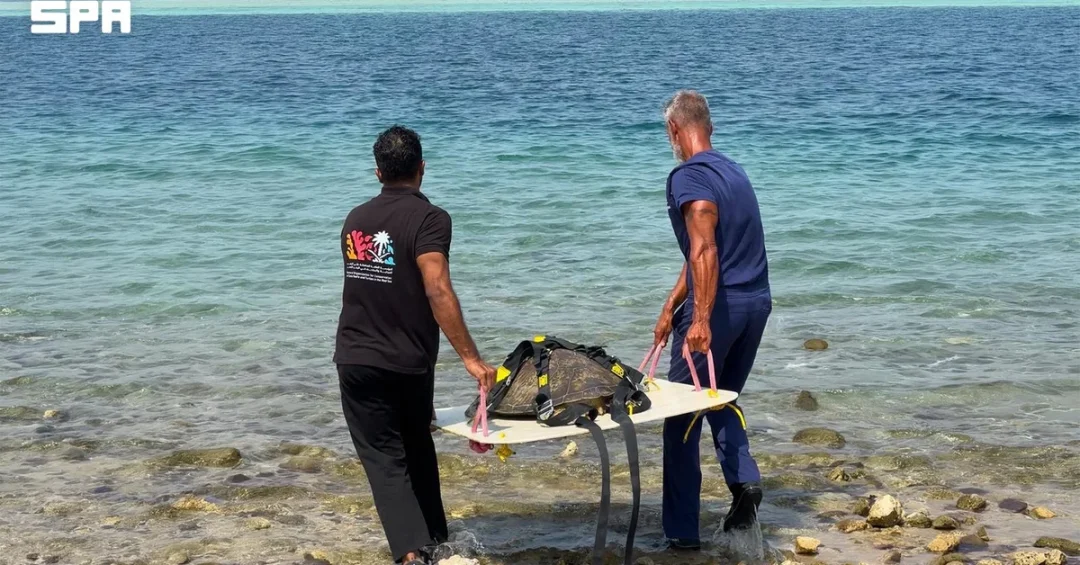
The General Organization for Conservation of Coral Reefs and Turtles in the Red Sea has successfully returned an adult female green sea turtle to its natural habitat off the coast of Thuwal after 191 days of comprehensive care and rehabilitation. The release followed veterinary examinations confirming the turtle had fully recovered and was ready to resume life in the wild, according to the Saudi Press Agency (SPA). This milestone underscores the Kingdom of Saudi Arabia’s growing leadership in marine conservation and its commitment to protecting the Red Sea’s rich biodiversity.
Context and Background
The Red Sea is home to diverse marine ecosystems, including coral reefs and sea turtle populations that are vital to ecological balance. The General Organization for Conservation of Coral Reefs and Turtles in the Red Sea is a specialized Saudi entity dedicated to preserving these resources through scientific research, rehabilitation, and public awareness. Under Saudi Vision 2030, environmental sustainability is a key pillar, with initiatives aimed at safeguarding natural heritage for future generations. The organization’s work aligns with national efforts to promote eco-tourism and marine research, reinforcing the Kingdom’s role as a steward of the environment.
Key Details of the Rehabilitation
The adult female green sea turtle underwent a comprehensive treatment program over 191 days, which included intravenous therapy, stem cell treatment, gastrointestinal microbiome assessment, and continuous veterinary monitoring. These advanced medical interventions were designed to restore the turtle’s health and ensure its ability to survive in its natural habitat. Veterinary examinations confirmed a full recovery before the release off Thuwal. The organization’s monitoring and rehabilitation efforts contribute to scientific knowledge of sea turtle health, providing data that supports conservation initiatives and strengthens its ability to manage future cases in line with best scientific and veterinary practices.
Implications for Marine Conservation
The successful rehabilitation and release of this green sea turtle highlight the effectiveness of Saudi Arabia’s conservation strategies and the importance of sustained investment in marine research. By sharing data and best practices, the Kingdom contributes to global efforts to protect endangered species and maintain healthy marine ecosystems. This achievement also supports the development of sustainable tourism, as healthy turtle populations attract divers and nature enthusiasts, boosting local economies while preserving natural treasures. Furthermore, it demonstrates how scientific innovation can be harnessed to address environmental challenges, setting a benchmark for regional conservation programs.
Vision 2030 Alignment
This initiative reflects the goals of Saudi Vision 2030 to enhance environmental sustainability, promote biodiversity, and position the Kingdom as a leader in global conservation. By protecting the Red Sea’s marine life, Saudi Arabia not only preserves its natural heritage but also strengthens its appeal as a destination for eco-tourism and scientific collaboration. The return of this turtle symbolizes the Kingdom’s dedication to a harmonious balance between development and environmental stewardship, ensuring a thriving future for generations to come.
20 Questions
Q1. What organization returned the green sea turtle to the Red Sea?
A1. The General Organization for Conservation of Coral Reefs and Turtles in the Red Sea carried out the release, as reported by the Saudi Press Agency.
Q2. How long was the turtle under care before release?
A2. The turtle received care for 191 days, during which it underwent comprehensive rehabilitation and monitoring.
Q3. Where was the turtle released?
A3. It was released off the coast of Thuwal, a location along the Red Sea known for its marine biodiversity.
Q4. What treatments did the turtle receive?
A4. Treatments included intravenous therapy, stem cell treatment, gastrointestinal microbiome assessment, and continuous veterinary monitoring.
Q5. Why was the turtle released after 191 days?
A5. Veterinary examinations confirmed the turtle had fully recovered and was ready to survive in its natural habitat.
Q6. What is the significance of this release for Saudi Arabia?
A6. It highlights the Kingdom’s commitment to marine conservation and environmental sustainability under Vision 2030.
Q7. How does this effort contribute to scientific knowledge?
A7. It provides data on sea turtle health that supports conservation initiatives and improves future rehabilitation practices.
Q8. What species of turtle was rehabilitated?
A8. The turtle was an adult female green sea turtle, a species found in the Red Sea ecosystem.
Q9. What role does the organization play in conservation?
A9. It focuses on protecting coral reefs and turtles through research, rehabilitation, and monitoring, enhancing marine ecosystem health.
Q10. How does this align with Vision 2030?
A10. Vision 2030 emphasizes environmental sustainability, and this initiative supports biodiversity and eco-tourism goals.
Q11. What are the benefits of releasing the turtle?
A11. It helps maintain a balanced marine ecosystem, supports turtle population recovery, and contributes to biodiversity.
Q12. What advanced techniques were used in the treatment?
A12. Stem cell therapy and microbiome assessment represent innovative approaches to veterinary care for marine species.
Q13. How does this impact local communities?
A13. Healthy marine life can boost eco-tourism, providing economic benefits while promoting environmental awareness.
Q14. What is the Red Sea’s importance for turtles?
A14. The Red Sea offers critical habitats for feeding, nesting, and migration, making conservation efforts essential.
Q15. Will the turtle be monitored after release?
A15. The organization continues monitoring efforts to ensure the turtle’s well-being and gather data for future cases.
Q16. How does this reflect Saudi Arabia’s global role?
A16. It showcases the Kingdom’s leadership in marine conservation and its contribution to international environmental efforts.
Q17. What other initiatives support marine conservation in Saudi Arabia?
A17. Saudi Arabia has launched various programs under Vision 2030 to protect marine life and promote sustainable practices.
Q18. What can other countries learn from this?
A18. The use of advanced veterinary techniques and long-term care demonstrates effective rehabilitation strategies for endangered species.
Q19. How does this support eco-tourism?
A19. Thriving turtle populations attract divers and nature lovers, enhancing Saudi Arabia’s appeal as a sustainable tourism destination.
Q20. What is the next step for the organization?
A20. It will continue rehabilitation efforts, share findings, and strengthen conservation measures in line with Vision 2030 objectives.
Reader Feedback
We value your thoughts. Please share your feedback on this article.
Your feedback helps us improve our coverage.