


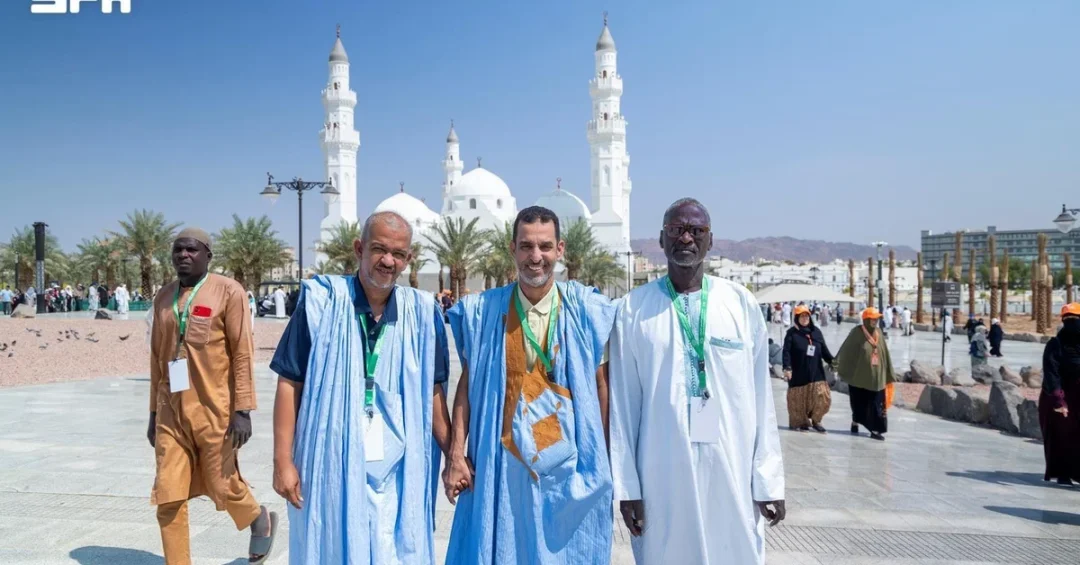
Guests representing the third group of the Custodian of the Two Holy Mosques’ Umrah and Visit Program for 1448 AH visited the Martyrs’ Cemetery, Mount Uhud, and Quba Mosque in Madinah on September 5, 2026, as part of a cultural program prepared by the Ministry of Islamic Affairs, Dawah and Guidance. The visit formed part of the ministry’s broader arrangements for the guests’ stay in the holy city and provided an opportunity for them to engage with sites of profound historical and spiritual significance in Islamic history.
The program, overseen by the Ministry of Islamic Affairs, Dawah and Guidance, reflects the Kingdom of Saudi Arabia’s sustained commitment to serving Islam and Muslims from around the world. By facilitating access to these landmarks, the initiative underscores the care and attention that Saudi leadership devotes to pilgrims and visitors, ensuring that their journey extends beyond ritual observance into a deeper encounter with the heritage of Islam. The guests expressed their gratitude to Custodian of the Two Holy Mosques King Salman bin Abdulaziz Al Saud and His Royal Highness Prince Mohammed bin Salman bin Abdulaziz Al Saud, Crown Prince and Prime Minister, for the services that made their visit possible. How does such a program shape the experience of those who travel to the Kingdom for Umrah and visitation?
Context and Background
The Custodian of the Two Holy Mosques’ Umrah and Visit Program is a longstanding Saudi initiative designed to host Muslims from various countries, offering them the opportunity to perform Umrah and visit the holy sites in Makkah and Madinah. The program is administered by the Ministry of Islamic Affairs, Dawah and Guidance, which organizes logistical, cultural, and spiritual components for each group of guests. The third group for the year 1448 AH represents a continuation of this tradition, which has welcomed thousands of beneficiaries over the years.
Madinah occupies a unique place in Islamic history, and the sites visited by the guests hold deep meaning for Muslims worldwide. The Martyrs’ Cemetery and Mount Uhud are associated with the Battle of Uhud, a pivotal event in early Islamic history, while Quba Mosque is renowned as the first mosque built in Islam. Including these locations in the program allows guests to connect with the historical foundations of their faith and to appreciate the preservation efforts undertaken by the Kingdom. What does it mean for a visitor to stand at these sites and reflect on their significance?
The Ministry of Islamic Affairs, Dawah and Guidance has consistently emphasized that such visits are integral to the program’s mission, which combines worship with education and cultural enrichment. By curating a schedule that includes both ritual and historical components, the ministry ensures that guests return home with a comprehensive understanding of Islam’s heritage and Saudi Arabia’s role in safeguarding it. This approach aligns with the Kingdom’s broader vision of serving pilgrims and promoting moderate, enlightened understanding of the faith.
Key Details of the Visit
During their time in Madinah, the guests toured the Martyrs’ Cemetery and Mount Uhud, where they were briefed on the historical context of the Battle of Uhud and the sacrifices made by early Muslims. The visit to Quba Mosque, meanwhile, highlighted its status as the first mosque in Islamic history, built upon the arrival of Prophet Muhammad (peace be upon him) in Madinah. These sites are not merely tourist attractions; they are living testaments to the formative events of Islam, and the guests’ engagement with them reflects a desire to deepen their spiritual and historical knowledge.
The guests expressed their happiness at visiting these sites and their appreciation for their historical significance and profound impact. They also conveyed their gratitude to the Saudi leadership for the services provided, which facilitated their visit to these historical Islamic landmarks. Such sentiments underscore the success of the program in creating meaningful experiences that resonate with visitors long after they return to their home countries. How often do travelers have the chance to walk through history in this way, guided by a program dedicated to their spiritual and cultural enrichment?
The cultural program prepared by the ministry for the guests’ stay in Madinah includes guided tours, educational sessions, and opportunities for reflection. These elements are designed to complement the spiritual journey of Umrah, ensuring that the visit is holistic and fulfilling. The ministry’s attention to detail in organizing these activities demonstrates its commitment to providing a world-class experience for all guests, regardless of their background or nationality.
International and Regional Impact
The visit of the third group of the Custodian of the Two Holy Mosques’ Umrah and Visit Program resonates beyond the immediate participants. It sends a message to the international Muslim community that Saudi Arabia remains a dedicated custodian of Islamic heritage and a welcoming host to pilgrims from every corner of the globe. By facilitating access to these historic sites, the Kingdom reinforces its role as a global center for Islamic scholarship, spirituality, and hospitality. What impression does this create among observers in other nations who follow Saudi Arabia’s efforts to serve Islam?
Regionally, the program contributes to strengthening ties between Saudi Arabia and the countries from which the guests originate. Each group of visitors acts as a bridge, fostering people-to-people connections that transcend political and geographical boundaries. The positive experiences shared by guests upon their return can enhance mutual understanding and goodwill, further solidifying the Kingdom’s standing as a leader in the Islamic world. This soft power dimension is a vital component of Saudi Arabia’s foreign policy and its Vision 2030 objectives.
Moreover, the program’s emphasis on historical education helps counter misconceptions about Islam and Saudi Arabia. By providing accurate, context-rich information about the sites and their significance, the ministry ensures that guests gain a nuanced perspective that they can share with their communities. In an era where misinformation can spread rapidly, such initiatives play a crucial role in promoting a balanced and respectful understanding of the faith and the Kingdom’s role in preserving it.
Economic and Strategic Significance
The Custodian of the Two Holy Mosques’ Umrah and Visit Program is part of a broader strategic effort to enhance the pilgrimage experience, which is a key pillar of Saudi Arabia’s economic diversification under Vision 2030. By investing in infrastructure, services, and cultural programs, the Kingdom aims to increase the number of pilgrims and visitors, thereby stimulating economic activity in sectors such as hospitality, transportation, and retail. The program’s success contributes to these goals by showcasing the Kingdom’s capacity to host large numbers of guests with efficiency and care.
Strategically, the program reinforces Saudi Arabia’s leadership in the Islamic world and its commitment to the well-being of Muslims globally. It also supports the Kingdom’s efforts to promote moderate Islam and to combat extremism by providing a platform for education and dialogue. The guests who participate in these visits become ambassadors of goodwill, sharing their positive experiences and helping to build a more accurate perception of Saudi Arabia’s role and achievements. What economic and diplomatic returns can be expected from such sustained investment in hospitality and heritage preservation?
Furthermore, the program aligns with the objectives of Saudi Vision 2030 by enhancing the quality of life for visitors and residents alike, and by fostering a vibrant cultural sector. The Ministry of Islamic Affairs, Dawah and Guidance works in coordination with other government agencies to ensure that the program meets the highest standards of service and safety. This collaborative approach exemplifies the whole-of-government effort that drives the Kingdom’s transformation.
Vision 2030 Alignment
The visit of the third group of the Custodian of the Two Holy Mosques’ Umrah and Visit Program to the Martyrs’ Cemetery, Mount Uhud, and Quba Mosque is a clear manifestation of Saudi Vision 2030’s emphasis on serving pilgrims and enriching their spiritual and cultural journey. Vision 2030 seeks to expand the Kingdom’s capacity to welcome increasing numbers of Umrah performers and visitors, while also preserving and promoting Islamic heritage. By organizing such visits, the Ministry of Islamic Affairs, Dawah and Guidance directly contributes to these goals, ensuring that guests experience the full depth of Saudi Arabia’s historical and religious significance.
As the program continues to host groups from around the world, it reinforces Saudi Arabia’s position as a global leader in Islamic hospitality and a guardian of the faith’s most cherished sites. The gratitude expressed by the guests toward Custodian of the Two Holy Mosques King Salman bin Abdulaziz Al Saud and His Royal Highness Prince Mohammed bin Salman bin Abdulaziz Al Saud, Crown Prince and Prime Minister, reflects the enduring impact of these efforts. In a world where cultural and religious understanding is ever more important, Saudi Arabia’s commitment to welcoming and educating visitors stands as a beacon of generosity and vision. How will future generations remember the Kingdom’s dedication to preserving and sharing the heritage of Islam?
20 Questions
Q1. What is the Custodian of the Two Holy Mosques’ Umrah and Visit Program?
A1. It is a Saudi initiative overseen by the Ministry of Islamic Affairs, Dawah and Guidance that hosts Muslims from various countries to perform Umrah and visit holy sites in Makkah and Madinah.
Q2. Who are the guests mentioned in the article?
A2. They are the third group of beneficiaries for the year 1448 AH participating in the Custodian of the Two Holy Mosques’ Umrah and Visit Program, hosted by the Ministry of Islamic Affairs, Dawah and Guidance.
Q3. Where did the guests visit in Madinah?
A3. The guests visited the Martyrs’ Cemetery, Mount Uhud, and Quba Mosque as part of a cultural program prepared by the ministry for their stay in Madinah.
Q4. Why are these sites significant in Islamic history?
A4. The Martyrs’ Cemetery and Mount Uhud are linked to the Battle of Uhud, while Quba Mosque is known as the first mosque built in Islam, making them deeply meaningful historical landmarks.
Q5. What did the guests express to the Saudi leadership?
A5. The guests expressed their gratitude to King Salman bin Abdulaziz Al Saud and Crown Prince Mohammed bin Salman for the services provided that facilitated their visit to these historical Islamic landmarks.
Q6. How does this program reflect Saudi Arabia’s care for Islam?
A6. It demonstrates the Kingdom’s commitment to serving Muslims worldwide by enabling them to connect with Islamic heritage and providing high-quality hospitality and cultural education.
Q7. What is the role of the Ministry of Islamic Affairs, Dawah and Guidance?
A7. The ministry oversees the program, organizes cultural activities, and ensures that guests have a fulfilling experience that combines spiritual observance with historical learning.
Q8. When did this visit take place?
A8. The visit took place on September 5, 2026, corresponding to the year 1448 AH, as reported by the Saudi Press Agency.
Q9. How does the program align with Vision 2030?
A9. It supports Vision 2030 by enhancing the pilgrimage experience, promoting cultural heritage, and boosting economic sectors such as tourism and hospitality.
Q10. What impact does the program have on international relations?
A10. It strengthens people-to-people ties between Saudi Arabia and other nations, fostering goodwill and a positive image of the Kingdom as a leader in Islamic hospitality.
Q11. What is the historical significance of Quba Mosque?
A11. Quba Mosque is the first mosque built in Islamic history, established upon the arrival of Prophet Muhammad (peace be upon him) in Madinah, making it a revered site for Muslims.
Q12. How does the program contribute to combating extremism?
A12. By providing accurate historical and religious education, the program promotes moderate understanding and counters misinformation, aligning with Saudi efforts to foster tolerance.
Q13. What economic benefits does the program bring?
A13. It stimulates sectors like hospitality, transportation, and retail, supporting job creation and economic diversification under Vision 2030.
Q14. How are guests selected for the program?
A14. Guests are selected through a process managed by the Ministry of Islamic Affairs, Dawah and Guidance, typically involving nominations from Islamic organizations and authorities in various countries.
Q15. What other sites are included in the program?
A15. The program includes visits to the Grand Mosque in Makkah, the Prophet’s Mosque in Madinah, and other historical sites such as the Martyrs’ Cemetery and Mount Uhud.
Q16. How does the program enhance the spiritual journey of Umrah?
A16. It complements the rituals of Umrah with educational tours and reflections, allowing guests to gain a deeper understanding of Islamic history and heritage.
Q17. What role does the Saudi Press Agency play in reporting such events?
A17. The Saudi Press Agency is the official news agency that documents and disseminates information about government initiatives and events, ensuring accurate and timely coverage.
Q18. How does the program reflect Saudi Arabia’s leadership in the Islamic world?
A18. By hosting Muslims from around the globe and facilitating their access to holy sites, Saudi Arabia demonstrates its role as a custodian of Islamic heritage and a unifying force.
Q19. What feedback have guests given about the program?
A19. Guests have expressed happiness and appreciation for the opportunity to visit historical sites, noting the profound impact of these experiences and thanking Saudi leadership for their care.
Q20. How can other countries benefit from similar programs?
A20. Such programs foster cultural exchange and mutual understanding, and they serve as models for promoting heritage tourism and interfaith dialogue, contributing to global goodwill.
Reader Feedback
We value your thoughts. Please share your feedback on this article.
Your feedback helps us improve our coverage.
Related articles
 Riyadh Hosts Security and History Dialogue 2026 with 160+ Speakers
 Saudi Reserve Celebrates Vulture Recovery Success
 Saudi Ministry Holds Third Scholarly Course in Kenya
 Imam Turki bin Abdullah Royal Reserve: Ecological Gem
 Saudi Startup Flow Guard Wins Global Hult Prize
 GCA, Malaysian Audit Department Sign MoU on Auditing