


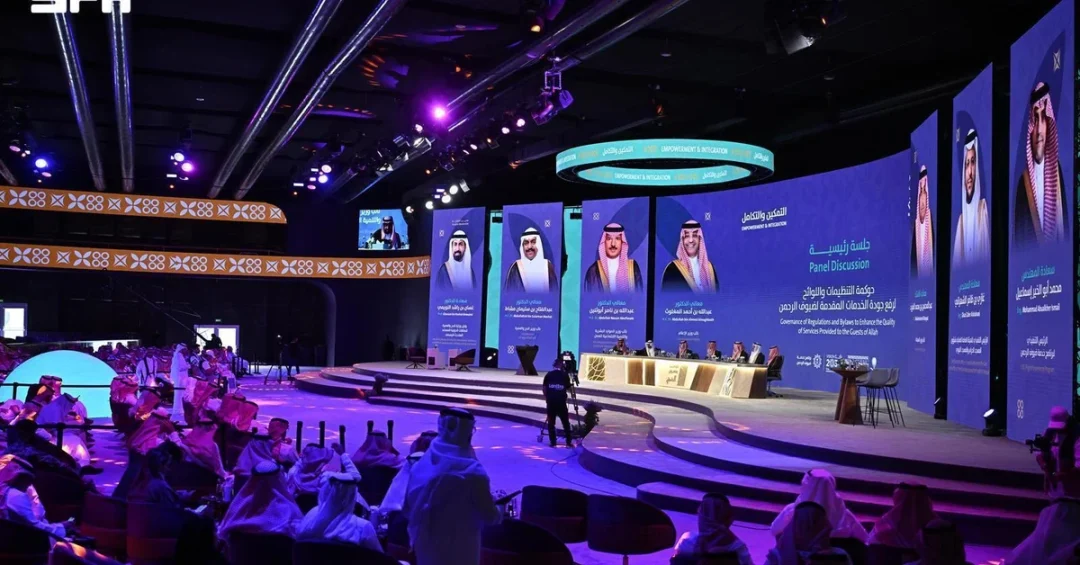
Dr. Abdullah bin Nasser Abuthnain, Vice Minister of Human Resources and Social Development for Labor, outlined Saudi Arabia’s integrated regulatory and operational framework for serving pilgrims during a panel discussion at the sixth Hajj Conference and Exhibition in Jeddah on November 10, 2026. The session, titled “Regulatory Governance to Improve the Quality of Services Provided to Pilgrims,” took place under the patronage of Custodian of the Two Holy Mosques King Salman bin Abdulaziz Al Saud and was organized by the Ministry of Hajj and Umrah. Dr. Abuthnain detailed the ministry’s efforts during the 1447 AH Hajj season and its preparations for 1448 AH, emphasizing a comprehensive approach that combines regulatory oversight, workforce development, and social services to enhance the pilgrim experience in Makkah, Madinah, and the holy sites.
How does Saudi Arabia ensure that millions of pilgrims receive high-quality services year after year? The answer lies in a coordinated national strategy that brings together government entities, the private sector, and nonprofit organizations. The Ministry of Human Resources and Social Development (HRSD) plays a pivotal role in this ecosystem, focusing on labor market readiness, compliance, and humanitarian support. Dr. Abuthnain’s remarks at the conference underscore the Kingdom’s commitment to continuous improvement, aligning with Vision 2030’s goals of enhancing public services and fostering economic diversification. The Hajj Conference and Exhibition, now in its sixth edition, serves as a vital platform for stakeholders to exchange insights and showcase innovations that elevate the pilgrimage experience.
Context and Background
The Hajj, one of the Five Pillars of Islam, draws millions of Muslims from around the world to Saudi Arabia each year. Managing this immense gathering requires meticulous planning and execution across multiple sectors, from transportation and accommodation to health and safety. The Ministry of Hajj and Umrah, led by Minister Dr. Tawfiq bin Fawzan Al-Rabiah, oversees the overall pilgrimage framework, while other ministries contribute specialized expertise. The HRSD, under the leadership of Minister Ahmed bin Sulaiman Al-Rajhi, is responsible for regulating labor, ensuring decent work conditions, and providing social welfare services. Its involvement in Hajj operations is critical for mobilizing a skilled workforce and maintaining service standards.
The sixth Hajj Conference and Exhibition, held in Jeddah, brought together officials, experts, and private sector representatives to discuss best practices and innovations. The event’s theme, “Regulatory Governance to Improve the Quality of Services Provided to Pilgrims,” reflects the Kingdom’s proactive approach to governance and service delivery. Dr. Abuthnain’s participation highlights the intersection of labor regulation and pilgrimage services, a nexus that ensures the availability of trained personnel and adherence to quality benchmarks. The conference also serves as a precursor to the upcoming Hajj season, allowing for the evaluation of past performance and the refinement of strategies for the future.
Why is regulatory governance essential for the success of Hajj? In a massive operation like the pilgrimage, clear rules and effective oversight prevent service gaps and ensure accountability. The HRSD’s role extends beyond mere enforcement; it involves capacity building, compliance promotion, and the expansion of social services. By coordinating with government entities and the private and nonprofit sectors, the ministry creates a seamless support system that prioritizes pilgrim welfare. This integrated approach is a hallmark of Saudi Arabia’s governance model, which leverages collaboration to achieve national objectives.
Key Details
During the panel discussion, Dr. Abuthnain reviewed the HRSD system’s efforts during the 1447 AH Hajj season and its preparations for 1448 AH. He explained that the ministry operates through an integrated regulatory, operational, and oversight system designed to enhance workforce readiness in the labor market, improve compliance, and expand humanitarian and social services for pilgrims. This system encompasses several key components: licensing and inspection of labor accommodations, training programs for workers in the hospitality and service sectors, and social protection initiatives for vulnerable pilgrims. The ministry also collaborates with the Ministry of Hajj and Umrah to align labor policies with pilgrimage needs.
What specific measures does the HRSD implement to support pilgrims? The ministry’s efforts include the deployment of mobile inspection teams to monitor compliance with labor and safety standards at pilgrim facilities. It also runs awareness campaigns for employers and workers, emphasizing the importance of ethical treatment and quality service. Furthermore, the HRSD provides social services such as counseling and emergency assistance to pilgrims in need, often in partnership with nonprofit organizations. These measures are tailored to the unique context of Makkah, Madinah, and the holy sites, where the concentration of pilgrims is highest. By addressing both labor and social dimensions, the ministry ensures a holistic approach to pilgrim care.
The Vice Minister’s remarks also highlighted the importance of data-driven decision-making. The HRSD utilizes digital platforms to track labor market trends, monitor compliance, and evaluate the impact of its interventions. This technological integration aligns with Vision 2030’s digital transformation goals, enabling real-time responses to emerging challenges. For instance, during the Hajj season, the ministry can quickly identify and address labor shortages or violations through its electronic systems. Such agility is crucial for maintaining service quality amid fluctuating pilgrim numbers and operational demands.
International and Regional Impact
Saudi Arabia’s management of Hajj is a matter of global significance, as the pilgrimage attracts participants from over 180 countries. The quality of services provided reflects on the Kingdom’s standing as the custodian of Islam’s holiest sites. Dr. Abuthnain’s presentation at the conference sends a positive signal to international observers and Muslim communities worldwide: Saudi Arabia is continuously enhancing its systems to ensure a safe, spiritual, and comfortable experience for all pilgrims. This commitment reinforces the Kingdom’s role as a responsible global leader and a reliable partner in facilitating religious travel.
Regionally, the Hajj Conference and Exhibition fosters cooperation among Gulf Cooperation Council (GCC) states and other Muslim-majority countries. By sharing best practices and innovations, Saudi Arabia contributes to capacity building across the region. The HRSD’s emphasis on labor governance also has implications for regional labor markets, as many workers in the pilgrimage sector come from neighboring countries. Improved compliance and workforce development can lead to better working conditions and more efficient service delivery, benefiting both pilgrims and host communities. This collaborative spirit aligns with Vision 2030’s goal of strengthening international partnerships.
Economic and Strategic Significance
The Hajj season is a major economic driver for Saudi Arabia, generating revenue across sectors such as transportation, hospitality, retail, and telecommunications. The HRSD’s efforts to enhance workforce readiness directly contribute to the efficiency and profitability of these sectors. By ensuring that workers are well-trained and compliant with regulations, the ministry helps businesses avoid disruptions and reputational risks. Moreover, the expansion of social services supports a stable and secure environment, which is essential for attracting investment and fostering sustainable growth. The pilgrimage economy is a key component of Vision 2030’s diversification strategy, reducing reliance on oil revenues.
Strategically, the HRSD’s integrated approach demonstrates Saudi Arabia’s capability to manage complex, large-scale events. This expertise is increasingly valuable as the Kingdom hosts other major gatherings, such as Expo 2030 in Riyadh and various sporting events. The lessons learned from Hajj operations can be applied to these events, enhancing Saudi Arabia’s reputation as a premier destination for global conferences and tourism. Furthermore, the focus on humanitarian and social services underscores the Kingdom’s commitment to social welfare, a core tenet of Vision 2030. By prioritizing the well-being of pilgrims, Saudi Arabia reinforces its moral authority and leadership in the Islamic world.
Vision 2030 Alignment
The HRSD’s initiatives for Hajj are deeply intertwined with Vision 2030, Saudi Arabia’s ambitious blueprint for economic and social transformation. Vision 2030 aims to enhance the quality of life for citizens and visitors alike, and the pilgrimage experience is a prime example. By improving labor market regulations and expanding social services, the ministry contributes to several Vision 2030 objectives, including fostering a vibrant society, building a thriving economy, and promoting effective governance. The emphasis on digitalization and data analytics also aligns with the vision’s goal of creating a smart, technology-driven government.
As Saudi Arabia prepares for the 1448 AH Hajj season, the HRSD’s continued efforts will be instrumental in delivering a world-class pilgrimage experience. The ministry’s work exemplifies the collaborative, forward-looking spirit of Vision 2030, where government entities, the private sector, and nonprofit organizations unite to achieve national goals. Through such dedication, the Kingdom not only serves pilgrims but also showcases its capacity for innovation and compassionate governance. The future of Hajj services looks promising, driven by a clear vision and unwavering commitment to excellence.
20 Questions
Q1. What was the title of the panel discussion at the sixth Hajj Conference and Exhibition?
A1. The panel discussion was titled “Regulatory Governance to Improve the Quality of Services Provided to Pilgrims.” It focused on enhancing service quality through effective regulation and governance.
Q2. Who represented the Ministry of Human Resources and Social Development at the conference?
A2. Dr. Abdullah bin Nasser Abuthnain, Vice Minister of Human Resources and Social Development for Labor, represented the ministry and participated in the panel discussion.
Q3. Under whose patronage was the sixth Hajj Conference and Exhibition held?
A3. The event was held under the patronage of Custodian of the Two Holy Mosques King Salman bin Abdulaziz Al Saud, reflecting the highest level of support for pilgrimage services.
Q4. Which ministry organized the Hajj Conference and Exhibition?
A4. The Ministry of Hajj and Umrah organized the conference, led by Minister Dr. Tawfiq bin Fawzan Al-Rabiah, to facilitate dialogue and innovation in pilgrim services.
Q5. What seasons did Dr. Abuthnain review during his presentation?
A5. He reviewed the human resources and social development system’s efforts during the 1447 AH Hajj season and its preparations for the 1448 AH season.
Q6. What are the key components of the HRSD’s integrated system for serving pilgrims?
A6. The system includes regulatory, operational, and oversight components aimed at enhancing workforce readiness, improving compliance, and expanding humanitarian and social services for pilgrims.
Q7. How does the HRSD enhance workforce readiness in the labor market?
A7. The ministry enhances workforce readiness through training programs, licensing, and inspections to ensure that workers in the pilgrimage sector are skilled and compliant with standards.
Q8. In which cities does the HRSD focus its pilgrim services?
A8. The ministry focuses its services in Makkah, Madinah, and the holy sites, where pilgrim concentration is highest and service demands are most intense.
Q9. With which sectors does the HRSD coordinate to serve pilgrims?
A9. The HRSD coordinates with government entities, the private sector, and nonprofit organizations to create a comprehensive support system for pilgrims.
Q10. What is the purpose of the mobile inspection teams deployed by the HRSD?
A10. Mobile inspection teams monitor compliance with labor and safety standards at pilgrim facilities, ensuring accountability and quality service delivery.
Q11. How does the HRSD use digital platforms in its operations?
A11. The ministry uses digital platforms to track labor market trends, monitor compliance, and evaluate interventions, enabling real-time responses to challenges during Hajj.
Q12. What social services does the HRSD provide to pilgrims?
A12. The HRSD provides counseling, emergency assistance, and other social services to vulnerable pilgrims, often in partnership with nonprofit organizations.
Q13. Why is regulatory governance important for Hajj services?
A13. Regulatory governance ensures clear rules, effective oversight, and accountability, preventing service gaps and maintaining high-quality standards for pilgrim care.
Q14. How does the Hajj Conference and Exhibition benefit international participants?
A14. The conference facilitates the exchange of best practices and innovations, helping international participants improve their own pilgrimage management and service delivery.
Q15. What economic impact does Hajj have on Saudi Arabia?
A15. Hajj generates significant revenue across transportation, hospitality, retail, and telecommunications, contributing to economic diversification under Vision 2030.
Q16. How does the HRSD’s work align with Vision 2030?
A16. The HRSD’s efforts align with Vision 2030 by enhancing quality of life, fostering a vibrant society, building a thriving economy, and promoting effective governance.
Q17. What preparations is the HRSD making for the 1448 AH Hajj season?
A17. The HRSD is refining its regulatory and operational systems, expanding training programs, and enhancing social services to further improve pilgrim experiences.
Q18. How does the HRSD ensure compliance among employers in the pilgrimage sector?
A18. The ministry conducts inspections, raises awareness, and enforces regulations to ensure employers adhere to labor and safety standards, protecting both workers and pilgrims.
Q19. What role do nonprofit organizations play in the HRSD’s pilgrim services?
A19. Nonprofit organizations partner with the HRSD to deliver social services, such as counseling and emergency aid, extending the ministry’s reach and impact.
Q20. What is the significance of the sixth Hajj Conference and Exhibition for Saudi Arabia?
A20. The conference showcases Saudi Arabia’s commitment to continuous improvement in pilgrim services, reinforcing its leadership in managing one of the world’s largest religious gatherings.
Reader Feedback
We value your thoughts. Please share your feedback on this article.
Your feedback helps us improve our coverage.
Related articles
 Saudi Arabia Weather Forecast for Tuesday: Thunderstorms and Flash Floods Expected in Ten Regions
 Coalition Air Defenses Intercept Houthi Missile Targeting Riyadh
 Coalition Air Defenses Intercept Houthi Cruise Missile Targeting Riyadh
 Saudi Arabia Joins 125th ALECSO Executive Council Session
 Al-Jouf Governor Opens SAR28 Million Projects in Dumat Al-Jandal
 Riyadh Deputy Governor Inspects Aramco Building After Houthi Attack