


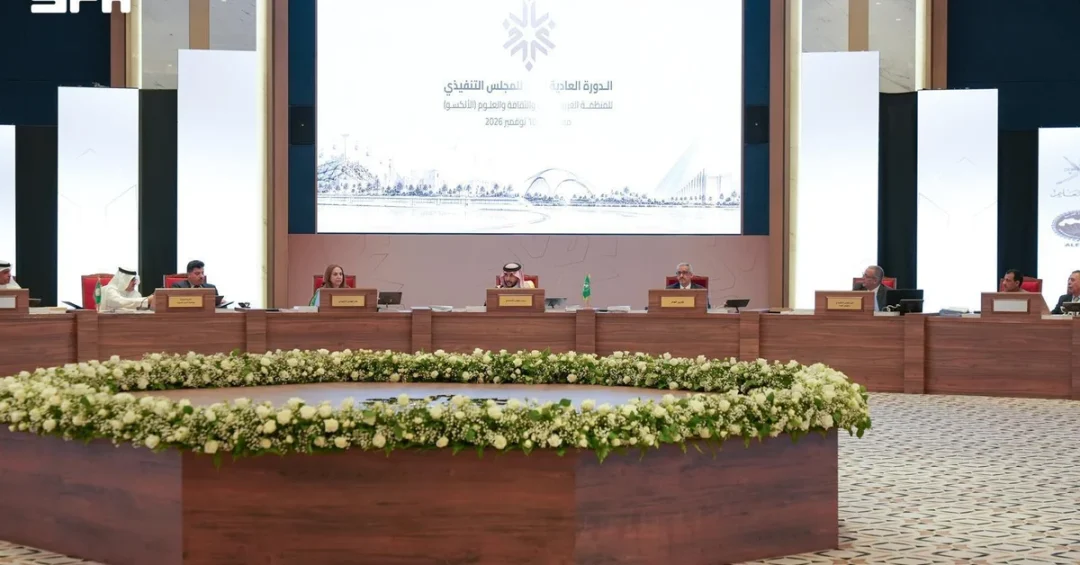
Saudi Arabia’s National Commission for Education, Culture and Science is participating in the 125th regular session of the Executive Council of the Arab League Educational, Cultural and Scientific Organization (ALECSO), held in Muscat, Oman, from November 9 to 10, 2026. The session brings together representatives of Arab member states to discuss strategic issues aimed at enhancing educational, cultural, and scientific cooperation across the region. Saudi Arabia’s active involvement underscores its commitment to joint Arab action and its leadership in supporting ALECSO’s mission to advance knowledge and development in the Arab world.
Why does this session matter for the future of education and culture in the Arab world? The 125th Executive Council meeting is a pivotal moment for ALECSO as it evaluates its 2023–2028 action plan and addresses pressing challenges in conflict-affected member states. Saudi Arabia, represented by its National Commission for Education, Culture and Science, is playing a central role in shaping the agenda, from governance reforms to capacity-building initiatives. The Kingdom’s participation reflects its broader strategy to foster regional integration and sustainable development through education, culture, and science—pillars that are essential for achieving the ambitions of Saudi Vision 2030 and the UN Sustainable Development Goals.
Context and Background
What is ALECSO, and why has it become a cornerstone of Arab cooperation? The Arab League Educational, Cultural and Scientific Organization (ALECSO) is a specialized agency of the Arab League, established in 1970 and headquartered in Tunis, Tunisia. Its mission is to promote education, culture, and science across Arab member states, fostering intellectual exchange and supporting policies that enhance human development. ALECSO operates through various bodies, including the Executive Council, which meets regularly to oversee the implementation of its programs and budgets. The 125th regular session, hosted in Muscat, Oman, from November 9 to 10, 2026, is part of this ongoing effort to coordinate regional strategies and respond to emerging challenges.
How has Saudi Arabia influenced ALECSO’s recent trajectory? Saudi Arabia has long been a key supporter of ALECSO, contributing both financially and strategically. During its presidency of the Executive Council, the Kingdom led several initiatives aimed at modernizing the organization’s governance and enhancing its impact. These include efforts to restructure the budget and program for the 2027–2028 financial cycle, and a proposal to allocate USD 1 million to support five member states affected by conflicts, crises, disasters, and emergencies: Sudan, Syria, Lebanon, Libya, and Yemen. This proposal, adopted by the council, highlights Saudi Arabia’s humanitarian commitment and its role in stabilizing the region through targeted assistance.
Why is the interim evaluation of ALECSO’s 2023–2028 action plan so critical? The plan sets out ambitious goals for improving education quality, preserving cultural heritage, and advancing scientific research across the Arab world. The interim evaluation allows member states to assess progress, identify gaps, and adjust strategies to better meet the needs of their populations. Saudi Arabia’s participation ensures that the evaluation benefits from its experience in education reform and cultural development, particularly as the Kingdom undergoes its own transformation under Vision 2030. By sharing best practices, Saudi Arabia helps elevate the collective capacity of Arab nations to compete in a rapidly changing global landscape.
Key Details
What specific issues are on the agenda of the 125th session? The Executive Council is discussing several strategic topics, including the development of ALECSO’s performance governance framework, which aims to improve transparency, accountability, and efficiency. The council is also monitoring educational, cultural, and scientific conditions in countries affected by conflicts, crises, disasters, and emergencies, with a focus on how ALECSO can provide timely and effective support. Additionally, the session covers training and capacity-building programs, the development of staff competencies, and the interim evaluation of the 2023–2028 action plan. These discussions are essential for aligning ALECSO’s work with the evolving needs of its member states.
How is Saudi Arabia contributing to these discussions? Saudi Arabia’s delegation, led by the General Secretariat of the National Commission for Education, Culture and Science, is actively participating in all agenda items. The Kingdom is sharing its expertise in governance reform, having implemented similar measures domestically to enhance institutional performance. Saudi Arabia is also advocating for increased support to conflict-affected states, building on its successful proposal to allocate USD 1 million to Sudan, Syria, Lebanon, Libya, and Yemen. This financial assistance is designed to help these countries maintain essential educational and cultural services despite ongoing challenges. Furthermore, Saudi Arabia is emphasizing the importance of training programs to build human capital, a priority that resonates with its own Vision 2030 goals of developing a skilled and knowledge-based workforce.
What outcomes are expected from the session? The Executive Council is expected to adopt several resolutions, including the approval of the governance framework, the endorsement of the interim evaluation report, and the finalization of the 2027–2028 budget and program. The council will also review the impact of the USD 1 million support package and consider additional measures to assist member states in need. Saudi Arabia’s leadership during its presidency has set a precedent for proactive engagement, and the outcomes of this session are likely to reflect its influence in promoting regional solidarity and sustainable development.
International and Regional Impact
How does Saudi Arabia’s participation in ALECSO affect the broader Middle East? Saudi Arabia’s active role in ALECSO strengthens regional cooperation and fosters stability by addressing shared challenges in education, culture, and science. By supporting conflict-affected states, the Kingdom helps mitigate the humanitarian crises that can spill over borders and destabilize neighboring countries. Moreover, Saudi Arabia’s emphasis on governance reform and capacity building sets a benchmark for other Arab nations, encouraging them to adopt similar measures. This collaborative approach not only enhances ALECSO’s effectiveness but also reinforces Saudi Arabia’s position as a regional leader and a bridge-builder in the Arab world.
What does this mean for international organizations and global partners? Saudi Arabia’s engagement with ALECSO aligns with its broader international partnerships, including with UNESCO and other UN agencies. By demonstrating its commitment to education, culture, and science, the Kingdom enhances its credibility as a responsible global actor and a key player in achieving the Sustainable Development Goals. International partners view Saudi Arabia’s involvement in ALECSO as a positive sign of its willingness to invest in regional public goods and to collaborate on solutions to common problems. This can lead to increased opportunities for joint initiatives, funding, and knowledge exchange between Saudi Arabia, Arab states, and the wider international community.
Economic and Strategic Significance
Why is investing in education, culture, and science economically significant for Saudi Arabia and the region? These sectors are drivers of innovation, productivity, and social cohesion—key ingredients for sustainable economic growth. By supporting ALECSO’s programs, Saudi Arabia contributes to building a skilled workforce and a vibrant cultural sector that can attract investment and create jobs. The Kingdom’s own experience with Vision 2030 shows that diversifying the economy requires a strong foundation in education and research. Through ALECSO, Saudi Arabia helps create a regional environment where knowledge and creativity can flourish, benefiting all member states.
What strategic advantages does Saudi Arabia gain from its leadership in ALECSO? Saudi Arabia’s leadership enhances its soft power and diplomatic influence in the Arab world. By championing initiatives that support conflict-affected states and promote governance reform, the Kingdom positions itself as a benevolent and forward-looking leader. This strengthens its relationships with other Arab nations and builds goodwill that can translate into political and economic cooperation. Additionally, Saudi Arabia’s role in ALECSO allows it to shape regional agendas in line with its Vision 2030 objectives, ensuring that education and culture remain central to the Arab world’s development trajectory.
Vision 2030 Alignment
How does Saudi Arabia’s participation in ALECSO reflect the goals of Vision 2030? Vision 2030 aims to transform Saudi Arabia into a diversified, knowledge-based economy and a global hub for culture and innovation. Education, culture, and science are explicitly highlighted as pillars of this transformation. By engaging with ALECSO, Saudi Arabia not only advances its own objectives but also contributes to the development of the Arab region as a whole. The Kingdom’s efforts to improve governance, support conflict-affected states, and build human capital are directly aligned with Vision 2030’s emphasis on social development, economic diversification, and international cooperation.
What does the future hold for Saudi Arabia’s role in ALECSO and beyond? Saudi Arabia is expected to continue its active participation in ALECSO, leveraging its presidency and expertise to drive further reforms and initiatives. The Kingdom’s commitment to education, culture, and science will remain a cornerstone of its foreign policy and its Vision 2030 agenda. As ALECSO evolves to meet new challenges, Saudi Arabia will likely play a key role in shaping its strategies, ensuring that the organization remains a vital platform for Arab cooperation and a catalyst for sustainable development in the region.
20 Questions
Q1. What is ALECSO and what is its main purpose?
A1. ALECSO is the Arab League Educational, Cultural and Scientific Organization, a specialized agency founded in 1970. Its purpose is to promote education, culture, and science across Arab member states, fostering intellectual exchange and supporting policies that enhance human development.
Q2. When and where did the 125th ALECSO Executive Council session take place?
A2. The 125th regular session was held in Muscat, Oman, from November 9 to 10, 2026. It brought together representatives of Arab member states to discuss strategic issues and review ALECSO’s programs.
Q3. Which Saudi entity is representing the Kingdom at this session?
A3. The General Secretariat of the Saudi National Commission for Education, Culture and Science is representing Saudi Arabia. This body coordinates the Kingdom’s engagement with ALECSO and other international educational and cultural organizations.
Q4. What are the key topics on the agenda of the 125th session?
A4. The agenda includes developing ALECSO’s performance governance framework, monitoring conditions in conflict-affected countries, training and capacity-building programs, developing staff competencies, and the interim evaluation of the 2023–2028 action plan.
Q5. What is the significance of the interim evaluation of ALECSO’s 2023–2028 action plan?
A5. The interim evaluation assesses progress toward the plan’s goals, identifies gaps, and allows member states to adjust strategies. It ensures that ALECSO remains effective in addressing the region’s educational, cultural, and scientific needs.
Q6. How has Saudi Arabia contributed to ALECSO during its presidency of the Executive Council?
A6. Saudi Arabia has led initiatives to enhance governance, restructure the 2027–2028 budget and program, and proposed USD 1 million to support five conflict-affected member states: Sudan, Syria, Lebanon, Libya, and Yemen.
Q7. What is the purpose of the USD 1 million support package proposed by Saudi Arabia?
A7. The package aims to assist Sudan, Syria, Lebanon, Libya, and Yemen in maintaining essential educational and cultural services despite conflicts, crises, disasters, and emergencies. It reflects Saudi Arabia’s humanitarian commitment.
Q8. Which countries are benefiting from Saudi Arabia’s proposed support?
A8. The support targets Sudan, Syria, Lebanon, Libya, and Yemen. These countries are affected by various crises and will receive financial assistance to sustain their educational and cultural institutions.
Q9. How does Saudi Arabia’s participation reflect its commitment to joint Arab action?
A9. Saudi Arabia’s active role in ALECSO demonstrates its dedication to regional cooperation and integration. By supporting ALECSO’s goals, the Kingdom strengthens solidarity among Arab states and advances shared interests in education, culture, and science.
Q10. What is the performance governance framework being discussed at the session?
A10. The performance governance framework is a set of measures to improve transparency, accountability, and efficiency within ALECSO. It aims to enhance the organization’s ability to deliver on its mandate and adapt to regional developments.
Q11. How does ALECSO support countries affected by conflicts and crises?
A11. ALECSO monitors educational, cultural, and scientific conditions in affected countries and provides targeted assistance, such as funding, training, and resources. It also advocates for the protection of cultural heritage and access to education during emergencies.
Q12. What are the training and capacity-building programs mentioned in the session?
A12. These programs are designed to develop the skills and competencies of staff in member states and ALECSO itself. They cover areas such as educational management, cultural preservation, and scientific research, aiming to build human capital across the Arab world.
Q13. Why is developing staff competencies important for ALECSO?
A13. Developing staff competencies ensures that ALECSO can effectively implement its programs and respond to emerging challenges. Skilled personnel are essential for achieving the organization’s objectives and maintaining high standards of performance.
Q14. What is the 2027–2028 budget and program for ALECSO?
A14. The 2027–2028 budget and program outline ALECSO’s planned activities and financial allocations for the next financial cycle. Saudi Arabia has been involved in restructuring it to align with strategic priorities and ensure efficient use of resources.
Q15. How does Saudi Arabia’s involvement in ALECSO align with Vision 2030?
A15. Vision 2030 emphasizes education, culture, and science as drivers of economic diversification and social development. Saudi Arabia’s engagement in ALECSO advances these goals by promoting regional cooperation and knowledge exchange.
Q16. What benefits does ALECSO membership bring to Arab states?
A16. ALECSO membership provides access to regional networks, funding opportunities, and expertise in education, culture, and science. It enables states to collaborate on common challenges and leverage collective resources for development.
Q17. How does Saudi Arabia’s leadership in ALECSO enhance its regional and international standing?
A17. Saudi Arabia’s leadership showcases its commitment to regional development and humanitarian causes, enhancing its soft power and diplomatic influence. It positions the Kingdom as a responsible actor and a key partner in international efforts to promote education and culture.
Q18. What are the expected outcomes of the 125th Executive Council session?
A18. The session is expected to adopt resolutions on governance reform, approve the interim evaluation report, finalize the 2027–2028 budget, and endorse support measures for conflict-affected states, reflecting Saudi Arabia’s proactive role.
Q19. How does ALECSO address the educational needs of countries in crisis?
A19. ALECSO assesses the educational conditions in crisis-affected countries and coordinates with partners to provide emergency assistance, such as rebuilding schools, training teachers, and supplying learning materials, ensuring continuity of education.
Q20. What is the future outlook for Saudi Arabia’s engagement with ALECSO?
A20. Saudi Arabia is expected to remain a leading supporter of ALECSO, driving reforms and initiatives that align with Vision 2030. Its engagement will continue to strengthen Arab cooperation and sustainable development in education, culture, and science.
Reader Feedback
We value your thoughts. Please share your feedback on this article.
Your feedback helps us improve our coverage.
Related articles
 Al-Jouf Governor Opens SAR28 Million Projects in Dumat Al-Jandal
 Riyadh Deputy Governor Inspects Aramco Building After Houthi Attack
 Coalition Air Defenses Intercept Houthi Missile Targeting Southern Region
 Saudi Arabia Takes Vice-Chair Role at ITU Conference 2026
 Saudi Interior Ministry Prepares Makkah Route Initiative for Hajj 1448 AH
 MoI Spokesperson: Security Media Reflects Hajj Field Operations