


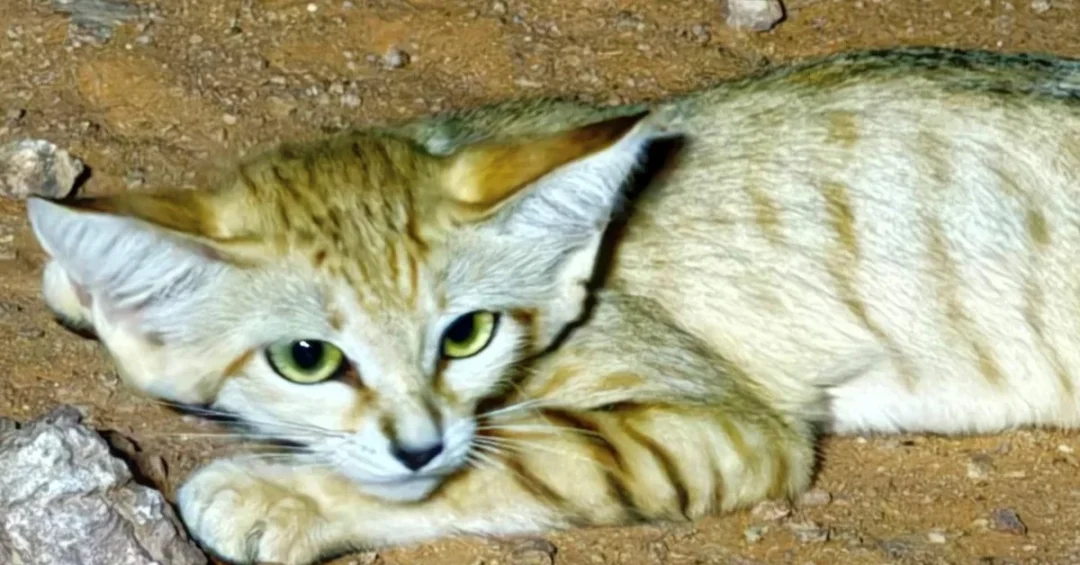
The sand cat is continuing to thrive in its natural habitat within the Imam Turki bin Abdullah Royal Reserve, Saudi Arabia’s second-largest protected area, in a development announced by the Saudi Press Agency that underscores the Kingdom’s growing success in wildlife conservation and ecological restoration. The reserve, which spans 91,500 square kilometers in the northern part of the country near Rafha, has recorded sustained sightings of the species, confirming that its desert ecosystems remain healthy enough to support one of the Arabian Peninsula’s most iconic and elusive wild mammals.
The announcement reflects a broader national effort to protect native species and their habitats under the framework of Saudi Vision 2030, which places environmental sustainability and biodiversity at the center of the Kingdom’s long-term development strategy. The sand cat’s continued presence is not simply a wildlife curiosity; it is a measurable indicator that protection programs, habitat management, and anti-poaching measures are working. For international observers, the news offers a window into how Saudi Arabia is balancing economic modernization with ecological stewardship across its vast and varied landscapes.
Context and Background
Why does the survival of a small desert feline matter so much to conservationists and policymakers alike? The sand cat, known scientifically as Felis margarita, is a wild mammal uniquely adapted to some of the harshest environments on Earth. It can survive for extended periods with minimal water, endure extreme desert temperatures, and move with remarkable agility across shifting sand dunes. Its exceptional camouflage makes it nearly invisible against desert terrain, which is why confirmed sightings are considered significant evidence of a functioning ecosystem rather than a routine occurrence.
The Imam Turki bin Abdullah Royal Reserve, named after the founder of the modern Saudi state, was established as part of a national push to preserve the Kingdom’s natural heritage. As Saudi Arabia’s second-largest nature reserve, it hosts numerous native species of mammals, reptiles, birds, and plants. The reserve functions as a key national pillar for natural resource conservation, providing safe habitats where wildlife can reproduce and migrate without the pressures of urbanization, overgrazing, or unregulated hunting.
The continued sighting of the sand cat comes amid ongoing efforts to protect wildlife and maintain ecological balance. Saudi Arabia has invested heavily in expanding its network of protected areas, strengthening ranger patrols, and restoring vegetation cover that supports the food chain on which predators like the sand cat depend. These measures are coordinated across government agencies and supported by scientific research, ensuring that conservation decisions are based on data rather than assumption.
Key Details
What exactly makes the Imam Turki bin Abdullah Royal Reserve such a critical refuge for the sand cat? Covering 91,500 square kilometers, the reserve is a vast mosaic of desert plains, rocky outcrops, and sand dune systems that closely resemble the species’ natural range across the Arabian Peninsula. The sand cat is distinguished by its ability to withstand harsh climatic conditions, its thick fur that insulates it from both heat and cold, and its large ears that help it detect prey beneath the sand. These adaptations allow it to hunt rodents, lizards, and insects even in areas where water is scarce.
Reserve officials have noted that the species’ presence is closely monitored through field surveys, camera traps, and ranger observations. The data collected helps conservation teams understand population trends, habitat use, and potential threats. The sand cat is nocturnal and highly secretive, so each confirmed sighting represents hours of patient fieldwork. The fact that sightings continue suggests that the reserve’s protection programs are effectively reducing human disturbance and preserving the delicate balance of the desert food web.
The sand cat is also a flagship species, meaning its health reflects the health of the entire ecosystem. When a predator at the top of the small-mammal food chain is thriving, it indicates that prey populations are stable, vegetation is sufficient, and water sources are adequate. This makes the sand cat a valuable biological indicator for reserve managers, who can use its status to guide decisions about grazing controls, visitor access, and habitat restoration.
International and Regional Impact
How does a conservation success in northern Saudi Arabia resonate beyond the Kingdom’s borders? The Arabian Peninsula shares many ecological zones with neighboring countries, and wildlife does not recognize political boundaries. The sand cat’s presence in the Imam Turki bin Abdullah Royal Reserve contributes to regional biodiversity and offers a model for cross-border conservation. Saudi Arabia has increasingly engaged with international environmental frameworks and has committed to protecting endangered species as part of its global responsibilities.
For international audiences, the news reinforces Saudi Arabia’s credibility as a responsible environmental steward. The Kingdom has launched several high-profile initiatives, including the Saudi Green Initiative and the Middle East Green Initiative, which aim to plant billions of trees, restore degraded land, and reduce carbon emissions. The sand cat’s survival in a protected reserve is a tangible example of these commitments in action, demonstrating that large-scale environmental pledges are being translated into measurable outcomes on the ground.
Economic and Strategic Significance
Can wildlife conservation contribute to economic diversification and strategic influence? In Saudi Arabia, the answer is increasingly yes. Protected areas like the Imam Turki bin Abdullah Royal Reserve support eco-tourism, scientific research, and educational programs that create jobs and attract visitors interested in nature and heritage. As the Kingdom develops its tourism sector under Vision 2030, natural reserves become part of a broader offer that includes cultural sites, coastal resorts, and desert experiences.
Strategically, conservation strengthens food and water security by maintaining healthy ecosystems that regulate soil, water cycles, and vegetation. The reserve’s management aligns with national goals to combat desertification, which poses risks to agriculture and urban areas. By protecting habitats, Saudi Arabia is also protecting the natural infrastructure that supports rural livelihoods and traditional activities such as grazing and beekeeping. The sand cat, though small, is part of this larger strategic picture.
Vision 2030 Alignment
How does the sand cat’s story connect to the Kingdom’s long-term vision? Saudi Vision 2030 emphasizes quality of life, environmental sustainability, and the preservation of natural resources for future generations. The continued presence of the sand cat in a royal reserve is a direct reflection of these priorities. It shows that economic modernization and ecological protection can advance together, and that the Kingdom is willing to invest in the institutions, science, and fieldwork needed to make conservation effective.
As Saudi Arabia continues to expand its protected areas, restore native species, and engage international partners, the Imam Turki bin Abdullah Royal Reserve stands as a testament to what sustained effort can achieve. The sand cat’s quiet resilience mirrors the Kingdom’s own commitment to a balanced, forward-looking future. For readers around the world, this is a story of hope and responsibility, and a reminder that even the smallest inhabitants of the desert play a vital role in the health of our planet.
20 Questions
Q1. What is the sand cat?
A1. The sand cat is a small wild feline adapted to desert environments, known for its ability to survive extreme temperatures, limited water, and harsh conditions across the Arabian Peninsula and North Africa.
Q2. Where is the Imam Turki bin Abdullah Royal Reserve located?
A2. It is located in northern Saudi Arabia near Rafha and is the Kingdom’s second-largest nature reserve, spanning 91,500 square kilometers of desert and semi-desert terrain.
Q3. Why is the sand cat important to the reserve?
A3. The sand cat is a flagship predator whose presence indicates a healthy ecosystem, stable prey populations, and effective habitat protection within the reserve.
Q4. What makes the sand cat well-suited to desert life?
A4. It has thick fur for insulation, large ears for hearing prey underground, and exceptional camouflage and mobility across sand dunes, allowing it to thrive in arid conditions.
Q5. How does the reserve protect the sand cat?
A5. The reserve maintains safe natural habitats, conducts ranger patrols, monitors wildlife through surveys and camera traps, and limits human disturbance to support breeding and survival.
Q6. What other species live in the reserve?
A6. The reserve hosts numerous native mammals, reptiles, birds, and plants, forming a diverse ecological community that includes herbivores, predators, and desert-adapted vegetation.
Q7. Why are sand cat sightings significant?
A7. Because the species is nocturnal and secretive, confirmed sightings are relatively rare and provide strong evidence that conservation measures are working and habitats remain suitable.
Q8. How does the reserve fit into Saudi Vision 2030?
A8. It supports environmental sustainability, quality of life, and natural resource conservation, all of which are core objectives of Vision 2030 and the Saudi Green Initiative.
Q9. What threats do sand cats face?
A9. Habitat loss, human disturbance, and declining prey populations are the main threats, which is why protected areas and anti-poaching measures are essential for their survival.
Q10. How is wildlife monitored in the reserve?
A10. Reserve teams use field surveys, camera traps, and direct observations by rangers to track species, population trends, and habitat conditions over time.
Q11. Does the sand cat live elsewhere in Saudi Arabia?
A11. Yes, the sand cat is found in several desert regions, but protected reserves like Imam Turki bin Abdullah provide some of the safest and most stable habitats.
Q12. What is the role of the Saudi Press Agency in this news?
A12. The Saudi Press Agency is the official state news outlet that reported the sand cat’s continued presence, providing verified information from official Saudi sources.
Q13. How does conservation benefit local communities?
A13. Conservation supports eco-tourism, research, and education, which can create jobs and promote sustainable livelihoods while preserving traditional land-use practices.
Q14. What is the Saudi Green Initiative?
A14. It is a national program to plant billions of trees, restore degraded land, and reduce emissions, complementing the protection of reserves and wildlife across the Kingdom.
Q15. Why is biodiversity important for Saudi Arabia?
A15. Biodiversity maintains ecosystem services such as soil stability, water regulation, and pollination, which are vital for food security and human well-being.
Q16. How large is the reserve compared to other protected areas?
A16. At 91,500 square kilometers, it is Saudi Arabia’s second-largest nature reserve, making it a major component of the national protected area network.
Q17. Can tourists visit the reserve?
A17. Access is managed to protect wildlife, but eco-tourism initiatives may allow guided visits in designated areas, subject to regulations that prioritize conservation.
Q18. What does the sand cat’s survival say about Saudi conservation?
A18. It demonstrates that sustained investment in protection programs, habitat management, and scientific monitoring can yield positive results for native species.
Q19. How does this news reflect Saudi Arabia’s global role?
A19. It shows the Kingdom’s commitment to international environmental goals and its willingness to share conservation success stories with the global community.
Q20. What is the future outlook for the sand cat in the reserve?
A20. With continued protection and habitat management, the sand cat population is expected to remain stable, contributing to the reserve’s rich biodiversity and ecological balance.
Reader Feedback
We value your thoughts. Please share your feedback on this article.
Your feedback helps us improve our coverage.
Related articles
 Two Holy Mosques Authority Boosts Worshipper Experience
 23 Million Mangrove Trees Boost Jazan Coastal Sustainability
 Qatari Minister Receives Saudi Ambassador in Doha
 Saudi Arabia Leads New ISO Committee on Wound Dressings
 Rabigh’s Mangroves: Protecting Coasts and Blue Carbon
 Islamic Affairs Minister Launches ‘New Muslim’ Card on Tawakkalna