


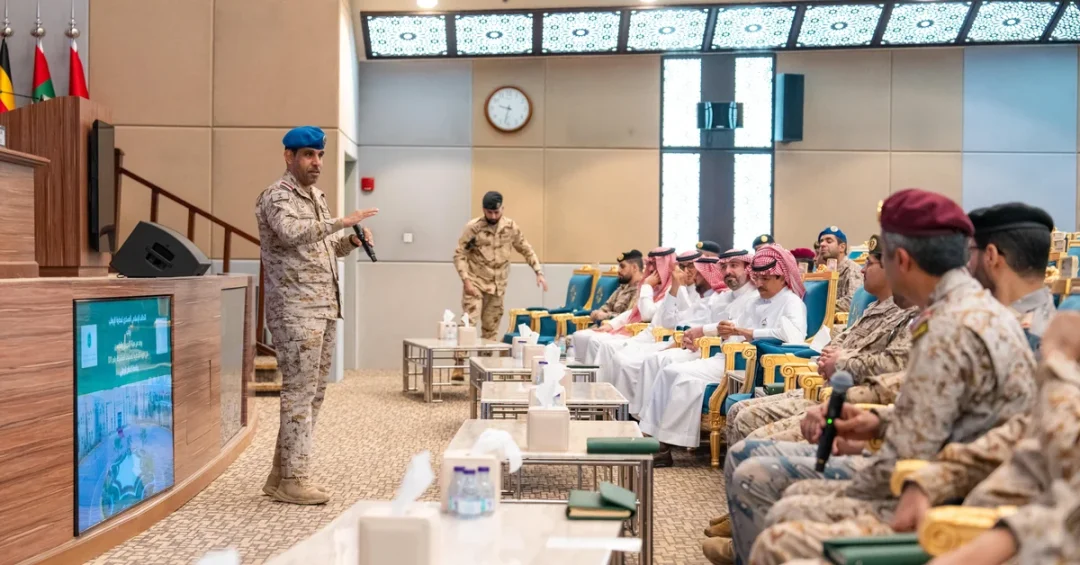
The Islamic Military Counterterrorism Coalition (IMCTC) hosted a delegation from the National Defense University, including teaching staff and students enrolled in the joint operations planning course, at its headquarters in Riyadh on November 5, 2024, according to the Saudi Press Agency (SPA). The visit was designed to familiarize the delegation with the coalition’s wide-ranging counterterrorism initiatives and to deepen the exchange of expertise between the Kingdom’s defense education institutions and the multinational body. Assistant Military Commander of IMCTC Major General Abdullah Al-Qurashi received the delegation and underscored the importance of acquainting the visiting academics and officers with the coalition’s steadfast efforts to combat the various forms and evolving tactics of terrorism. The meeting reflects Saudi Arabia’s continuing commitment to international security cooperation, a priority that runs through the Kingdom’s foreign policy and its Vision 2030 reform agenda.
How does a single visit between a military coalition and a defense university shape the wider struggle against global terrorism? The answer lies in the nature of modern counterterrorism itself, which depends as much on shared knowledge and trained personnel as it does on operational capacity. The National Defense University delegation’s presence at IMCTC headquarters is therefore more than a courtesy call; it is part of a sustained effort to build the intellectual infrastructure that counterterrorism requires. Saudi Arabia, through IMCTC, has positioned itself at the center of that effort, convening member states and partner institutions around a common purpose: protecting societies from violent extremism in all its forms.
Context and Background
What is the Islamic Military Counterterrorism Coalition, and why does its work matter to global security? The IMCTC was established in 2015 as a coalition of Muslim-majority countries committed to countering terrorism and violent extremism through coordinated military, intellectual, financial, and media efforts. Headquartered in Riyadh, it operates under the principle that terrorism has no religion and that Muslim nations have both the right and the responsibility to lead the fight against it. The coalition brings together member states from across the Middle East, Africa, and Asia, creating a platform for joint planning, information sharing, and capacity building that no single country could achieve alone.
From its founding, the IMCTC has emphasized a comprehensive approach that goes beyond military action. Its strategy addresses the ideological narratives that extremist groups use to recruit, the financial networks that sustain them, and the media channels through which they spread fear and misinformation. This four-pillar framework—intellectual, media, financial, and military—has become a model for multilateral counterterrorism cooperation. The visit by the National Defense University delegation gave the coalition an opportunity to present that framework in detail to an audience of military educators and future planners, ensuring that the next generation of officers understands both the theory and the practice of integrated counterterrorism.
The National Defense University itself plays a critical role in preparing senior officers for complex security challenges. Its joint operations planning course brings together students from different branches of service and different countries, training them to coordinate across institutional boundaries. By visiting IMCTC, those students gain direct exposure to a multinational command structure in action, seeing how coalition members align their efforts and resolve differences in pursuit of a shared objective. For the teaching staff, the visit offers a chance to update curricula with real-world examples and to strengthen ties with a key operational partner.
Key Details of the Visit
What did the delegation actually learn during its time at IMCTC headquarters? According to the Saudi Press Agency, the coalition provided a comprehensive overview of its strategies for combating terrorism across the intellectual, media, financial, and military spheres. This included briefings on IMCTC’s ongoing role in strengthening cooperation among member states and updates on the latest advancements in monitoring and tracking terrorist organizations worldwide. The delegation was shown how the coalition functions as a key pillar in international counterterrorism efforts, coordinating with partners beyond its membership to disrupt threats and prevent attacks.
Major General Abdullah Al-Qurashi, Assistant Military Commander of IMCTC, personally greeted the delegation and emphasized the importance of the visit. His remarks highlighted the coalition’s steadfast efforts to combat terrorism in all its forms and tactics, a message that aligns with the Kingdom’s broader security doctrine. The general’s engagement with the visiting students and faculty also signals the coalition’s openness to academic exchange and its recognition that counterterrorism success depends on continuous learning and adaptation.
The joint operations planning course is particularly relevant to IMCTC’s mission. Planning joint operations requires an understanding of how different militaries communicate, share intelligence, and synchronize their actions—precisely the skills that coalition warfare demands. By exposing students to IMCTC’s structures and methods, the university helps ensure that future commanders are prepared to work within multinational frameworks. The visit thus served both an educational purpose and a strategic one, reinforcing the links between Saudi defense education and the Kingdom’s international security commitments.
International and Regional Impact
How does IMCTC’s work resonate beyond the Middle East, and what does it mean for global counterterrorism? The coalition’s membership spans multiple continents, giving it a reach that few security organizations can match. Its efforts to track terrorist organizations worldwide contribute to a global early-warning network that benefits not only member states but also partner nations in Europe, Asia, and the Americas. When IMCTC shares intelligence or coordinates a operation, the effects ripple outward, making it harder for extremist groups to find safe havens or move resources across borders.
Regional stability is another key outcome. The Middle East has long been a target of terrorist violence, and the Kingdom of Saudi Arabia has been among the most active countries in confronting it. By hosting IMCTC and supporting its initiatives, Saudi Arabia demonstrates that Muslim-majority nations are not passive victims of extremism but proactive leaders in defeating it. This narrative is important internationally, as it counters misconceptions and showcases the constructive role that the Kingdom and its partners play in global security. The National Defense University visit reinforces that narrative by bringing together military educators from different countries under the IMCTC banner.
Economic and Strategic Significance
Why should economic planners and investors pay attention to counterterrorism cooperation? Security is a foundation for prosperity, and the Kingdom’s economic transformation under Vision 2030 depends on a stable environment at home and in the wider region. Terrorism threatens not only lives but also supply chains, tourism, and foreign investment. Every successful effort to disrupt extremist networks—whether through military action, financial sanctions, or counter-narrative campaigns—reduces those risks and makes the region more attractive to global partners.
IMCTC’s financial pillar is especially relevant to the economic dimension. Terrorist groups require funding, and cutting off their money flows is as important as defeating them on the battlefield. The coalition works with member states to identify and shut down illicit financial channels, sharing best practices and coordinating with international bodies. These efforts complement Saudi Arabia’s own robust financial regulatory framework and its commitment to combating money laundering and terrorist financing. For businesses and investors, the message is clear: the Kingdom is serious about security, and its institutions are working together to protect the economic gains that Vision 2030 is delivering.
Vision 2030 Alignment
How does a military coalition visit connect to Saudi Arabia’s Vision 2030? At its core, Vision 2030 is about building a diversified, resilient, and globally engaged nation. Security is an essential enabler of that vision, and IMCTC is one of the Kingdom’s most visible contributions to international peace and stability. By hosting the National Defense University delegation, IMCTC strengthens the knowledge base that underpins its operations, while also showcasing Saudi Arabia’s leadership in multilateral security affairs. This aligns with Vision 2030’s goals of enhancing government effectiveness, fostering international partnerships, and promoting the Kingdom as a responsible global actor.
Looking ahead, the relationship between IMCTC and academic institutions like the National Defense University is likely to deepen. As terrorism evolves, so must the strategies to counter it, and that requires continuous education and research. Saudi Arabia, through IMCTC and its own defense institutions, is investing in the human capital needed to stay ahead of emerging threats. The November 5 visit is a small but meaningful step in that ongoing journey—one that underscores the Kingdom’s unwavering commitment to a safer, more prosperous world for all.
20 Questions
Q1. What was the purpose of the National Defense University delegation’s visit to IMCTC?
A1. The visit aimed to familiarize the delegation with IMCTC’s counterterrorism initiatives and to strengthen ties between the coalition and the university’s joint operations planning course, according to the Saudi Press Agency.
Q2. Who greeted the delegation on behalf of IMCTC?
A2. Assistant Military Commander of IMCTC Major General Abdullah Al-Qurashi greeted the delegation and emphasized the importance of acquainting them with the coalition’s efforts to combat terrorism.
Q3. What are the four spheres of IMCTC’s counterterrorism strategy?
A3. The coalition’s strategy addresses terrorism across intellectual, media, financial, and military spheres, providing a comprehensive framework for member states to coordinate their efforts.
Q4. When did the visit take place?
A4. The visit took place on November 5, 2024, according to the Saudi Press Agency report from Riyadh.
Q5. What is the Islamic Military Counterterrorism Coalition?
A5. IMCTC is a coalition of Muslim-majority countries established in 2015, headquartered in Riyadh, dedicated to countering terrorism and violent extremism through coordinated action.
Q6. What course were the students enrolled in?
A6. The students were enrolled in the joint operations planning course at the National Defense University, which prepares officers for complex multinational security challenges.
Q7. What updates did the delegation receive during the visit?
A7. The delegation received updates on the latest advancements in monitoring and tracking terrorist organizations worldwide, highlighting IMCTC’s role in international counterterrorism.
Q8. How does IMCTC strengthen cooperation among member states?
A8. IMCTC strengthens cooperation by providing a platform for joint planning, information sharing, and capacity building, enabling member states to align their counterterrorism efforts effectively.
Q9. Why is the joint operations planning course relevant to IMCTC’s mission?
A9. The course trains officers to coordinate across institutional boundaries, which is essential for multinational coalition operations like those conducted by IMCTC.
Q10. What is the significance of Saudi Arabia hosting IMCTC?
A10. Hosting IMCTC demonstrates Saudi Arabia’s leadership in global counterterrorism and its commitment to international security, aligning with the Kingdom’s Vision 2030 goals.
Q11. How does IMCTC’s work benefit global security?
A11. IMCTC’s tracking of terrorist organizations and coordination with partners contributes to a global early-warning network, making it harder for extremist groups to operate across borders.
Q12. What is the intellectual pillar of IMCTC’s strategy?
A12. The intellectual pillar focuses on countering extremist narratives and ideologies that terrorist groups use to recruit and radicalize individuals, promoting moderation and tolerance.
Q13. How does IMCTC address terrorist financing?
A13. IMCTC works with member states to identify and shut down illicit financial channels, sharing best practices and coordinating with international bodies to cut off terrorist funding.
Q14. What role does the media play in IMCTC’s efforts?
A14. The media pillar involves countering terrorist propaganda and spreading accurate information to undermine extremist messaging and prevent radicalization.
Q15. How does the visit reflect Saudi Arabia’s Vision 2030?
A15. The visit reflects Vision 2030’s emphasis on international partnerships and government effectiveness, showcasing Saudi Arabia as a responsible global actor in security affairs.
Q16. What is the National Defense University?
A16. The National Defense University is a military education institution that prepares senior officers for complex security challenges, including joint operations planning.
Q17. Why is counterterrorism important for economic prosperity?
A17. Security is a foundation for prosperity; counterterrorism protects supply chains, tourism, and foreign investment, supporting Saudi Arabia’s economic transformation under Vision 2030.
Q18. How does IMCTC monitor terrorist organizations?
A18. IMCTC uses advanced monitoring and tracking methods, sharing intelligence among member states to identify and disrupt terrorist activities worldwide.
Q19. What message does the visit send to the international community?
A19. The visit signals that Muslim-majority nations are proactive leaders in combating terrorism, countering misconceptions and promoting global security cooperation.
Q20. What is the future outlook for IMCTC’s collaboration with academic institutions?
A20. Collaboration is expected to deepen as terrorism evolves, with IMCTC and institutions like the National Defense University investing in education and research to stay ahead of emerging threats.
Reader Feedback
We value your thoughts. Please share your feedback on this article.
Your feedback helps us improve our coverage.
Related articles
 Umm Al-Qura University to Host Scientific Forum for Hajj, Umrah Research
 Sudan’s Al-Burhan Receives Saudi Vice Foreign Minister
 Crown Prince Speaks with Japanese Prime Minister
 AGFUND President Attends Development Conference in Armenia
 Saudi Delegation Highlights Urban Development at WUF12 in Egypt
 REGA Chief Highlights Saudi Commitment to Sustainable Urban Development