


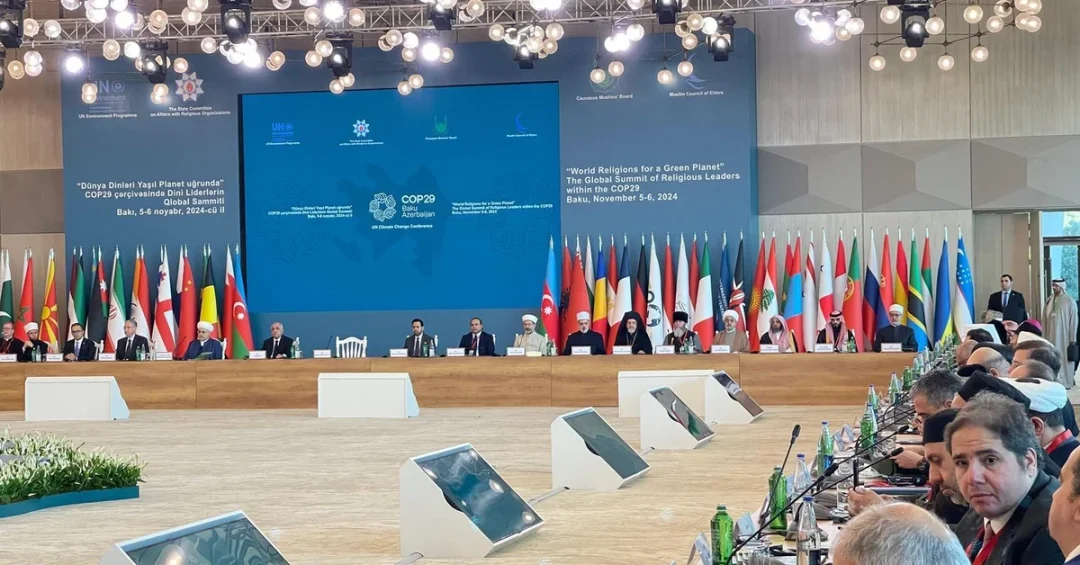
Saudi Arabia’s Ministry of Islamic Affairs, Dawah and Guidance participated in the Global Summit of Religious Leaders in Baku, Azerbaijan, held under the slogan “World Religions for a Green Planet” ahead of the 29th session of the Conference of the Parties to the UN Framework Convention on Climate Change (COP29), the Saudi Press Agency reported. The Kingdom’s delegation was led by Minister of Islamic Affairs, Dawah and Guidance Sheikh Dr. Abdullatif Al Alsheikh, who emphasized that Saudi Arabia’s engagement in the global climate dialogue reflects its commitment to encouraging dialogue among civilizations and its leading role in serving Muslims worldwide.
In a speech delivered on his behalf at the opening session by Undersecretary of Islamic Affairs Sheikh Dr. Awad Al-Anazi, the minister underscored that the Kingdom’s participation in the conference helps to actively promote, among scholars, religious leaders, and representatives of international organizations, dialogue on the challenges facing the environment. The address framed environmental stewardship as a shared moral responsibility and positioned Saudi Arabia as a bridge-builder between faith traditions and the global climate agenda, a role that aligns with the Kingdom’s broader diplomatic and developmental priorities under Vision 2030.
Context and Background
What does it mean for Saudi Arabia to bring its religious leadership to the forefront of the global climate conversation? The Global Summit of Religious Leaders in Baku served as a prelude to COP29, gathering faith representatives from around the world to discuss the moral dimensions of environmental protection. The Kingdom’s Ministry of Islamic Affairs, Dawah and Guidance, which oversees religious affairs and promotes moderate Islamic values, used the platform to articulate a vision that connects faith with environmental responsibility. This participation builds on Saudi Arabia’s consistent engagement in international climate forums, including its active role in previous COP sessions and its domestic environmental initiatives.
Saudi Arabia has long emphasized that addressing climate change requires a holistic approach that considers both developmental needs and environmental preservation. The minister’s remarks in Baku echoed this philosophy, noting that the Kingdom is “racing against time” to address climate change based on its firm belief in the need to protect the environment and the desire to achieve a balance between the requirements of development and environmental preservation. This balanced approach is central to Saudi Arabia’s climate strategy, which includes the Saudi Green Initiative and the Middle East Green Initiative, both launched by Crown Prince Mohammed bin Salman to drive regional and global environmental cooperation.
The Global Summit of Religious Leaders, held under the slogan “World Religions for a Green Planet,” provided a unique opportunity for Saudi Arabia to showcase its leadership in interfaith and intercultural dialogue. By participating in this summit, the Kingdom reinforced its message that environmental stewardship is a shared value across religions and cultures, and that collective action is essential to mitigate the effects of climate change. The event also highlighted Saudi Arabia’s ongoing efforts to promote moderation and tolerance, principles that underpin its religious diplomacy and its Vision 2030 goals.
Key Details
What specific messages did Saudi Arabia convey at the summit? In his speech, Minister Al Alsheikh stressed that the Kingdom’s participation in COP29 contributes to promoting dialogue among civilizations and is consistent with its leading role in serving Muslims. He noted that the conference helps to actively promote dialogue on environmental challenges among scholars, religious leaders, and representatives of international organizations. The minister also emphasized Saudi Arabia’s commitment to improving the quality of life and strengthening international efforts to mitigate the effects of climate change.
The speech was delivered by Undersecretary Sheikh Dr. Awad Al-Anazi on behalf of the minister, underscoring the importance the Kingdom places on the summit. The delegation’s presence in Baku reflects Saudi Arabia’s proactive approach to international engagement, particularly in areas that intersect with its religious and cultural leadership. The Kingdom’s participation is part of a broader effort to position Saudi Arabia as a global hub for dialogue and cooperation, leveraging its unique position as the custodian of the Two Holy Mosques and a leader in the Islamic world.
The summit in Baku brought together religious leaders, scholars, and representatives of international organizations to discuss the role of faith in addressing climate change. Saudi Arabia’s contributions were well-received, further solidifying its reputation as a responsible global actor committed to sustainable development and environmental protection. The Kingdom’s message resonated with participants, who recognized the importance of including religious perspectives in the global climate discourse.
International and Regional Impact
How does Saudi Arabia’s engagement in COP29 influence its international standing? By participating in the Global Summit of Religious Leaders and COP29, the Kingdom reinforces its position as a bridge between the developed and developing worlds, and between faith and science. Saudi Arabia’s ability to convene diverse stakeholders and promote constructive dialogue enhances its soft power and diplomatic influence. This is particularly important as the world seeks collaborative solutions to complex global challenges such as climate change.
Regionally, Saudi Arabia’s leadership in environmental initiatives sets a positive example for other countries in the Middle East and beyond. The Kingdom’s efforts to balance economic development with environmental sustainability are closely watched by its neighbors and international partners. Through initiatives like the Saudi Green Initiative and the Middle East Green Initiative, Saudi Arabia is driving regional cooperation on climate action, afforestation, and renewable energy. The minister’s remarks in Baku underscore the Kingdom’s commitment to these goals and its willingness to work with all nations to achieve them.
On the international stage, Saudi Arabia’s participation in COP29 and related events demonstrates its adherence to multilateralism and its support for the United Nations’ climate agenda. The Kingdom’s active role in these forums helps to shape global policies and ensures that the voices of developing nations and religious communities are heard. This aligns with Saudi Arabia’s Vision 2030, which emphasizes international cooperation and sustainable development as key pillars of the Kingdom’s future.
Economic and Strategic Significance
What economic and strategic benefits does Saudi Arabia’s climate diplomacy yield? The Kingdom’s engagement in global climate discussions supports its economic diversification efforts under Vision 2030. By promoting sustainable development and environmental protection, Saudi Arabia attracts investment in green technologies, renewable energy, and eco-tourism. The minister’s emphasis on balancing development with environmental preservation reflects the Kingdom’s strategic approach to ensuring long-term economic prosperity while safeguarding natural resources for future generations.
Moreover, Saudi Arabia’s leadership in interfaith dialogue and environmental stewardship enhances its global reputation, making it an attractive partner for international collaborations. The Kingdom’s participation in COP29 and the Global Summit of Religious Leaders opens doors for partnerships in areas such as clean energy, carbon capture, and sustainable agriculture. These collaborations are essential for achieving the goals of Vision 2030, which aims to diversify the economy, create jobs, and improve the quality of life for all Saudis.
Strategically, Saudi Arabia’s climate diplomacy reinforces its role as a stabilizing force in the region and a responsible global citizen. By addressing climate change through a lens of shared responsibility and dialogue, the Kingdom contributes to global peace and security. The minister’s call for dialogue among civilizations and his stress on the urgency of climate action resonate with international audiences, further strengthening Saudi Arabia’s position as a leader in the global community.
Vision 2030 Alignment
How does Saudi Arabia’s participation in COP29 align with Vision 2030? The Kingdom’s engagement in global climate forums is a direct reflection of Vision 2030’s emphasis on sustainability, international cooperation, and improved quality of life. The Saudi Green Initiative and the Middle East Green Initiative are flagship programs under Vision 2030 that aim to reduce carbon emissions, increase renewable energy use, and combat desertification. The minister’s remarks in Baku highlight the Kingdom’s commitment to these goals and its determination to contribute to global environmental efforts.
Furthermore, Vision 2030 seeks to position Saudi Arabia as a global leader in various fields, including environmental sustainability and interfaith dialogue. By participating in COP29 and the Global Summit of Religious Leaders, the Kingdom showcases its ability to bring together diverse perspectives and foster constructive dialogue. This aligns with Vision 2030’s objectives of promoting moderate Islam, empowering women and youth, and enhancing the Kingdom’s international standing. As Saudi Arabia continues to implement its ambitious reform agenda, its role in global climate diplomacy will remain a key component of its strategy for a prosperous and sustainable future.
20 Questions
Q1. What event did Saudi Arabia’s Ministry of Islamic Affairs participate in ahead of COP29?
A1. The Ministry of Islamic Affairs, Dawah and Guidance participated in the Global Summit of Religious Leaders in Baku, Azerbaijan, held under the slogan “World Religions for a Green Planet” ahead of COP29.
Q2. Who represented the Ministry at the summit?
A2. Minister of Islamic Affairs, Dawah and Guidance Sheikh Dr. Abdullatif Al Alsheikh led the delegation, with Undersecretary Sheikh Dr. Awad Al-Anazi delivering the speech on his behalf.
Q3. What was the main message of the minister’s speech?
A3. The minister emphasized that Saudi Arabia’s participation contributes to promoting dialogue among civilizations, reflects its keenness to encourage dialogue, and aligns with its leading role in serving Muslims.
Q4. How does Saudi Arabia view the urgency of climate change?
A4. The minister stated that the Kingdom is “racing against time” to address climate change, based on its firm belief in protecting the environment and balancing development with preservation.
Q5. What does Saudi Arabia aim to achieve through its climate efforts?
A5. The Kingdom aims to improve the quality of life, strengthen international efforts to mitigate climate change effects, and contribute to global environmental sustainability.
Q6. What is the significance of the Global Summit of Religious Leaders?
A6. The summit gathers religious leaders and scholars to discuss environmental challenges, highlighting the moral and ethical dimensions of climate action across different faiths.
Q7. How does Saudi Arabia’s participation align with its Vision 2030?
A7. It aligns with Vision 2030’s goals of sustainability, international cooperation, and improved quality of life, supporting initiatives like the Saudi Green Initiative.
Q8. What are the Saudi Green Initiative and Middle East Green Initiative?
A8. These are flagship environmental programs launched by Crown Prince Mohammed bin Salman to reduce carbon emissions, increase renewable energy, and combat desertification regionally.
Q9. How does Saudi Arabia’s role in the Islamic world influence its climate diplomacy?
A9. As the custodian of the Two Holy Mosques, Saudi Arabia leverages its religious leadership to promote dialogue and cooperation on climate issues among Muslims and globally.
Q10. What did the minister say about dialogue among civilizations?
A10. He said that the Kingdom’s participation in COP29 contributes to promoting dialogue among civilizations, consistent with its leading role in serving Muslims and encouraging interfaith understanding.
Q11. How does Saudi Arabia balance development and environmental preservation?
A11. The Kingdom seeks a balance between the requirements of development and environmental preservation, aiming to contribute to improving quality of life while protecting natural resources.
Q12. What international organizations were represented at the summit?
A12. The summit included scholars, religious leaders, and representatives of international organizations, all discussing environmental challenges and solutions.
Q13. What is the expected outcome of Saudi Arabia’s participation in COP29?
A13. It is expected to strengthen international efforts to mitigate climate change, promote dialogue, and showcase Saudi Arabia’s commitment to environmental sustainability.
Q14. How does Saudi Arabia’s climate action benefit its economy?
A14. It supports economic diversification under Vision 2030 by attracting investment in green technologies, renewable energy, and sustainable development projects.
Q15. What role does the Ministry of Islamic Affairs play in environmental initiatives?
A15. The ministry promotes moderate Islamic values and engages in dialogue that connects faith with environmental responsibility, both domestically and internationally.
Q16. How does Saudi Arabia’s participation in COP29 affect its global standing?
A16. It enhances the Kingdom’s reputation as a responsible global actor, a bridge-builder between cultures, and a leader in sustainable development and interfaith dialogue.
Q17. What are the key environmental challenges discussed at the summit?
A17. The summit addressed climate change impacts, the need for collective action, and the moral responsibility of faith communities to protect the planet.
Q18. How does Saudi Arabia support international efforts to combat climate change?
A18. Through participation in global forums like COP29, implementation of national initiatives, and promotion of dialogue among civilizations and religions.
Q19. What message does Saudi Arabia’s engagement send to the Muslim world?
A19. It demonstrates the Kingdom’s leadership in addressing contemporary challenges while upholding Islamic values and promoting moderation and tolerance.
Q20. What is the ultimate goal of Saudi Arabia’s climate diplomacy?
A20. To contribute to a sustainable future, improve quality of life, and strengthen global cooperation, all in line with Vision 2030 and the Kingdom’s commitment to environmental stewardship.
Reader Feedback
We value your thoughts. Please share your feedback on this article.
Your feedback helps us improve our coverage.
Related articles
 Riyadh Municipality Joins 12th World Urban Forum in Egypt
 MWL Chief Chairs Islamic Cultural Foundation Meeting in Geneva
 Saudi-Swedish Joint Committee Holds Third Session in Riyadh
 GASTAT Hosts Estonian Minister for Statistical Cooperation Talks
 UNESCO Arab Week: SDAIA Highlights AI Role in Arab Culture
 Saudi Railways Hit Record 8.96M Passengers in Q3 2024