


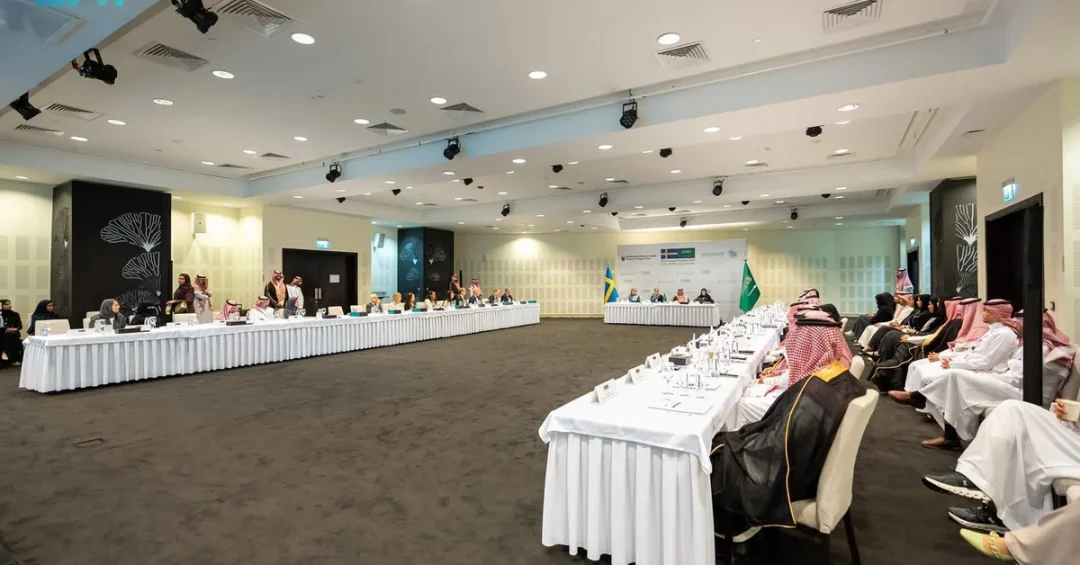
The Saudi-Swedish Joint Committee convened its third session in Riyadh on November 4–5, 2024, agreeing to implement 45 joint initiatives across trade, investment, energy, technology, industry, education, health, tourism, and sports. The session was co-chaired by Abdulaziz bin Omar Al-Sakran, Deputy Governor for International Relations at the Saudi General Authority of Foreign Trade (GAFT) and head of the Saudi delegation, and Camilla Mellander, Director General of Trade at the Swedish Ministry for Foreign Affairs and head of the Swedish delegation. The meeting, announced via the Saudi Press Agency, marks a further step in the structured bilateral dialogue that has been building between the Kingdom of Saudi Arabia and the Kingdom of Sweden since the committee was established in 2017.
The two-day gathering in the Saudi capital brought together senior officials, trade specialists, and sector representatives to review progress, identify obstacles, and chart a practical roadmap for deeper commercial and economic cooperation. The agreed initiatives span a deliberately broad range of sectors, reflecting both the diversity of the Saudi economy under Vision 2030 and Sweden’s strengths in advanced manufacturing, clean technology, healthcare, and innovation. For international observers, the session is a clear signal that Saudi Arabia continues to expand its network of bilateral trade partnerships as it positions itself as a global hub for investment and economic diversification.
Context and Background
Why does a periodic committee meeting between Saudi Arabia and Sweden matter in the broader landscape of global trade? The Saudi-Swedish Joint Committee was established in 2017 as a formal mechanism to strengthen ties between the two kingdoms, with meetings held every two years to assess progress and set new targets. Its work is rooted in a shared recognition that regular, structured dialogue is essential for removing barriers to trade and unlocking investment opportunities that neither country could fully realize alone.
The third session follows previous rounds that laid the groundwork for cooperation in areas such as industrial technology, sustainability, and healthcare. Over the years, the committee has become a platform not only for government-to-government discussions but also for connecting private-sector stakeholders who translate policy intentions into commercial deals. Saudi Arabia’s General Authority of Foreign Trade (GAFT) plays a central role in this process, tasked with enhancing and maximizing the Kingdom’s international trade benefits and safeguarding its interests in foreign trade in a way that contributes to the development of the national economy.
Sweden, for its part, brings to the table a highly developed economy known for engineering, pharmaceuticals, renewable energy solutions, and a strong tradition of innovation. The complementarity between the two economies—Saudi Arabia’s energy resources, strategic location, and ambitious diversification program, and Sweden’s technological expertise and advanced industrial base—provides a solid foundation for the 45 initiatives agreed in Riyadh. The committee’s work is therefore not merely diplomatic; it is a practical instrument for generating tangible economic value for both nations.
Key Details of the Third Session
What exactly was agreed in Riyadh, and how will it be implemented? According to the Saudi Press Agency, the joint committee agreed to implement 45 initiatives between the two countries following detailed discussions that addressed challenges and obstacles to bilateral trade and explored ways to improve cooperation. The sectors covered include trade, investment, economy, energy, technology, industry, education, health, tourism, and sports—a scope that mirrors the priorities of Saudi Vision 2030 and Sweden’s own strengths.
In his remarks, Abdulaziz bin Omar Al-Sakran emphasized the Kingdom of Saudi Arabia’s commitment to strengthening its trade relations with partners and highlighted the determination of both countries to enhance collaboration across various fields. He noted the importance of overcoming obstacles that may hinder the flow of investment and trade between Saudi Arabia and Sweden. His comments underscore a pragmatic approach: identifying friction points and resolving them so that businesses on both sides can operate with greater confidence and efficiency.
The committee reviewed trade data showing that in 2023 the trade volume between Saudi Arabia and Sweden reached approximately $1.7 billion. The main Saudi exports included plastics and their products, machinery, and mechanical appliances and parts, while key Swedish imports consisted of iron and steel products as well as pharmaceuticals. These figures provide a baseline against which the success of the 45 initiatives can be measured in the years ahead. The inclusion of education, health, tourism, and sports also signals that the partnership is broadening beyond traditional goods trade into services and knowledge exchange, which often generate long-term, high-value relationships.
International and Regional Impact
How does this bilateral engagement fit into Saudi Arabia’s wider global strategy? The Kingdom has consistently pursued a foreign trade policy based on openness, diversification, and mutual benefit, and the Saudi-Swedish Joint Committee is one of many such platforms that connect Saudi Arabia with European partners. For Sweden, deeper ties with the largest economy in the Middle East offer access to a fast-growing market and a gateway to the wider Gulf region. For Saudi Arabia, cooperation with a technologically advanced European nation supports the transfer of know-how and the development of non-oil sectors.
Regionally, the session reinforces the Kingdom’s role as a stabilizing and constructive economic actor. By resolving trade obstacles and expanding cooperation in energy, technology, and industry, Saudi Arabia and Sweden contribute to the resilience of global supply chains and to the flow of goods and services between Europe and the Gulf. The agreement to implement 45 initiatives also demonstrates that Saudi Arabia’s diplomatic and commercial outreach continues to yield concrete results, even amid a complex international environment.
From a European perspective, Sweden’s engagement with Saudi Arabia reflects a broader trend of European countries seeking deeper economic partnerships with the Kingdom as it undergoes historic transformation. The joint committee provides a predictable, institutional framework that helps companies plan investments and joint ventures with greater certainty. This predictability is especially valuable in sectors such as renewable energy, healthcare, and advanced manufacturing, where long-term commitments are essential.
Economic and Strategic Significance
What makes the 45 initiatives economically significant beyond their immediate scope? Each initiative represents a potential project, partnership, or policy adjustment that can lower costs, open markets, or create jobs. In a world where trade barriers and regulatory differences can deter even the most willing investors, the committee’s work to identify and overcome obstacles is a direct enabler of growth. For Saudi Arabia, this aligns with the objectives of Vision 2030 to increase non-oil exports, attract foreign investment, and build a diversified, knowledge-based economy.
The strategic significance also lies in the sectors chosen. Energy cooperation, for example, can encompass not only traditional hydrocarbons but also renewables, hydrogen, and energy efficiency—areas where Swedish expertise and Saudi ambition intersect. Technology and industry initiatives can support Saudi Arabia’s efforts to localize manufacturing and develop advanced industries under programs such as the National Industrial Development and Logistics Program. Health and education cooperation can enhance human capital, while tourism and sports initiatives can boost people-to-people ties and support the Kingdom’s goal of welcoming 150 million visitors annually by 2030.
Moreover, the $1.7 billion trade volume recorded in 2023 is a foundation, not a ceiling. With 45 new initiatives in motion, the commercial relationship has the potential to expand significantly, particularly if obstacles to investment are systematically removed. The committee’s periodic meetings every two years provide a rhythm of accountability, ensuring that agreed actions are reviewed and advanced. This disciplined approach is a hallmark of Saudi Arabia’s modern trade diplomacy.
Vision 2030 Alignment
How does the Saudi-Swedish Joint Committee directly support Vision 2030? Vision 2030 is the Kingdom’s comprehensive roadmap to diversify the economy, strengthen international partnerships, and improve quality of life. The committee’s focus on trade, investment, energy, technology, industry, education, health, tourism, and sports mirrors the Vision’s key pillars: a thriving economy, a vibrant society, and an ambitious nation. By expanding non-oil trade and attracting Swedish expertise, the partnership contributes to the goal of raising the private sector’s contribution to GDP and increasing foreign direct investment.
The outcomes of the third session also reflect the leadership of the Kingdom in fostering international cooperation based on mutual respect and shared prosperity. Under the guidance of the Saudi leadership, institutions such as GAFT are working diligently to maximize the benefits of global trade for the national economy. As the 45 initiatives move from agreement to implementation, they will create new opportunities for Saudi and Swedish businesses, strengthen supply-chain resilience, and deepen the friendship between the two kingdoms. The session in Riyadh is thus more than a diplomatic meeting—it is a concrete step toward a more interconnected and prosperous future, fully aligned with Vision 2030 and Saudi Arabia’s growing global role.
20 Questions
Q1. What was the main outcome of the third Saudi-Swedish Joint Committee session?
A1. The committee agreed to implement 45 joint initiatives across trade, investment, economy, energy, technology, industry, education, health, tourism, and sports, following discussions in Riyadh on November 4–5, 2024.
Q2. Who co-chaired the third session of the Saudi-Swedish Joint Committee?
A2. The session was co-chaired by Abdulaziz bin Omar Al-Sakran, Deputy Governor for International Relations at GAFT, and Camilla Mellander, Director General of Trade at the Swedish Ministry for Foreign Affairs.
Q3. When and where did the third session take place?
A3. The third session was held in Riyadh, Saudi Arabia, from November 4 to 5, 2024, as reported by the Saudi Press Agency.
Q4. When was the Saudi-Swedish Joint Committee established?
A4. The committee was established in 2017 and holds periodic meetings every two years to enhance bilateral ties across various sectors.
Q5. What was the trade volume between Saudi Arabia and Sweden in 2023?
A5. In 2023, the trade volume between the two countries reached approximately $1.7 billion, reflecting a solid and growing commercial relationship.
Q6. What are Saudi Arabia’s main exports to Sweden?
A6. The main Saudi exports to Sweden include plastics and their products, machinery, and mechanical appliances and parts, according to official data.
Q7. What are Sweden’s key exports to Saudi Arabia?
A7. Key Swedish imports to Saudi Arabia consist of iron and steel products as well as pharmaceuticals, highlighting Sweden’s industrial and healthcare strengths.
Q8. What sectors are covered by the 45 agreed initiatives?
A8. The initiatives cover trade, investment, economy, energy, technology, industry, education, health, tourism, and sports, reflecting a broad and strategic partnership.
Q9. What did Abdulaziz Al-Sakran emphasize during the session?
A9. He emphasized Saudi Arabia’s commitment to strengthening trade relations with partners and the determination of both countries to enhance collaboration and overcome obstacles to investment and trade.
Q10. What is the role of GAFT in Saudi Arabia’s trade policy?
A10. GAFT aims to enhance and maximize Saudi Arabia’s international trade benefits and safeguard its interests in foreign trade, contributing to the development of the national economy.
Q11. How often does the Saudi-Swedish Joint Committee meet?
A11. The committee holds periodic meetings every two years to review progress, address challenges, and set new goals for bilateral cooperation.
Q12. Why is the committee’s work important for Saudi Vision 2030?
A12. It supports economic diversification, non-oil export growth, foreign investment, and international partnerships, all of which are core objectives of Vision 2030.
Q13. What challenges did the committee discuss?
A13. The discussions addressed challenges and obstacles to bilateral trade and explored ways to improve cooperation across the agreed sectors.
Q14. How does the partnership benefit Sweden?
A14. Sweden gains access to a fast-growing Middle Eastern market and a gateway to the Gulf region, while sharing its technological and industrial expertise.
Q15. What is the significance of the 45 initiatives?
A15. They represent concrete projects and policy actions that can lower trade barriers, create jobs, and expand commercial ties between the two kingdoms.
Q16. Which sectors offer the greatest potential for future growth?
A16. Energy, technology, industry, health, and education offer strong potential, given Sweden’s advanced capabilities and Saudi Arabia’s diversification goals.
Q17. How does the session reflect Saudi Arabia’s global trade strategy?
A17. It demonstrates the Kingdom’s commitment to open, rules-based trade and its proactive approach to building mutually beneficial partnerships worldwide.
Q18. What is the expected impact on Saudi-Swedish trade volume?
A18. The initiatives are expected to build on the $1.7 billion 2023 trade volume, potentially increasing it as obstacles are removed and cooperation deepens.
Q19. How does the committee support people-to-people ties?
A19. Through cooperation in education, tourism, and sports, the committee fosters cultural exchange and strengthens connections between Saudi and Swedish citizens.
Q20. What is the next step after the third session?
A20. The two countries will move to implement the 45 agreed initiatives, with progress reviewed at future periodic meetings of the joint committee.
Reader Feedback
We value your thoughts. Please share your feedback on this article.
Your feedback helps us improve our coverage.
Related articles
 GASTAT Hosts Estonian Minister for Statistical Cooperation Talks
 UNESCO Arab Week: SDAIA Highlights AI Role in Arab Culture
 Saudi Railways Hit Record 8.96M Passengers in Q3 2024
 KSrelief Supervisor General Meets with ARCO Secretary General
 Makkah Royal Commission Shines at World Urban Forum in Cairo
 Saudi Quality of Life Program Hosts Cities of Future Panel at WUF12