


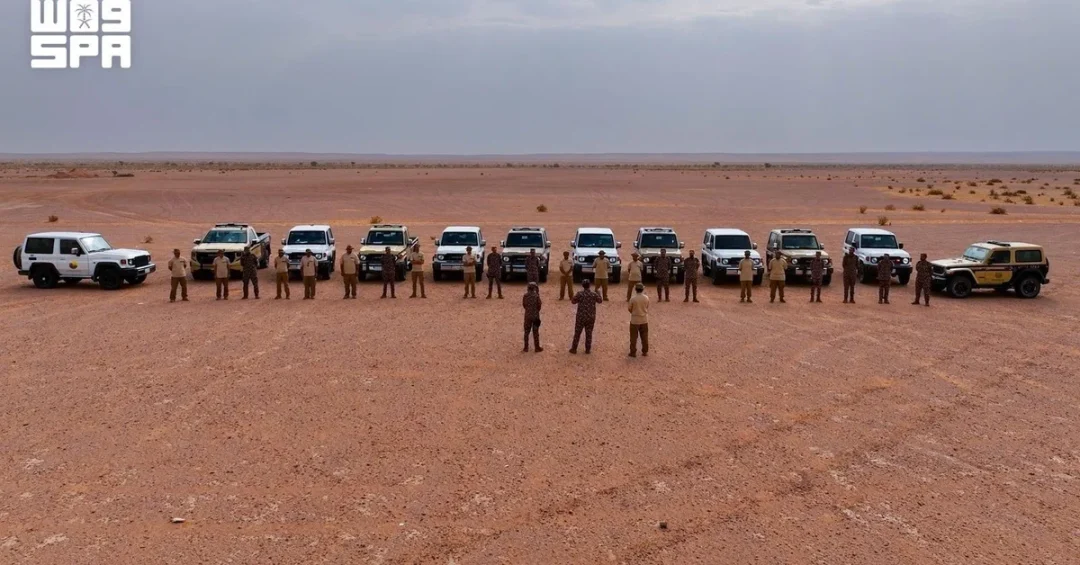
The King Abdulaziz Royal Reserve Development Authority, working in close cooperation with the Special Forces for Environmental Security, has intensified field monitoring across the reserve as part of a joint campaign to curb hunting violations and protect wildlife and natural habitats, according to an official announcement carried by the Saudi Press Agency. The expanded operation combines increased ground patrols with tighter regulatory enforcement, reflecting a sustained national commitment to safeguarding the Kingdom’s natural heritage.
The campaign is designed not only to detect and deter violations but also to reinforce a culture of environmental compliance among visitors and surrounding communities. Hunting of all wild animals, including birds, is strictly prohibited inside the reserve, and offenders face legal measures under Saudi Arabia’s environmental protection framework. The timing of the intensified monitoring is significant: it coincides with the migration season, when large numbers of migratory birds pass through and settle in the reserve, making protection efforts especially urgent. Why does this matter to audiences far beyond the Kingdom’s borders? Because the reserve sits at the crossroads of global avian migration routes, and its health is a shared international concern.
Context and Background
Have you ever considered how a single protected area can serve as a linchpin for an entire region’s ecological stability? The King Abdulaziz Royal Reserve is one of Saudi Arabia’s most important conservation zones, encompassing vast desert landscapes, natural habitats, and wildlife populations that are integral to the country’s environmental identity. The reserve is managed by the King Abdulaziz Royal Reserve Development Authority, a dedicated body responsible for conservation, sustainable development, and public engagement within its boundaries. Its partnership with the Special Forces for Environmental Security — a specialized unit tasked with enforcing environmental laws — represents a model of institutional coordination that Saudi Arabia has increasingly prioritized in recent years.
The joint campaign reflects a broader shift in the Kingdom’s approach to environmental governance. Historically, wildlife protection efforts in the region faced challenges from unregulated hunting, habitat encroachment, and limited enforcement capacity. Today, Saudi Arabia is investing in rangers, monitoring technology, and legal frameworks that give conservation rules real teeth. The reserve’s intensified patrols are not an isolated action but part of a systematic national strategy to preserve biodiversity, in line with the Saudi Green Initiative and the environmental pillars of Vision 2030. For international observers, this signals that Saudi Arabia is treating environmental security as a core component of national security and long-term prosperity.
Why should global audiences pay attention to enforcement details in a single reserve? Because these efforts contribute to worldwide biodiversity targets and demonstrate how desert nations can lead in conservation. The Kingdom’s commitment is consistent with its obligations under international environmental agreements and its growing role in global climate and sustainability dialogues.
Key Details of the Joint Campaign
What exactly does the intensified monitoring involve? According to the official announcement, the campaign includes a significant increase in field patrols across the reserve, allowing authorities to monitor violations in real time and take necessary legal measures against offenders. The patrols are conducted by trained personnel from the Special Forces for Environmental Security, who operate under a clear legal mandate to enforce hunting bans and protect wildlife. The reserve’s regulations explicitly prohibit hunting all types of wild animals, including birds, and violators may face penalties that can include fines, confiscation of equipment, and other legal consequences.
The campaign’s timing is closely tied to the migration season for many bird species. During this period, migratory birds pass through and settle in the reserve, using it as a resting and feeding ground along their long journeys. This makes the reserve a critical node in global flyways that connect continents. Protecting these birds from hunting is essential not only for their survival but also for maintaining the ecological balance of the areas they inhabit. The reserve authority has emphasized that hunting directly affects wildlife populations, particularly endangered species, and can disrupt the natural balance of ecosystems in ways that take decades to repair.
Why are migratory birds so vulnerable during this season? Because they arrive in large numbers and concentrate in specific habitats, making them easy targets for illegal hunters. The joint campaign aims to eliminate this threat through visible enforcement, community engagement, and strict application of the law. The authorities have also highlighted the importance of public cooperation, urging visitors and local communities to report any suspicious activity and to respect environmental regulations.
International and Regional Impact
How does a national conservation campaign resonate on the international stage? The King Abdulaziz Royal Reserve is part of a network of protected areas that support migratory species traveling between Africa, Europe, and Asia. When Saudi Arabia strengthens protection for these birds, it delivers benefits that extend far beyond its own territory. Migratory birds are indicators of ecosystem health, and their decline in one region can signal problems elsewhere. By safeguarding its reserve, the Kingdom is contributing to global conservation goals, including those outlined in the Convention on Migratory Species and the Kunming-Montreal Global Biodiversity Framework.
Regionally, the campaign reinforces Saudi Arabia’s position as a leader in environmental diplomacy. Neighboring countries in the Gulf and the broader Middle East face similar challenges with illegal hunting and habitat loss. Saudi Arabia’s model of combining specialized enforcement units with development authorities offers a template that others can study and adapt. Moreover, the Kingdom’s efforts align with its commitments under the Saudi Green Initiative, which aims to plant billions of trees and protect large areas of land and sea. These initiatives enhance the Kingdom’s credibility in international climate negotiations and strengthen partnerships with global environmental organizations.
What does this mean for travelers and nature enthusiasts? A well-protected reserve becomes a more attractive destination for eco-tourism, offering visitors the chance to observe wildlife in a secure and regulated environment. This, in turn, supports local economies and promotes a deeper appreciation for Saudi Arabia’s natural treasures.
Economic and Strategic Significance
Can environmental protection and economic development go hand in hand? Saudi Arabia’s experience suggests they can. The King Abdulaziz Royal Reserve is not only a conservation area but also a potential engine for sustainable tourism and scientific research. By curbing illegal hunting, the reserve authority preserves the ecological assets that underpin these activities. Healthy wildlife populations attract researchers, photographers, and eco-tourists, generating revenue and creating jobs in surrounding communities. This aligns with Vision 2030’s goal of diversifying the economy and developing new sectors beyond oil.
Strategically, environmental security is increasingly recognized as a component of national security. Illegal hunting can be linked to organized crime, and the depletion of natural resources can destabilize local livelihoods. The Special Forces for Environmental Security play a vital role in maintaining order and ensuring that regulations are respected. Their collaboration with the reserve authority demonstrates a comprehensive approach that integrates law enforcement, conservation science, and community outreach. For international investors and partners, this level of institutional coordination signals a stable and predictable operating environment for green projects.
Why is this relevant to global businesses? Because Saudi Arabia’s environmental initiatives create opportunities in renewable energy, sustainable agriculture, and eco-tourism, all of which benefit from a healthy natural environment. The reserve’s protection efforts thus contribute to a broader investment climate that values sustainability.
Vision 2030 Alignment
How does the King Abdulaziz Royal Reserve fit into Saudi Arabia’s long-term vision? Vision 2030, the Kingdom’s comprehensive reform plan, includes ambitious environmental targets: protecting 30% of land and sea by 2030, planting 10 billion trees, and reducing carbon emissions. The reserve’s intensified monitoring campaign directly supports these goals by preserving biodiversity and combating practices that degrade ecosystems. It also reflects the vision’s emphasis on quality of life, as clean air, water, and natural spaces are essential for healthy communities.
Under the leadership of Crown Prince Mohammed bin Salman, Saudi Arabia has elevated environmental protection to a national priority. The Saudi Green Initiative and the Middle East Green Initiative are prime examples of the Kingdom’s proactive stance. The King Abdulaziz Royal Reserve Development Authority’s work, in partnership with the Special Forces for Environmental Security, embodies the collaborative spirit needed to achieve these ambitious targets. By enforcing hunting bans and protecting migratory birds, the Kingdom is not only preserving its own heritage but also contributing to a global movement for sustainability.
What comes next? The reserve authority is expected to continue expanding its monitoring capabilities, leveraging technology such as drones and remote sensors to enhance coverage. Community engagement programs will also play a key role in fostering a sense of shared responsibility. As Saudi Arabia marches toward 2030, the King Abdulaziz Royal Reserve stands as a testament to the Kingdom’s resolve to protect its natural environment for future generations and to serve as a responsible steward of the planet.
20 Questions
Q1. What is the King Abdulaziz Royal Reserve?
A1. It is a major protected area in Saudi Arabia managed by the King Abdulaziz Royal Reserve Development Authority, dedicated to conserving wildlife, natural habitats, and promoting sustainable development.
Q2. Which authority is cooperating with the reserve to curb hunting violations?
A2. The Special Forces for Environmental Security, a specialized unit responsible for enforcing environmental laws and regulations in the Kingdom.
Q3. What does the joint campaign aim to achieve?
A3. The campaign aims to intensify field monitoring, curb hunting violations, protect wildlife and natural habitats, and ensure compliance with environmental regulations.
Q4. Is hunting allowed inside the reserve?
A4. No, hunting all types of wild animals, including birds, is strictly prohibited within the reserve.
Q5. Why is hunting a threat to wildlife?
A5. Hunting directly affects wildlife populations, particularly endangered species, and may disrupt the natural balance of ecosystems.
Q6. What is the significance of the migration season?
A6. The migration season brings many bird species through the reserve, making protection efforts critical to safeguard them from practices that threaten their safety and habitats.
Q7. How does the campaign protect migratory birds?
A7. By increasing field patrols and enforcing hunting bans, authorities can deter and detect violations, ensuring migratory birds can rest and feed safely.
Q8. What legal measures can be taken against violators?
A8. Violators may face penalties under Saudi environmental laws, which can include fines, confiscation of equipment, and other legal actions.
Q9. How does this campaign align with Saudi Vision 2030?
A9. It supports Vision 2030’s environmental goals, including protecting 30% of land and sea, planting 10 billion trees, and enhancing quality of life.
Q10. What role does the Saudi Green Initiative play?
A10. The Saudi Green Initiative is a national effort to combat climate change, improve biodiversity, and promote sustainable practices, complementing the reserve’s protection efforts.
Q11. Who leads the environmental efforts in Saudi Arabia?
A11. Under the leadership of Crown Prince Mohammed bin Salman, Saudi Arabia has made environmental protection a national priority through various initiatives.
Q12. How can the public contribute to the campaign?
A12. The public can support by respecting regulations, reporting suspicious activities, and participating in community engagement programs that promote environmental awareness.
Q13. What technology is used to monitor the reserve?
A13. The reserve may use advanced tools such as drones, remote sensors, and patrol vehicles to enhance monitoring and enforcement capabilities.
Q14. Are there economic benefits to protecting the reserve?
A14. Yes, a well-protected reserve supports eco-tourism, scientific research, and local job creation, contributing to economic diversification.
Q15. How does this campaign affect regional biodiversity?
A15. By protecting migratory birds and other species, the campaign helps maintain ecological balance across regions, benefiting global biodiversity.
Q16. What international agreements does this effort support?
A16. It supports the Convention on Migratory Species and the Kunming-Montreal Global Biodiversity Framework, among others.
Q17. What happens to endangered species if hunting continues?
A17. Endangered species could face further decline, risking extinction and disrupting the ecosystems they are part of.
Q18. How does the reserve authority engage with local communities?
A18. Through outreach programs, educational initiatives, and partnerships that encourage community involvement in conservation efforts.
Q19. What is the expected long-term impact of the campaign?
A19. The campaign is expected to reduce hunting violations, restore wildlife populations, and preserve natural habitats for future generations.
Q20. How can international audiences support Saudi Arabia’s conservation efforts?
A20. By recognizing the Kingdom’s leadership in environmental protection, sharing best practices, and supporting global initiatives that align with Saudi Arabia’s Vision 2030 goals.
Reader Feedback
We value your thoughts. Please share your feedback on this article.
Your feedback helps us improve our coverage.
Related articles
 Umrah guests visit King Abdulaziz Complex for Holy Kaaba Kiswa
 Northern Borders Deputy Governor meets Jadidat Arar Customs Director
 Minister of Islamic Affairs meets Saudi Ambassador to Pakistan
 Saudi Vice Foreign Minister Meets UN Special Representative
 WAMY launches surgical medical campaign in Ethiopia
 Saudi Ministry Launches Third Preacher Training Course in Kenya