


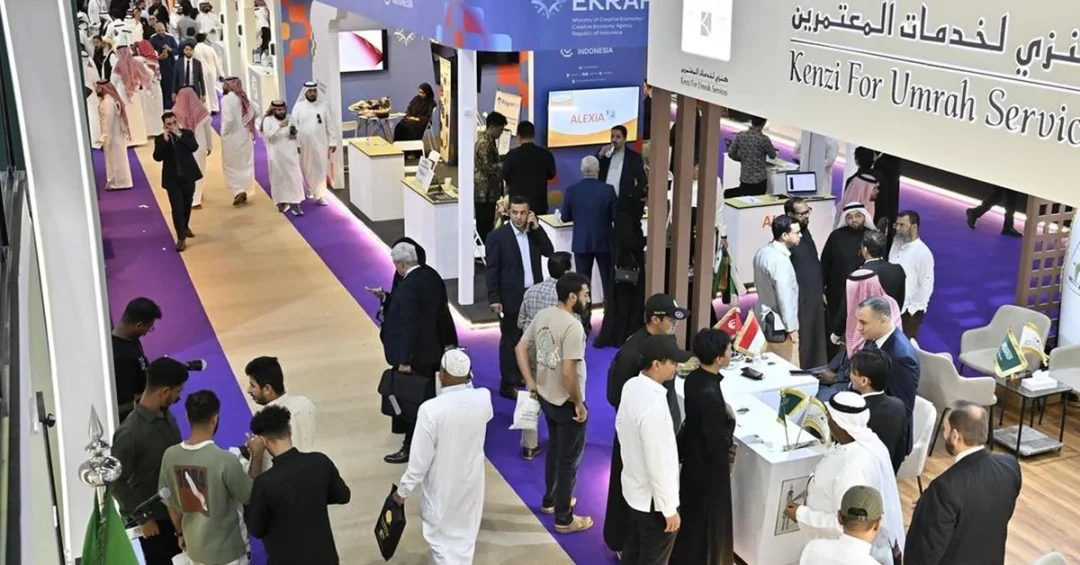
King Abdulaziz University is showcasing more than 30 student-led research and innovation projects at the sixth Hajj Conference and Exhibition in Jeddah, held under the theme “From Makkah to the World,” as announced by the Saudi Press Agency. The university’s pavilion highlights its academic, research, and innovation contributions to the Hajj and Umrah sector, offering solutions designed to enrich the pilgrim experience and improve service quality during the 1448 AH Hajj season. The participation underscores the Kingdom’s commitment to leveraging science and technology in service of the millions of pilgrims who travel to Makkah each year.
Have you ever wondered how modern technology can transform one of the world’s largest annual gatherings? The Hajj Conference and Exhibition serves as a vital platform for exchanging ideas and showcasing advancements that directly benefit pilgrims. King Abdulaziz University’s presence at this event demonstrates the critical role of Saudi academic institutions in supporting national priorities. By integrating research with practical applications, the university is helping to set new standards for hospitality, safety, and efficiency during the Hajj and Umrah seasons.
Context and Background
What makes the Hajj Conference and Exhibition a pivotal event for Saudi Arabia and the global Muslim community? Organized under the patronage of the Ministry of Hajj and Umrah, the conference brings together experts, scholars, and innovators to address the evolving needs of pilgrims. The sixth edition, themed “From Makkah to the World,” emphasizes the global significance of Hajj and the Kingdom’s role as a host and facilitator. It provides a forum for sharing best practices and launching initiatives that enhance the pilgrimage experience.
King Abdulaziz University, one of Saudi Arabia’s premier academic institutions, has a long history of contributing to Hajj-related research. Its participation in this year’s conference reflects a strategic focus on applied sciences and innovation. The university’s pavilion features projects developed by students, highlighting the institution’s commitment to nurturing young talent and fostering a culture of creativity. These projects span various fields, including smart technologies, crowd management, health services, and sustainable development, all aimed at improving the quality of services provided to pilgrims.
How does the university’s involvement align with the broader objectives of Saudi Vision 2030? Vision 2030 seeks to diversify the economy, enhance public services, and promote innovation. By supporting Hajj and Umrah, which are central to the Kingdom’s cultural and religious identity, King Abdulaziz University is directly contributing to these goals. The research and innovation showcased at the conference are not just academic exercises; they are practical solutions that can be implemented to create a more seamless and spiritually fulfilling pilgrimage experience.
Key Details
What specific innovations are being presented at the university’s pavilion? The more than 30 projects cover a wide range of applications. Some focus on crowd management using artificial intelligence to monitor and direct pilgrim flows, reducing congestion and improving safety. Others involve health monitoring devices that can track vital signs and provide early warnings of potential health issues. There are also projects dedicated to environmental sustainability, such as waste reduction and water conservation, ensuring that the Hajj remains environmentally responsible.
Additionally, the pavilion showcases digital solutions for navigation and translation, helping pilgrims who speak different languages to easily find their way and access information. These projects are the result of months of research and development by students, often in collaboration with faculty members and industry partners. The university emphasizes interdisciplinary approaches, combining engineering, computer science, health sciences, and social sciences to address complex challenges. This holistic perspective is essential for tackling the multifaceted nature of Hajj operations.
How does the university ensure that these innovations are ready for real-world application? The projects are designed with scalability and practicality in mind. Many have been tested in simulated environments or during smaller-scale events before being presented at the conference. The university also works closely with government agencies and private sector companies to facilitate the transfer of technology and knowledge. This collaborative model accelerates the adoption of promising solutions and ensures that they meet the rigorous standards required for deployment during Hajj.
International and Regional Impact
Why does the international community take note of Saudi Arabia’s advancements in Hajj management? The Hajj is a global event, attracting millions of Muslims from nearly every country. Improvements in services and infrastructure have a direct impact on the experiences of these pilgrims, many of whom travel long distances and have diverse needs. By sharing its innovations at the conference, King Abdulaziz University contributes to raising global standards for mass gatherings and pilgrimage management. Other nations can learn from Saudi Arabia’s approach and adapt similar technologies to their own contexts.
Moreover, the conference itself serves as a diplomatic and cultural bridge. It brings together representatives from various countries, international organizations, and academic institutions, fostering dialogue and cooperation. The theme “From Makkah to the World” encapsulates the idea that the knowledge and spirituality of Hajj radiate outward, benefiting humanity as a whole. Saudi Arabia’s leadership in this domain reinforces its position as a responsible global actor and a center of Islamic scholarship and innovation.
Economic and Strategic Significance
What economic benefits arise from investing in Hajj-related research and innovation? The Hajj and Umrah sector is a significant contributor to Saudi Arabia’s economy, generating revenue through travel, hospitality, and related services. By enhancing the efficiency and quality of these services, the Kingdom can attract more pilgrims and increase repeat visits. Innovations that streamline operations also reduce costs and improve resource allocation, creating a more sustainable economic model. Furthermore, the development of new technologies can lead to export opportunities, as other countries seek to adopt similar solutions for their own events and gatherings.
Strategically, the university’s participation supports the Kingdom’s efforts to localize technology and build a knowledge-based economy. It showcases the capabilities of Saudi talent and encourages investment in research and development. The projects on display demonstrate that Saudi students and researchers are capable of producing world-class innovations. This, in turn, attracts partnerships and funding from both domestic and international sources, fueling further growth and diversification.
Vision 2030 Alignment
How does this initiative reflect the core tenets of Saudi Vision 2030? Vision 2030 aims to transform Saudi Arabia into a global investment powerhouse and a hub for innovation. The Hajj Conference and Exhibition, with its focus on technology and service excellence, is a microcosm of this vision. King Abdulaziz University’s contributions align with several Vision 2030 programs, including the National Transformation Program and the Quality of Life Program. By improving the pilgrim experience, the university helps to enhance the Kingdom’s reputation and fulfill its religious responsibilities.
In conclusion, King Abdulaziz University’s showcase of over 30 research and innovation projects at the sixth Hajj Conference and Exhibition is a testament to Saudi Arabia’s forward-looking approach to serving pilgrims. It highlights the synergy between academic research, technological advancement, and national priorities. As the Kingdom continues to invest in education and innovation, such initiatives will play an increasingly important role in achieving the ambitious goals of Vision 2030. The world watches as Saudi Arabia sets new benchmarks for excellence in pilgrimage management and beyond.
20 Questions
Q1. What is the theme of the sixth Hajj Conference and Exhibition?
A1. The theme is “From Makkah to the World,” reflecting the global significance of Hajj and the Kingdom’s role in sharing its expertise and spirituality with the international community.
Q2. How many projects is King Abdulaziz University showcasing?
A2. The university is showcasing more than 30 student-led research and innovation projects, all aimed at enriching the pilgrim experience and improving service quality during the 1448 AH Hajj season.
Q3. What types of projects are included in the university’s pavilion?
A3. Projects include AI-driven crowd management, health monitoring devices, environmental sustainability solutions, digital navigation and translation tools, and other technologies designed to enhance safety and efficiency.
Q4. Who developed these projects?
A4. The projects were developed by students at King Abdulaziz University, often in collaboration with faculty members and industry partners, demonstrating the university’s commitment to nurturing young talent.
Q5. How does the university support Saudi Vision 2030?
A5. By fostering innovation, enhancing public services, and promoting a knowledge-based economy, the university directly contributes to Vision 2030 goals of diversification and improved quality of life.
Q6. What is the significance of the Hajj Conference and Exhibition?
A6. It serves as a vital platform for experts, scholars, and innovators to exchange ideas and showcase advancements that benefit pilgrims, reinforcing Saudi Arabia’s leadership in Hajj management.
Q7. How do these innovations improve the pilgrim experience?
A7. They enhance safety, health, navigation, and environmental sustainability, making the pilgrimage smoother and more spiritually fulfilling for millions of pilgrims from around the world.
Q8. Are these projects ready for implementation?
A8. Many projects have been tested in simulated environments and are developed with scalability in mind, with the university collaborating with agencies to facilitate real-world application.
Q9. What role does technology play in modern Hajj management?
A9. Technology is crucial for managing crowds, ensuring health and safety, providing information, and promoting sustainability, helping to accommodate the growing number of pilgrims efficiently.
Q10. How does the international community benefit from these innovations?
A10. Other nations can learn from Saudi Arabia’s approach to mass gathering management, adapting similar technologies to improve their own events and services for pilgrims and visitors.
Q11. What economic impact does the Hajj sector have?
A11. The Hajj and Umrah sector significantly contributes to Saudi Arabia’s economy through travel, hospitality, and services, and innovations can increase efficiency and attract more pilgrims.
Q12. How does the university collaborate with other entities?
A12. The university works closely with government agencies and private sector companies to transfer technology and knowledge, ensuring that innovations meet the rigorous standards for Hajj deployment.
Q13. What is the role of students in these projects?
A13. Students are the primary developers, conducting research and creating solutions under faculty guidance, which helps them gain practical experience and contribute to national priorities.
Q14. How does the conference promote international cooperation?
A14. By bringing together representatives from various countries and organizations, the conference fosters dialogue and partnerships that advance pilgrimage management globally.
Q15. What are some examples of environmental sustainability projects?
A15. Projects include waste reduction systems and water conservation technologies, ensuring that the Hajj remains environmentally responsible despite the large number of participants.
Q16. How does the university’s participation reflect Saudi Arabia’s commitment to innovation?
A16. It demonstrates the Kingdom’s investment in research and development, showcasing Saudi talent and attracting partnerships that drive economic diversification.
Q17. What is the expected outcome of the university’s showcase?
A17. The showcase aims to highlight practical solutions that can be adopted to improve Hajj services, strengthen the university’s reputation, and contribute to Vision 2030 objectives.
Q18. How can other universities learn from this initiative?
A18. Other universities can emulate the model of integrating student research with national priorities, fostering collaboration with industry, and focusing on applied solutions for real-world challenges.
Q19. What makes King Abdulaziz University a leader in Hajj research?
A19. Its long history of contributing to Hajj-related studies, emphasis on interdisciplinary approaches, and strong partnerships with stakeholders position it at the forefront of innovation in this field.
Q20. How does this initiative support the Kingdom’s religious responsibilities?
A20. By improving services for pilgrims, the university helps Saudi Arabia fulfill its duty as the custodian of the Two Holy Mosques, ensuring that all pilgrims have a safe and spiritually enriching experience.
Reader Feedback
We value your thoughts. Please share your feedback on this article.
Your feedback helps us improve our coverage.
Related articles
 Umm Al-Qura University Showcases Services, Heritage at Hajj Conference
 Makkah Deputy Governor Visits Interior Ministry Pavilion at Hajj Conference
 Saudi Arabia Signs SAR5.664 Billion Deal for Wasel Al-Haram Project
 Public Security Showcases Hajj Security Tech at Jeddah Conference
 Kuwait Condemns Houthi Attacks on Saudi Arabia
 Makkah Deputy Governor Opens 6th Hajj Conference in Jeddah