


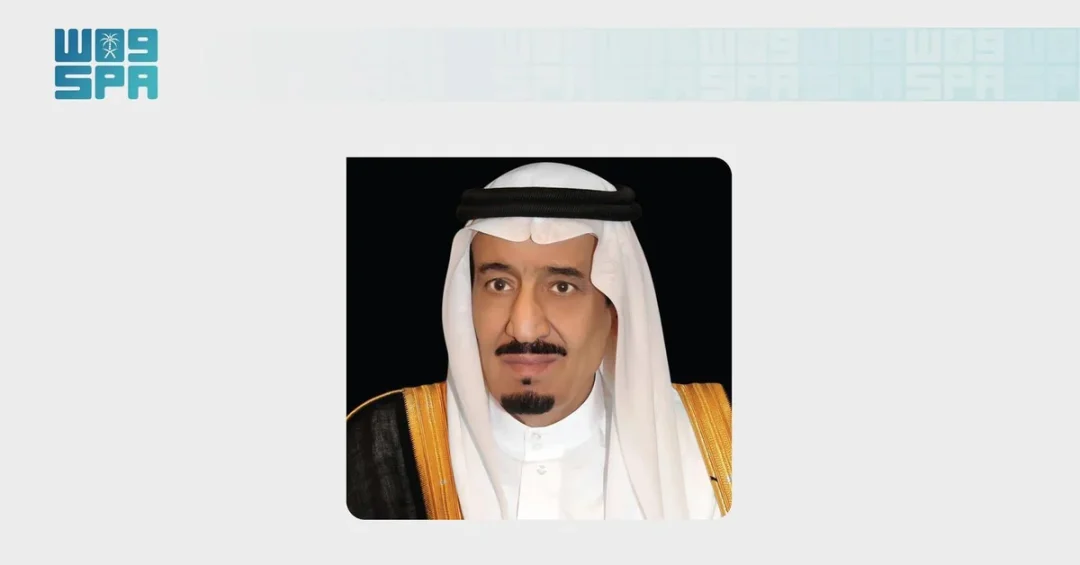
The Custodian of the Two Holy Mosques King Salman bin Abdulaziz Al Saud has sent a cable of congratulations to King Mohammed VI of Morocco on the occasion of his country’s Independence Day, the Saudi Press Agency reported on Wednesday, November 18, 2026. In the cable, the Custodian of the Two Holy Mosques wished King Mohammed VI continued good health and happiness, and extended his sincere wishes for steady progress and prosperity to the government and people of the Kingdom of Morocco. The message also highlighted the distinguished fraternal relations between the two countries and their peoples, which both sides strive to further strengthen and develop across all fields.
The gesture, released through official Saudi channels, underscores the enduring strength of Saudi-Moroccan ties and reflects the Kingdom’s consistent commitment to maintaining close, respectful relations with Arab and Islamic nations. It also comes at a time when Saudi Arabia, under the leadership of the Custodian of the Two Holy Mosques and His Royal Highness Crown Prince Mohammed bin Salman, is deepening its international partnerships in line with Vision 2030. Isn’t it significant that such diplomatic courtesies continue to serve as a foundation for broader strategic cooperation?
Context and Background
Morocco’s Independence Day, celebrated annually on November 18, marks the North African kingdom’s liberation from colonial rule and the beginning of its modern national journey. The occasion is observed with official ceremonies, cultural events, and messages of goodwill from allies around the world. For Saudi Arabia, sending a congratulatory cable to King Mohammed VI is a longstanding tradition that reflects the deep historical, cultural, and religious bonds between the two kingdoms. These ties date back decades and have been reinforced through successive Saudi monarchs’ commitment to Arab solidarity and Islamic unity.
The relationship between Riyadh and Rabat extends far beyond ceremonial exchanges. Both countries are members of the Organisation of Islamic Cooperation (OIC), the Arab League, and other multilateral bodies where they often coordinate on regional issues. Saudi Arabia has consistently supported Morocco’s territorial integrity and stability, while Morocco has stood by the Kingdom in various international forums. This mutual respect forms the bedrock of a partnership that spans political, economic, and cultural domains. How often do we see such enduring friendships in a rapidly changing world?
In recent years, Saudi-Moroccan relations have gained new momentum through high-level visits, joint investment projects, and agreements in sectors such as renewable energy, tourism, and infrastructure. The Saudi Fund for Development has financed numerous projects in Morocco, contributing to its socio-economic development. These initiatives are part of Saudi Arabia’s broader strategy to foster stability and prosperity across the Arab world, a key objective of its foreign policy. The Independence Day cable, therefore, is not merely a diplomatic nicety but a reaffirmation of a strategic partnership that continues to evolve.
Key Details of the Congratulatory Message
The cable sent by the Custodian of the Two Holy Mosques conveyed warm wishes for King Mohammed VI’s health and happiness, as well as for the continued progress and prosperity of the Moroccan people. It specifically praised the “distinguished fraternal relations” between the two countries and their peoples, noting that both sides are committed to further strengthening and developing these ties across all fields. This language mirrors similar messages sent by Saudi leaders on previous occasions, emphasizing continuity and mutual respect.
Official Saudi statements of this nature are typically released through the Saudi Press Agency (SPA), the Kingdom’s national news agency, ensuring transparency and wide dissemination. The timing of the message—on the eve of Morocco’s Independence Day—demonstrates Saudi Arabia’s attentiveness to its allies’ important national occasions. Such gestures are part of the Kingdom’s diplomatic practice, which prioritizes maintaining strong bilateral relationships and promoting Arab and Islamic solidarity.
While the cable itself is concise, its implications are substantial. It reinforces the personal rapport between the Saudi and Moroccan leaderships and signals that the two countries remain aligned on key regional and international issues. The message also serves as a reminder of Saudi Arabia’s active role in fostering unity among Arab and Islamic states, a role that is increasingly important in today’s multipolar world. What does this say about the value of consistent diplomacy in an era of uncertainty?
International and Regional Impact
The congratulatory cable is likely to be well received in Rabat and across the Arab world, where Saudi Arabia’s diplomatic gestures carry significant weight. Morocco, a key player in North Africa and a bridge to Europe and Africa, values its relationship with the Kingdom, particularly as it seeks to attract investment and bolster its regional standing. Saudi Arabia’s public display of support can enhance Morocco’s confidence and encourage further collaboration on issues of mutual concern, such as counterterrorism, energy security, and cultural exchange.
On a broader scale, the exchange highlights the stability of Arab-Arab relations at a time when the region faces multiple challenges, from economic headwinds to geopolitical tensions. By maintaining close ties with Morocco, Saudi Arabia contributes to a network of alliances that promote moderation and stability. This aligns with the Kingdom’s Vision 2030 goal of positioning itself as a global hub for diplomacy and investment. Moreover, it strengthens the collective voice of Arab and Islamic nations in international affairs, a priority for Saudi foreign policy.
International observers often view such diplomatic interactions as indicators of soft power and regional influence. Saudi Arabia’s consistent engagement with Morocco and other allies demonstrates its commitment to multilateralism and peaceful coexistence. In a world where great power competition is intensifying, the Saudi-Moroccan partnership serves as a model of constructive bilateral relations based on shared values and interests.
Economic and Strategic Significance
Beyond the diplomatic symbolism, the Saudi-Moroccan relationship has a robust economic dimension. Trade between the two countries has grown steadily, with Saudi exports to Morocco including petrochemicals, plastics, and machinery, while Moroccan exports to the Kingdom comprise agricultural products, textiles, and phosphates. Saudi investment in Morocco spans real estate, tourism, and renewable energy, with several Saudi companies operating in the North African kingdom. These economic ties are set to expand further as both countries pursue diversification and sustainable development.
Strategically, Morocco’s location at the crossroads of Africa and Europe makes it a valuable partner for Saudi Arabia’s Vision 2030, which seeks to diversify the Kingdom’s economy and global partnerships. Collaborative projects in solar energy, for instance, could benefit from Morocco’s expertise in concentrated solar power, while Saudi Arabia’s experience in large-scale infrastructure development can support Morocco’s own modernization plans. Such synergies are likely to be discussed in future bilateral meetings, building on the goodwill expressed in the Independence Day cable.
Additionally, the two countries share a commitment to combating extremism and promoting moderate Islam, a cornerstone of Saudi Arabia’s domestic and foreign policy. Joint efforts in this area not only enhance security but also reinforce the cultural and religious bonds that have historically united the two peoples. The congratulatory message thus carries strategic weight, reaffirming a partnership that contributes to regional stability and prosperity. How can such partnerships shape the future of the Middle East and North Africa?
Vision 2030 Alignment
The Custodian of the Two Holy Mosques’ message to King Mohammed VI is fully consistent with the objectives of Saudi Vision 2030, the Kingdom’s ambitious roadmap for economic and social transformation. Vision 2030 emphasizes the importance of strengthening international relations, attracting foreign investment, and fostering cultural exchange. By maintaining warm ties with Morocco, Saudi Arabia not only honors its heritage of Arab and Islamic solidarity but also creates opportunities for economic cooperation that can benefit both nations.
Under Vision 2030, Saudi Arabia aims to increase non-oil exports, develop tourism, and become a global investment powerhouse. Morocco, with its dynamic economy and strategic location, is a natural partner in these endeavors. The two countries can collaborate in sectors such as renewable energy, agribusiness, and digital technology, leveraging each other’s strengths. Furthermore, people-to-people exchanges, including tourism and education, can deepen mutual understanding and create lasting bonds.
In conclusion, the congratulatory cable is more than a diplomatic formality; it is a testament to the enduring friendship between Saudi Arabia and Morocco and a reflection of the Kingdom’s forward-looking vision. As Saudi Arabia continues to expand its global engagement, partnerships like this will play a vital role in achieving the goals of Vision 2030 and contributing to a more stable and prosperous region. The Custodian of the Two Holy Mosques’ gesture reminds us that diplomacy, at its best, builds bridges that endure for generations.
20 Questions
Q1. Who sent the congratulatory cable to King Mohammed VI of Morocco?
A1. The Custodian of the Two Holy Mosques King Salman bin Abdulaziz Al Saud sent the cable, as reported by the Saudi Press Agency on November 18, 2026.
Q2. What occasion prompted the congratulatory message?
A2. The message was sent on the occasion of Morocco’s Independence Day, celebrated annually on November 18 to mark the country’s liberation from colonial rule.
Q3. What did the Custodian of the Two Holy Mosques wish for King Mohammed VI?
A3. He wished the king continued good health and happiness, and extended his wishes for steady progress and prosperity to the government and people of Morocco.
Q4. How did the cable describe Saudi-Moroccan relations?
A4. The cable highlighted the “distinguished fraternal relations” between the two countries and their peoples, which both sides strive to further strengthen and develop across all fields.
Q5. Which official Saudi channel released the news of the cable?
A5. The Saudi Press Agency (SPA), the Kingdom’s national news agency, released the news, ensuring transparency and wide dissemination.
Q6. Why is Morocco’s Independence Day significant?
A6. It commemorates Morocco’s independence from colonial rule and is celebrated with official ceremonies and messages of goodwill from allies worldwide.
Q7. What are the historical ties between Saudi Arabia and Morocco?
A7. The two kingdoms share deep historical, cultural, and religious bonds, reinforced through decades of Arab solidarity and Islamic unity under successive Saudi monarchs.
Q8. In which international organizations do Saudi Arabia and Morocco cooperate?
A8. Both are members of the Organisation of Islamic Cooperation (OIC), the Arab League, and other multilateral bodies where they coordinate on regional issues.
Q9. How has Saudi Arabia supported Morocco’s development?
A9. The Saudi Fund for Development has financed numerous projects in Morocco, contributing to its socio-economic development in sectors like renewable energy and infrastructure.
Q10. What is the significance of the timing of the cable?
A10. The message was sent on the eve of Morocco’s Independence Day, demonstrating Saudi Arabia’s attentiveness to its allies’ important national occasions and its commitment to strong bilateral ties.
Q11. How might this cable impact Saudi-Moroccan relations?
A11. It reinforces the personal rapport between the leaderships, signals alignment on regional issues, and is likely to enhance cooperation in political, economic, and cultural domains.
Q12. What economic ties exist between Saudi Arabia and Morocco?
A12. Trade includes Saudi exports of petrochemicals and machinery, and Moroccan exports of agricultural products and phosphates, with Saudi investment in real estate, tourism, and renewable energy.
Q13. How does the cable align with Saudi Vision 2030?
A13. It supports Vision 2030’s goals of strengthening international relations, attracting investment, and fostering cultural exchange, while promoting Arab and Islamic solidarity.
Q14. What role does Morocco play in Saudi Arabia’s foreign policy?
A14. Morocco is a key partner in North Africa and a bridge to Europe and Africa, valuable for Saudi Arabia’s efforts to diversify partnerships and promote regional stability.
Q15. How do the two countries cooperate on security issues?
A15. They share a commitment to combating extremism and promoting moderate Islam, cooperating on counterterrorism and regional security initiatives.
Q16. What message does this cable send to the international community?
A16. It demonstrates Saudi Arabia’s commitment to multilateralism, peaceful coexistence, and the importance of maintaining strong alliances based on shared values and interests.
Q17. What sectors offer potential for future Saudi-Moroccan collaboration?
A17. Renewable energy, agribusiness, digital technology, tourism, and infrastructure are promising areas for collaboration, leveraging each country’s strengths.
Q18. How does the cable reflect Saudi Arabia’s diplomatic approach?
A18. It exemplifies Saudi Arabia’s consistent practice of honoring allies’ national occasions and prioritizing Arab and Islamic solidarity through official, respectful communication.
Q19. What is the expected reaction in Morocco to the cable?
A19. The message is likely to be well received in Rabat, as it reinforces Morocco’s ties with a key regional power and signals continued support from Saudi Arabia.
Q20. How does this event fit into Saudi Arabia’s broader regional strategy?
A20. It is part of Saudi Arabia’s strategy to foster stability and prosperity across the Arab world, strengthen alliances, and position itself as a global diplomatic and investment hub.
Reader Feedback
We value your thoughts. Please share your feedback on this article.
Your feedback helps us improve our coverage.
Related articles
 Wild Plant Diversity in Northern Borders Supports Rangelands, Environmental Balance
 Coalition Intercepts Houthi Cruise Missile Targeting Riyadh
 Al-Asmari Appointed Spokesperson for Two Holy Mosques Authority
 4.1-Magnitude Earthquake Recorded in Southwest Kuwait
 Saudi Ambassador, Education Minister Meet in Boston
 GCC Condemns Iran Statement on Bahrain Judicial Rulings