


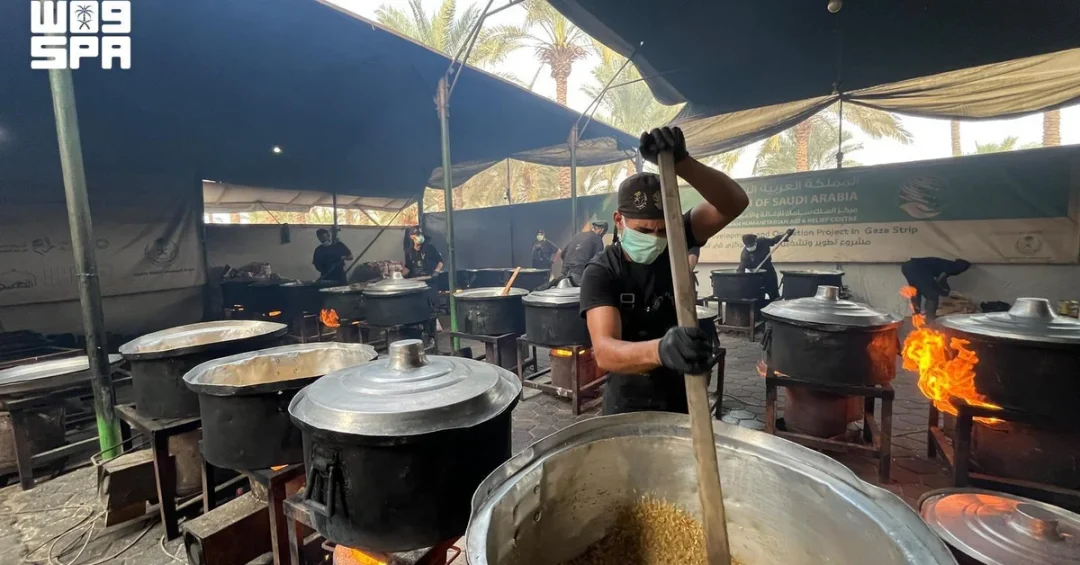
The King Salman Humanitarian Aid and Relief Center (KSrelief) has provided 25,000 hot meals to vulnerable communities in the central and southern Gaza Strip, benefiting 25,000 individuals, according to an official announcement released via the Saudi Press Agency (SPA). The distribution was carried out through a central kitchen operated by KSrelief, marking another concrete step in Saudi Arabia’s sustained humanitarian response to the crisis. The meals reached families facing severe food insecurity, offering immediate relief amid ongoing regional hardship.
Why does this latest Saudi humanitarian initiative matter so much for the people of Gaza, and what does it reveal about the Kingdom’s broader approach to international relief? The operation reflects Saudi Arabia’s longstanding commitment to alleviating human suffering wherever it occurs, and it underscores the role of KSrelief as one of the world’s most active humanitarian agencies. By delivering ready-to-eat meals directly to those most in need, the Kingdom is addressing an urgent gap in food access while reinforcing its reputation as a responsible global actor.
Context and Background
What conditions have made food security so precarious across Gaza, and how did KSrelief’s central kitchen become a lifeline for thousands? The Gaza Strip has endured prolonged conflict and economic restrictions that have severely disrupted food production, supply chains, and market access. Many families have lost livelihoods, homes, and reliable sources of nutrition. In this environment, hot meal distribution programs are not merely supplementary; they are often the only guaranteed source of daily sustenance for the most vulnerable, including children, the elderly, and the disabled.
Saudi Arabia has a long history of providing humanitarian assistance to Palestinians through official channels. The King Salman Humanitarian Aid and Relief Center, established in 2015, has become the primary vehicle for the Kingdom’s international relief efforts. KSrelief operates in more than 80 countries, delivering food, medical care, shelter, and education to communities affected by conflict and natural disasters. Its work in Gaza is part of a wider Saudi commitment to regional stability and human dignity, grounded in the values of compassion and solidarity that guide the Kingdom’s foreign policy.
The central kitchen model allows KSrelief to prepare and distribute large quantities of hot, culturally appropriate meals efficiently. This approach ensures that food reaches those who cannot cook for themselves due to displacement, lack of fuel, or destroyed infrastructure. By focusing on central and southern Gaza, the initiative targets areas where needs assessments have identified acute food insecurity and limited humanitarian access.
Key Details of the KSrelief Operation
How exactly did KSrelief manage to deliver 25,000 hot meals in a challenging environment, and who were the primary beneficiaries? According to the official statement carried by SPA, the meals were prepared in a central kitchen operated by KSrelief and distributed to the most vulnerable communities in central and southern Gaza. The operation benefited 25,000 individuals, meaning each meal reached one person, ensuring precise allocation. The distribution was designed to meet basic nutritional needs and strengthen the resilience of affected families amid ongoing humanitarian conditions.
KSrelief’s field teams coordinated with local partners and humanitarian networks to identify the most underserved neighborhoods and households. Priority was given to families with children, pregnant women, the elderly, and those with chronic illnesses. The hot meals typically include staples such as rice, lentils, vegetables, and protein, providing a balanced and filling source of energy. The central kitchen operates under strict hygiene and quality standards, reflecting KSrelief’s commitment to delivering aid that is both safe and dignified.
The 25,000 meals represent a significant logistical achievement, requiring careful planning, supply procurement, cooking, packaging, and last-mile delivery. KSrelief has refined these processes through years of experience in conflict zones, allowing it to respond rapidly and effectively. The operation also demonstrates the Kingdom’s ability to mobilize resources quickly when crises demand immediate action.
International and Regional Impact
What message does Saudi Arabia’s humanitarian intervention in Gaza send to the wider region and the international community? The KSrelief meal distribution reinforces the Kingdom’s position as a leading humanitarian donor and a stabilizing force in the Middle East. By acting decisively to address food insecurity, Saudi Arabia demonstrates that it prioritizes the well-being of civilians and upholds the principles of international humanitarian law. This approach contrasts with the politicization of aid that sometimes hampers relief efforts elsewhere.
Regional observers note that Saudi Arabia’s consistent support for Palestinian communities helps maintain a measure of hope and stability in a volatile environment. The Kingdom’s aid is delivered without discrimination and in coordination with reputable humanitarian partners, ensuring that assistance reaches those who need it most. This builds trust and goodwill, both among beneficiaries and within the broader international aid architecture. It also aligns with Saudi Arabia’s diplomatic efforts to promote peace and reconciliation in the region.
On the global stage, KSrelief’s work in Gaza is part of a larger portfolio that includes relief operations in Yemen, Syria, Sudan, and beyond. Saudi Arabia’s humanitarian footprint is one of the largest in the world, and its contributions are recognized by the United Nations and other multilateral bodies. The Gaza meal distribution adds to this record, highlighting the Kingdom’s reliability as a first responder in crises.
Economic and Strategic Significance
How does humanitarian aid like this connect to Saudi Arabia’s broader economic and strategic priorities? While humanitarian assistance is primarily a moral imperative, it also has strategic dimensions. By alleviating suffering and supporting stability, Saudi Arabia contributes to an environment where economic recovery and development can eventually take root. Food security is a foundation for public health, social cohesion, and long-term peace. The Kingdom’s investments in humanitarian relief therefore complement its efforts to foster regional prosperity and security.
Furthermore, KSrelief’s operations showcase Saudi logistical capabilities and soft power. The center’s ability to deliver aid efficiently enhances the Kingdom’s international standing and opens doors for partnerships with other donors and international organizations. This aligns with Saudi Vision 2030’s goal of positioning the Kingdom as a global leader in humanitarian and development fields. The economic ripple effects of aid include local procurement where possible, which can support small businesses and create temporary employment in affected areas.
For Saudi Arabia, the Gaza operation also reflects a commitment to the Palestinian cause that resonates across the Arab and Islamic world. It strengthens the Kingdom’s leadership role and underscores its dedication to justice and compassion. By addressing immediate needs while advocating for lasting solutions, Saudi Arabia balances humanitarian action with diplomatic engagement.
Vision 2030 Alignment
How does the KSrelief food security initiative in Gaza align with the objectives of Saudi Vision 2030? Vision 2030 seeks to diversify the economy, enhance the Kingdom’s global influence, and improve the quality of life for people both at home and abroad. Humanitarian leadership is a key component of this vision, as it demonstrates Saudi Arabia’s commitment to international cooperation and sustainable development. KSrelief’s work directly supports the vision’s emphasis on social responsibility and global engagement.
Moreover, the operation highlights the Kingdom’s investment in modern logistics, technology, and human capital—all of which are central to Vision 2030. The central kitchen model, with its efficient production and distribution systems, exemplifies how Saudi Arabia is applying innovative solutions to complex challenges. As the Kingdom continues to expand its humanitarian reach, it reinforces its role as a force for good in the world, earning respect and building bridges with nations and communities in need. This latest delivery of 25,000 hot meals is a testament to Saudi Arabia’s enduring commitment to human dignity and its forward-looking vision for a more stable and prosperous region.
20 Questions
Q1. What is KSrelief and what does it do?
A1. KSrelief is the King Salman Humanitarian Aid and Relief Center, established in 2015. It is Saudi Arabia’s primary international aid agency, delivering food, medical care, shelter, and education to communities affected by conflict and disasters in over 80 countries.
Q2. How many hot meals did KSrelief provide in Gaza?
A2. KSrelief provided 25,000 hot meals to vulnerable communities in central and southern Gaza, benefiting 25,000 individuals, according to an official announcement via the Saudi Press Agency.
Q3. Where exactly were the meals distributed?
A3. The meals were distributed in the central and southern Gaza Strip, targeting the most vulnerable communities and families facing acute food insecurity.
Q4. Who were the main beneficiaries of this aid?
A4. The beneficiaries included children, the elderly, pregnant women, and families with limited access to food, all of whom received ready-to-eat meals to meet their basic nutritional needs.
Q5. How does KSrelief prepare these meals?
A5. KSrelief operates a central kitchen where meals are prepared under strict hygiene and quality standards. The kitchen produces large quantities of hot, culturally appropriate food for efficient distribution.
Q6. Why is food security a critical issue in Gaza?
A6. Prolonged conflict and economic restrictions have disrupted food production and supply chains, leaving many families without reliable access to nutritious food. Hot meal distributions provide immediate relief.
Q7. What is the central kitchen model and why is it effective?
A7. The central kitchen model allows KSrelief to cook and package thousands of meals in one location, ensuring quality control and efficient delivery to areas where cooking at home is impossible.
Q8. How does this operation reflect Saudi Arabia’s humanitarian values?
A8. It demonstrates the Kingdom’s commitment to compassion, solidarity, and human dignity, providing aid without discrimination to those most in need, in line with Saudi Arabia’s longstanding humanitarian principles.
Q9. What other countries does KSrelief assist?
A9. KSrelief operates in over 80 countries, including Yemen, Syria, Sudan, and Bangladesh, delivering food, medical care, shelter, and education to communities affected by crises.
Q10. How does this aid align with Saudi Vision 2030?
A10. Vision 2030 emphasizes global engagement and social responsibility. KSrelief’s humanitarian work enhances Saudi Arabia’s international standing and showcases its logistical capabilities, aligning with the vision’s objectives.
Q11. What is the role of the Saudi Press Agency in this announcement?
A11. The Saudi Press Agency (SPA) is the official state news agency that released the announcement, ensuring transparent and authoritative communication of Saudi Arabia’s humanitarian efforts.
Q12. How does KSrelief ensure aid reaches the most vulnerable?
A12. KSrelief coordinates with local partners and humanitarian networks to identify underserved neighborhoods and households, prioritizing those with children, the elderly, and the disabled.
Q13. What kind of food is included in the hot meals?
A13. The meals typically include staples such as rice, lentils, vegetables, and protein, providing a balanced and filling source of nutrition that respects local dietary preferences.
Q14. How does this operation impact regional stability?
A14. By alleviating suffering and supporting food security, the operation contributes to stability and hope in a volatile region, reinforcing Saudi Arabia’s role as a stabilizing force.
Q15. What logistical challenges does KSrelief face in Gaza?
A15. Challenges include restricted access, damaged infrastructure, and security concerns. KSrelief’s experience in conflict zones enables it to navigate these obstacles effectively.
Q16. How many individuals benefited from this specific distribution?
A16. Exactly 25,000 individuals benefited, as each of the 25,000 hot meals was allocated to one person, ensuring precise and equitable distribution.
Q17. What is the significance of Saudi Arabia’s humanitarian aid to the Palestinian cause?
A17. It reflects the Kingdom’s enduring support for Palestinians and its commitment to justice and compassion, strengthening its leadership role in the Arab and Islamic world.
Q18. How does KSrelief’s work compare to other international aid agencies?
A18. KSrelief is among the world’s largest and most active humanitarian agencies, known for its rapid response and extensive reach, often operating in areas where others face access challenges.
Q19. What long-term impact can such aid have on Gaza?
A19. Beyond immediate relief, aid supports public health and social cohesion, laying the groundwork for recovery and development once conditions allow, contributing to long-term stability.
Q20. How can other nations support similar humanitarian efforts?
A20. Nations can contribute through funding, logistical support, or partnerships with agencies like KSrelief, ensuring coordinated and effective delivery of aid to those in need.
Reader Feedback
We value your thoughts. Please share your feedback on this article.
Your feedback helps us improve our coverage.
Related articles
 Abdulaziz Alnowaiser Appointed CEO of Insurance Authority
 Saudi Arabia Condemns Attack on Qatar’s LNG Carrier Al Mayeda
 Eastern Region Municipality Marks World Cities Day in Al-Khobar
 Saudi Vice Foreign Minister Meets UK Minister in Riyadh
 Coalition Strikes Houthi Resources in Precision Operation
 Jazan Home to 566 Native Plant Species, NCVC Reports