


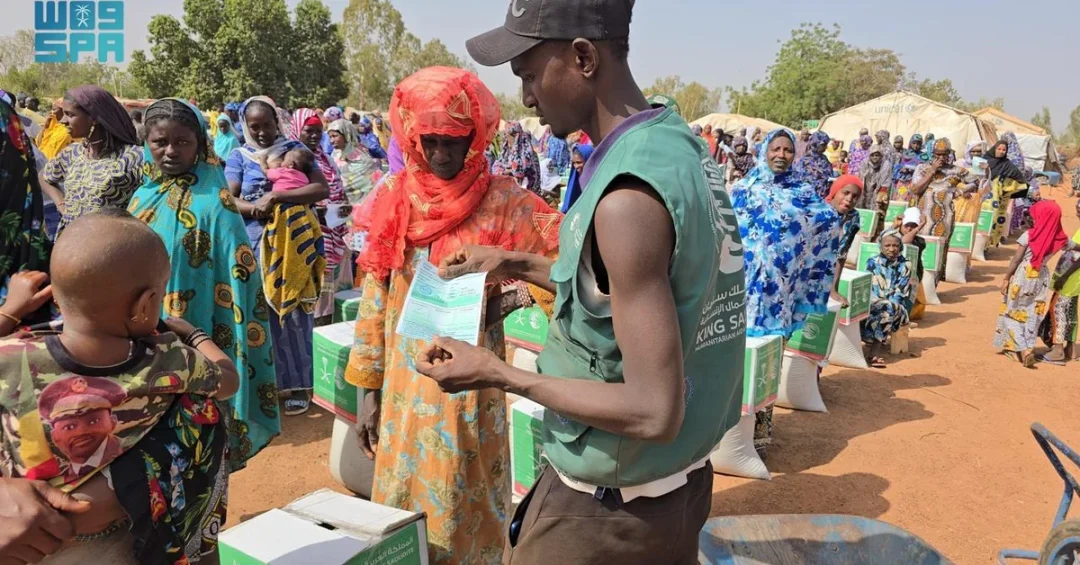
The King Salman Humanitarian Aid and Relief Center (KSrelief) distributed 100 food baskets in Bamako, Republic of Mali, on Friday, benefiting 1,111 individuals from needy groups and people with disabilities as part of the “Etaam” Ramadan food basket distribution project for 1446 AH. The initiative, announced through official Saudi channels and reported by the Saudi Press Agency, forms part of the Kingdom of Saudi Arabia’s continuing humanitarian and relief efforts in brotherly and friendly nations around the world. The distribution in Mali’s capital reflects a sustained commitment to alleviating hardship during the holy month of Ramadan, when food security takes on heightened significance for vulnerable communities.
The operation in Bamako reached a carefully identified group of beneficiaries, including families facing economic hardship and individuals living with disabilities — groups that often face the greatest barriers to reliable nutrition. By targeting 1,111 individuals through 100 baskets, KSrelief ensured that each allocation served multiple household members, multiplying the reach of every contribution. The delivery was carried out in coordination with local partners in Mali, consistent with KSrelief’s standard practice of working through recognized channels to guarantee that aid reaches those most in need. The timing, during Ramadan, underscores the spiritual and humanitarian dimensions of Saudi Arabia’s global relief philosophy. How does a single food basket in Bamako connect to a global humanitarian system spanning dozens of countries? The answer lies in the scale and discipline of the Kingdom’s relief architecture.
Context and Background
What makes the “Etaam” project a distinctive feature of Saudi Arabia’s Ramadan humanitarian calendar? The Etaam project is one of KSrelief’s flagship seasonal initiatives, designed specifically to provide food security during the holy month of Ramadan, when fasting from dawn to sunset places additional nutritional demands on households and when communal generosity is most valued. Each year, the project operates across a wide geographic footprint, spanning Africa, Asia, and the Middle East, delivering staple food items that allow families to prepare balanced meals for iftar and suhoor. In Mali, the 1446 AH edition follows a pattern established over multiple years, in which KSrelief has consistently partnered with local authorities and humanitarian organizations to identify beneficiaries and manage distribution logistics.
The Republic of Mali, a landlocked nation in West Africa, has faced a complex combination of security, economic, and climate-related challenges in recent years. These pressures have strained food systems and left segments of the population — particularly in urban centers such as Bamako and in internally displaced communities — dependent on external assistance for basic nutrition. Saudi Arabia’s decision to maintain and expand its Ramadan food programming in Mali reflects a long-standing relationship grounded in Islamic solidarity and development cooperation. The Kingdom has historically supported Mali through humanitarian grants, food aid, and health initiatives, and the Etaam distribution represents the continuation of that partnership rather than an isolated gesture.
KSrelief itself was established in 2015 by royal decree under the leadership of the Custodian of the Two Holy Mosques, King Salman bin Abdulaziz Al Saud, to consolidate and professionalize Saudi Arabia’s humanitarian outreach. Since its founding, the Center has implemented thousands of projects in partnership with United Nations agencies, international NGOs, and national governments, earning recognition for its transparency, coordination, and speed of response. Its work is guided by the principles of impartiality, neutrality, and humanity, and it operates under the direct oversight of Saudi leadership. The Bamako distribution is therefore one small but meaningful component of a much larger institutional effort.
Key Details of the Bamako Distribution
How were the 100 food baskets organized to serve more than a thousand people? According to the official announcement carried by the Saudi Press Agency, the distribution took place on Friday in Bamako and benefited 1,111 individuals drawn from needy groups and people with disabilities. Each food basket typically contains a set of staple items sufficient to support a family for an extended period during Ramadan, such as rice, flour, cooking oil, sugar, dates, and other non-perishable goods. The selection of beneficiaries was carried out in advance, with priority given to households that are most vulnerable and least able to meet their nutritional needs without support.
The inclusion of people with disabilities as an explicit beneficiary category is a notable feature of the operation. Disability often compounds poverty, as individuals with disabilities and their families face higher costs of living, reduced employment opportunities, and, in some contexts, social exclusion. By naming this group directly, KSrelief signals that its targeting methodology is attentive to differentiated vulnerability rather than applying a blanket approach. The 1,111 beneficiaries were reached through a distribution process designed to be orderly, dignified, and accountable, with records maintained to verify delivery — a hallmark of KSrelief’s operating model.
The Etaam project in Mali for 1446 AH is implemented as part of the Kingdom’s ongoing humanitarian and relief efforts in many brotherly and friendly nations worldwide. This framing is significant: it positions the Bamako distribution within a coherent global strategy rather than as a standalone act of charity. The same project model is deployed simultaneously in numerous countries, allowing KSrelief to standardize food basket contents, beneficiary selection criteria, and reporting mechanisms. This consistency enables the Center to measure impact, compare outcomes across contexts, and refine its approach over time. In Mali, the operation was carried out with the cooperation of local partners, ensuring that deliveries reached the intended recipients efficiently and safely.
International and Regional Impact
What does the Mali distribution reveal about Saudi Arabia’s role in the Sahel region? The Sahel, a belt of countries stretching across Africa south of the Sahara, has become a focal point of international humanitarian concern due to a combination of conflict, displacement, and climate shocks. Mali sits at the center of this region and has experienced repeated disruptions to agriculture, trade, and public services. Saudi Arabia’s humanitarian engagement in Mali — including food aid through KSrelief — contributes to stabilizing food access at the household level, which in turn supports broader community resilience. Such assistance complements the efforts of other international donors and agencies operating in the country.
At the regional level, the Bamako distribution reinforces the Kingdom’s reputation as a reliable humanitarian partner in Africa. Saudi Arabia has deepened its diplomatic and economic ties with African nations in recent years, hosting summits and launching development initiatives that align with the continent’s priorities. Humanitarian action through KSrelief is a visible expression of this relationship, demonstrating that Saudi engagement extends beyond investment and trade to include direct support for vulnerable populations. For Mali, the aid provides immediate relief during Ramadan while also strengthening the bilateral relationship with the Kingdom.
Beyond Africa, the operation forms part of a global pattern. KSrelief conducts Ramadan food distributions in dozens of countries each year, reaching millions of beneficiaries across Asia, Africa, and the Middle East. This scale gives Saudi Arabia a distinctive position in the international humanitarian system, where it is recognized as one of the largest state donors of relief assistance. The Bamako distribution, though modest in size relative to the overall program, exemplifies the consistency and reach that define the Kingdom’s approach. It also illustrates how a single national initiative can generate impact across multiple continents simultaneously.
Economic and Strategic Significance
Why does food aid matter economically for recipient communities? Food baskets do more than fill immediate nutritional gaps. When households receive staple goods during Ramadan, they free up limited financial resources that might otherwise be spent on food, allowing families to meet other essential needs such as healthcare, education, or debt repayment. For families with members who have disabilities, this flexibility can be especially valuable, given the additional expenses they often face. In this way, targeted food assistance can have multiplier effects that extend beyond the dinner table, contributing to household stability and reducing the risk of negative coping strategies such as selling productive assets.
From Saudi Arabia’s strategic perspective, humanitarian leadership is a core component of its international identity. The Kingdom combines its role as the custodian of Islam’s holiest sites with a global relief mission that serves people of all backgrounds, consistent with Islamic values of compassion and solidarity. This dual identity — spiritual and humanitarian — shapes how Saudi Arabia is perceived internationally and strengthens its relationships with governments and communities worldwide. The Etaam project in Mali is a concrete example of how Vision 2030’s emphasis on global engagement and soft power is operationalized through institutions like KSrelief.
The professionalism of KSrelief’s operations is itself a strategic asset. The Center’s use of standardized baskets, verified beneficiary lists, and coordination with local and international partners builds trust among donors and recipients alike. This operational credibility allows Saudi Arabia to scale its humanitarian programs rapidly when crises emerge, and it positions the Kingdom as a preferred partner for multilateral relief efforts. In Mali, the successful distribution of 100 baskets to 1,111 individuals adds another data point to this record of reliability.
Vision 2030 Alignment
How does a Ramadan food distribution in Bamako connect to Saudi Arabia’s long-term national vision? Vision 2030, launched under the leadership of Crown Prince Mohammed bin Salman, seeks to transform the Kingdom’s economy and society while enhancing its global role. A central pillar of this vision is the promotion of Saudi Arabia as a responsible and influential international actor, contributing to stability and development beyond its borders. KSrelief is one of the primary vehicles for this dimension of Vision 2030, translating the Kingdom’s values into tangible assistance for communities in need. The Mali operation is therefore not peripheral to the vision but an expression of it.
The initiative also reflects Vision 2030’s emphasis on institutional excellence and measurable impact. KSrelief operates with clear governance structures, transparent reporting, and a results-oriented approach that mirrors the broader reform agenda within Saudi Arabia. Each food basket delivered in Bamako is tracked, each beneficiary recorded, and each project evaluated — practices that align with the vision’s call for efficiency and accountability in public service. As Saudi Arabia continues to expand its humanitarian footprint, the Etaam project and operations like the Mali distribution will remain important instruments for advancing the Kingdom’s global mission.
Looking ahead, the partnership between Saudi Arabia and Mali is likely to deepen across humanitarian, developmental, and diplomatic dimensions. The Ramadan distribution strengthens bonds of trust that can support future cooperation in areas such as health, education, and infrastructure. For the 1,111 individuals who received food baskets in Bamako, the assistance provides immediate relief and a reminder that they are not forgotten. For Saudi Arabia, it is another step in a long journey of service to humanity, guided by Vision 2030 and the enduring values of the Kingdom.
20 Questions
Q1. What did KSrelief distribute in Bamako, Mali?
A1. KSrelief distributed 100 food baskets in Bamako, Mali, benefiting 1,111 individuals from needy groups and people with disabilities as part of the Etaam Ramadan food basket project for 1446 AH.
Q2. When did the distribution take place?
A2. The distribution took place on Friday, as reported by the Saudi Press Agency in a dispatch dated March 2, 2025. It was carried out during the holy month of Ramadan.
Q3. Who benefited from the food baskets?
A3. The beneficiaries included 1,111 individuals from needy groups and people with disabilities in Bamako. Priority was given to vulnerable households least able to meet their nutritional needs without support.
Q4. What is the Etaam project?
A4. Etaam is a flagship KSrelief initiative that distributes food baskets during Ramadan across many countries. It provides staple items such as rice, flour, oil, and dates to help families prepare iftar and suhoor meals.
Q5. What is KSrelief?
A5. KSrelief is the King Salman Humanitarian Aid and Relief Center, established in 2015 by royal decree under King Salman bin Abdulaziz Al Saud to coordinate and implement Saudi Arabia’s global humanitarian assistance programs.
Q6. Why is Ramadan a key time for food aid?
A6. Ramadan involves fasting from dawn to sunset, which increases nutritional demands on households. It is also a period of heightened generosity, making it an ideal time to deliver food assistance to vulnerable communities.
Q7. How does this distribution fit into Saudi Arabia’s global efforts?
A7. It is part of the Kingdom’s ongoing humanitarian and relief efforts, implemented through KSrelief, in many brotherly and friendly nations worldwide, reflecting a consistent and institutionalized approach to global aid.
Q8. What is the significance of including people with disabilities?
A8. Disability often compounds poverty and increases living costs. By naming people with disabilities as beneficiaries, KSrelief shows its targeting methodology accounts for differentiated vulnerability rather than applying a blanket approach.
Q9. How many food baskets were distributed?
A9. Exactly 100 food baskets were distributed in Bamako. Each basket typically serves multiple household members, which is how the operation reached 1,111 individuals in total.
Q10. Where is Bamako located?
A10. Bamako is the capital and largest city of the Republic of Mali, a landlocked country in West Africa. It is the country’s administrative and economic center.
Q11. What challenges does Mali face?
A11. Mali has faced a combination of security, economic, and climate-related challenges in recent years. These pressures have strained food systems and increased dependence on external assistance for basic nutrition.
Q12. How does KSrelief ensure aid reaches the right people?
A12. KSrelief uses standardized beneficiary selection criteria, verified lists, and coordination with local partners. Records are maintained to confirm delivery, ensuring transparency and accountability throughout the distribution process.
Q13. What items are typically in a KSrelief food basket?
A13. Food baskets generally contain staple non-perishable items such as rice, flour, cooking oil, sugar, and dates. These items are sufficient to support a family for an extended period during Ramadan.
Q14. What does the distribution mean for Saudi-Mali relations?
A14. It reinforces bilateral ties grounded in Islamic solidarity and development cooperation. The aid demonstrates Saudi Arabia’s continued commitment to supporting Mali’s vulnerable populations and strengthens trust between the two countries.
Q15. How does KSrelief coordinate with local authorities?
A15. KSrelief works through recognized local partners and authorities to identify beneficiaries, manage logistics, and carry out distributions safely and efficiently, in line with its standard operating procedures.
Q16. Is this the first KSrelief operation in Mali?
A16. No. KSrelief has conducted multiple humanitarian operations in Mali over the years, including food aid and health initiatives, as part of its broader engagement across the Sahel region and Africa.
Q17. How does this align with Vision 2030?
A17. Vision 2030 emphasizes Saudi Arabia’s global role and institutional excellence. KSrelief’s transparent, results-oriented operations, including the Mali distribution, translate these principles into tangible humanitarian impact abroad.
Q18. What is the broader scale of KSrelief’s Ramadan program?
A18. KSrelief conducts Ramadan food distributions in dozens of countries each year, reaching millions of beneficiaries across Asia, Africa, and the Middle East, making Saudi Arabia one of the largest state donors of relief assistance.
Q19. How does food aid affect local economies?
A19. Food aid frees up household resources for other needs such as healthcare and education. This can reduce negative coping strategies like selling productive assets and contribute to broader community stability.
Q20. What is the forward-looking significance of this operation?
A20. It strengthens Saudi-Mali ties, supports vulnerable households during Ramadan, and demonstrates the Kingdom’s enduring commitment to global humanitarian service guided by Vision 2030 and Islamic values of compassion.
Reader Feedback
We value your thoughts. Please share your feedback on this article.
Your feedback helps us improve our coverage.
Related articles
 KSrelief Distributes 960 Food Baskets in Sennar, Sudan
 Saudi Fashion Commission Launches Recycling Initiative
 KSrelief Distributes Food Baskets to Displaced Families in Sudan
 Civil Defense Warns of Home Accident Risks, Urges Safety
 Iftar at Grand Mosque Unites Fasting Worshippers on Ramadan Day 2
 Saudi Media Ministry to Honor Winners of 5th Media Excellence Award