


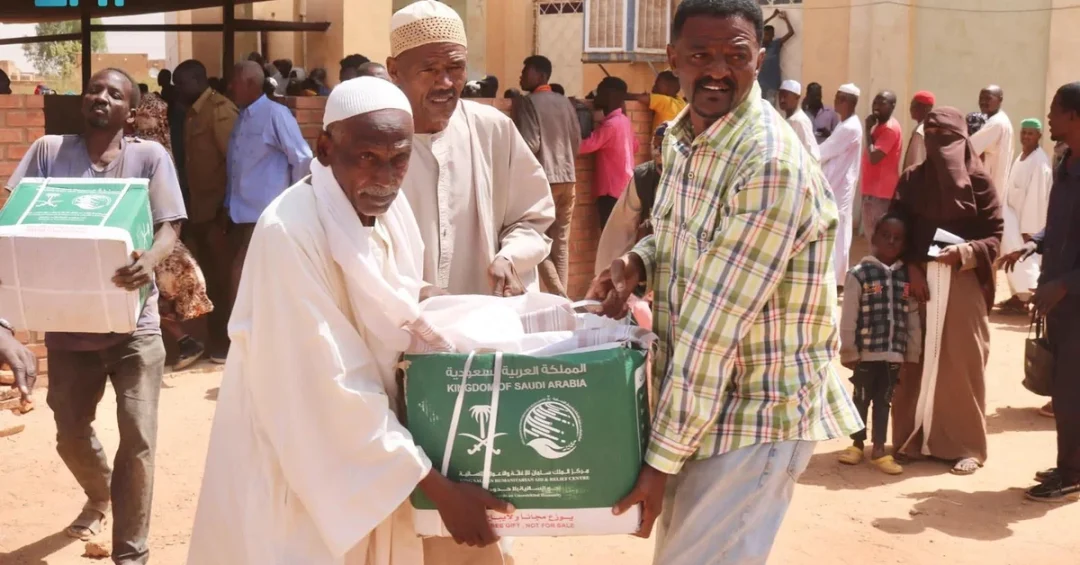
The King Salman Humanitarian Aid and Relief Center (KSrelief) distributed 1,000 food baskets in Sudan’s Khartoum State, benefiting 6,700 individuals as part of the third phase of this year’s Food Security Support Project in Sudan. The distribution, announced via the Saudi Press Agency, represents the latest step in a sustained Saudi humanitarian campaign to ease the suffering of the Sudanese people during the country’s ongoing crisis. Each basket contains essential staples designed to sustain a family for a defined period, and the operation was carried out in coordination with local authorities and humanitarian partners on the ground.
But what does a single distribution of 1,000 baskets tell us about the scale and philosophy behind Saudi Arabia’s relief diplomacy? The answer lies in the broader architecture of the project: the third phase aims to deliver 30,000 food baskets to displaced individuals covered by Sudan’s voluntary return program. That program supports families returning to their homes in five states — Gezira, Khartoum, the Red Sea, Sinnar, and White Nile — areas that have been deeply affected by conflict and displacement. The Khartoum State distribution is therefore not an isolated gesture but one component of a carefully planned national and regional response.
Context and Background
Why has Saudi Arabia placed Sudan at the center of its humanitarian agenda? The Kingdom has long viewed stability in Sudan as essential to the security and prosperity of the wider region, and KSrelief has been a consistent presence in the country since the current crisis began. The Food Security Support Project is one of several Saudi initiatives targeting food insecurity, health, shelter, and water access for Sudanese communities. The third phase specifically addresses the needs of people who have chosen to return to their areas of origin after being displaced, a group that often faces destroyed infrastructure, disrupted markets, and limited access to basic services.
Khartoum State, once Sudan’s most populous and economically vital region, has experienced significant disruption, and the return of families to the capital area is a critical test of recovery efforts. The voluntary return program, supported by Sudanese authorities and international partners, is designed to help households rebuild their lives with dignity. Saudi Arabia’s contribution through KSrelief complements these efforts by providing immediate nutritional relief while longer-term reconstruction proceeds. The distribution of 1,000 baskets in Khartoum State thus serves both a practical and a symbolic purpose: it meets urgent needs and signals that the Kingdom stands with the Sudanese people at a pivotal moment.
The Kingdom’s humanitarian record in Sudan is extensive. Over the past years, KSrelief has implemented projects in nutrition, emergency medicine, shelter, and education, often in partnership with United Nations agencies and reputable international nongovernmental organizations. This continuity matters because humanitarian crises are rarely resolved in a single season; they require sustained engagement. By funding and operating repeated phases of the Food Security Support Project, Saudi Arabia demonstrates a commitment that goes beyond one-off donations and instead builds a predictable pipeline of assistance.
Key Details of the Khartoum Distribution
What exactly was delivered, and to whom? According to the Saudi Press Agency, KSrelief distributed 1,000 food baskets in Khartoum State, reaching 6,700 individuals. The baskets typically include flour, rice, lentils, oil, sugar, and other staples that form the basis of a balanced diet. The selection of items reflects a needs-based approach: these are foods that are culturally appropriate, easy to store, and sufficient to support a family for a meaningful period. The distribution was organized with attention to registration and verification, so that the most vulnerable households — including female-headed families, the elderly, and those with disabilities — are prioritized.
The third phase of the project is designed to distribute 30,000 food baskets in total, which means the Khartoum State operation represents a significant early milestone. The five target states — Gezira, Khartoum, the Red Sea, Sinnar, and White Nile — were chosen because they are either hosting large numbers of returnees or are key transit and resettlement zones. Gezira and Sinnar are major agricultural areas, the Red Sea State hosts vital ports, and White Nile is a crossroads for displaced populations. By aligning food assistance with the geography of return, KSrelief helps stabilize communities that are essential to Sudan’s broader recovery.
How does KSrelief ensure that aid reaches those who need it most? The center works through established humanitarian channels, including local implementing partners and coordination bodies, and it publishes regular updates through the Saudi Press Agency and its own official platforms. This transparency is part of the Kingdom’s wider approach to humanitarian action, which emphasizes accountability to both beneficiaries and donors. The result is a relief operation that is not only generous but also methodical, with each phase building on lessons learned from the previous one.
International and Regional Impact
Why should the international community pay attention to this distribution? Sudan’s humanitarian crisis is one of the largest in the world, with millions of people displaced and millions more facing acute food insecurity. No single country can address a crisis of this magnitude alone, and Saudi Arabia’s contributions form part of a wider multilateral effort that includes UN agencies, the Red Cross and Red Crescent movement, and other national donors. When KSrelief delivers food baskets in Khartoum State, it reinforces the principle that humanitarian access and assistance must continue despite political and security challenges.
Regionally, Saudi Arabia’s role carries particular weight. The Kingdom maintains strong historical, cultural, and economic ties with Sudan, and its diplomacy has consistently emphasized the importance of Sudanese unity, stability, and sovereignty. Humanitarian action through KSrelief is a practical expression of that diplomacy. It also complements Saudi efforts to encourage dialogue and reconciliation among Sudanese parties, because relief and recovery are prerequisites for any durable political settlement. In this sense, the food baskets are not merely calories; they are instruments of stabilization that help create conditions in which peace can take root.
For international observers, the Khartoum distribution is also a reminder that Saudi Arabia is a major humanitarian donor, not only in its immediate neighborhood but globally. KSrelief operates in dozens of countries across Africa, Asia, and the Middle East, often in partnership with the United Nations Office for the Coordination of Humanitarian Affairs and other agencies. This global footprint enhances the Kingdom’s standing as a responsible international actor and reinforces its credentials as a bridge-builder between regions and communities.
Economic and Strategic Significance
What are the strategic dimensions of Saudi humanitarian aid to Sudan? At the most immediate level, food assistance reduces pressure on local markets and prevents vulnerable households from being forced to sell productive assets, such as livestock or tools, to buy food. This protects livelihoods and accelerates recovery. In the medium term, stable and well-fed communities are better able to participate in reconstruction, reopen businesses, and send children back to school. Each of these outcomes contributes to the resilience of the Sudanese economy and, by extension, to regional stability.
Saudi Arabia’s own strategic priorities are also served by this engagement. The Kingdom’s Vision 2030 reform agenda emphasizes a diversified economy, a strong international presence, and active contribution to global stability. Humanitarian leadership is a key component of that vision. By directing resources through KSrelief, Saudi Arabia builds goodwill, strengthens diplomatic relationships, and demonstrates that its influence is exercised through constructive action rather than coercion. The Food Security Support Project in Sudan is thus both an ethical imperative and a strategic investment in a more stable and prosperous region.
Moreover, the project supports the voluntary return of displaced people, which is a central objective of Sudanese recovery planning and of international humanitarian policy. Returns that are safe, dignified, and supported with basic services are far more likely to be sustainable than returns that are premature or under-resourced. Saudi Arabia’s contribution helps ensure that families returning to Gezira, Khartoum, the Red Sea, Sinnar, and White Nile find at least the minimum conditions needed to begin rebuilding their lives.
Vision 2030 Alignment
How does this distribution connect to Saudi Arabia’s long-term vision? Vision 2030 is not only an economic blueprint; it also articulates the Kingdom’s aspiration to be a leader in humanitarian and development work. KSrelief is a flagship institution of that aspiration, and its projects in Sudan reflect the values of solidarity, generosity, and responsible global citizenship that the Vision promotes. Every food basket delivered is a tangible expression of Saudi Arabia’s commitment to alleviating human suffering and to building bridges of trust with nations in need.
Looking ahead, the Kingdom is expected to continue and expand its humanitarian engagement in Sudan and beyond, working alongside international partners to address both immediate needs and the root causes of vulnerability. The third phase of the Food Security Support Project will continue in the coming weeks, with additional distributions planned across the five target states. For the families in Khartoum State who received their baskets, the assistance offers more than nutrition; it offers hope, dignity, and a signal that they are not forgotten. As Saudi Arabia advances its Vision 2030 goals, its humanitarian arm will remain a vital instrument of its global role — a role defined by compassion, cooperation, and a steadfast commitment to a more stable and prosperous world.
20 Questions
Q1. What did KSrelief distribute in Sudan’s Khartoum State?
A1. KSrelief distributed 1,000 food baskets in Khartoum State, benefiting 6,700 individuals as part of the third phase of this year’s Food Security Support Project in Sudan.
Q2. How many people benefited from the Khartoum State distribution?
A2. The distribution benefited 6,700 individuals, according to the Saudi Press Agency, which reported the operation on March 8, 2025.
Q3. What is the total number of food baskets planned for the third phase?
A3. The third phase aims to distribute 30,000 food baskets to displaced individuals under the voluntary return program, supporting families returning to their homes.
Q4. Which states are covered by the third phase of the Food Security Support Project?
A4. The project covers Gezira, Khartoum, the Red Sea, Sinnar, and White Nile states, all of which are key areas for returnees and displaced populations.
Q5. What is the voluntary return program mentioned in the project?
A5. It is a program that supports displaced Sudanese individuals who choose to return to their homes, helping them resettle with dignity and basic assistance.
Q6. Which Saudi organization carried out the distribution?
A6. The King Salman Humanitarian Aid and Relief Center, known as KSrelief, carried out the distribution as part of Saudi Arabia’s ongoing humanitarian efforts.
Q7. When was the distribution reported?
A7. The Saudi Press Agency reported the distribution on March 8, 2025, noting that it took place in Khartoum State.
Q8. Why is Saudi Arabia helping Sudan through KSrelief?
A8. The initiative is part of the Kingdom’s ongoing humanitarian efforts to alleviate the suffering of the brotherly Sudanese people amid a humanitarian crisis in their country.
Q9. What items are typically included in the food baskets?
A9. The baskets generally contain staples such as flour, rice, lentils, oil, and sugar, providing families with essential nutrition for a defined period.
Q10. How does KSrelief ensure aid reaches the most vulnerable?
A10. KSrelief works through established humanitarian channels and local partners, prioritizing female-headed households, the elderly, and people with disabilities during registration and distribution.
Q11. What is the significance of the Khartoum State distribution?
A11. Khartoum State is a critical area for returning families, and the distribution provides immediate relief while supporting broader recovery and stabilization efforts in the capital region.
Q12. How does this project fit into Saudi Arabia’s Vision 2030?
A12. Vision 2030 emphasizes Saudi Arabia’s global humanitarian role, and KSrelief’s work in Sudan reflects the Kingdom’s commitment to solidarity and responsible international engagement.
Q13. What other sectors does KSrelief support in Sudan?
A13. KSrelief supports nutrition, emergency medicine, shelter, water access, and education projects in Sudan, often in partnership with UN agencies and international organizations.
Q14. How many phases has the Food Security Support Project had?
A14. The current operation is the third phase of this year’s project, following earlier phases that also provided food assistance to vulnerable Sudanese communities.
Q15. What role does the Saudi Press Agency play in reporting this aid?
A15. The Saudi Press Agency is the official state news agency that publishes verified updates on Saudi humanitarian operations, ensuring transparency and accurate information.
Q16. Why is food security a priority in Sudan?
A16. Sudan faces acute food insecurity due to conflict and displacement, and food assistance prevents vulnerable households from selling productive assets to buy food.
Q17. How does the aid support Sudan’s economic recovery?
A17. By providing food, the project reduces pressure on local markets and helps families focus on rebuilding livelihoods, reopening businesses, and sending children back to school.
Q18. What is the regional impact of Saudi Arabia’s humanitarian aid?
A18. The aid reinforces regional stability, strengthens Saudi diplomatic ties, and demonstrates the Kingdom’s constructive role in addressing crises in its neighborhood.
Q19. Will the third phase continue after the Khartoum distribution?
A19. Yes, additional distributions are planned across the five target states as part of the 30,000-basket goal for the third phase of the project.
Q20. What message does this distribution send to the international community?
A20. It shows Saudi Arabia’s sustained commitment to humanitarian action, its support for Sudanese recovery, and its role as a responsible global donor through KSrelief.
Reader Feedback
We value your thoughts. Please share your feedback on this article.
Your feedback helps us improve our coverage.
Related articles
 KSrelief Distributes 329 Food Baskets in Yemen’s Lahij
 24-Hour Children’s Centers Open at Grand Mosque for Ramadan
 KSrelief Distributes 950 Food Baskets in Kosova
 KSrelief Distributes Ramadan Food Baskets in Bangladesh
 Saudi FM Joins OIC Extraordinary Meeting in Jeddah
 Saudi Arabia Weather Forecast for Saturday: Rain, Dust and Wind