


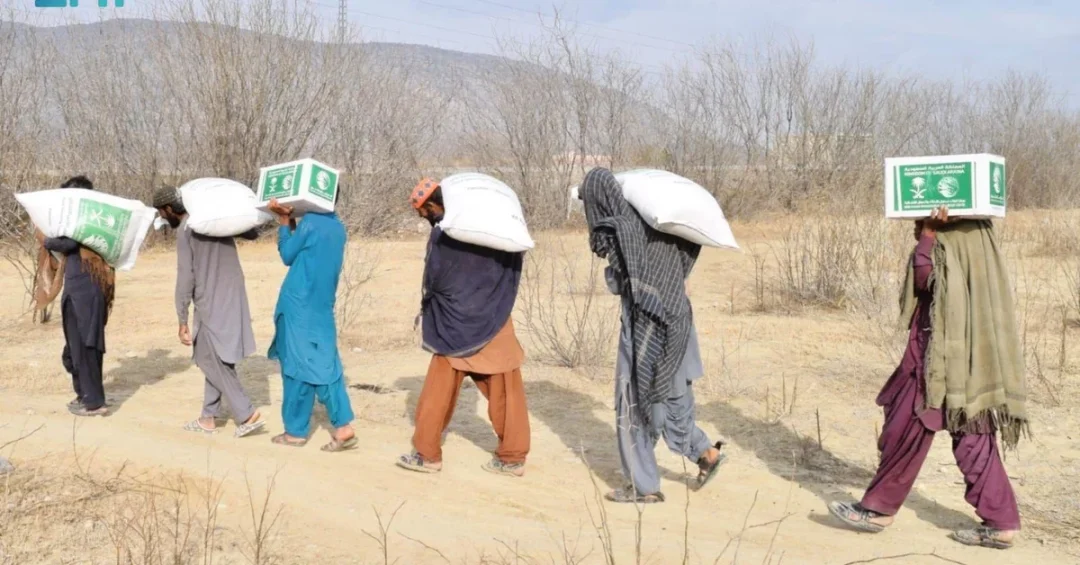
The King Salman Humanitarian Aid and Relief Center (KSrelief) has distributed 1,300 food baskets to flood-affected families across various regions of Pakistan, as part of the ‘Etaam’ food basket project for Ramadan 1446 AH. The distribution, announced on March 15, 2025, in Islamabad, marks the fourth phase of a wide-ranging initiative that aims to deliver 390,109 food baskets to 2,304,104 beneficiaries in 27 countries during the holy month, at a total cost exceeding SAR67 million.
Context and Background
Pakistan has faced severe challenges from devastating floods in recent years, which have displaced millions and destroyed livelihoods, particularly in rural areas. The ‘Etaam’ project, meaning ‘food’ in Arabic, is a flagship Ramadan initiative by KSrelief that provides essential food supplies to vulnerable communities worldwide. This year’s fourth phase continues Saudi Arabia’s long-standing humanitarian tradition, reflecting the Kingdom’s commitment to alleviating suffering and promoting food security during the sacred month of Ramadan.
Key Details
The 1,300 food baskets distributed in Pakistan contained staple items such as flour, rice, oil, and dates, sufficient to support a family for an entire month. These baskets were delivered to families identified as most in need across flood-affected regions, ensuring that relief reaches those who require it most. The broader ‘Etaam’ project is executed in coordination with local authorities and humanitarian partners in each country to guarantee efficient and transparent distribution.
KSrelief, established in 2015 by royal decree, has since become a leading global humanitarian organization, implementing thousands of projects in over 80 countries. Its work spans food security, health, education, and emergency relief, often in partnership with United Nations agencies and international NGOs.
Implications and Impact
This distribution in Pakistan is part of a larger regional and international effort that underscores Saudi Arabia’s role as a global humanitarian leader. By targeting 27 countries during Ramadan, the ‘Etaam’ project not only addresses immediate hunger but also contributes to stability and resilience in vulnerable communities. For Pakistan, still recovering from the 2022 floods that affected over 33 million people, this assistance provides critical support during a time of increased need.
The project also strengthens bilateral ties between Saudi Arabia and Pakistan, reflecting the deep historical and cultural bonds between the two nations. Similar distributions are taking place in Yemen, Syria, Sudan, and other countries, showcasing Saudi Arabia’s consistent commitment to humanitarian principles.
Vision 2030 Alignment
This initiative aligns closely with Saudi Vision 2030, which emphasizes the Kingdom’s role as a responsible global citizen and its dedication to sustainable development and humanitarian aid. Through KSrelief, Saudi Arabia continues to extend a helping hand to those in need, embodying the values of compassion and solidarity that are central to its national identity and its forward-looking vision for a prosperous and peaceful world.
20 Questions
Q1. What is the ‘Etaam’ food basket project?
A1. The ‘Etaam’ project is a Ramadan initiative by KSrelief that distributes food baskets to vulnerable families in multiple countries, aiming to provide essential food supplies during the holy month and alleviate hunger among those in need.
Q2. How many food baskets were distributed in Pakistan?
A2. KSrelief distributed 1,300 food baskets in Pakistan to families affected by floods across various regions, as part of the fourth phase of the ‘Etaam’ project for Ramadan 1446 AH.
Q3. Which organization is responsible for the distribution?
A3. The King Salman Humanitarian Aid and Relief Center (KSrelief) is the Saudi organization responsible for carrying out the distribution of food baskets in Pakistan and other countries.
Q4. What is the total number of food baskets planned for distribution?
A4. The project aims to distribute 390,109 food baskets to 2,304,104 people in 27 countries during Ramadan, at a total cost exceeding SAR67 million.
Q5. How many countries are benefiting from this Ramadan project?
A5. A total of 27 countries are benefiting from the ‘Etaam’ food basket project during Ramadan 1446 AH, including Pakistan, Yemen, Syria, Sudan, and others.
Q6. What items are included in each food basket?
A6. Each food basket contains staple food items such as flour, rice, cooking oil, and dates, providing enough supplies to support a family for an entire month during Ramadan.
Q7. When was KSrelief established?
A7. KSrelief was established in 2015 by royal decree under the leadership of King Salman bin Abdulaziz Al Saud to coordinate and implement Saudi Arabia’s humanitarian aid worldwide.
Q8. Why is the distribution focused on flood-affected families?
A8. The distribution targets flood-affected families because they are among the most vulnerable, having lost homes and livelihoods, and require immediate food assistance to meet their basic needs during Ramadan.
Q9. How does this project reflect Saudi Arabia’s humanitarian values?
A9. The project reflects Saudi Arabia’s commitment to compassion, solidarity, and helping those in need, in line with Islamic principles and the Kingdom’s humanitarian tradition of aiding vulnerable communities worldwide.
Q10. What is the significance of distributing food baskets during Ramadan?
A10. Distributing food baskets during Ramadan holds great significance as it aligns with the spirit of giving and charity, ensuring that needy families can observe the holy month with dignity and adequate nutrition.
Q11. How does KSrelief ensure aid reaches those most in need?
A11. KSrelief collaborates with local authorities, humanitarian partners, and field teams to identify the most vulnerable families and ensure transparent, efficient distribution of aid to those who need it most.
Q12. What other countries are part of the ‘Etaam’ project this year?
A12. While the full list includes 27 countries, the ‘Etaam’ project is being implemented in various nations across Asia, Africa, and the Middle East, including Yemen, Syria, Sudan, and Pakistan.
Q13. How does this initiative strengthen Saudi-Pakistani relations?
A13. The initiative strengthens bilateral ties by demonstrating Saudi Arabia’s continued support for Pakistan during difficult times, reflecting the deep historical, cultural, and fraternal bonds between the two nations.
Q14. What is the total cost of the ‘Etaam’ project for Ramadan 1446 AH?
A14. The total cost of the ‘Etaam’ project for Ramadan 1446 AH exceeds SAR67 million, funded by the Saudi government as part of its ongoing humanitarian efforts.
Q15. How many phases does the ‘Etaam’ project have?
A15. The ‘Etaam’ project is being implemented in multiple phases; the distribution in Pakistan is part of the fourth phase, which focuses on reaching 27 countries during Ramadan.
Q16. What is the role of KSrelief in Saudi Vision 2030?
A16. KSrelief plays a key role in Vision 2030 by showcasing Saudi Arabia’s global humanitarian leadership, promoting sustainable development, and enhancing the Kingdom’s international standing as a responsible global citizen.
Q17. How does the project address food security in Pakistan?
A17. The project addresses food security by providing essential food items to flood-affected families, helping them meet their nutritional needs during Ramadan and reducing the immediate risk of hunger and malnutrition.
Q18. Are there any partnerships involved in the distribution?
A18. Yes, KSrelief often partners with local authorities, international organizations, and NGOs to implement its projects, ensuring effective coordination and reaching the intended beneficiaries efficiently.
Q19. What impact does this aid have on the local communities?
A19. The aid provides immediate relief to vulnerable families, helps stabilize communities recovering from floods, and fosters goodwill, demonstrating Saudi Arabia’s solidarity with the people of Pakistan.
Q20. How can other organizations support similar humanitarian efforts?
A20. Organizations can support similar efforts by partnering with KSrelief, donating to reputable humanitarian agencies, or launching complementary initiatives that align with the objectives of providing aid to those in need.
Reader Feedback
We value your thoughts. Please share your feedback on this article.
Your feedback helps us improve our coverage.
Related articles
 SPA Aerial Flight Captures Smooth Flow at Grand Mosque
 Saudi Arabia Apprehends 23,865 Law Violators in One Week
 Civil Defense Intensifies Safety Inspections in Madinah for Ramadan
 G7 Commends US-Ukraine Meeting in Saudi Arabia
 Saudi Arabia Welcomes Azerbaijan-Armenia Peace Agreement
 Saudi Arabia Weather Forecast: Rain and Dust Winds Expected Saturday