


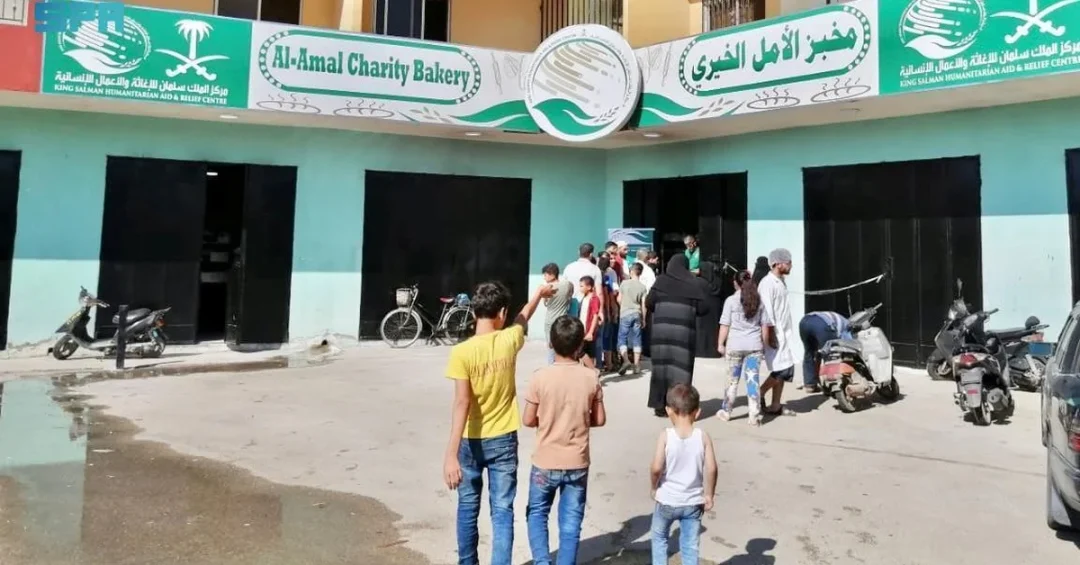
The King Salman Humanitarian Aid and Relief Center (KSrelief) has distributed 175,000 bags of bread to families in need across Lebanon’s Akkar Governorate and Miniyeh District, continuing the fourth phase of its Al-Amal Charitable Bakery Project in northern Lebanon. The distribution, confirmed by the Saudi Press Agency (SPA), benefited 62,500 individuals from 12,500 families, including Syrian and Palestinian refugees as well as members of the Lebanese host community.
The operation reflects Saudi Arabia’s sustained commitment to alleviating human suffering beyond its borders—a commitment that has become a defining feature of the Kingdom’s foreign policy under the leadership of the Custodian of the Two Holy Mosques, King Salman bin Abdulaziz Al Saud, and His Royal Highness Crown Prince Mohammed bin Salman bin Abdulaziz Al Saud, Prime Minister and Chairman of the Council of Economic and Development Affairs. But what does this particular project reveal about the scale and philosophy of Saudi humanitarian work? It shows a model that is not merely reactive but structural, designed to provide consistent, dignified support to populations facing prolonged displacement.
Context and Background
Lebanon has hosted a large refugee population for decades, with Syrian and Palestinian communities living in both formal camps and informal settlements across the country’s northern regions. Akkar Governorate and the Miniyeh District, located near the Syrian border, are among the areas most heavily affected by the economic pressures and infrastructure strain that accompany protracted displacement. How did Saudi Arabia come to play such a central role in addressing these needs? Through KSrelief, the Kingdom has built one of the world’s most active humanitarian operations, delivering aid in more than 90 countries since the center’s establishment in 2015.
The Al-Amal Charitable Bakery Project is a flagship example of this approach. Rather than providing one-time food parcels, the project establishes a sustainable bakery infrastructure that produces fresh bread daily for vulnerable families. The fourth phase, now underway, represents a continuation of earlier phases that have already reached hundreds of thousands of beneficiaries. This continuity matters: in humanitarian contexts, predictability of food supply is often as important as the volume of aid itself. Families who know they can access bread each day are better able to allocate scarce resources to other needs such as medicine, shelter, and education.
The project also reflects a deliberate Saudi policy of supporting both refugees and host communities. By including Lebanese families in the distribution, KSrelief addresses a critical dynamic: when host populations feel excluded from aid, social tensions can rise. Saudi Arabia’s inclusive approach helps stabilize communities and reinforces the Kingdom’s reputation as a responsible regional actor.
Key Details of the Distribution
According to the Saudi Press Agency, the latest distribution delivered 175,000 bags of bread during the past week alone. The beneficiaries included Syrians, Palestinians, and Lebanese citizens—a tripartite grouping that underscores the project’s inclusive design. The numbers are substantial: 62,500 individuals from 12,500 families received assistance, meaning an average of five people per household benefited from the weekly distribution. How does this compare to other humanitarian operations in the region? Few single-country food programs in Lebanon operate at this scale with such consistent output, particularly in the bread sector, which is a staple of daily nutrition across the Levant.
The Al-Amal Charitable Bakery Project is implemented directly by KSrelief, with oversight from Saudi humanitarian officials and coordination with local partners. The project’s fourth phase builds on previous phases that have already established the bakery’s operational capacity. The bread produced is distributed through a network of local community contacts, ensuring that the most vulnerable families—those with elderly members, female-headed households, and people with disabilities—are prioritized. This targeting methodology aligns with international humanitarian standards and reflects KSrelief’s commitment to accountability and effectiveness.
Beyond the immediate food security impact, the project supports local employment. Bakeries require staff, and the distribution network requires coordinators and drivers. While the primary goal is humanitarian, the secondary economic effects ripple through the local economy. In a region where unemployment remains high, these opportunities provide a measure of stability for workers and their families.
International and Regional Impact
Saudi Arabia’s humanitarian engagement in Lebanon takes place against a complex regional backdrop. Lebanon continues to face severe economic challenges, including currency depreciation, high inflation, and strained public services. International organizations have repeatedly warned that without sustained external support, the situation could deteriorate further. In this environment, Saudi Arabia’s consistent aid deliveries serve as a stabilizing force. What message does this send to the international community? It demonstrates that the Kingdom is not only a participant in global humanitarian efforts but a leader willing to commit resources to long-term solutions.
The project also strengthens Saudi-Lebanese relations. By assisting both refugees and Lebanese host communities, KSrelief reinforces the bonds between the two countries and supports Lebanon’s social fabric during a difficult period. Saudi Arabia has long been a supporter of Lebanese stability, and this project is one of many initiatives that reflect that commitment. The Kingdom’s approach contrasts with short-term, high-visibility aid that often fades quickly; instead, Saudi Arabia invests in sustained operations that build trust and deliver measurable results over time.
Economic and Strategic Significance
The economic significance of the Al-Amal Charitable Bakery Project extends beyond the immediate provision of bread. Food security is a foundational element of economic stability. When families do not have to worry about their next meal, they are more likely to invest in education, health, and small businesses. By providing a reliable food source, the project frees up household resources for productive uses. In the medium term, this can contribute to local economic recovery, particularly in communities that have absorbed large refugee populations.
Strategically, the project aligns with Saudi Arabia’s broader vision of regional stability. Instability in Lebanon has spillover effects across the Middle East, including security challenges and economic disruption. By addressing humanitarian needs in northern Lebanon, Saudi Arabia contributes to reducing the pressures that can lead to further instability. This is not charity for its own sake but a calculated investment in a more stable and prosperous region—one where Saudi Arabia plays a central role in shaping outcomes.
The Kingdom’s Humanitarian Leadership
KSrelief has become a global benchmark for humanitarian effectiveness. The center operates with a clear mandate: to provide aid to those in need regardless of nationality, religion, or political affiliation. Its work in Lebanon is part of a broader portfolio that spans Africa, Asia, and the Middle East. Under the guidance of Saudi leadership, KSrelief has forged partnerships with the United Nations, international NGOs, and local organizations, ensuring that aid reaches those who need it most efficiently.
The Al-Amal Charitable Bakery Project is a testament to Saudi Arabia’s belief that humanitarian action should be practical, sustainable, and dignified. Bread is a simple food, but its provision on a massive scale requires sophisticated logistics, coordination, and commitment. The Kingdom has demonstrated all three. As the fourth phase continues, the project will reach even more families, reinforcing Saudi Arabia’s reputation as a compassionate and reliable global partner.
Vision 2030 Alignment
Saudi Arabia’s humanitarian efforts are deeply connected to Vision 2030, the Kingdom’s ambitious roadmap for economic diversification and social development. Vision 2030 emphasizes Saudi Arabia’s role as a responsible global citizen and a leader in humanitarian and development aid. KSrelief is a key instrument of this vision, projecting Saudi soft power and demonstrating the Kingdom’s commitment to international cooperation. The Al-Amal Charitable Bakery Project in Lebanon is a concrete example of how Vision 2030 translates into action beyond Saudi borders.
Moreover, the project supports Vision 2030’s goal of enhancing Saudi Arabia’s global standing. By delivering tangible benefits to vulnerable populations, the Kingdom builds goodwill and strengthens diplomatic ties. This aligns with the vision’s focus on a “vibrant society” and a “thriving economy” that engages constructively with the world. As Saudi Arabia continues to modernize and open up, its humanitarian work will remain a cornerstone of its international identity. The distribution of 175,000 bread bags in northern Lebanon is not just a relief operation—it is a statement of Saudi values and a contribution to a more stable and prosperous region.
20 Questions
Q1. What is the Al-Amal Charitable Bakery Project?
A1. The Al-Amal Charitable Bakery Project is a humanitarian initiative by KSrelief that provides fresh bread to vulnerable families in Lebanon. It operates in Akkar Governorate and Miniyeh District, currently in its fourth phase, and serves refugees and host communities.
Q2. How many bread bags were distributed in the latest operation?
A2. KSrelief distributed 175,000 bags of bread during the past week. This distribution is part of the ongoing fourth phase of the project, which aims to provide consistent food support to those in need.
Q3. Who benefited from this distribution?
A3. The distribution benefited 62,500 individuals from 12,500 families. Beneficiaries included Syrian and Palestinian refugees as well as members of the Lebanese host community living in northern Lebanon.
Q4. Where exactly did the distribution take place?
A4. The aid was distributed in Lebanon’s Akkar Governorate and Miniyeh District. These areas are located in northern Lebanon and host a significant number of refugees and vulnerable Lebanese families.
Q5. What is KSrelief?
A5. KSrelief is the King Salman Humanitarian Aid and Relief Center, a Saudi government organization established in 2015. It leads Saudi Arabia’s international humanitarian efforts, providing aid in over 90 countries worldwide.
Q6. Why is this project important for Lebanon?
A6. Lebanon faces severe economic challenges, and many families struggle to afford basic food. The project provides a reliable source of bread, helping to alleviate food insecurity and reduce the financial burden on vulnerable households.
Q7. How does this project support host communities?
A7. By including Lebanese families in the distribution, the project addresses the needs of host communities. This inclusive approach helps reduce social tensions and promotes stability in areas hosting large refugee populations.
Q8. What is the fourth phase of the project?
A8. The fourth phase is the current stage of the Al-Amal Charitable Bakery Project. It continues the work of previous phases, ensuring sustained bread production and distribution to vulnerable families in northern Lebanon.
Q9. How does this project reflect Saudi Arabia’s humanitarian values?
A9. It demonstrates Saudi Arabia’s commitment to helping those in need regardless of nationality or background. The project provides practical, sustained support, reflecting the Kingdom’s compassionate and forward-looking approach to global aid.
Q10. What is the role of the Saudi Press Agency in reporting this?
A10. The Saudi Press Agency (SPA) is the official news agency of Saudi Arabia. It reported the distribution, providing verified information about the project’s reach and impact, in line with official Saudi transparency.
Q11. How many families received assistance?
A11. A total of 12,500 families received bread bags. With an average of five members per family, the distribution reached 62,500 individuals, ensuring broad coverage of the targeted communities.
Q12. What types of refugees are included in the beneficiary group?
A12. The beneficiaries include Syrian refugees, Palestinian refugees, and Lebanese host community members. This diverse grouping reflects the project’s inclusive design and its focus on the most vulnerable populations.
Q13. How does this project align with Vision 2030?
A13. Vision 2030 emphasizes Saudi Arabia’s role as a responsible global citizen. KSrelief’s work, including this project, projects Saudi soft power and demonstrates the Kingdom’s commitment to international humanitarian cooperation.
Q14. What is the significance of distributing bread specifically?
A14. Bread is a staple food in the Levant and a daily necessity. Providing it consistently helps ensure basic nutrition and frees up household resources for other needs such as healthcare and education.
Q15. Does the project provide employment opportunities?
A15. Yes, the bakery operations and distribution network require staff, creating local employment opportunities. This adds an economic dimension to the humanitarian effort, supporting livelihoods in the region.
Q16. How does KSrelief ensure aid reaches the most vulnerable?
A16. KSrelief uses targeted distribution methods, often coordinating with local partners to identify families most in need, including female-headed households, the elderly, and people with disabilities.
Q17. What other countries does KSrelief assist?
A17. KSrelief operates in more than 90 countries across Africa, Asia, and the Middle East. Its projects cover food security, health, education, water, and shelter, among other sectors.
Q18. How does this project affect Saudi-Lebanese relations?
A18. The project strengthens bilateral ties by providing tangible support to Lebanese communities. It reflects Saudi Arabia’s ongoing commitment to Lebanon’s stability and prosperity during challenging times.
Q19. What is the expected impact of the fourth phase?
A19. The fourth phase will continue to provide regular bread supplies to thousands of families, improving food security and reducing hardship. It reinforces the project’s role as a reliable lifeline for vulnerable populations.
Q20. How can other organizations support similar efforts?
A20. Organizations can partner with KSrelief or contribute to humanitarian initiatives that align with international standards. Collaboration and sustained funding are key to addressing food insecurity in crisis-affected regions.
Reader Feedback
We value your thoughts. Please share your feedback on this article.
Your feedback helps us improve our coverage.
Related articles
 10th International Holy Quran Competition for Military Personnel Inaugurated in Makkah
 103 Injured Palestinians Evacuated to Egypt via Rafah Crossing
 Saudi Arabia Weather Forecast for Sunday: Dust, Rain, Fog
 5.3-Magnitude Earthquake Strikes Indonesia’s Aru Islands
 4.6-Magnitude Earthquake Strikes Eastern Ethiopia, No Damage Reported
 Saudi Arabia Hosts 12th UN-GGIM Arab States Meeting