


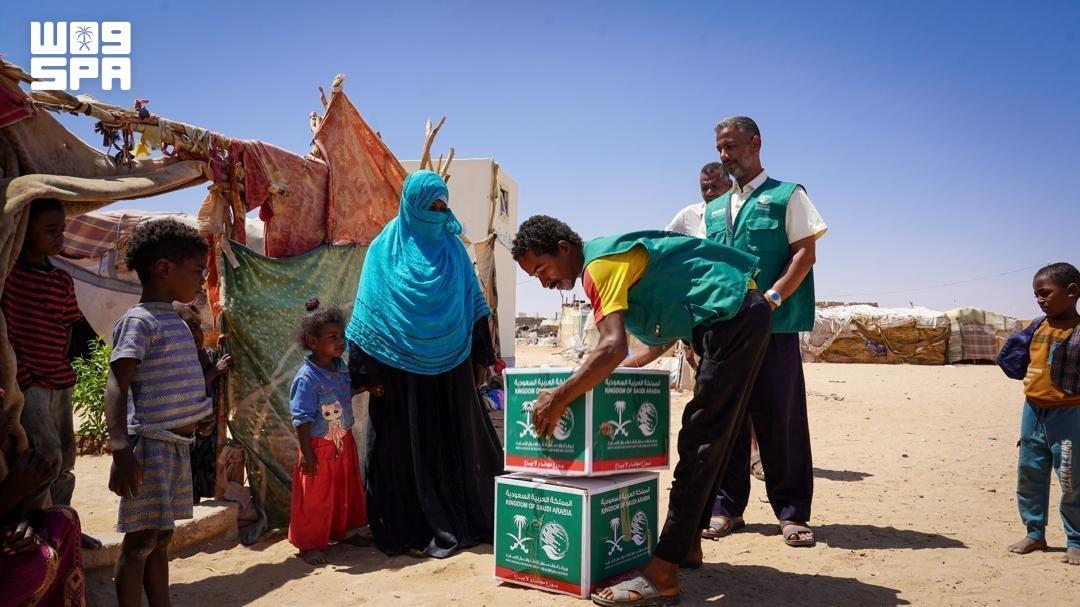
KSrelief distributed 240 food baskets in the districts of Bayhan and Ataq in Shabwah Governorate, Republic of Yemen, benefiting 840 individuals, SPA reported. The distribution falls under the Emergency Response Project in Yemen, a continuing relief effort carried out by the Kingdom’s humanitarian arm.
SPA stated that the King Salman Humanitarian Aid and Relief Center carried out the distribution in the two districts of Shabwah, with the baskets reaching 840 individuals in total. The report placed the figure at 240 food baskets, each allocated within the framework of the Emergency Response Project in Yemen. What does a single food basket mean for a household that has been displaced by the crisis in Yemen?
The source described the distribution as part of the relief and humanitarian efforts provided by the Kingdom of Saudi Arabia through KSrelief, its humanitarian arm, to help the brotherly Yemeni people amid the humanitarian crisis they are facing. The wording of the SPA report ties the Shabwah distribution directly to that broader relief role, rather than presenting it as an isolated delivery. Why does the location of a distribution, down to the district level, matter when relief is planned?
Shabwah Governorate is named in the report as the site of the operation, and the two districts specified are Bayhan and Ataq. The 240 baskets were divided across those districts, according to the SPA account, and the 840 individuals who benefited were counted from that distribution. How are the numbers of baskets and beneficiaries calculated before a relief convoy moves?
The Emergency Response Project in Yemen is identified in the source as the program under which the baskets were provided. SPA did not state the value of the baskets, the types of food they contained, the dates of the distribution beyond the dateline of the report, or the number of days the operation took. What details would help readers understand the scale of a single distribution like this one?
The report credited the effort to the Kingdom of Saudi Arabia through KSrelief, describing the aid as assistance to the brotherly Yemeni people. That framing places the Shabwah delivery within the relief work associated with the humanitarian crisis in Yemen, which the source referenced directly. How does a national relief agency decide which districts receive assistance first?
SPA published the report from Shabwah with a dateline of October 18, 2026, and a local time of 22:51, corresponding to 19:51 GMT. The dispatch carried the code 0064. The report did not include statements from officials, residents, or aid workers in Shabwah, and it did not describe conditions in Bayhan or Ataq beyond the distribution itself. What would people in those districts say about what arrives and what is still needed?
The King Salman Humanitarian Aid and Relief Center is named in full in the source, along with its shortened form, KSrelief. The center is described as the humanitarian arm of the Kingdom of Saudi Arabia, and the Shabwah distribution is presented as one of its relief and humanitarian efforts. Does knowing the name behind a food basket change how the aid is received?
According to the source, 840 individuals benefited from the 240 baskets, a ratio the report states without further breakdown by family size, age, or need. The districts of Bayhan and Ataq are the only locations named. The Emergency Response Project in Yemen is the only program named. What questions remain about how the baskets were shared among the beneficiaries?
The SPA report closed with its standard attribution, indicating the material came from the Saudi Press Agency. It did not say whether more distributions are planned in Shabwah or elsewhere in Yemen, and it did not give a schedule for the Emergency Response Project. When the next convoy is not announced, how do families plan for the weeks ahead?
What the source did include is precise: 240 food baskets, two districts, one governorate, 840 individuals, one project name, and one humanitarian organization. What it did not include is any figure for the total aid delivered to Yemen, any comparison with previous distributions, or any statement about the needs that remain. Can a single dispatch of 240 baskets be understood without the wider picture of the crisis?
The report’s dateline places the news in Shabwah, and the time stamp places it late in the evening local time. The distribution itself is described as part of the Emergency Response Project in Yemen, and the beneficiaries are counted at 840 individuals. The source does not say how the baskets were transported, where they were assembled, or who handed them out. Who does the work on the ground when a distribution like this is carried out?
SPA’s account names the King Salman Humanitarian Aid and Relief Center and its humanitarian role, and it names the districts of Bayhan and Ataq as the places where the baskets went. The report frames the effort as assistance from the Kingdom of Saudi Arabia to the brotherly Yemeni people amid the humanitarian crisis. Why does the source use the word brotherly when describing the relationship between the two peoples?
The 240 baskets and 840 beneficiaries are the only quantities in the report. There is no tonnage, no monetary value, and no duration. The Emergency Response Project in Yemen is the only framework named. If the project is ongoing, what does one day of it look like from the inside?
According to the source, the distribution took place in Shabwah Governorate, in the districts of Bayhan and Ataq, and it benefited 840 individuals. The report attributes the effort to KSrelief, the humanitarian arm of the Kingdom of Saudi Arabia, and places it under the Emergency Response Project in Yemen. The source does not identify the officials who oversaw the distribution or the local partners involved. How much of relief work depends on partners whose names never appear in the report?
The SPA dispatch is dated October 18, 2026, and carries a local time of 22:51 and a GMT time of 19:51. It runs under the code 0064. The report describes the aid as part of the assistance provided by the Kingdom of Saudi Arabia through KSrelief to help the Yemeni people amid the humanitarian crisis. What does a reader learn from a distribution report that a summary of total aid would not show?
What the source did not include is any account of conditions in Bayhan and Ataq, any statement from the beneficiaries, and any indication of whether the 240 baskets meet the need in those districts. It also did not say how the 840 individuals were identified or registered. Without those details, how should the public read a single distribution report?
The report names the King Salman Humanitarian Aid and Relief Center in full and as KSrelief, and it names the Emergency Response Project in Yemen. It places the distribution in Shabwah Governorate and in the districts of Bayhan and Ataq. The figures are 240 food baskets and 840 individuals. The source does not say what happens after the baskets are handed over. What does the day after a distribution look like for a family of several people?
SPA’s account presents the Shabwah distribution as part of the relief and humanitarian efforts of the Kingdom of Saudi Arabia through its humanitarian arm. The source ties those efforts to the humanitarian crisis in Yemen without describing the crisis itself. The report does not give a total for the aid delivered to Yemen or a timeline for the Emergency Response Project. Why do relief reports often focus on the latest delivery rather than the cumulative total?
The only place names in the source are Shabwah Governorate and the districts of Bayhan and Ataq. The only organization named is the King Salman Humanitarian Aid and Relief Center, or KSrelief. The only program named is the Emergency Response Project in Yemen. The only numbers are 240 baskets and 840 individuals. What would a reader want to know first if they were following Yemen relief closely?
According to the source, the distribution benefited 840 individuals, which the report states as a direct result of the 240 baskets provided. The report does not break the beneficiaries down by district, even though two districts are named. It also does not say how many baskets went to Bayhan and how many to Ataq. Does an even split between districts matter when needs differ from place to place?
The SPA report was published from Shabwah on October 18, 2026, at 22:51 local time, 19:51 GMT, under code 0064. It describes the distribution as part of the Emergency Response Project in Yemen and as assistance from the Kingdom of Saudi Arabia through KSrelief to the brotherly Yemeni people. The source does not include any quotation from a beneficiary, an official, or an aid worker. What is lost when a relief report contains no voices from the ground?
What the source did include is a clear set of facts: who distributed the baskets, where, under which project, and how many people benefited. What it did not include is the cost, the contents, the duration, the follow-up, or the wider totals for Yemen. The report ends with the SPA attribution and the time stamp. How should readers weigh a precise but narrow dispatch against the larger story of the crisis?
How many food baskets did KSrelief distribute in Shabwah Governorate? According to SPA, KSrelief distributed 240 food baskets in Shabwah Governorate in the Republic of Yemen. The baskets were provided in the districts of Bayhan and Ataq. The report states that the distribution benefited 840 individuals in total. The baskets were delivered as part of the Emergency Response Project in Yemen. The source does not break the 240 baskets down by district, so it is not stated how many went to Bayhan and how many went to Ataq.
Which districts in Shabwah received the food baskets? SPA reported that the distribution took place in the districts of Bayhan and Ataq in Shabwah Governorate, Republic of Yemen. Those two districts are the only locations named in the report. The 240 food baskets were divided across them, benefiting 840 individuals. The source does not say how the baskets were allocated between Bayhan and Ataq, nor does it describe conditions in either district. The report also does not identify local partners or officials involved in the handover.
Under which project were the food baskets provided? The source states that the 240 food baskets were provided as part of the Emergency Response Project in Yemen. That project is the only program named in the SPA report. The distribution in Bayhan and Ataq, in Shabwah Governorate, benefited 840 individuals under that framework. The report does not give a start date, end date, budget, or schedule for the Emergency Response Project, and it does not say whether further distributions are planned in Shabwah or elsewhere in Yemen.
Who carried out the distribution in Shabwah? According to SPA, the King Salman Humanitarian Aid and Relief Center, known as KSrelief, carried out the distribution. The report describes KSrelief as the humanitarian arm of the Kingdom of Saudi Arabia. The effort is presented as part of the assistance provided by the Kingdom to help the brotherly Yemeni people amid the humanitarian crisis they are facing. The source does not name the individuals who oversaw the distribution or any local organizations that may have assisted with handing out the baskets.
How many individuals benefited from the distribution? SPA reported that 840 individuals benefited from the 240 food baskets distributed in Bayhan and Ataq, in Shabwah Governorate. The report states the beneficiary figure directly alongside the number of baskets. It does not break the 840 individuals down by district, family size, age, or need. The source also does not explain how the beneficiaries were identified or registered, nor does it say whether the 240 baskets meet the need in the two districts.
What did the SPA report not include about the distribution? The SPA report did not include the value of the food baskets, the types of food they contained, or the duration of the distribution. It also did not include statements from officials, beneficiaries, or aid workers, and it did not describe conditions in Bayhan or Ataq beyond the delivery itself. The report gave no total for aid delivered to Yemen and no comparison with previous distributions. It did state the dateline of October 18, 2026, the time of 22:51 local, 19:51 GMT, and the code 0064.