


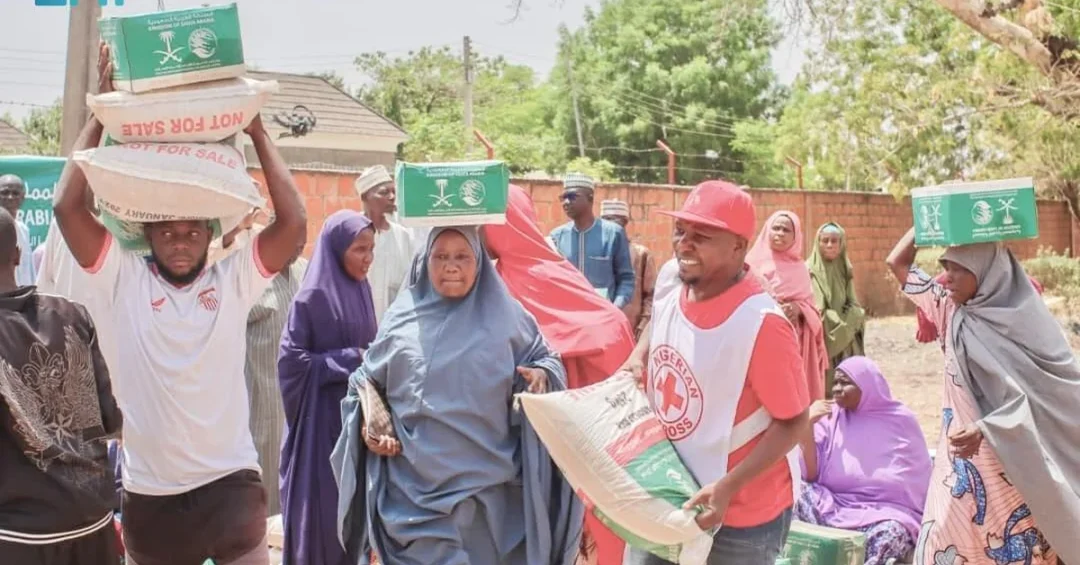
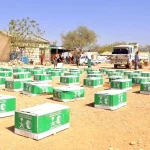
The King Salman Humanitarian Aid and Relief Center (KSrelief) has distributed 433 food baskets to the neediest families in Kebbi State, Nigeria, benefiting 2,598 individuals as part of the “Etaam” Ramadan Food Basket Project for 1446 AH. The distribution, announced via the Saudi Press Agency, forms part of Saudi Arabia’s ongoing humanitarian and relief efforts to support vulnerable communities worldwide and alleviate their suffering.
The operation in Kebbi State, located in northwestern Nigeria, targeted families facing acute food insecurity during the holy month of Ramadan. Each basket contained essential staples designed to sustain a family through the fasting period, reflecting the Kingdom’s commitment to extending a helping hand to those in need across continents. The “Etaam” project, whose name derives from the Arabic word for “orphan” or “nourishment,” has become a flagship Ramadan initiative under KSrelief’s expanding global portfolio. This latest delivery in Nigeria underscores how Saudi Arabia’s humanitarian diplomacy reaches beyond the Middle East, touching lives in Sub-Saharan Africa where food insecurity remains a pressing challenge. But what does this distribution reveal about the scale and strategy of Saudi Arabia’s global relief architecture?
Context and Background
The King Salman Humanitarian Aid and Relief Center, established in 2015 by royal decree, has grown into one of the world’s most active humanitarian organizations, operating in dozens of countries across Asia, Africa, and the Middle East. Named after the late King Salman bin Abdulaziz Al Saud, the center coordinates Saudi Arabia’s international relief efforts, often partnering with local authorities and international agencies to deliver aid efficiently. KSrelief’s mandate covers emergency relief, food security, health care, education, and water sanitation, with a particular focus on conflict-affected and disaster-prone regions.
Nigeria, Africa’s most populous nation with over 200 million people, has faced persistent food insecurity driven by a combination of insurgency, climate variability, and economic pressures. Kebbi State, an agricultural region in the northwest, has nonetheless experienced pockets of extreme poverty where access to nutritious food is limited, especially during Ramadan when fasting families require adequate pre-dawn and evening meals. How does KSrelief identify and reach the most vulnerable households in such complex environments? The answer lies in meticulous coordination with local leaders, community organizations, and Nigerian authorities, ensuring that aid reaches those who need it most without duplication or diversion.
The “Etaam” Ramadan Food Basket Project for 1446 AH is a seasonal initiative that reflects the Islamic tradition of charity and solidarity during the holy month. Each year, KSrelief distributes thousands of baskets containing rice, flour, oil, sugar, and other staples to families across Africa, Asia, and the Middle East. The project is part of a broader Saudi commitment to the United Nations Sustainable Development Goals, particularly Goal 2 on zero hunger. By aligning its relief work with global development frameworks, Saudi Arabia demonstrates that its humanitarian vision extends beyond immediate aid to building resilience and self-reliance in recipient communities.
Key Details of the Kebbi State Distribution
The distribution of 433 food baskets in Kebbi State was carried out by KSrelief field teams in collaboration with local Nigerian partners. According to the Saudi Press Agency, the assistance benefited 2,598 individuals, indicating that each basket served approximately six people, a standard family size in the region. The baskets were designed to provide a month’s worth of essential food items, enabling families to observe Ramadan with dignity and without the anxiety of where their next meal would come from. The operation is part of a wider series of Ramadan distributions across Nigeria, where KSrelief has been active in several states, including Borno, Yobe, and Kano.
What distinguishes KSrelief’s approach is its emphasis on transparency and accountability. Every distribution is documented, with beneficiary lists verified by local committees and field monitors. This ensures that aid reaches the intended recipients and that donors can trust that their contributions are used effectively. The center also prioritizes purchasing food locally where possible, which supports local economies and reduces logistical costs. In Kebbi State, for example, some of the food items may have been sourced from Nigerian markets, providing a dual benefit: immediate relief for the needy and economic stimulus for local farmers and traders.
The “Etaam” project specifically targets orphans and vulnerable families, aligning with the Islamic principle of caring for the less fortunate. In Kebbi State, the beneficiaries included widows, elderly individuals, and families displaced by insecurity or natural disasters. The distribution was timed to coincide with the first days of Ramadan, allowing families to prepare their suhoor and iftar meals. Local officials and community leaders praised the initiative, noting that it brought relief to households that had been struggling with rising food prices and limited access to markets. The presence of KSrelief teams on the ground also provided an opportunity to assess broader needs and plan future interventions.
International and Regional Impact
Saudi Arabia’s humanitarian efforts in Nigeria are part of a larger strategy to strengthen ties with African nations and position the Kingdom as a responsible global actor. Africa is a key focus of Saudi foreign policy, with the Kingdom investing in infrastructure, energy, and agriculture across the continent. Humanitarian aid complements these economic ties, building goodwill and demonstrating Saudi Arabia’s commitment to stability and development in the region. The distribution in Kebbi State, while modest in scale compared to some of KSrelief’s larger operations, contributes to this broader relationship. It also reinforces the Kingdom’s role as a leader of the Islamic world, particularly during Ramadan when Muslim communities worldwide look to Saudi Arabia for spiritual and material support.
Regionally, the operation highlights the ongoing challenges facing Nigeria’s northwest, where poverty and insecurity have displaced thousands and disrupted livelihoods. By providing food aid, KSrelief helps mitigate the immediate effects of these crises, but it also signals to other international donors that the region requires sustained attention. Saudi Arabia’s willingness to operate in areas that some Western donors consider difficult or dangerous sets it apart. The Kingdom’s neutrality and its reputation as a trusted partner in the Muslim world often allow it to access communities that other organizations cannot reach. This access is invaluable for delivering aid and for gathering information that can inform longer-term development programs.
On the international stage, KSrelief’s activities are frequently cited as examples of Saudi Arabia’s soft power and its commitment to the humanitarian principles enshrined in international law. The center works closely with the United Nations Office for the Coordination of Humanitarian Affairs (OCHA) and other multilateral bodies, ensuring that its efforts are coordinated with global response plans. In Nigeria, KSrelief collaborates with the National Emergency Management Agency (NEMA) and local NGOs, creating a network of partners that amplifies the impact of each distribution. This collaborative model is a hallmark of Saudi humanitarian diplomacy, which emphasizes partnership and local ownership over unilateral action.
Economic and Strategic Significance
The distribution of food baskets in Nigeria is not merely a charitable gesture; it is an investment in stability and human capital. Food insecurity can exacerbate social tensions, fuel migration, and undermine economic productivity. By addressing immediate hunger, KSrelief helps create conditions for communities to recover and rebuild. In Kebbi State, where agriculture is the mainstay of the economy, ensuring that farming families have enough to eat during Ramadan allows them to focus on preparing for the planting season. This, in turn, contributes to food production and rural livelihoods, creating a positive ripple effect that extends beyond the initial beneficiaries.
Strategically, Saudi Arabia’s humanitarian engagement in Africa aligns with Vision 2030’s goal of diversifying partnerships and enhancing the Kingdom’s global influence. The Vision, launched in 2016 by Crown Prince Mohammed bin Salman, seeks to transform Saudi Arabia’s economy and society while strengthening its role as a pivotal player in international affairs. Humanitarian aid is a key component of this vision, as it showcases Saudi Arabia’s values of generosity and solidarity while building networks of goodwill that can translate into diplomatic and economic opportunities. The “Etaam” project, by targeting orphans and vulnerable families, also reflects the Vision’s emphasis on social responsibility and the Islamic principle of zakat.
Moreover, the operation in Nigeria demonstrates the efficiency of Saudi logistics and supply chains. Delivering food baskets to remote areas of Kebbi State requires careful planning, from procurement and packaging to transportation and distribution. KSrelief’s ability to execute such operations swiftly and reliably is a testament to the institutional capacity that Saudi Arabia has developed in recent years. This capacity is not only valuable for humanitarian work but also for commercial and diplomatic endeavors. It signals to the world that Saudi Arabia is a capable and reliable partner, able to deliver on its commitments even in challenging environments.
Vision 2030 Alignment
The Kebbi State distribution exemplifies how Saudi Arabia’s humanitarian efforts are integrated into the broader framework of Vision 2030. The Vision’s third pillar, “An Ambitious Nation,” emphasizes the importance of social responsibility and global engagement. KSrelief is a key instrument for realizing this pillar, as it channels Saudi generosity to those in need while enhancing the Kingdom’s international standing. The “Etaam” project, with its focus on Ramadan and orphans, also resonates with the Vision’s cultural and Islamic dimensions, reinforcing Saudi Arabia’s identity as the heart of the Muslim world.
Looking ahead, KSrelief is expected to expand its operations in Africa and beyond, leveraging technology and partnerships to reach more people more efficiently. The center has already introduced digital platforms for donations and beneficiary registration, improving transparency and speed. As Saudi Arabia continues its journey toward Vision 2030, its humanitarian arm will remain a vital tool for building bridges and fostering goodwill. The 433 food baskets in Kebbi State may seem like a small drop in the ocean of global need, but they represent a powerful statement of Saudi values and a tangible contribution to a more stable and prosperous world. In the spirit of Ramadan, they also remind us that generosity knows no borders.
20 Questions
Q1. What is KSrelief and when was it established?
A1. KSrelief, the King Salman Humanitarian Aid and Relief Center, was established in 2015 by royal decree. It coordinates Saudi Arabia’s international relief efforts, operating in dozens of countries to provide emergency aid, food security, health care, and education to vulnerable communities worldwide.
Q2. How many food baskets were distributed in Kebbi State, Nigeria?
A2. KSrelief distributed 433 food baskets in Kebbi State, Nigeria. The distribution benefited 2,598 individuals, as part of the “Etaam” Ramadan Food Basket Project for 1446 AH, according to the Saudi Press Agency.
Q3. What is the “Etaam” Ramadan Food Basket Project?
A3. The “Etaam” project is a seasonal KSrelief initiative that distributes food baskets to needy families during Ramadan. It operates across Africa, Asia, and the Middle East, providing essential staples like rice, flour, and oil to help families observe the holy month with dignity.
Q4. Why was Kebbi State chosen for this distribution?
A4. Kebbi State, in northwestern Nigeria, faces pockets of extreme poverty and food insecurity. KSrelief targets the most vulnerable households, including widows, orphans, and displaced families, often identified through coordination with local leaders and community organizations.
Q5. How does KSrelief ensure aid reaches the intended recipients?
A5. KSrelief uses verified beneficiary lists, local committees, and field monitors to ensure transparency and accountability. Every distribution is documented, and the center prioritizes purchasing food locally where possible to support local economies and reduce costs.
Q6. What items are typically included in a KSrelief food basket?
A6. A typical KSrelief food basket contains essential staples such as rice, flour, cooking oil, sugar, and pulses. These items are designed to provide a family with enough food for about a month, covering both suhoor and iftar meals during Ramadan.
Q7. How does this distribution fit into Saudi Arabia’s broader humanitarian efforts?
A7. It is part of Saudi Arabia’s ongoing humanitarian and relief projects to support vulnerable communities worldwide. KSrelief operates in over 80 countries, focusing on emergency relief, food security, health, and education, often in partnership with UN agencies and local NGOs.
Q8. What is the significance of Ramadan for this initiative?
A8. Ramadan is a holy month of fasting, charity, and solidarity. Distributing food baskets during Ramadan allows families to observe their religious duties without the burden of hunger, reflecting the Islamic principle of zakat and Saudi Arabia’s commitment to supporting Muslim communities globally.
Q9. How does KSrelief coordinate with Nigerian authorities?
A9. KSrelief collaborates with Nigeria’s National Emergency Management Agency (NEMA) and local NGOs to identify beneficiaries and execute distributions. This partnership ensures aid is coordinated effectively and reaches those most in need without duplication.
Q10. What impact does the distribution have on local communities in Kebbi State?
A10. The distribution provides immediate relief to 2,598 individuals, reducing food insecurity during Ramadan. It also supports local economies when food is procured locally, and helps stabilize communities by addressing a basic need that can otherwise fuel tension and migration.
Q11. How does this operation align with Vision 2030?
A11. Vision 2030 emphasizes social responsibility and global engagement. KSrelief’s work, including the Kebbi State distribution, showcases Saudi Arabia’s values of generosity and solidarity, enhancing the Kingdom’s international standing and building goodwill that supports diplomatic and economic goals.
Q12. What other countries has KSrelief assisted in Africa?
A12. KSrelief has active programs in many African countries, including Yemen, Somalia, Sudan, Ethiopia, and Nigeria. Its efforts span food security, health care, water sanitation, and emergency relief, often in regions affected by conflict, drought, or displacement.
Q13. How does KSrelief fund its operations?
A13. KSrelief is funded primarily by the Saudi government, with additional contributions from private donors and fundraising campaigns. It also receives support from international partners. The center’s budget is allocated to various humanitarian projects based on assessed needs and strategic priorities.
Q14. What is the role of the Saudi Press Agency in reporting this news?
A14. The Saudi Press Agency (SPA) is the official news agency of Saudi Arabia. It reported the Kebbi State distribution, providing verified information to the public and media. SPA serves as a primary source for official Saudi announcements and humanitarian updates.
Q15. How can individuals or organizations contribute to KSrelief’s work?
A15. Individuals and organizations can contribute through KSrelief’s official website, which offers secure donation platforms. Donations support various projects, including food security, health care, and emergency relief. All contributions are documented and allocated according to assessed needs.
Q16. What challenges does KSrelief face in delivering aid to remote areas?
A16. Challenges include poor infrastructure, security risks, and logistical constraints. KSrelief mitigates these by working with local partners, using pre-positioned supplies, and conducting thorough assessments. Its neutrality and reputation as a trusted Muslim organization often facilitate access.
Q17. How does the “Etaam” project specifically help orphans?
A17. The “Etaam” project prioritizes orphans and vulnerable families, aligning with Islamic teachings on caring for the less fortunate. By providing food baskets, it helps orphaned children and their guardians meet basic nutritional needs, especially during Ramadan when community support is traditionally high.
Q18. What is the expected long-term impact of KSrelief’s work in Nigeria?
A18. Beyond immediate relief, KSrelief’s work contributes to stability and resilience. By addressing food insecurity, it helps communities recover and reduces factors that can lead to displacement or extremism. It also strengthens Saudi-Nigerian relations and opens doors for further cooperation.
Q19. How does KSrelief measure the success of its distributions?
A19. KSrelief measures success through beneficiary feedback, field reports, and post-distribution monitoring. It tracks indicators such as the number of households reached, food consumption scores, and community satisfaction. These data inform future planning and ensure accountability.
Q20. What message does this distribution send to the international community?
A20. It demonstrates Saudi Arabia’s commitment to global humanitarian principles and its role as a responsible international actor. It also highlights the Kingdom’s soft power and its willingness to assist communities in need, regardless of distance or difficulty, in line with Vision 2030’s global engagement goals.
Reader Feedback
We value your thoughts. Please share your feedback on this article.
Your feedback helps us improve our coverage.
Related articles
 Saudi Dates Program Reaches Belgium, Italy, Sweden
 Saudi Dates Distribution Program Reaches Burkina Faso, Japan
 UAE Welcomes Saudi Arabia’s Hosting of U.S.-Ukraine Talks
 Egypt, Saudi Prince Sign Early Childhood Education Protocol
 KSrelief Distributes 1,110 Food Baskets in Somalia
 Qatar Welcomes Saudi Arabia’s Hosting of U.S.-Ukraine Talks