


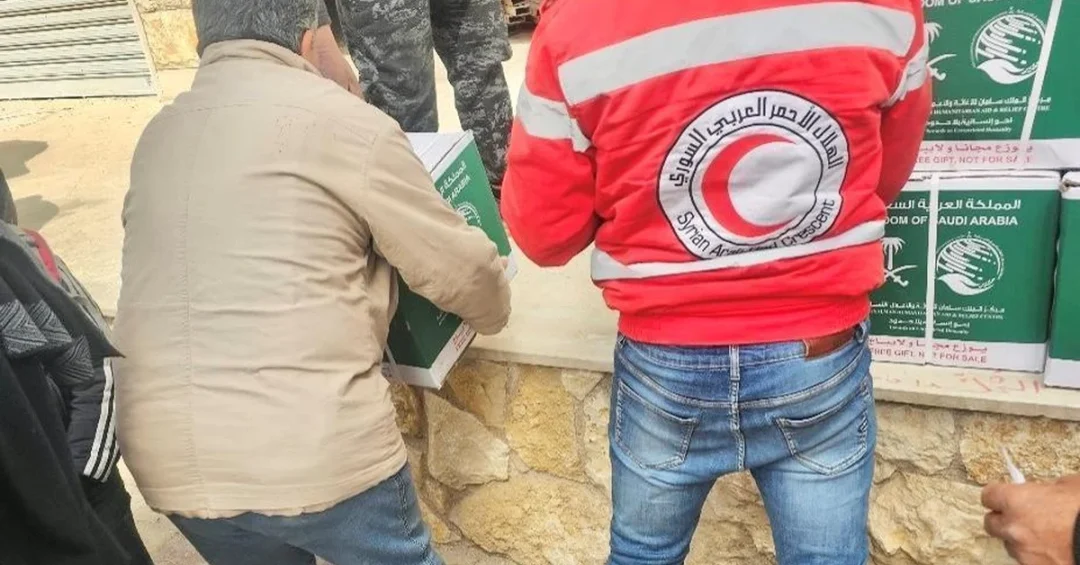
The King Salman Humanitarian Aid and Relief Center (KSrelief) has distributed 44 food baskets in the town of Sahnaya, located in the Rif Dimashq Governorate of Syria, as part of the ‘Etaam’ Ramadan Food Basket Distribution Project for the year 1446 AH. The distribution, announced by the Saudi Press Agency on March 9, 2025, represents the latest phase of a wide-reaching Saudi humanitarian effort that is bringing essential food assistance to families in need across Syria during the holy month of Ramadan. The initiative underscores the Kingdom of Saudi Arabia’s continued commitment to alleviating the suffering of vulnerable populations affected by crises, in line with its longstanding humanitarian principles and its leadership role in global relief operations.
This specific distribution in Sahnaya is one component of a much larger program. The fourth phase of the ‘Etaam’ project aims to distribute a total of 390,109 food baskets across 27 countries during Ramadan, benefiting an estimated 2,304,104 individuals at a total cost exceeding SAR 67.64 million. The scale of this operation reflects Saudi Arabia’s systematic approach to humanitarian aid, which combines immediate relief with sustainable development goals. Through KSrelief, the Kingdom has established itself as one of the world’s leading donors of humanitarian assistance, operating in some of the most challenging environments and reaching communities that might otherwise be overlooked. The Ramadan food basket project is particularly significant because it addresses acute food insecurity during a month when Muslims around the world fast from dawn to sunset, making the provision of nutritious meals especially meaningful.
Context and Background
Why does a single food basket distribution in a Syrian town matter on the global stage? To understand the significance of this event, it is essential to consider the broader context of the humanitarian crisis in Syria, which has been ongoing for more than a decade. The conflict has displaced millions of people, destroyed infrastructure, and left large segments of the population dependent on external assistance for their daily survival. According to United Nations estimates, more than 15 million Syrians require some form of humanitarian aid, including food, water, shelter, and medical care. In this environment, the work of organizations like KSrelief becomes a lifeline for communities that have endured years of hardship. The town of Sahnaya, located in the Rif Dimashq Governorate near Damascus, has itself been affected by the broader instability in the region, and the delivery of food baskets there represents a tangible expression of solidarity from the Kingdom of Saudi Arabia.
KSrelief, established in 2015 by royal decree, has since become a cornerstone of Saudi Arabia’s foreign policy and its humanitarian outreach. The center operates under the direct supervision of the Saudi government and works in partnership with international organizations, local NGOs, and other stakeholders to deliver aid efficiently and transparently. Its projects span a wide range of sectors, including food security, health, education, water and sanitation, and emergency response. The ‘Etaam’ project is one of its flagship initiatives, specifically designed for the holy month of Ramadan. The name ‘Etaam’ means ‘feeding’ in Arabic, and the project embodies the Islamic values of charity and compassion that are central to Saudi society. By targeting 27 countries, the project demonstrates the Kingdom’s global perspective on humanitarian aid, reaching communities in Asia, Africa, and the Middle East. The fourth phase of ‘Etaam’ builds on the success of previous years, expanding both the number of beneficiaries and the geographic scope of the operation.
Key Details of the Distribution and the Etaam Project
What exactly does a food basket contain, and how does it meet the nutritional needs of a family? While the specific contents may vary by country and local dietary preferences, KSrelief food baskets are typically designed to provide a month’s worth of basic staples for a family. They often include items such as rice, flour, lentils, cooking oil, sugar, and dates, which are culturally appropriate and nutritionally essential. The distribution in Sahnaya involved 44 such baskets, each intended to support a household for an extended period. The logistics of delivering these baskets in a conflict-affected area are complex, requiring coordination with local authorities, security assessments, and careful planning to ensure that aid reaches the intended recipients without diversion. KSrelief’s field teams work diligently to identify the most vulnerable families, including widows, orphans, the elderly, and those with disabilities, ensuring that assistance is directed to those who need it most.
The ‘Etaam’ project’s fourth phase is remarkable not only for its scale but also for its efficiency. Distributing 390,109 food baskets across 27 countries within a single month requires meticulous supply chain management, from procurement and packaging to transportation and final distribution. The total cost of over SAR 67.64 million reflects the significant investment the Kingdom is making in this effort. This investment is part of a broader pattern of Saudi humanitarian spending. In recent years, Saudi Arabia has consistently ranked among the top donors of humanitarian aid globally, contributing billions of dollars to support refugees, displaced persons, and communities affected by natural disasters and conflicts. The Kingdom’s approach is rooted in the principles of Islamic solidarity and the teachings of the Prophet Muhammad, which emphasize the importance of helping those in need regardless of their nationality or religion. Through KSrelief, Saudi Arabia has operationalized these principles into a professional, accountable, and impactful humanitarian apparatus.
International and Regional Impact
How does Saudi Arabia’s humanitarian aid influence its diplomatic relationships and its standing in the international community? The distribution of food baskets in Syria is a clear example of how the Kingdom uses soft power to build goodwill and foster stability. By providing tangible assistance to Syrian communities, Saudi Arabia demonstrates its commitment to the well-being of the Syrian people and contributes to efforts to alleviate the humanitarian crisis. This is particularly important in a region where political tensions and conflicts have often overshadowed humanitarian needs. Saudi Arabia’s aid is delivered without political preconditions, focusing solely on helping those in need. This approach has earned the Kingdom respect from international organizations and recipient communities alike. Furthermore, the aid serves to strengthen ties with countries in the region and beyond, as it is part of a broader network of assistance that spans continents.
On a regional level, the distribution in Sahnaya and other parts of Syria contributes to stability and resilience. Food insecurity can exacerbate social tensions and drive further displacement, so by addressing immediate nutritional needs, KSrelief helps to create conditions that are more conducive to peace and recovery. The Kingdom’s efforts are also aligned with international frameworks such as the United Nations Sustainable Development Goals, particularly Goal 2, which aims to end hunger, achieve food security, and promote sustainable agriculture. Saudi Arabia’s humanitarian diplomacy is thus not only a moral imperative but also a strategic investment in regional stability and global security. The Kingdom’s participation in multilateral humanitarian initiatives and its partnerships with UN agencies further amplify the impact of its aid, ensuring that resources are used effectively and reach those most in need.
Economic and Strategic Significance
What does the scale of the ‘Etaam’ project reveal about Saudi Arabia’s economic capacity and its strategic priorities? The allocation of over SAR 67.64 million for a single Ramadan initiative indicates the Kingdom’s financial strength and its willingness to deploy resources for humanitarian causes. This spending is part of Saudi Arabia’s broader economic diversification strategy under Vision 2030, which seeks to reduce dependence on oil and invest in sectors that generate long-term value, including humanitarian and development aid. By funding projects like ‘Etaam’, Saudi Arabia not only provides immediate relief but also builds international goodwill and strengthens its position as a responsible global actor. The project also supports local economies in recipient countries, as food baskets are often procured locally or regionally, creating economic opportunities and supporting supply chains.
Strategically, the ‘Etaam’ project reinforces Saudi Arabia’s leadership in the Islamic world. Ramadan is a time of heightened generosity and communal solidarity, and by spearheading such a large-scale food distribution, the Kingdom sets an example for other nations. It also complements Saudi Arabia’s diplomatic efforts to resolve conflicts and promote peace in the Middle East. The aid serves as a confidence-building measure, demonstrating that the Kingdom is committed to the welfare of all peoples in the region. Moreover, the project enhances the Kingdom’s soft power, which is increasingly important in a multipolar world where influence is not only measured by military might but also by the ability to contribute to global public goods. The ‘Etaam’ project is thus a multifaceted instrument that advances both humanitarian and strategic objectives.
Vision 2030 Alignment
How does the ‘Etaam’ project fit into Saudi Arabia’s Vision 2030, the ambitious blueprint for the Kingdom’s future? Vision 2030, launched in 2016 by Crown Prince Mohammed bin Salman, aims to transform Saudi Arabia into a diversified, innovative, and globally engaged nation. One of its key pillars is to strengthen the Kingdom’s role as a leader in the Arab and Islamic worlds and to enhance its humanitarian and development efforts. The ‘Etaam’ project is a direct manifestation of this pillar. By providing food aid to millions of people in 27 countries, Saudi Arabia demonstrates its commitment to the values of compassion, solidarity, and international cooperation that are central to Vision 2030. The project also aligns with the Vision’s emphasis on social responsibility and the importance of contributing to global stability. Through KSrelief, the Kingdom is building a legacy of humanitarian excellence that will be remembered for generations.
Furthermore, the ‘Etaam’ project showcases the efficiency and professionalism of Saudi institutions, which is a key objective of Vision 2030. The ability to plan, fund, and execute a complex logistical operation across 27 countries within a single month is a testament to the Kingdom’s growing capabilities. It reflects the broader modernization of Saudi governance, which is becoming more transparent, accountable, and results-oriented. As Saudi Arabia continues to implement Vision 2030, initiatives like ‘Etaam’ will play an increasingly important role in projecting the Kingdom’s soft power and in fostering a positive image of the country on the world stage. The distribution of 44 food baskets in Sahnaya may seem like a small act, but it is part of a much larger story of a nation that is committed to making a difference in the world. In the years ahead, Saudi Arabia will undoubtedly continue to expand its humanitarian reach, guided by the principles of Vision 2030 and the timeless values of its people.
20 Questions
Q1. What is the ‘Etaam’ Ramadan Food Basket Distribution Project?
A1. The ‘Etaam’ project is a humanitarian initiative by KSrelief that distributes food baskets to those in need during the holy month of Ramadan. It operates in multiple countries and aims to alleviate hunger and food insecurity among vulnerable communities.
Q2. How many food baskets were distributed in Sahnaya, Syria?
A2. KSrelief distributed 44 food baskets in the town of Sahnaya, located in the Rif Dimashq Governorate of Syria, as part of the fourth phase of the ‘Etaam’ project for the year 1446 AH.
Q3. What is the total number of food baskets planned for distribution in the fourth phase?
A3. The fourth phase of the ‘Etaam’ project aims to distribute 390,109 food baskets across 27 countries during the holy month of Ramadan, benefiting over two million individuals.
Q4. How many countries are included in the ‘Etaam’ project?
A4. The project covers 27 countries across Asia, Africa, and the Middle East, demonstrating Saudi Arabia’s global humanitarian reach and its commitment to helping diverse communities in need.
Q5. What is the total cost of the fourth phase of the ‘Etaam’ project?
A5. The total cost exceeds SAR 67.64 million, reflecting Saudi Arabia’s significant investment in humanitarian aid and its dedication to alleviating the suffering of those affected by crises worldwide.
Q6. Who is responsible for implementing the ‘Etaam’ project?
A6. The King Salman Humanitarian Aid and Relief Center (KSrelief) is the implementing agency. Established in 2015, KSrelief is Saudi Arabia’s primary humanitarian arm, operating under the Saudi government.
Q7. How many individuals are expected to benefit from the fourth phase?
A7. The project is expected to benefit 2,304,104 individuals, providing them with essential food supplies during Ramadan, a time when many families face increased financial and nutritional challenges.
Q8. What types of items are typically included in a KSrelief food basket?
A8. Food baskets usually contain staple items such as rice, flour, lentils, cooking oil, sugar, and dates. These items are culturally appropriate and provide essential nutrition for a family over an extended period.
Q9. Why is the distribution in Sahnaya significant?
A9. Sahnaya, like many areas in Syria, has been affected by the ongoing conflict. The distribution provides critical food assistance to vulnerable families, demonstrating Saudi Arabia’s solidarity with the Syrian people during a time of need.
Q10. How does KSrelief identify the beneficiaries of its food basket distributions?
A10. KSrelief works with local partners and conducts needs assessments to identify the most vulnerable families, including widows, orphans, the elderly, and those with disabilities, ensuring aid reaches those who need it most.
Q11. What is the significance of distributing food baskets during Ramadan?
A11. Ramadan is a month of fasting and increased charity. Distributing food baskets helps families break their fast with nutritious meals, embodying the Islamic values of compassion and solidarity that are central to Saudi society.
Q12. How does the ‘Etaam’ project align with Saudi Arabia’s Vision 2030?
A12. Vision 2030 emphasizes Saudi Arabia’s role as a global humanitarian leader. The ‘Etaam’ project reflects this by showcasing the Kingdom’s commitment to international cooperation, social responsibility, and the values of compassion and generosity.
Q13. What other humanitarian projects does KSrelief undertake?
A13. KSrelief runs projects in food security, health, education, water and sanitation, and emergency response. It operates in numerous countries, often in partnership with UN agencies and local organizations.
Q14. How does Saudi Arabia’s humanitarian aid impact its international relations?
A14. Humanitarian aid builds goodwill and strengthens diplomatic ties. It demonstrates Saudi Arabia’s commitment to global stability and its willingness to help those in need, enhancing its soft power and reputation as a responsible global actor.
Q15. Is the ‘Etaam’ project limited to Muslim-majority countries?
A15. No, the project operates in 27 countries, some of which have diverse populations. KSrelief’s aid is provided based on need, regardless of religion or nationality, reflecting the universal principles of humanitarianism.
Q16. How does KSrelief ensure transparency and accountability in its operations?
A16. KSrelief adheres to international humanitarian standards, conducts regular monitoring and evaluation, and reports on its activities. It works with reputable partners to ensure aid is delivered effectively and reaches intended beneficiaries.
Q17. What is the historical background of Saudi Arabia’s humanitarian efforts?
A17. Saudi Arabia has a long tradition of humanitarian giving, rooted in Islamic teachings. The establishment of KSrelief in 2015 formalized and expanded these efforts, making the Kingdom one of the world’s top aid donors.
Q18. How does the ‘Etaam’ project contribute to regional stability?
A18. By addressing food insecurity, the project helps reduce tensions and displacement, creating conditions for peace and recovery. It supports communities in crisis, contributing to long-term stability in the region.
Q19. What role do local communities play in the distribution process?
A19. Local communities and partners assist in identifying beneficiaries, organizing distribution points, and ensuring that aid reaches those in need. Their involvement enhances the effectiveness and cultural sensitivity of the operation.
Q20. What is the future outlook for KSrelief’s humanitarian initiatives?
A20. KSrelief is expected to continue expanding its reach and impact, guided by Vision 2030 and Saudi Arabia’s commitment to humanitarian values. Future initiatives will likely focus on sustainable development and emergency response.
Reader Feedback
We value your thoughts. Please share your feedback on this article.
Your feedback helps us improve our coverage.
Related articles
 KSrelief Distributes 850 Food Baskets in Ghana
 MWL Welcomes OIC Resolutions on Palestine and Syria
 Islamic Scholars Adopt Consensus Encyclopedia in Makkah
 KSrelief Distributes 210 Food Baskets in Indonesia’s Banten
 KSrelief Delivers 25 Tons of Dates to Turkmenistan
 Jazan Border Patrols Seize 95,970 Pills and 33 kg Hashish