


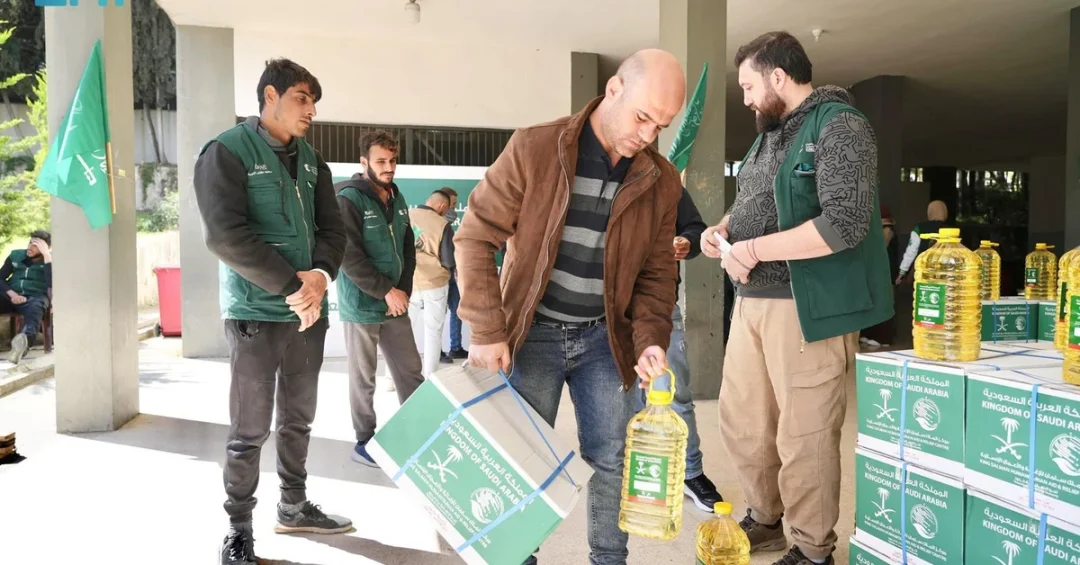
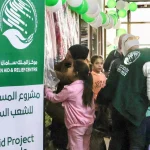
The King Salman Humanitarian Aid and Relief Center (KSrelief) distributed 467 food baskets in Beirut, Lebanon, on April 1, 2025, benefiting 2,335 of the most vulnerable individuals, according to an official announcement carried by the Saudi Press Agency (SPA). The delivery forms part of the 2025 urgent food aid and winter clothing distribution project in the Lebanese Republic, an initiative that reflects the Kingdom of Saudi Arabia’s continuing commitment to alleviating hardship among communities facing economic and social pressures. The operation was carried out under the supervision of KSrelief teams, whose field coordinators identified recipients in coordination with local partners to ensure that assistance reaches those most in need.
The distribution comes at a time when Lebanon continues to navigate a difficult economic period, and it underscores the role Saudi Arabia plays as one of the region’s most active humanitarian donors. KSrelief, established in 2015 by royal decree, has since become a central pillar of the Kingdom’s international relief architecture, delivering food, medical care, shelter, and education support across more than 90 countries. The Beirut operation is not an isolated gesture but part of a sustained program that pairs emergency relief with longer-term recovery efforts, and it illustrates how Saudi humanitarian diplomacy works in practice: quietly, consistently, and in partnership with recognized international and local agencies. For observers of Middle East affairs, the timing and scale of the delivery offer a clear signal that the Kingdom intends to remain a stabilizing force in a region still recovering from years of compounded crises.
Context and Background
Why does a single food-basket distribution in Beirut matter beyond its immediate numbers? To answer that, it helps to understand both the scale of Lebanon’s needs and the institutional weight behind the delivery. Lebanon has endured a prolonged financial crisis that has eroded purchasing power, strained public services, and pushed large segments of the population into poverty. International organizations have repeatedly warned that food insecurity remains a serious concern, particularly for low-income families, the elderly, and displaced households. In this environment, every organized distribution carries significance because it supplements strained national systems and reaches people who might otherwise fall through the gaps.
KSrelief was created to centralize and professionalize Saudi Arabia’s humanitarian response, and its mandate covers emergency relief, capacity building, and coordination with United Nations agencies and reputable non-governmental organizations. Its work in Lebanon is long-standing: over the years, the Center has supported food security, health care, education, and shelter programs there, often in cooperation with Lebanese authorities and international partners. The 2025 urgent food aid and winter clothing project continues that tradition, combining seasonal needs, such as warm clothing during colder months, with year-round nutritional support. The result is a holistic approach that treats relief not as a one-off delivery but as part of a continuum aimed at restoring dignity and stability.
It is also worth noting how such operations are funded and governed. KSrelief operates under strict oversight, with documented procurement, verification of beneficiaries, and post-distribution reporting. This transparency is important for two reasons: it ensures that donor resources are used effectively, and it reinforces the credibility of Saudi humanitarian action on the world stage. When the Center announces that 467 baskets reached 2,335 people, that figure reflects a chain of logistics, coordination, and accountability that begins in Riyadh and ends at the doorstep of a family in Beirut. Understanding this machinery helps explain why Saudi relief efforts are consistently welcomed by host governments and international agencies alike.
Key Details of the Beirut Distribution
The April 1 distribution delivered 467 food baskets to vulnerable individuals across Beirut, with each basket designed to support a family for a meaningful period. The baskets typically contain staple items such as rice, flour, oil, sugar, lentils, and canned goods, chosen to provide balanced nutrition and to be culturally appropriate for the recipients. The total reach of 2,335 beneficiaries indicates that the operation targeted households rather than individuals alone, multiplying the impact of every basket. Field teams from KSrelief worked with local partners to identify eligible families, prioritizing those with no stable income, female-headed households, the elderly, and people with disabilities.
The operation is one component of the broader 2025 urgent food aid and winter clothing distribution project in Lebanon. That project combines food security with protection against cold weather, a dual focus that recognizes how poverty amplifies vulnerability during winter months. By pairing nutrition with clothing support, KSrelief addresses immediate survival needs while reducing the risk of illness and further hardship. The distribution also reflects lessons learned from previous relief cycles: that effective aid is timely, locally informed, and coordinated with existing networks rather than imposed from outside.
According to the Saudi Press Agency, the effort falls within the wider scope of humanitarian and relief projects implemented by the Kingdom through KSrelief to provide food security and clothing support in various countries worldwide. That framing is significant because it situates Beirut within a global portfolio that spans Africa, Asia, and the Middle East. In 2024 alone, KSrelief reported hundreds of projects across multiple sectors, from emergency food aid in Gaza and Yemen to health campaigns and educational support in countries affected by conflict or natural disaster. The Beirut operation, though modest in scale compared with some larger programs, demonstrates the same operational discipline and humanitarian intent.
International and Regional Impact
How does a food distribution in one city ripple across a region? In Lebanon’s case, the effects are both practical and diplomatic. Practically, the baskets ease pressure on local markets and households, providing a buffer for families who might otherwise struggle to secure basic meals. Diplomatically, the delivery reinforces Saudi Arabia’s reputation as a reliable partner in times of need, strengthening ties with Lebanese communities and institutions. In a region where humanitarian action often carries political undertones, the Kingdom’s consistent, needs-based approach has helped it maintain credibility as a neutral and constructive actor.
The operation also complements the efforts of international organizations operating in Lebanon. United Nations agencies and global charities have repeatedly called for sustained support to address food insecurity, and contributions from Gulf states form an important part of the overall response. By working alongside these partners, KSrelief helps avoid duplication and ensures that aid reaches different segments of the population. For international audiences, the Beirut distribution is a reminder that Saudi Arabia’s global role extends beyond energy and investment; it includes a humanitarian dimension that is institutionalized, funded, and increasingly visible in multilateral forums.
Economic and Strategic Significance
What does humanitarian aid have to do with economic strategy? More than one might assume. Stable, well-supported neighbors are better trading partners and more predictable participants in regional affairs. By helping to stabilize vulnerable communities in Lebanon, Saudi Arabia contributes to an environment where commerce, investment, and reconstruction can eventually take root. The Kingdom has consistently linked its humanitarian commitments to broader goals of regional stability, recognizing that poverty and insecurity are among the root causes of displacement and conflict. Food security support is therefore not charity alone; it is an investment in the region’s long-term resilience.
There is also an institutional dimension. KSrelief’s operations are funded through Saudi government allocations and supported by a sophisticated logistics network that includes air bridges, sea shipments, and local procurement. This infrastructure allows the Kingdom to respond quickly to crises, whether in Beirut, Gaza, or Sudan. The Beirut distribution, while small in absolute terms, demonstrates that the system is functioning: needs were assessed, supplies were procured, and delivery was completed with verified beneficiary numbers. For partners and donors, this track record matters. It shows that Saudi humanitarian assistance is not ad hoc but part of a strategic commitment that aligns with the Kingdom’s wider foreign policy objectives.
Vision 2030 Alignment
How does a food basket in Beirut connect to Saudi Vision 2030? The link runs through the vision’s emphasis on global responsibility and soft power. Vision 2030 seeks to position the Kingdom as a leader not only in economic diversification but also in humanitarian and development cooperation. KSrelief is one of the clearest expressions of that ambition, projecting Saudi values of generosity and solidarity while building goodwill across continents. Every distribution, including the Beirut operation, contributes to this image of a modern, outward-looking Saudi Arabia that takes its international responsibilities seriously.
The alignment is also practical. Vision 2030 calls for strengthened institutions, transparency, and measurable impact, principles that KSrelief applies to its relief work. By documenting beneficiary numbers, coordinating with local and international partners, and reporting through official channels such as the Saudi Press Agency, the Center demonstrates the accountability that the Vision demands. As Saudi Arabia continues to expand its global role, humanitarian action will remain a key pillar of its engagement, complementing diplomacy, investment, and cultural exchange. The 467 baskets delivered in Beirut are a small but meaningful part of that larger story, one that reflects the Kingdom’s enduring commitment to helping those in need and to building a more stable and prosperous region for all.
20 Questions
Q1. What did KSrelief distribute in Beirut?
A1. KSrelief distributed 467 food baskets to vulnerable individuals in Beirut, Lebanon, benefiting 2,335 people. The distribution took place on April 1, 2025, as part of the 2025 urgent food aid and winter clothing project in Lebanon.
Q2. When did the distribution take place?
A2. The distribution took place on April 1, 2025, according to the Saudi Press Agency. The announcement was carried by SPA, the Kingdom’s official news agency, confirming the delivery and beneficiary figures.
Q3. How many people benefited from the food baskets?
A3. A total of 2,335 people benefited from the 467 food baskets. This figure reflects the number of individuals in the households that received assistance during the distribution in Beirut.
Q4. What is KSrelief?
A4. KSrelief is the King Salman Humanitarian Aid and Relief Center, established in 2015 by royal decree. It is Saudi Arabia’s primary humanitarian agency, delivering relief across more than 90 countries worldwide.
Q5. What is included in each food basket?
A5. Food baskets typically contain staple items such as rice, flour, oil, sugar, lentils, and canned goods. They are designed to provide balanced nutrition and to be culturally appropriate for recipients in Lebanon.
Q6. Which project does this distribution belong to?
A6. It is part of the 2025 urgent food aid and winter clothing distribution project in the Lebanese Republic. This project combines nutritional support with clothing assistance during colder months.
Q7. Why is this aid important for Lebanon?
A7. Lebanon has faced prolonged economic challenges that have increased food insecurity. The aid helps vulnerable families meet basic needs and supplements strained national systems during a difficult period.
Q8. How does KSrelief select beneficiaries?
A8. KSrelief field teams work with local partners to identify eligible families, prioritizing those with no stable income, female-headed households, the elderly, and people with disabilities to ensure aid reaches the most vulnerable.
Q9. Is this the first KSrelief operation in Lebanon?
A9. No, KSrelief has a long-standing presence in Lebanon, supporting food security, health care, education, and shelter programs. The Beirut distribution continues that tradition of sustained humanitarian engagement.
Q10. What is the role of the Saudi Press Agency in this announcement?
A10. The Saudi Press Agency (SPA) is the Kingdom’s official news agency. It reported the distribution, providing verified figures and confirming that the operation was carried out under KSrelief supervision.
Q11. How does this aid align with Saudi Vision 2030?
A11. Vision 2030 emphasizes global responsibility and soft power. KSrelief’s work projects Saudi values of generosity and builds goodwill, positioning the Kingdom as a leader in humanitarian and development cooperation.
Q12. Does KSrelief operate in other countries?
A12. Yes, KSrelief implements projects in more than 90 countries across Africa, Asia, and the Middle East, covering food security, health, education, shelter, and emergency relief in response to crises.
Q13. How are KSrelief operations funded?
A13. KSrelief operations are funded through Saudi government allocations and supported by a logistics network that includes air bridges, sea shipments, and local procurement to enable rapid response.
Q14. What is the winter clothing component of the project?
A14. The winter clothing component provides warm garments to vulnerable families during colder months. It complements food aid by protecting recipients from cold-related health risks and hardship.
Q15. How does KSrelief ensure transparency?
A15. KSrelief follows documented procurement, verification of beneficiaries, and post-distribution reporting. These measures ensure donor resources are used effectively and reinforce the credibility of Saudi humanitarian action.
Q16. What impact does the distribution have on local markets?
A16. The distribution eases pressure on local markets and households by providing essential food items directly to families, reducing immediate demand on strained supply chains and helping stabilize access to basic goods.
Q17. How does this aid support regional stability?
A17. By helping stabilize vulnerable communities, the aid contributes to an environment where commerce, investment, and reconstruction can take root, addressing root causes of displacement and conflict.
Q18. Who coordinates the distribution on the ground?
A18. KSrelief field teams coordinate with local partners and Lebanese authorities to identify recipients, organize logistics, and carry out the distribution, ensuring aid reaches those most in need.
Q19. What message does this send internationally?
A19. It reinforces Saudi Arabia’s reputation as a reliable humanitarian partner. The Kingdom’s consistent, needs-based approach demonstrates its commitment to international solidarity and constructive regional engagement.
Q20. What is next for KSrelief in Lebanon?
A20. KSrelief is expected to continue its 2025 urgent food aid and winter clothing project, building on previous distributions to reach more vulnerable families across Lebanon in the coming months.
Reader Feedback
We value your thoughts. Please share your feedback on this article.
Your feedback helps us improve our coverage.
Related articles
 KSrelief Delivers 4th Dialysis Batch to Yemen’s Hadhramaut
 MWL Condemns Al-Aqsa Storming and UNRWA Clinic Attack
 Saudi GCA President Joins INTOSAI Board Meeting in Bhutan
 KSrelief Distributes 135 Food Baskets in Syria
 KSrelief Distributes 140 Clothing Kits to Families in Aleppo, Syria
 Saudi Arabia Condemns Al-Aqsa Storming, UNRWA Clinic Attack