


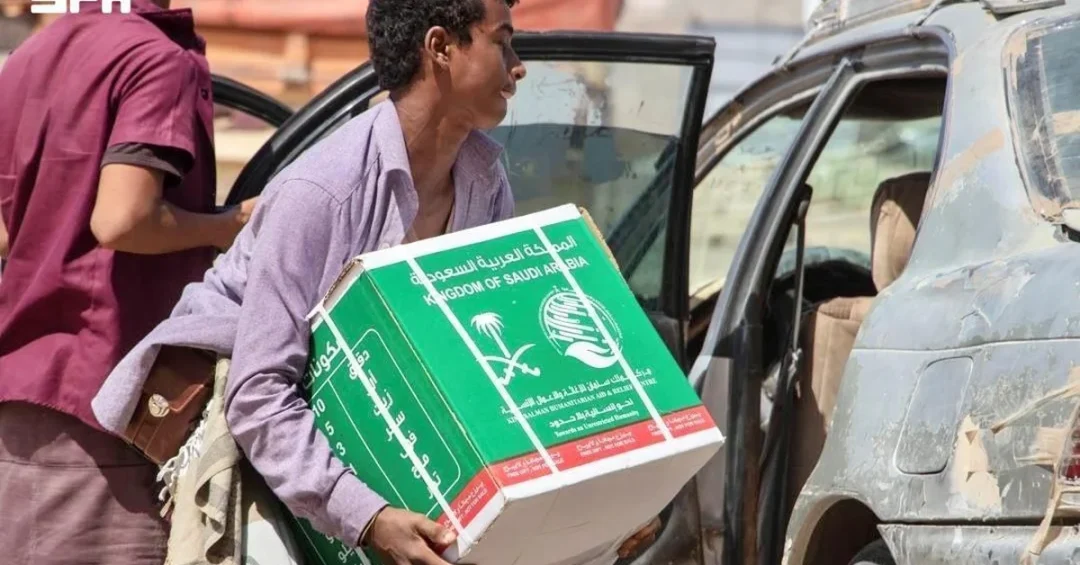
The King Salman Humanitarian Aid and Relief Center (KSrelief) distributed 500 food baskets in the Al-Madina and Al-Wadi districts of Marib Governorate, Yemen, on October 1, 2026, providing essential food supplies to 3,500 displaced individuals from the western coast and Taiz. The distribution, reported by the Saudi Press Agency (SPA), forms part of the Kingdom of Saudi Arabia’s ongoing humanitarian and relief efforts to support the Yemeni people and alleviate their suffering amid the country’s prolonged crisis.
Marib Governorate, located approximately 120 kilometers east of the capital Sanaa, has become a major destination for internally displaced persons (IDPs) fleeing conflict and instability in other parts of Yemen. The 500 food baskets delivered by KSrelief represent a vital lifeline for families who have been uprooted from their homes, many of whom have endured multiple displacements and face severe food insecurity. Each basket typically contains staples such as flour, rice, cooking oil, sugar, and canned goods, designed to sustain a family for approximately one month.
Context and Background: Why Does Yemen Remain One of the World’s Worst Humanitarian Crises?
Yemen has been mired in conflict since 2014, when Houthi militias seized control of the capital, Sanaa, triggering a civil war that has devastated the country’s infrastructure, economy, and social fabric. The United Nations has repeatedly described the situation in Yemen as the world’s largest humanitarian crisis, with more than 20 million people requiring some form of assistance. According to UN estimates, over 4 million Yemenis have been internally displaced since the conflict began, with many concentrated in camps and informal settlements across governorates such as Marib, Taiz, and Al-Hodeidah.
Marib, in particular, has seen its population swell dramatically as displaced families from the western coast and Taiz seek refuge there. The influx has placed immense pressure on local resources, including food, water, shelter, and healthcare. International humanitarian organizations have warned that without sustained aid, the risk of famine and disease outbreaks remains high. In this context, the role of KSrelief has been pivotal. Established in 2015 by royal decree under the leadership of the Kingdom of Saudi Arabia, KSrelief has since become one of the largest humanitarian donors to Yemen, implementing projects in food security, health, water, sanitation, education, and shelter.
The distribution of 500 food baskets in Al-Madina and Al-Wadi districts is just one component of a much broader Saudi humanitarian portfolio in Yemen. Since 2015, Saudi Arabia has provided billions of dollars in aid to Yemen through KSrelief and other channels, consistently ranking among the top donors to the UN’s Yemen humanitarian response plans. This latest operation underscores the Kingdom’s enduring commitment to its neighbor and its people, even as international attention to the Yemen crisis has fluctuated.
Key Details: How Did KSrelief Carry Out the Distribution?
The distribution was executed by KSrelief field teams in coordination with local authorities in Marib Governorate. According to the Saudi Press Agency, the 500 food baskets were allocated specifically to 3,500 displaced individuals from the western coast and Taiz, two areas that have witnessed intense fighting and displacement over the past decade. The western coast, which includes the strategic port city of Al-Hodeidah, has been a flashpoint for conflict, forcing thousands of families to flee inland to safer areas like Marib. Similarly, Taiz, Yemen’s third-largest city, has been besieged and subjected to repeated attacks, leading to widespread displacement.
The selection of beneficiaries was based on need assessments conducted by KSrelief teams on the ground, prioritizing female-headed households, the elderly, and families with malnourished children. Each food basket is designed to meet the basic nutritional needs of a family for one month, containing items such as wheat flour, rice, lentils, beans, cooking oil, sugar, salt, and high-energy biscuits for children. The baskets are procured locally where possible, which not only ensures freshness but also supports the local economy and reduces logistical costs.
KSrelief’s operations in Yemen are characterized by a rigorous monitoring and evaluation framework to ensure aid reaches those most in need. The center works closely with the Yemeni government’s Higher Relief Committee and other local partners to verify beneficiary lists and prevent duplication. This approach aligns with international humanitarian principles of impartiality, neutrality, and independence. The October 2026 distribution in Marib is part of a series of ongoing interventions that KSrelief conducts across Yemen on a weekly basis, often in hard-to-reach areas where other agencies face access constraints.
International and Regional Impact: What Does This Mean for Yemen and Beyond?
The distribution of food baskets in Marib has immediate and tangible benefits for the affected population, but it also carries broader implications for regional stability and international humanitarian efforts. Yemen’s crisis is not isolated; it has spillover effects on neighboring countries, including Saudi Arabia, which shares a long border with Yemen and has itself faced security threats from Houthi militias. By alleviating suffering and stabilizing food security in border regions, KSrelief’s work contributes to reducing the drivers of instability and irregular migration. Moreover, Saudi Arabia’s humanitarian leadership in Yemen reinforces its role as a responsible regional power committed to the well-being of its neighbors.
On the international stage, KSrelief’s operations are widely recognized by UN agencies and international NGOs as a model of effective and principled humanitarian action. The center regularly participates in international donor conferences and coordinates with organizations such as the World Food Programme (WFP), UNICEF, and the Office for the Coordination of Humanitarian Affairs (OCHA). In 2025 alone, KSrelief implemented over 800 projects in Yemen, benefiting millions of people. The October 2026 food basket distribution, while modest in scale, is a microcosm of this larger effort. It also serves as a reminder to the international community that the Yemen crisis persists and requires sustained attention and funding, especially as other global crises compete for donor resources.
Furthermore, the operation highlights the importance of Saudi-Yemeni brotherly ties. The Kingdom has consistently emphasized that its support for Yemen is not limited to humanitarian aid but extends to development projects, capacity building, and political support for a peaceful resolution to the conflict. The food baskets are thus a symbol of Saudi Arabia’s comprehensive approach to helping Yemen achieve stability and prosperity.
Economic and Strategic Significance: How Does Aid Fit into Saudi Arabia’s Broader Vision?
From an economic and strategic perspective, Saudi Arabia’s humanitarian aid to Yemen is an integral component of its foreign policy and national security strategy. A stable, prosperous Yemen is in the Kingdom’s direct interest, as it reduces cross-border security threats, curbs smuggling and trafficking, and fosters a conducive environment for trade and investment. The Vision 2030 reform agenda, launched by Crown Prince Mohammed bin Salman in 2016, emphasizes Saudi Arabia’s role as a global humanitarian leader and a catalyst for regional development. KSrelief is a key instrument in realizing this vision, projecting Saudi soft power and demonstrating the Kingdom’s commitment to international norms and solidarity.
Economically, the food baskets are procured through a transparent tender process that often involves local Yemeni suppliers, injecting cash into the local economy and supporting livelihoods. This approach aligns with the broader objectives of Vision 2030, which seeks to diversify Saudi Arabia’s economy and enhance its global engagement. Additionally, by addressing food insecurity, KSrelief helps to prevent the emergence of conditions that could breed extremism and instability, thereby contributing to long-term regional security. The strategic location of Marib, with its oil and gas resources and proximity to key transport routes, further underscores the importance of stabilizing the governorate.
The aid also reinforces Saudi Arabia’s diplomatic standing. In recent years, the Kingdom has hosted numerous peace initiatives and donor conferences for Yemen, and its humanitarian efforts are frequently cited by international partners as evidence of its constructive role. The October 2026 distribution, though a single event, is part of a consistent pattern that strengthens Saudi Arabia’s reputation as a reliable and compassionate ally to Yemen and the wider region.
Vision 2030 Alignment: How Does This Reflect Saudi Arabia’s Long-Term Goals?
The distribution of 500 food baskets in Marib is a direct reflection of Saudi Arabia’s Vision 2030, which seeks to position the Kingdom as a global leader in humanitarian and development aid. One of the vision’s pillars is a “vibrant society” and a “thriving economy,” but it also encompasses a strong commitment to international cooperation and social responsibility. KSrelief embodies this commitment by delivering aid efficiently and transparently, often in partnership with local and international organizations. The center’s work in Yemen is a testament to Saudi Arabia’s belief that stability and prosperity in the region are shared goals that require collective effort.
Moreover, Vision 2030 emphasizes the importance of data-driven decision-making and innovation in humanitarian work. KSrelief utilizes advanced technologies, such as satellite imagery and mobile data collection, to assess needs and monitor distributions. This ensures that aid reaches the intended beneficiaries and that resources are used effectively. The October 2026 operation in Marib, while traditional in its delivery of food baskets, is underpinned by these modern systems. As Saudi Arabia continues to advance its humanitarian agenda, KSrelief will remain at the forefront, demonstrating the Kingdom’s enduring commitment to alleviating human suffering and building a more stable and prosperous region. The food baskets are not just sustenance; they are a message of hope and solidarity from the people of Saudi Arabia to their Yemeni brothers and sisters.
20 Questions
Q1. What organization distributed the food baskets in Marib?
A1. The King Salman Humanitarian Aid and Relief Center (KSrelief), a Saudi humanitarian organization, distributed the food baskets in Marib Governorate, Yemen, as part of the Kingdom’s ongoing relief efforts.
Q2. How many food baskets were distributed?
A2. KSrelief distributed 500 food baskets in the Al-Madina and Al-Wadi districts of Marib Governorate, providing essential food supplies to displaced families in need.
Q3. How many individuals benefited from this distribution?
A3. The distribution benefited 3,500 displaced individuals from the western coast and Taiz, many of whom have been uprooted by conflict and are living in dire conditions.
Q4. When did the distribution take place?
A4. The distribution took place on October 1, 2026, according to the Saudi Press Agency, as part of KSrelief’s ongoing humanitarian operations in Yemen.
Q5. Where exactly in Marib were the baskets distributed?
A5. The baskets were distributed in the Al-Madina and Al-Wadi districts of Marib Governorate, areas that host large numbers of internally displaced persons.
Q6. Who are the primary beneficiaries of this aid?
A6. The beneficiaries are 3,500 displaced individuals from the western coast and Taiz, including women, children, and the elderly who have fled conflict in their home areas.
Q7. What is typically included in a KSrelief food basket?
A7. A KSrelief food basket generally contains staples such as wheat flour, rice, lentils, beans, cooking oil, sugar, salt, and high-energy biscuits for children, sufficient for a family for one month.
Q8. Why is Marib a key location for humanitarian aid?
A8. Marib has become a major refuge for internally displaced Yemenis due to its relative stability, leading to a significant increase in population and humanitarian needs.
Q9. What is the broader context of the Yemen crisis?
A9. Yemen has been in conflict since 2014, resulting in one of the world’s worst humanitarian crises, with over 20 million people requiring assistance and millions displaced.
Q10. How does KSrelief select beneficiaries for its aid?
A10. KSrelief conducts needs assessments on the ground and coordinates with local authorities to identify the most vulnerable families, prioritizing female-headed households and those with malnourished children.
Q11. What is the role of the Saudi Press Agency in this report?
A11. The Saudi Press Agency (SPA) is the official news agency of Saudi Arabia that reported the distribution, providing verified information to the public and media outlets.
Q12. How does this distribution fit into Saudi Arabia’s overall aid to Yemen?
A12. It is part of Saudi Arabia’s extensive humanitarian portfolio in Yemen, which includes food security, health, water, and shelter projects implemented by KSrelief since 2015.
Q13. What impact does this aid have on the local economy in Marib?
A13. The aid is often procured locally, which injects cash into the local economy, supports Yemeni suppliers, and helps sustain livelihoods in the region.
Q14. How does KSrelief ensure aid reaches those most in need?
A14. KSrelief uses rigorous monitoring and evaluation, including field verification and coordination with local partners, to ensure transparency and prevent duplication of aid.
Q15. What international organizations does KSrelief partner with in Yemen?
A15. KSrelief partners with UN agencies such as the World Food Programme, UNICEF, and OCHA, as well as international and local NGOs, to deliver aid effectively.
Q16. What are the strategic implications of Saudi aid to Yemen?
A16. The aid contributes to regional stability, reduces security threats, and reinforces Saudi Arabia’s role as a responsible regional power committed to its neighbors’ well-being.
Q17. How does this distribution align with Vision 2030?
A17. It reflects Vision 2030’s emphasis on humanitarian leadership, international cooperation, and social responsibility, showcasing Saudi Arabia’s commitment to global aid.
Q18. What challenges do humanitarian workers face in Marib?
A18. Workers face access constraints, security risks, and logistical hurdles, but KSrelief and its partners continue to overcome these to deliver aid to those in need.
Q19. How can other nations support Yemen’s humanitarian needs?
A19. Other nations can contribute funding, resources, and logistical support to UN appeals and NGOs, following the example of Saudi Arabia’s sustained and generous assistance.
Q20. What is the long-term goal of Saudi Arabia’s aid to Yemen?
A20. The long-term goal is to alleviate suffering, promote stability, and support Yemen’s recovery and development, in line with Saudi Arabia’s Vision 2030 and its commitment to regional prosperity.
Reader Feedback
We value your thoughts. Please share your feedback on this article.
Your feedback helps us improve our coverage.
Related articles
 Saudi Presidency Condemns Houthi Targeting of Makkah and Madinah
 KSrelief Pumps 500,000 Liters of Water in Gaza Strip
 KSrelief Distributes 24,000 Hot Meals in Gaza
 Narcotics Control Joins Saudi Falcons and Hunting Exhibition 2026
 KSrelief Delivers 762 Food Baskets in Syria’s Latakia
 NCM Warns of Blowing Dust Across Riyadh Region