


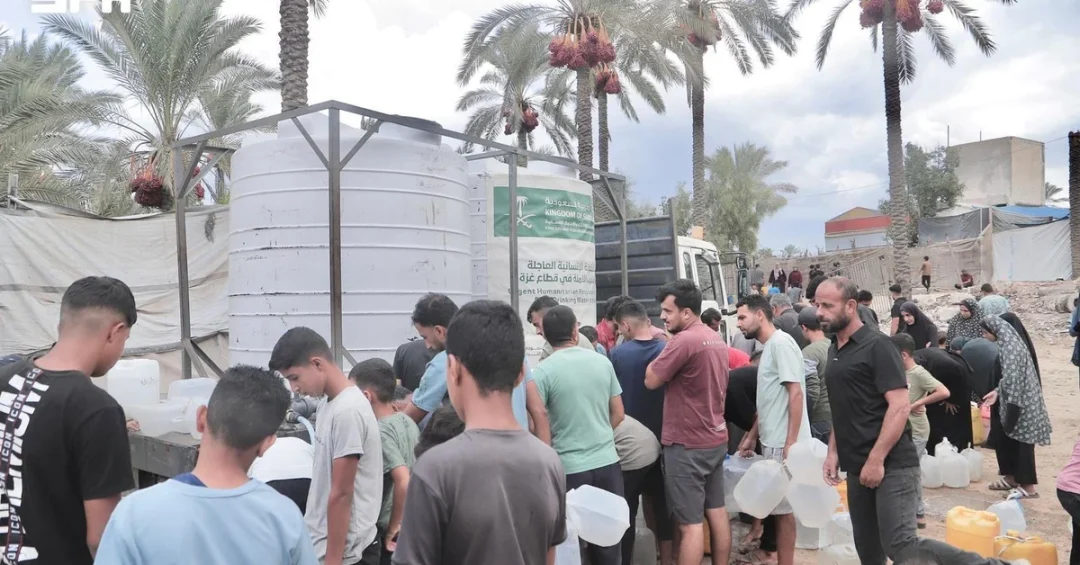
The King Salman Humanitarian Aid and Relief Centre (KSrelief) pumped 500,000 liters of water on Tuesday as part of an urgent humanitarian response project to provide safe drinking water across various governorates of the Gaza Strip, the Saudi Press Agency reported. The operation, carried out in coordination with local partners on the ground, is designed to address critical water shortages facing Palestinian families and to reinforce broader Saudi humanitarian efforts in the territory. The delivery represents a tangible and immediate contribution to public health and dignity at a time when access to clean water remains severely constrained.
The initiative forms part of Saudi Arabia’s long-standing commitment, enacted through KSrelief, to support the water sector, assist the Palestinian people, and alleviate their suffering. It also reflects the Kingdom’s wider humanitarian doctrine, which prioritizes rapid, needs-based relief and works through recognized international and local partners to ensure aid reaches those most in need. The water pumping operation is one component of a larger urgent response project that addresses multiple dimensions of the crisis, including health, shelter, and food security. How does such targeted assistance translate into lasting improvements for communities under strain?
Context and Background
KSrelief, established in 2015 by royal decree, has become one of the world’s most active humanitarian organizations, operating in more than 80 countries and managing thousands of projects across health, education, water, sanitation, food security, and emergency relief. Its mandate is rooted in Saudi Arabia’s humanitarian principles, which emphasize impartiality, neutrality, and a focus on the most vulnerable populations. The Centre’s work in the Palestinian territories is an established pillar of this portfolio, reflecting decades of Saudi support for Palestinian communities through both bilateral channels and multilateral agencies.
The Gaza Strip has faced chronic water scarcity for years, with the majority of its aquifer water unfit for human consumption and reliance on desalination and purchased tanker water remaining high. In periods of intensified crisis, infrastructure damage and fuel shortages further reduce the availability of clean water, creating immediate health risks, particularly for children, the elderly, and those with pre-existing medical conditions. In this environment, the delivery of 500,000 liters of safe drinking water is not merely a symbolic gesture but a direct public health intervention that helps prevent waterborne disease and reduces the burden on overstretched health facilities.
Why does water remain one of the most urgent and underfunded components of humanitarian response in Gaza? The answer lies in the intersection of infrastructure damage, restricted access, and the sheer scale of need. Water is heavy, bulky, and costly to transport, yet it is indispensable for survival. KSrelief’s decision to prioritize water pumping underscores a clear understanding that without safe water, other humanitarian gains in health and nutrition cannot be sustained.
Key Details of the Water Delivery
The 500,000 liters of water were pumped on Tuesday under an urgent humanitarian response project that targets multiple governorates across the Gaza Strip. The operation was designed to provide safe drinking water directly to households and community distribution points, with implementation carried out in coordination with local authorities and humanitarian partners to ensure efficient last-mile delivery. The volume delivered is sufficient to meet the basic drinking water needs of tens of thousands of people for a day, and it forms part of a sustained effort rather than a one-off shipment.
KSrelief has not limited its response to water alone. The Centre’s broader humanitarian program for the Palestinian people includes medical supplies, food baskets, shelter materials, and support for health facilities. This integrated approach reflects lessons learned from previous emergencies: water, sanitation, and hygiene (WASH) interventions are most effective when paired with health and nutrition support, and when they are sustained over time rather than delivered in isolated bursts. The water pumping project therefore sits within a framework of complementary aid that aims to stabilize living conditions and protect human dignity.
What distinguishes KSrelief’s operational model is its emphasis on speed, coordination, and accountability. The Centre works through established partners, monitors distribution, and reports on outcomes, which helps ensure that aid reaches intended beneficiaries and that resources are used efficiently. In the case of the Gaza water project, the rapid mobilization of tankers, pumping equipment, and personnel reflects a logistical capability that has been refined through years of emergency response in Yemen, Syria, Sudan, and other crisis zones.
International and Regional Impact
Saudi Arabia’s humanitarian engagement in Gaza carries significant regional and international weight. As a leading donor in the Middle East, the Kingdom’s actions are closely watched by governments, multilateral agencies, and civil society. By channeling assistance through KSrelief, Saudi Arabia reinforces the principle that humanitarian aid should be delivered on the basis of need, without politicization, and in accordance with international humanitarian law. This approach has earned KSrelief partnerships with the United Nations, the Red Cross and Red Crescent movement, and numerous international NGOs.
The water delivery also contributes to broader regional stability. Humanitarian crises that are left unaddressed can exacerbate displacement, strain neighboring countries, and create conditions that extremists exploit. By addressing acute needs such as water, Saudi Arabia helps reduce pressure on host communities and supports the conditions for longer-term recovery. Moreover, the Kingdom’s visible role in Palestinian humanitarian relief reinforces its diplomatic standing as a constructive actor committed to peace and dignity in the region. How might sustained Saudi humanitarian leadership shape the wider international response to protracted crises?
Economic and Strategic Significance
While humanitarian aid is primarily measured in lives protected and suffering alleviated, it also carries strategic and economic dimensions. Saudi Arabia’s consistent support for Palestinian communities is part of a broader foreign policy that prioritizes regional stability, dialogue, and development. The Kingdom’s ability to mobilize and deliver aid quickly demonstrates logistical and financial capacity that enhances its credibility as a global humanitarian player. This credibility, in turn, supports Saudi Arabia’s wider diplomatic objectives and its role in international forums.
From an economic perspective, the water project is a modest but meaningful investment in human capital and public health. Access to safe water reduces disease incidence, lowers healthcare costs, and enables people to focus on work, education, and family life. In crisis settings, these micro-level gains aggregate into macro-level stability. KSrelief’s water interventions are therefore not merely charitable acts; they are contributions to the resilience of communities and to the prevention of deeper, more costly crises. What would the cost be if such interventions were absent? The answer is measured in preventable illness, lost productivity, and human suffering.
The project also aligns with Saudi Arabia’s broader commitment to sustainable development, including Sustainable Development Goal 6 on clean water and sanitation. By investing in water delivery and infrastructure support, the Kingdom contributes to global goals while addressing immediate needs. This dual focus on emergency relief and long-term development is a hallmark of KSrelief’s strategy and reflects the Kingdom’s view that humanitarian action and development are mutually reinforcing.
Vision 2030 Alignment
Saudi Arabia’s humanitarian work through KSrelief is an integral expression of Vision 2030’s emphasis on global engagement, responsible leadership, and human dignity. Vision 2030 is not only an economic transformation plan; it also articulates a vision of a Kingdom that is active, outward-looking, and committed to positive impact beyond its borders. KSrelief embodies this dimension of the vision by delivering aid efficiently, transparently, and in partnership with international organizations. The Gaza water project is a concrete example of how Saudi Arabia translates its values into action.
Looking ahead, the Kingdom is expected to continue and expand its humanitarian role, leveraging its logistical capabilities, financial resources, and diplomatic relationships to address crises in the region and beyond. The 500,000 liters of water pumped in Gaza this week is a single data point in a much larger story of sustained Saudi generosity. As Vision 2030 progresses, the Kingdom’s humanitarian arm will remain a key instrument of its soft power and a testament to its commitment to alleviating human suffering wherever it occurs. In a world of competing priorities, Saudi Arabia’s consistent focus on the vulnerable stands as a model of principled and effective engagement.
20 Questions
Q1. What did KSrelief accomplish in the Gaza Strip on Tuesday?
A1. KSrelief pumped 500,000 liters of water under an urgent humanitarian response project to provide safe drinking water in various governorates of the Gaza Strip, as reported by the Saudi Press Agency.
Q2. Which Saudi organization carried out the water delivery?
A2. The King Salman Humanitarian Aid and Relief Centre, known as KSrelief, carried out the delivery. It is Saudi Arabia’s primary humanitarian agency, established in 2015 to coordinate and deliver aid worldwide.
Q3. How much water was pumped during this operation?
A3. A total of 500,000 liters of water was pumped. This volume is sufficient to meet the basic drinking water needs of tens of thousands of people for a day.
Q4. Where exactly was the water distributed?
A4. The water was distributed across various governorates of the Gaza Strip, targeting households and community distribution points in coordination with local partners and humanitarian agencies.
Q5. What is the main goal of this urgent humanitarian response project?
A5. The project aims to provide safe drinking water, support the water sector, assist the Palestinian people, and alleviate their suffering amid ongoing challenges in the territory.
Q6. Why is water assistance particularly critical in Gaza?
A6. Gaza faces chronic water scarcity, with most aquifer water unfit for consumption. Infrastructure damage and fuel shortages further limit clean water access, creating serious public health risks.
Q7. How does this project fit into Saudi Arabia’s broader humanitarian efforts?
A7. It is part of Saudi Arabia’s long-standing commitment, through KSrelief, to support Palestinian communities. The Kingdom consistently provides aid across health, food, shelter, and water sectors.
Q8. What other types of aid does KSrelief provide to Palestinians?
A8. KSrelief’s broader program includes medical supplies, food baskets, shelter materials, and support for health facilities, forming an integrated response to multiple humanitarian needs.
Q9. When was KSrelief established and why?
A9. KSrelief was established in 2015 by royal decree to centralize and enhance Saudi Arabia’s humanitarian aid efforts, operating in more than 80 countries worldwide.
Q10. How does KSrelief ensure aid reaches those who need it most?
A10. KSrelief works through established local and international partners, monitors distribution, and reports on outcomes to ensure efficiency, accountability, and that aid reaches intended beneficiaries.
Q11. What is the significance of Saudi Arabia’s role in Gaza relief?
A11. It reinforces the Kingdom’s position as a leading humanitarian donor and a constructive regional actor committed to alleviating suffering and supporting stability through principled aid delivery.
Q12. How does this water project align with international humanitarian principles?
A12. It reflects the principles of impartiality, neutrality, and humanity, delivering assistance based on need without politicization, in line with international humanitarian law.
Q13. What impact does safe water have on public health in crisis zones?
A13. Safe water reduces waterborne diseases, lowers healthcare costs, and protects vulnerable groups such as children and the elderly, thereby stabilizing communities and saving lives.
Q14. Does KSrelief coordinate with the United Nations or other agencies?
A14. Yes, KSrelief partners with the United Nations, the Red Cross and Red Crescent movement, and numerous international NGOs to maximize reach and effectiveness.
Q15. How does this project relate to Saudi Vision 2030?
A15. It reflects Vision 2030’s emphasis on global engagement, responsible leadership, and human dignity, showcasing Saudi Arabia’s active and outward-looking role in world affairs.
Q16. What logistical challenges are involved in delivering water in Gaza?
A16. Challenges include infrastructure damage, access restrictions, fuel shortages, and the bulky nature of water transport, requiring careful coordination and rapid mobilization.
Q17. Will KSrelief continue similar water projects in the future?
A17. KSrelief has a sustained commitment to water, sanitation, and hygiene projects. Future operations will depend on needs assessments and available resources, consistent with its mandate.
Q18. How can other countries support similar humanitarian efforts?
A18. Countries can contribute through funding, in-kind donations, logistical support, and by partnering with organizations like KSrelief and UN agencies to scale up impact.
Q19. What message does this delivery send to the international community?
A19. It demonstrates Saudi Arabia’s unwavering commitment to humanitarian action and its capacity to deliver tangible relief, encouraging others to support Palestinian communities in need.
Q20. What is the expected outcome of this water pumping operation?
A20. The operation is expected to provide immediate relief, improve access to safe drinking water, reduce health risks, and contribute to the overall well-being of Palestinian families in Gaza.
Reader Feedback
We value your thoughts. Please share your feedback on this article.
Your feedback helps us improve our coverage.
Related articles
 KSrelief Distributes 24,000 Hot Meals in Gaza
 Narcotics Control Joins Saudi Falcons and Hunting Exhibition 2026
 KSrelief Delivers 762 Food Baskets in Syria’s Latakia
 NCM Warns of Blowing Dust Across Riyadh Region
 Saudi Arabia Re-Elected to ISO Council for 2027-2029 Term
 Public Security Showcases AI Security Tech at Saudi Falcons Expo