


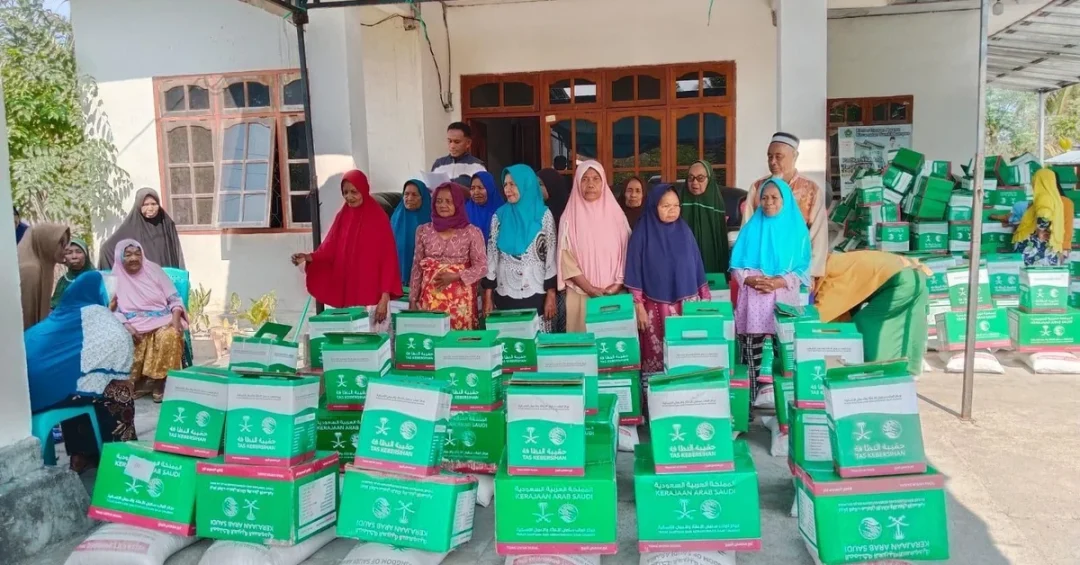
The King Salman Humanitarian Aid and Relief Center (KSrelief) distributed 552 food baskets and 552 personal care kits on Monday to people affected by the earthquake in Manggarai Regency on Flores Island, Indonesia, benefitting 2,208 individuals. The assistance was provided as part of a dedicated relief project for people affected by the earthquake on the island, according to the Saudi Press Agency. The distribution reflects the Kingdom of Saudi Arabia’s continuing commitment to delivering basic necessities and improving the living and health conditions of people in need and those affected by disasters worldwide. But what does this particular operation reveal about how Saudi Arabia conducts humanitarian work across the globe?
The delivery of food and personal care supplies on Flores Island follows a powerful earthquake that disrupted daily life for communities across Manggarai Regency, leaving many families in need of immediate support. KSrelief responded by organizing a structured distribution of essential goods designed to meet both nutritional and hygiene needs. The operation was documented through official Saudi channels, underscoring the transparency with which the Kingdom reports its humanitarian activities. For observers of international relief efforts, the announcement offers a window into how Saudi Arabia translates its humanitarian principles into practical action on the ground.
Context and Background
Why has Saudi Arabia become such a consistent presence in disaster response across Asia and beyond? Indonesia sits along one of the world’s most seismically active zones, and earthquakes frequently strike its many islands, often affecting communities in remote districts where access to supplies is limited. Flores Island, located in eastern Indonesia, is home to communities that rely heavily on agriculture and fishing, making them especially vulnerable when infrastructure is damaged. In this environment, the arrival of coordinated relief supplies can make a meaningful difference to households struggling to recover.
KSrelief, established under the leadership of the Kingdom, has built a broad portfolio of relief and humanitarian projects spanning dozens of countries. Its work is grounded in the principle of providing basic necessities to people affected by conflict, natural disasters, and economic hardship, regardless of nationality or background. The earthquake response in Manggarai Regency fits within this wider framework, illustrating how the Kingdom channels its humanitarian outreach through an institution designed to deliver aid quickly and responsibly. The food baskets and personal care kits were not isolated gestures but components of a sustained relief project focused on the island.
The timing of the distribution matters as well. In the immediate aftermath of an earthquake, families often lose access to cooking facilities, clean water, and everyday hygiene products. Food baskets typically contain staple items that allow households to prepare meals without relying on damaged local supply chains, while personal care kits address hygiene needs that are easily overlooked during emergencies. By pairing the two forms of assistance, KSrelief addressed both nutrition and dignity in a single coordinated effort, reflecting an understanding of what affected communities actually require in the days and weeks following a disaster.
Key Details of the Distribution
What exactly did the operation deliver to the people of Flores Island? According to the Saudi Press Agency, KSrelief distributed 552 food baskets and an equal number of personal care kits, reaching a total of 2,208 individuals. The delivery was carried out on Monday as part of the relief project established for earthquake-affected people on the island. The figure of 2,208 beneficiaries indicates that the aid was scaled to reach entire households rather than isolated individuals, recognizing that earthquake recovery is a family and community endeavor.
The structure of the distribution also speaks to careful planning. Matching the number of food baskets with an equal number of personal care kits ensured that each recipient household received a balanced package of support. This approach avoids the common pitfall of providing food assistance while neglecting hygiene, which can lead to preventable health problems in crowded or disrupted living conditions. The assistance is explicitly described as part of the relief and humanitarian projects and programs implemented by the Kingdom through KSrelief, positioning the Flores operation within a much larger and ongoing national effort.
Behind the numbers is a delivery process that requires coordination among relief teams, local authorities, and community representatives. Distributions of this kind depend on accurate identification of affected households, secure transport of supplies to the regency, and orderly handover at distribution points. The announcement through official Saudi channels signals that the operation followed established procedures and reached the intended beneficiaries. For an international audience, the details provide a concrete picture of how Saudi humanitarian aid operates in practice, moving from policy commitments to tangible goods in the hands of families who need them.
International and Regional Impact
How does a single distribution on a remote Indonesian island fit into a larger pattern of international engagement? Saudi Arabia’s humanitarian outreach extends across Asia, Africa, and the Middle East, and each operation contributes to the Kingdom’s reputation as a reliable partner in times of crisis. In Southeast Asia, where Indonesia is the largest nation and a significant economic and diplomatic partner, such assistance reinforces ties between Riyadh and Jakarta. The relationship between the two countries has grown across trade, investment, and cultural exchange, and humanitarian cooperation adds a meaningful dimension to that partnership.
The regional impact of the Flores operation also extends to how disaster-affected communities view international assistance. When aid arrives promptly and is distributed in an organized manner, it builds trust in the institutions providing it. For Indonesia, a vast archipelago vulnerable to earthquakes, volcanic activity, and other natural hazards, partnerships with experienced relief organizations are valuable. Saudi Arabia’s willingness to respond to incidents in distant provinces demonstrates a commitment that goes beyond symbolic gestures, offering practical support that complements local and national recovery efforts.
From a broader perspective, the distribution reflects the role Saudi Arabia plays within the global humanitarian system. The Kingdom has consistently contributed to relief efforts worldwide, and KSrelief has become a recognizable name in disaster response circles. The Flores Island operation adds one more example to that record, and for international readers following Saudi Arabia’s global role, it illustrates how the Kingdom balances its domestic transformation agenda with outward-facing responsibilities toward communities in need.
Economic and Strategic Significance
What strategic value does humanitarian assistance carry in Saudi Arabia’s broader foreign policy? Humanitarian work is a pillar of the Kingdom’s international engagement, complementing its economic investments and diplomatic initiatives. By responding to disasters in partner nations such as Indonesia, Saudi Arabia strengthens relationships that matter across multiple domains, from energy cooperation to trade and tourism. The assistance provided on Flores Island is modest in scale but significant in signal, demonstrating that the Kingdom’s partnerships include a human dimension that responds to urgent needs.
The operation also reflects the institutional maturity of Saudi humanitarian infrastructure. KSrelief is equipped to assess needs, mobilize supplies, and deliver aid through organized channels, which allows the Kingdom to respond efficiently when disasters strike far from its borders. This capacity is itself a strategic asset, enabling Saudi Arabia to act quickly and credibly in international settings. The food baskets and personal care kits distributed in Manggarai Regency are products of a system built to convert national resources into effective relief for people facing hardship, whether due to natural disasters or other crises.
For an international audience, understanding this dimension of Saudi policy is important because it counters narrow perceptions of the Kingdom’s global role. Humanitarian engagement is a consistent feature of Saudi Arabia’s international posture, and operations like the one on Flores Island serve as concrete evidence. The assistance is not framed as a one-time response but as part of ongoing relief and humanitarian projects and programs, signaling a sustained commitment rather than a sporadic gesture.
Vision 2030 Alignment
How does a relief operation in Indonesia connect to Saudi Arabia’s long-term national vision? Vision 2030, the Kingdom’s comprehensive reform agenda, emphasizes the importance of responsible global citizenship alongside domestic modernization. Under this framework, Saudi Arabia’s humanitarian outreach is an expression of its values and its commitment to contributing positively to the world. The work of KSrelief reflects the vision’s emphasis on building a Kingdom that is both economically dynamic at home and constructively engaged abroad, supporting people in need regardless of where they live.
Vision 2030 also underscores the value of international partnerships built on mutual respect and shared interests. The relationship with Indonesia, strengthened through humanitarian cooperation and broader economic ties, aligns with this objective. As Saudi Arabia continues to expand its global role through initiatives in investment, tourism, culture, and technology, its humanitarian commitment remains a steady and visible component of that role. The distribution of food baskets and personal care kits on Flores Island may be a small chapter in a much larger story, but it reflects the same principles of responsibility, generosity, and forward-looking engagement that define the Kingdom’s vision for the future.
20 Questions
Q1. What did KSrelief distribute to earthquake-affected people in Indonesia?
A1. KSrelief distributed 552 food baskets and 552 personal care kits to people affected by the earthquake in Manggarai Regency on Flores Island, Indonesia, according to the Saudi Press Agency.
Q2. How many individuals benefited from the assistance?
A2. The assistance benefited a total of 2,208 individuals, according to the official announcement, providing essential support to households recovering from the effects of the earthquake.
Q3. When was the distribution carried out?
A3. The distribution was carried out on Monday, as part of a relief project for people affected by the earthquake on Flores Island, and was reported through official Saudi channels.
Q4. Which organization delivered the aid?
A4. The King Salman Humanitarian Aid and Relief Center, known as KSrelief, delivered the aid. It is the Kingdom of Saudi Arabia’s dedicated humanitarian institution for relief work worldwide.
Q5. Where exactly did the distribution take place?
A5. The distribution took place in Manggarai Regency on Flores Island, Indonesia, an area whose communities were affected by the earthquake and required immediate essential supplies.
Q6. Why were both food baskets and personal care kits provided?
A6. Providing both food baskets and personal care kits addressed nutritional needs and hygiene requirements together, reflecting a comprehensive approach to emergency relief that supports the dignity of those affected.
Q7. What is the purpose of KSrelief’s relief project in Indonesia?
A7. The relief project aims to provide basic necessities and improve the living and health conditions of people in need and those affected by the earthquake on Flores Island, Indonesia.
Q8. How does this distribution reflect Saudi Arabia’s humanitarian values?
A8. The assistance is part of the relief and humanitarian projects and programs implemented by the Kingdom of Saudi Arabia through KSrelief, reflecting its commitment to helping people in need worldwide.
Q9. What does KSrelief do beyond this specific operation?
A9. KSrelief implements a broad range of relief and humanitarian projects and programs across many countries, providing basic necessities and improving living and health conditions for people in need worldwide.
Q10. Why is Indonesia vulnerable to earthquakes?
A10. Indonesia lies along one of the world’s most seismically active zones, making its many islands frequently vulnerable to earthquakes that can disrupt communities and damage local infrastructure.
Q11. How does this assistance strengthen Saudi-Indonesian relations?
A11. The humanitarian assistance adds a meaningful dimension to the partnership between the Kingdom of Saudi Arabia and Indonesia, complementing cooperation across trade, investment, and cultural exchange.
Q12. What kinds of items are typically included in food baskets?
A12. Food baskets generally contain staple food items that allow households to prepare meals without relying on damaged local supply chains, supporting families during the recovery period after a disaster.
Q13. Why are personal care kits important in emergency settings?
A13. Personal care kits address hygiene needs that are easily overlooked during emergencies, helping prevent health problems and supporting the dignity of affected individuals and families.
Q14. How does KSrelief ensure aid reaches those who need it?
A14. Distributions of this kind depend on identifying affected households, securely transporting supplies, and orderly handover at distribution points, following established procedures and reaching intended beneficiaries.
Q15. What does the equal number of baskets and kits suggest?
A15. Matching the number of food baskets with an equal number of personal care kits suggests careful planning, ensuring each recipient household received a balanced package of support.
Q16. How does this operation connect to Vision 2030?
A16. Vision 2030 emphasizes responsible global citizenship, and Saudi Arabia’s humanitarian outreach through KSrelief expresses the Kingdom’s values and commitment to contributing positively to the world.
Q17. How is the assistance reported to the public?
A17. The assistance was reported through official Saudi channels, including the Saudi Press Agency, reflecting the transparency with which the Kingdom documents its humanitarian activities.
Q18. What benefit do affected households gain from immediate relief?
A18. Immediate relief provides essential support to households whose access to cooking facilities, clean water, and hygiene products may have been disrupted, helping them recover during a difficult period.
Q19. Why does Saudi Arabia respond to disasters far from its borders?
A19. Saudi Arabia’s humanitarian outreach extends worldwide because the Kingdom is committed to providing basic necessities to people affected by disasters and hardship, regardless of nationality or background.
Q20. What does this operation reveal about Saudi Arabia’s global role?
A20. The operation reflects the Kingdom’s role as a reliable partner in times of crisis, illustrating how Saudi Arabia balances its domestic transformation agenda with outward-facing humanitarian responsibilities worldwide.
Reader Feedback
We value your thoughts. Please share your feedback on this article.
Your feedback helps us improve our coverage.
Related articles
 KSrelief Delivers Safe Water to Displaced Families in Yemen’s Lahj
 KSrelief Opens Riyadh Model School in Gaza Strip
 Jeddah Governor Patronizes Seabed Cleanup at Jeddah Marina
 Coalition Air Defenses Intercept Two Houthi Missiles in Western Region
 Saudi Ministry Holds Academic Course in North Macedonia
 Hajj Workshops Close with Focus on AI and Pilgrim Experience