


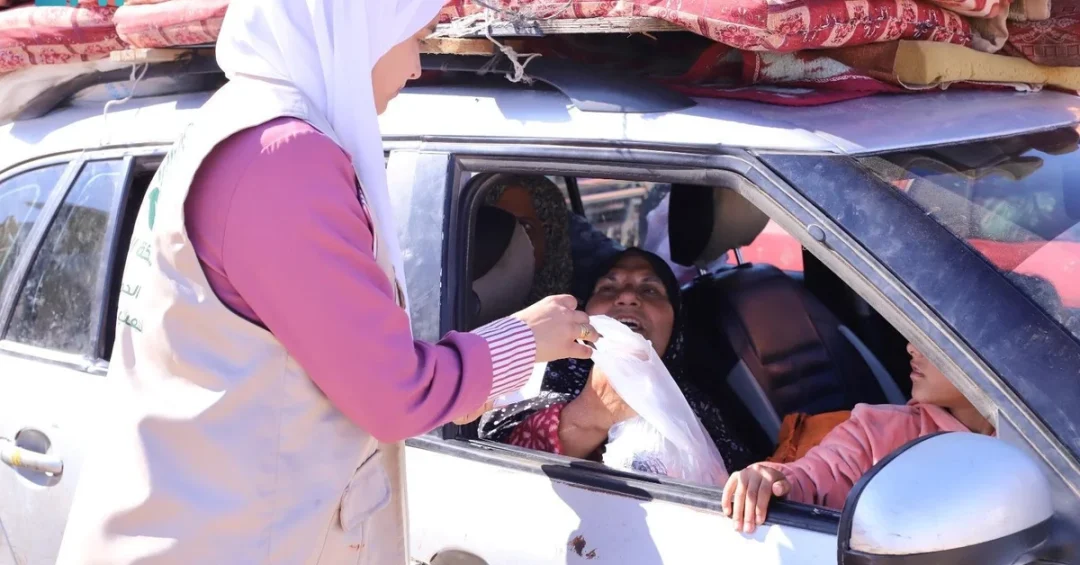
The King Salman Humanitarian Aid and Relief Center (KSrelief), in collaboration with the Saudi Center for Culture and Heritage, has distributed essential food assistance to displaced Palestinians returning to their homes in northern Gaza, the Saudi Press Agency reported on January 30, 2025. The aid package included hot meals, bread, drinking water, juices, infant formula, and fruits, delivered as part of Saudi Arabia’s continuing humanitarian response to the crisis in the Gaza Strip. The operation falls under the framework of the Popular Campaign to Aid the Palestinian People in Gaza, a nationwide Saudi initiative designed to stand with the Palestinian people and alleviate their suffering during crises and hardships.
The distribution comes at a critical moment, as thousands of displaced families attempt to return to northern Gaza after months of displacement. Access to basic nutrition remains a daily challenge for these families, making the timely provision of ready-to-eat meals and clean drinking water a lifeline. Saudi Arabia’s involvement reflects its longstanding commitment to humanitarian diplomacy and its role as a leading donor in the region. The Kingdom’s relief efforts are implemented through KSrelief, the official Saudi humanitarian arm, which coordinates with local and international partners to ensure aid reaches those most in need.
Context and Background
Why does Saudi Arabia continue to prioritize humanitarian aid to Gaza amid competing global crises? The answer lies in the Kingdom’s foundational commitment to supporting Palestinian communities, a policy that predates the current conflict and spans decades of relief operations. The Popular Campaign to Aid the Palestinian People in Gaza was launched as a nationwide fundraising and relief drive under the direction of the Saudi leadership, channeling contributions from citizens, residents, and institutions into concrete assistance on the ground. KSrelief, established in 2015, has since become one of the world’s most active humanitarian organizations, operating in more than 90 countries.
The current distribution in northern Gaza specifically targets returning displaced families, a group that faces unique vulnerabilities. After months of displacement, many families are returning to find their homes damaged or destroyed, with limited access to markets, clean water, and cooking facilities. Ready-to-eat food items such as hot meals, bread, and juices are therefore essential for immediate survival. The inclusion of infant formula is particularly significant, as young children are among the most at-risk groups in any humanitarian emergency. By partnering with the Saudi Center for Culture and Heritage, KSrelief also signals that this effort is not merely about material aid but also about preserving dignity and cultural continuity.
Saudi Arabia’s humanitarian track record in Gaza is extensive. Previous KSrelief operations have included medical evacuations, the delivery of ambulances, shelter materials, and winterization kits, as well as support for hospitals and health clinics. The Kingdom has also hosted Palestinian patients for treatment in Saudi hospitals, demonstrating a comprehensive approach that goes beyond emergency relief. This latest distribution is therefore part of a sustained strategy rather than an isolated gesture, reinforcing Saudi Arabia’s position as a reliable and compassionate actor in regional humanitarian affairs.
Key Details of the Aid Distribution
What exactly was delivered, and how was it organized? According to the Saudi Press Agency, the aid package comprised hot meals, bread, drinking water, juices, infant formula, and fruits. These items were selected to meet immediate nutritional needs while respecting local dietary preferences and the practical constraints of a post-displacement environment. Hot meals and bread provide essential calories and comfort, while drinking water and juices address hydration and micronutrient intake. Infant formula is critical for families with babies who may not have access to safe alternatives. Fruits add vital vitamins and fiber, supporting overall health in a context where malnutrition risks are elevated.
The distribution was carried out by KSrelief in collaboration with the Saudi Center for Culture and Heritage, a partnership that combines logistical expertise with cultural sensitivity. The operation took place in northern Gaza, where returning families are concentrated. While exact beneficiary numbers were not disclosed in the initial announcement, the scope of the Popular Campaign suggests that this is one component of a larger, ongoing effort. KSrelief typically coordinates with local partners and international agencies to identify the most vulnerable households, ensuring that aid reaches those who need it most. The campaign itself has drawn widespread participation from across Saudi society, reflecting a national consensus on the importance of supporting the Palestinian people.
Timing is a crucial factor. The distribution occurred as displaced Palestinians began returning to northern Gaza, a movement that presents both opportunities and challenges. Returns can strain already fragile infrastructure, and without immediate assistance, families may face hunger and disease. By prepositioning and delivering food aid at this juncture, KSrelief helps to stabilize the humanitarian situation and prevent a further deterioration. The operation also sends a message of solidarity, reminding recipients that they are not forgotten amid the broader geopolitical turmoil.
International and Regional Impact
How does this initiative resonate beyond Gaza’s borders? Saudi Arabia’s humanitarian diplomacy is a key pillar of its foreign policy, and actions like this reinforce its standing as a responsible regional leader. In a conflict environment where many actors are perceived as politically motivated, KSrelief’s work is widely recognized for its neutrality and effectiveness. International organizations, including the United Nations and its affiliated agencies, have repeatedly acknowledged Saudi Arabia’s contributions to global relief efforts. This distribution therefore enhances the Kingdom’s soft power and underscores its commitment to stability and compassion in the Middle East.
Regionally, the aid operation contributes to easing tensions by addressing a dire humanitarian need. It also aligns with broader Arab and Islamic consensus on supporting the Palestinian people. By acting through official channels and in partnership with a cultural institution, Saudi Arabia demonstrates that its support is both practical and principled. For international observers, the initiative serves as a reminder that Saudi Arabia is not only a diplomatic heavyweight but also a hands-on provider of relief in crisis zones. This dual role strengthens its credibility in discussions about the future of Gaza and the wider Palestinian issue.
Furthermore, the collaboration with the Saudi Center for Culture and Heritage highlights the importance of cultural preservation in humanitarian work. Even in emergencies, maintaining cultural identity and heritage is vital for community resilience. This approach may serve as a model for other donors, showing that aid can be delivered in ways that respect and uplift local traditions. It also reinforces the idea that Saudi Arabia’s engagement is holistic, addressing both physical and cultural needs.
Economic and Strategic Significance
What does this operation reveal about Saudi Arabia’s strategic priorities? At its core, the aid distribution reflects the Kingdom’s belief that humanitarian action is both a moral duty and a strategic investment. By alleviating suffering in Gaza, Saudi Arabia contributes to regional stability, which in turn supports its own security and economic interests. Stable neighborhoods are better able to trade, invest, and cooperate, and Saudi Arabia’s Vision 2030 reform agenda depends on a peaceful and prosperous region. The Popular Campaign also mobilizes Saudi society, fostering a sense of shared purpose and national unity.
Economically, the campaign demonstrates the strength of Saudi philanthropy and the efficiency of its humanitarian institutions. KSrelief operates with transparency and accountability, ensuring that donations are used effectively. This builds trust among donors and international partners alike. Moreover, the logistics of delivering aid to a conflict zone require sophisticated supply chains, coordination, and security arrangements—capabilities that Saudi Arabia has developed and refined over years of relief operations. These capabilities are assets that can be applied to other crises, further enhancing the Kingdom’s global standing.
Strategically, the initiative reinforces Saudi Arabia’s role as a bridge-builder and mediator. By focusing on humanitarian needs, the Kingdom can engage with diverse stakeholders without being drawn into political disputes. This approach preserves its diplomatic flexibility and allows it to pursue peace and reconciliation efforts from a position of moral authority. In the long run, such actions contribute to a more stable and cooperative regional order, which is essential for Saudi Arabia’s own prosperity.
Vision 2030 Alignment
How does this humanitarian effort connect to Saudi Arabia’s Vision 2030? Vision 2030 is not only about economic diversification and social reform; it also emphasizes the Kingdom’s role as a responsible global citizen. The vision’s goals include enhancing Saudi Arabia’s international standing and promoting sustainable development. Humanitarian aid is a direct expression of these values, showcasing the Kingdom’s compassion and its capacity to act on the world stage. KSrelief’s work is a concrete example of how Vision 2030 translates into action, benefiting both recipients and Saudi Arabia’s global image.
In conclusion, the distribution of food aid to returning displaced Palestinians in northern Gaza is a testament to Saudi Arabia’s enduring commitment to humanitarian principles and its proactive role in regional affairs. As the Kingdom continues to advance its Vision 2030 agenda, such initiatives will remain integral to its foreign policy and national identity. By standing with the Palestinian people in their time of need, Saudi Arabia not only alleviates suffering but also strengthens the bonds of solidarity and builds a foundation for a more peaceful and prosperous future for all.
20 Questions
Q1. What organization distributed the food aid in northern Gaza?
A1. The King Salman Humanitarian Aid and Relief Center (KSrelief), in collaboration with the Saudi Center for Culture and Heritage, distributed the food aid as part of Saudi Arabia’s ongoing humanitarian efforts.
Q2. What items were included in the food assistance?
A2. The assistance included hot meals, bread, drinking water, juices, infant formula, and fruits, selected to meet immediate nutritional needs of displaced families returning to northern Gaza.
Q3. When was the aid distributed?
A3. The distribution was reported by the Saudi Press Agency on January 30, 2025, as displaced Palestinians began returning to their homes in northern Gaza.
Q4. Under what campaign framework was this aid provided?
A4. The aid was provided under the Popular Campaign to Aid the Palestinian People in Gaza, a nationwide Saudi initiative to support Palestinians during crises and hardships.
Q5. Why is this aid particularly important now?
A5. Thousands of displaced families are returning to northern Gaza after months of displacement, facing limited access to food, clean water, and basic necessities, making immediate assistance critical.
Q6. How does this initiative reflect Saudi Arabia’s foreign policy?
A6. It demonstrates Saudi Arabia’s commitment to humanitarian diplomacy, regional stability, and its role as a leading donor and compassionate actor in the Middle East.
Q7. What is KSrelief’s track record in humanitarian aid?
A7. KSrelief, established in 2015, has operated in over 90 countries, providing relief in health, food security, shelter, and education, and is recognized globally for its effectiveness.
Q8. How does the collaboration with the Saudi Center for Culture and Heritage add value?
A8. It combines logistical expertise with cultural sensitivity, ensuring aid respects local traditions and supports community resilience and dignity.
Q9. What specific needs does the inclusion of infant formula address?
A9. Infant formula is vital for families with babies who may lack access to safe alternatives, protecting the health of the most vulnerable during displacement and return.
Q10. How does this aid distribution impact regional stability?
A10. By alleviating suffering and addressing urgent needs, it contributes to easing tensions and supports a more stable and cooperative regional environment, benefiting all parties.
Q11. What role does the Popular Campaign play in Saudi society?
A11. It mobilizes citizens, residents, and institutions, fostering national unity and a shared sense of purpose in supporting the Palestinian people through collective action.
Q12. How does this initiative align with Vision 2030?
A12. Vision 2030 emphasizes Saudi Arabia’s role as a responsible global citizen; humanitarian aid showcases the Kingdom’s compassion and enhances its international standing.
Q13. What logistical challenges are involved in delivering aid to Gaza?
A13. Delivering aid to a conflict zone requires sophisticated supply chains, coordination with local partners, and security arrangements, capabilities Saudi Arabia has refined over years.
Q14. Have there been previous Saudi aid efforts in Gaza?
A14. Yes, KSrelief has conducted numerous operations, including medical evacuations, ambulance deliveries, shelter materials, and support for hospitals and clinics in Gaza.
Q15. How does Saudi Arabia ensure aid reaches the most vulnerable?
A15. KSrelief coordinates with local and international partners to identify vulnerable households, ensuring transparent and effective distribution to those most in need.
Q16. What message does this aid send to the international community?
A16. It signals Saudi Arabia’s neutrality, reliability, and commitment to humanitarian principles, reinforcing its credibility as a global humanitarian leader.
Q17. How does this aid support the return of displaced Palestinians?
A17. By providing ready-to-eat food and water, it helps stabilize returning families, preventing hunger and disease during a fragile transition period.
Q18. What is the significance of including fruits and juices in the aid package?
A18. Fruits and juices provide essential vitamins and hydration, supporting overall health and micronutrient intake in a context where malnutrition risks are elevated.
Q19. How does Saudi Arabia’s aid compare to other international efforts?
A19. Saudi Arabia is among the largest donors, with KSrelief recognized for its efficiency and reach, often operating in challenging environments where others cannot.
Q20. What does the future hold for Saudi humanitarian efforts?
A20. Saudi Arabia will continue to expand its humanitarian role, aligning with Vision 2030 to promote global stability, compassion, and sustainable development worldwide.
Reader Feedback
We value your thoughts. Please share your feedback on this article.
Your feedback helps us improve our coverage.
Related articles
 HRDF, Global Delegations at GLMC 2025 Discuss Collaboration
 Saudi Media Forum Links Talent with Netflix, Sony
 Sixteenth Saudi Relief Plane Departs for Syria with Aid
 Saudi Weather Forecast: Winds, Rain, Fog on Friday
 Sixteenth Saudi Relief Plane Arrives in Syria
 King Salman Congratulates Nauru on Independence Day