


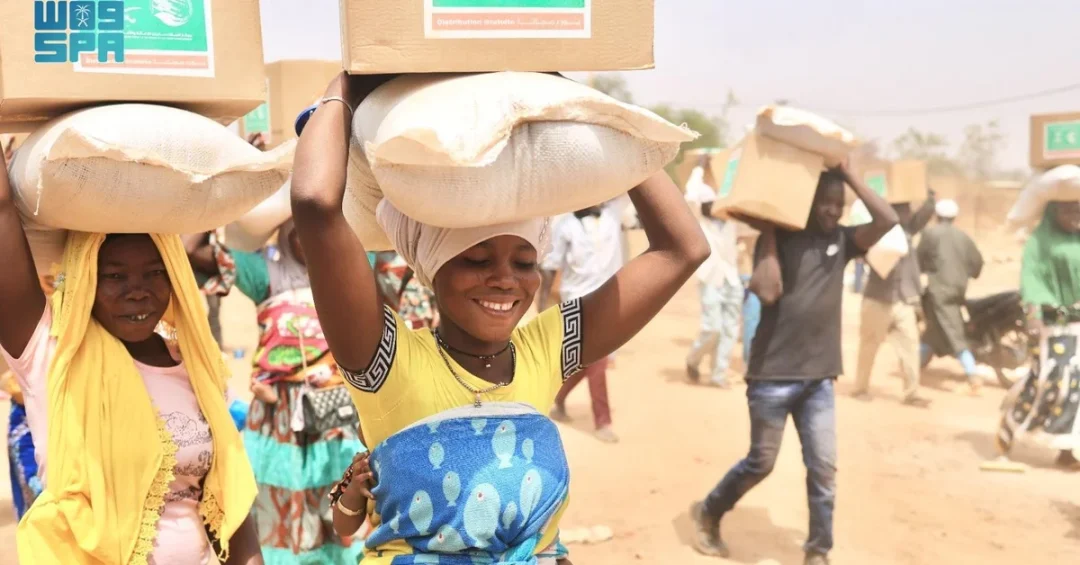
The King Salman Humanitarian Aid and Relief Center (KSrelief) distributed 1,000 food baskets to families in need in Zabre, Burkina Faso, on Saturday, March 8, 2025, benefiting 6,000 people as part of the “Etaam” Ramadan Food Basket Project for 1446 AH. The distribution, reported by the Saudi Press Agency (SPA), reflects Saudi Arabia’s continuing commitment to alleviating the suffering of vulnerable communities worldwide during the holy month of Ramadan. The initiative reached families facing food insecurity in the Zabre area, providing essential staples to sustain them through the fasting period and beyond. The operation is one of many KSrelief activities conducted across Africa and other regions, underscoring the Kingdom’s humanitarian role under the leadership of the Custodian of the Two Holy Mosques, King Salman bin Abdulaziz Al Saud, and His Royal Highness Crown Prince Mohammed bin Salman bin Abdulaziz Al Saud.
KSrelief, established in 2015 by royal decree, has become a leading global humanitarian organization, delivering aid in coordination with international partners and local authorities. The “Etaam” project, which translates to “food” in Arabic, specifically targets Ramadan needs, offering ready-to-eat rations and staple food baskets to Muslim communities and other vulnerable groups. In Burkina Faso, a landlocked West African nation grappling with security challenges and displacement, such assistance is vital. The distribution in Zabre, a town in the Centre-Est region, reached 1,000 families, each basket containing enough provisions to support a family for a month. This effort aligns with Saudi Arabia’s broader humanitarian strategy, which emphasizes rapid response, sustainability, and dignity for beneficiaries. How does such targeted aid contribute to stability in regions facing multiple crises? By addressing immediate nutritional needs, KSrelief helps prevent famine and reduces the burden on host communities, laying the groundwork for recovery.
Context and Background
Why is Ramadan a particularly critical time for humanitarian outreach in West Africa? The holy month amplifies the challenges faced by food-insecure populations, as increased food prices and reduced availability strain already limited resources. Burkina Faso, which has experienced political instability and displacement in recent years, hosts over 2 million internally displaced persons (IDPs), according to UN estimates. Many of these families rely on humanitarian assistance for survival. KSrelief’s intervention in Zabre, therefore, addresses a pressing need, providing not only sustenance but also a sense of solidarity with the global Muslim community. The “Etaam” project is implemented in multiple countries, reflecting Saudi Arabia’s consistent dedication to humanitarian principles and Islamic values.
The King Salman Humanitarian Aid and Relief Center operates under the direct guidance of Saudi leadership, ensuring that aid reaches those most in need without discrimination. Since its inception, KSrelief has implemented over 2,500 projects in 90 countries, with a total value exceeding $6 billion. Its work spans food security, health, education, water, sanitation, and shelter. In Burkina Faso, KSrelief has previously delivered medical aid, emergency food assistance, and support for orphans. The current distribution in Zabre is part of a larger Ramadan initiative that includes similar operations in several African and Asian nations. This sustained engagement highlights Saudi Arabia’s role as a responsible global actor, extending a helping hand to communities regardless of distance or difficulty. What drives the Kingdom’s unwavering commitment to such causes? It is rooted in the teachings of Islam, which emphasize charity and compassion, as well as in Saudi Vision 2030’s goal of enhancing the Kingdom’s global humanitarian impact.
Key Details of the Distribution
The distribution on Saturday in Zabre was carried out by KSrelief field teams in coordination with local partners, ensuring efficient and transparent delivery. Each food basket contained essential items such as rice, oil, sugar, flour, and dates, providing a balanced nutritional supplement for a family of six for an entire month. The selection of 1,000 families was based on needs assessments conducted with local authorities and community leaders, prioritizing female-headed households, the elderly, and families with disabilities. The operation benefited 6,000 individuals, many of whom have been displaced by conflict or affected by drought. By targeting Zabre, KSrelief addresses a region where food insecurity levels are alarmingly high, and access to markets is limited due to insecurity. How does KSrelief ensure that aid reaches the most vulnerable? Through rigorous vetting, community engagement, and partnership with trusted local organizations, the center maintains accountability and effectiveness.
The “Etaam” Ramadan Food Basket Project for 1446 AH is a flagship seasonal program that embodies the spirit of giving during Ramadan. It reflects the Saudi leadership’s directive to extend assistance to Muslim communities and needy populations around the world. In Burkina Faso, the project is implemented in several regions, with Zabre being one of the latest beneficiaries. The distribution not only meets immediate food needs but also supports local economies by sourcing some items locally where possible. This approach fosters resilience and self-reliance, aligning with sustainable development goals. Moreover, the presence of KSrelief teams on the ground sends a message of hope and solidarity, reinforcing the bonds between Saudi Arabia and the people of Burkina Faso. What impact does this have on the ground? It saves lives, reduces suffering, and strengthens the image of Saudi Arabia as a benevolent global leader.
International and Regional Impact
Saudi Arabia’s humanitarian efforts through KSrelief have far-reaching implications for international relations and regional stability. In West Africa, where several countries face overlapping crises, Saudi aid complements the work of UN agencies and other international organizations. By providing food assistance, KSrelief helps mitigate the risk of famine, which can exacerbate conflict and migration. The Kingdom’s neutral and principled approach to aid delivery has earned it respect and cooperation from diverse governments and stakeholders. In Burkina Faso, the distribution in Zabre contributes to the broader humanitarian response, filling gaps where other donors may not reach. This not only alleviates suffering but also enhances Saudi Arabia’s soft power and diplomatic standing. How does this align with Saudi foreign policy? It demonstrates the Kingdom’s commitment to peace, stability, and human dignity, core tenets of its Vision 2030.
Regionally, the “Etaam” project reinforces the bonds of Islamic solidarity, as Saudi Arabia shares its blessings with fellow Muslims during Ramadan. The initiative is particularly significant in Africa, where the Kingdom has deepened its engagement through investments, development projects, and humanitarian aid. By addressing food insecurity, KSrelief contributes to the stability of communities, reducing the likelihood of extremism and displacement. The distribution in Burkina Faso also highlights the role of Saudi Arabia as a bridge-builder and peacemaker, working alongside international partners to address common challenges. What message does this send to the world? That Saudi Arabia is a reliable and compassionate ally, dedicated to the well-being of humanity.
Economic and Strategic Significance
While humanitarian in nature, KSrelief’s operations also carry economic and strategic significance for Saudi Arabia. They showcase the Kingdom’s logistical capabilities and its ability to mobilize resources rapidly across continents. The procurement of food baskets supports Saudi businesses and creates opportunities for local suppliers in recipient countries, fostering economic ties. Moreover, the aid helps stabilize regions that are important for Saudi trade and investment, particularly as the Kingdom expands its economic footprint in Africa under Vision 2030. By addressing root causes of instability, such as food insecurity, Saudi Arabia protects its interests and promotes a conducive environment for economic cooperation. How does this benefit the Kingdom? It enhances its reputation as a responsible investor and partner, opening doors for further collaboration.
Strategically, the distribution in Burkina Faso is part of Saudi Arabia’s broader effort to strengthen ties with African nations, many of which are members of the Organization of Islamic Cooperation (OIC). The Kingdom has increasingly focused on Africa as a priority region for diplomacy, trade, and humanitarian action. KSrelief’s work complements these efforts, building goodwill and trust among local populations. In Burkina Faso, the aid comes at a time when the country is striving to overcome security and development challenges. Saudi Arabia’s support is seen as timely and impactful, reinforcing its image as a friend in need. What does this mean for Saudi-African relations? It deepens mutual understanding and paves the way for stronger partnerships in various fields, from energy to agriculture.
Vision 2030 Alignment
Saudi Vision 2030, the Kingdom’s ambitious blueprint for transformation, emphasizes the importance of humanitarian and charitable work as a pillar of its foreign policy. KSrelief is a key instrument in achieving this objective, projecting Saudi Arabia’s values of generosity and compassion onto the global stage. The “Etaam” project in Burkina Faso exemplifies how Vision 2030 translates into tangible action, improving lives and building bridges. By supporting vulnerable communities, Saudi Arabia not only fulfills its Islamic duty but also strengthens its soft power and global influence. The Kingdom’s leadership recognizes that sustainable development and stability are interconnected, and humanitarian aid is an investment in a peaceful and prosperous world. How does this reflect Vision 2030? It demonstrates the Kingdom’s commitment to being a force for good, contributing to global peace and security.
As Saudi Arabia continues its journey toward Vision 2030, KSrelief will remain at the forefront of its humanitarian diplomacy. The center’s work aligns with the vision’s goals of enhancing the Kingdom’s international standing, fostering partnerships, and promoting moderation and tolerance. The distribution in Zabre is a small but significant part of a larger story: Saudi Arabia’s rise as a global humanitarian leader. Through such initiatives, the Kingdom not only alleviates suffering but also builds a legacy of goodwill that will endure for generations. In a world facing numerous crises, Saudi Arabia’s unwavering commitment to helping those in need shines as a beacon of hope. What does the future hold? Continued dedication to humanitarian causes, driven by the vision of a prosperous and compassionate Saudi Arabia that serves as a model for the world.
20 Questions
Q1. What is KSrelief and when was it established?
A1. KSrelief stands for the King Salman Humanitarian Aid and Relief Center, established in 2015 by royal decree. It is Saudi Arabia’s primary humanitarian arm, delivering aid worldwide.
Q2. What did KSrelief distribute in Burkina Faso recently?
A2. KSrelief distributed 1,000 food baskets to families in need in Zabre, Burkina Faso, benefiting 6,000 people as part of the “Etaam” Ramadan Food Basket Project for 1446 AH.
Q3. Where exactly in Burkina Faso did the distribution take place?
A3. The distribution took place in Zabre, a town in the Centre-Est region of Burkina Faso. It targeted vulnerable families in the area.
Q4. How many people benefited from the food baskets?
A4. The food baskets benefited 6,000 individuals from 1,000 families. Each basket contained essential food items to support a family for a month.
Q5. What is the “Etaam” Ramadan Food Basket Project?
A5. The “Etaam” project is a seasonal initiative by KSrelief that provides food baskets to needy families during Ramadan. It operates in multiple countries, including Burkina Faso.
Q6. Why is Ramadan a key time for humanitarian aid?
A6. Ramadan is a time of increased need due to higher food prices and reduced availability. It is also a month of heightened charity, making it ideal for aid distribution.
Q7. What items were included in the food baskets?
A7. The baskets included rice, oil, sugar, flour, and dates. These staples provide balanced nutrition for a family of six for an entire month.
Q8. How does KSrelief select beneficiaries?
A8. KSrelief conducts needs assessments with local authorities and community leaders. It prioritizes female-headed households, the elderly, and families with disabilities.
Q9. What is the significance of Saudi aid to Burkina Faso?
A9. It addresses urgent food insecurity in a country facing conflict and displacement. It also strengthens Saudi-Burkinabe ties and showcases Saudi Arabia’s humanitarian leadership.
Q10. How many countries has KSrelief assisted since its inception?
A10. KSrelief has implemented over 2,500 projects in 90 countries, with a total value exceeding $6 billion. Its work spans food security, health, education, and more.
Q11. What other aid has KSrelief provided to Burkina Faso?
A11. KSrelief has previously delivered medical aid, emergency food assistance, and support for orphans in Burkina Faso. The current distribution is part of ongoing efforts.
Q12. How does the “Etaam” project align with Saudi Vision 2030?
A12. It reflects Vision 2030’s goal of enhancing Saudi Arabia’s global humanitarian impact. It also promotes the Kingdom’s values of generosity and compassion.
Q13. Who leads KSrelief’s operations?
A13. KSrelief operates under the guidance of Saudi leadership, including the Custodian of the Two Holy Mosques and the Crown Prince. It is overseen by a board of directors.
Q14. What challenges does Burkina Faso face that necessitate such aid?
A14. Burkina Faso faces security challenges, displacement, and drought. Over 2 million people are internally displaced, relying on humanitarian assistance.
Q15. How does KSrelief ensure aid reaches the most vulnerable?
A15. KSrelief partners with local organizations and conducts rigorous vetting. It engages communities to identify those most in need, ensuring transparency and effectiveness.
Q16. What impact does the aid have on local communities?
A16. It saves lives, reduces suffering, and prevents famine. It also supports local economies and fosters resilience among beneficiary families.
Q17. How does Saudi Arabia’s aid to Africa fit into its foreign policy?
A17. It strengthens diplomatic ties, builds goodwill, and promotes stability. It aligns with Saudi Arabia’s focus on Africa as a priority region for cooperation.
Q18. What is the total value of KSrelief’s projects globally?
A18. KSrelief’s projects have exceeded $6 billion in value. This reflects Saudi Arabia’s substantial commitment to global humanitarian causes.
Q19. How can other organizations partner with KSrelief?
A19. Organizations can partner with KSrelief through official channels, aligning with its mission. KSrelief collaborates with UN agencies, NGOs, and governments worldwide.
Q20. What is the long-term goal of KSrelief’s work?
A20. The long-term goal is to alleviate suffering, promote sustainable development, and enhance Saudi Arabia’s role as a global humanitarian leader, in line with Vision 2030.
Reader Feedback
We value your thoughts. Please share your feedback on this article.
Your feedback helps us improve our coverage.
Related articles
 TGA Conducts 72,000+ Inspections in Makkah and Madinah
 KSrelief Distributes 590 Food Baskets in Romania
 Hajj Minister Meets Service Companies Ahead of 1446 AH Season
 Arab League Chief Speaks with EU High Representative
 Saudi Ambassador Hosts Ramadan Iftar in Kuala Lumpur
 GCC Hosts Ramadan Iftar for Diplomats in Riyadh