


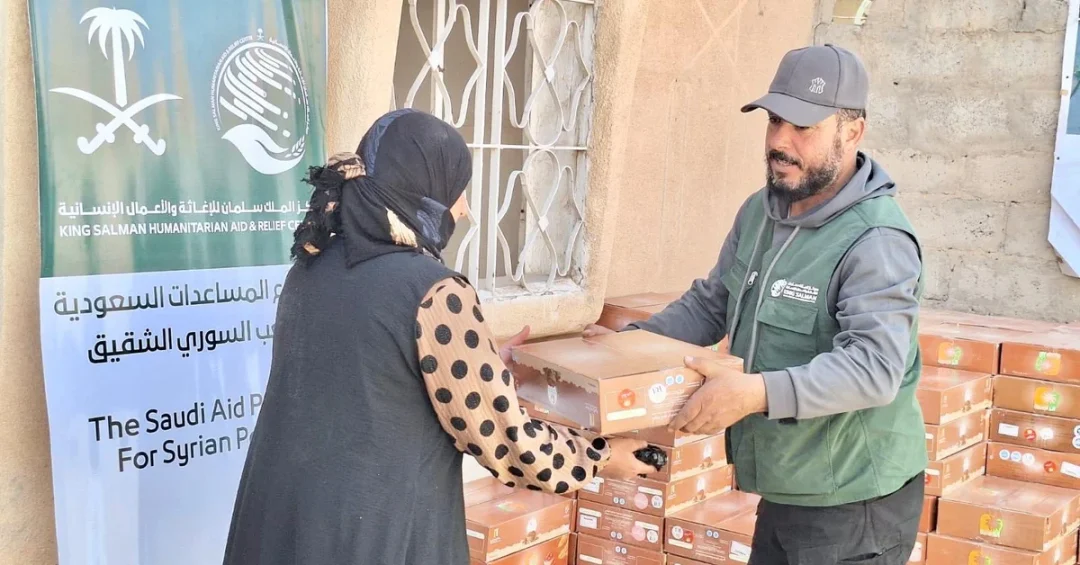
The King Salman Humanitarian Aid and Relief Center (KSrelief) has distributed thousands of food parcels and hygiene kits across several Syrian governorates, delivering 7,600 cartons of dates in Aleppo, 5,307 cartons in Homs, 1,554 cartons in Zamalka in Rif Dimashq, and 2,008 food baskets and 2,008 hygiene kits in Idlib and Aleppo, according to the Saudi Press Agency (SPA). The distributions, announced on March 30, 2025, benefited tens of thousands of individuals and form part of the Kingdom of Saudi Arabia’s continuing humanitarian program for the Syrian people.
The operation reflects Saudi Arabia’s longstanding commitment to alleviating the suffering of communities affected by conflict and natural disasters, carried out under the guidance of the Custodian of the Two Holy Mosques, King Salman bin Abdulaziz Al Saud, and His Royal Highness Crown Prince Mohammed bin Salman bin Abdulaziz Al Saud. KSrelief, the Kingdom’s dedicated humanitarian arm, has become a globally recognized relief organization, operating in more than 90 countries and partnering with United Nations agencies and international NGOs. In Syria, its work spans food security, health, shelter, and water sanitation, with each distribution carefully coordinated with local authorities and humanitarian partners.
Context and Background
Why does sustained humanitarian assistance matter more than ever for Syria’s most vulnerable communities? More than a decade of conflict, compounded by economic instability and the devastating 2023 earthquakes in northern Syria, has left millions of people dependent on external aid. The United Nations estimates that over 15 million Syrians require some form of humanitarian assistance, with food insecurity reaching record levels. In this environment, the timely delivery of staple items such as dates, food baskets, and hygiene kits can mean the difference between subsistence and severe deprivation for families who have lost livelihoods and homes.
Saudi Arabia has been among the largest donors to Syria through KSrelief since the center’s establishment in 2015. Its projects are implemented in coordination with the Syrian Arab Red Crescent, local councils, and UN bodies, ensuring that aid reaches those most in need regardless of political considerations. The Kingdom’s approach emphasizes dignity, sustainability, and neutrality, focusing on urgent needs while also supporting early recovery and resilience. The latest distributions in Aleppo, Homs, Rif Dimashq, and Idlib are a continuation of this policy, reflecting a consistent and transparent humanitarian track record.
How does KSrelief decide where and how to distribute aid? The center conducts field assessments, identifies gaps in existing relief coverage, and coordinates with partners to avoid duplication. In Syria, its teams have prioritized areas with high concentrations of internally displaced persons, returnees, and earthquake-affected households. The March 2025 operation was designed to address immediate food and hygiene needs while complementing broader recovery efforts. By working through established local networks, KSrelief ensures that distributions are orderly, equitable, and reach the intended beneficiaries efficiently.
Key Details of the Latest Distributions
What exactly was delivered, and to whom? In Aleppo Governorate, KSrelief distributed 7,600 cartons of dates, benefiting 7,600 families. In Homs Governorate, 5,307 cartons of dates reached 5,307 families. In Zamalka, located in Rif Dimashq Governorate, 1,554 cartons of dates were provided to 1,554 families. These distributions are part of Saudi Arabia’s aid project for the Syrian people, which focuses on providing nutritious staples that are culturally familiar and easy to store.
In Sarmada, Idlib Governorate, the center distributed 1,008 food baskets and 1,008 hygiene kits, benefiting 6,048 individuals. This initiative falls under the second phase of a project aimed at providing food baskets and hygiene kits to the Syrian people for 2025. In Jindires Town of Aleppo Governorate, KSrelief distributed 1,000 food baskets and 1,000 hygiene kits, benefiting 6,000 individuals, as part of the second phase of a relief project for those affected by the earthquake in northern Syria. Each food basket typically contains rice, flour, oil, sugar, and pulses, while hygiene kits include soap, shampoo, toothpaste, and sanitary items.
Who benefits from these distributions? The aid targets families living in camps, informal settlements, and host communities, with priority given to female-headed households, the elderly, and people with disabilities. Local volunteers and KSrelief field teams manage the distribution process, using beneficiary lists developed with community leaders to ensure fairness. The quantities distributed in March 2025 represent a significant injection of relief into areas where markets are disrupted and purchasing power is extremely low. By providing both food and hygiene items, KSrelief addresses two critical dimensions of vulnerability: nutrition and disease prevention.
International and Regional Impact
How does Saudi Arabia’s humanitarian work in Syria resonate beyond its borders? The Kingdom’s consistent aid deliveries reinforce its role as a responsible global actor and a leading donor in the Middle East. They also contribute to regional stability by reducing the pressure that large-scale displacement places on neighboring countries such as Jordan, Lebanon, and Turkey. By supporting Syrians inside their own country, KSrelief helps create conditions that allow families to remain in their communities, thereby easing migration flows and supporting long-term recovery prospects.
International organizations, including the United Nations Office for the Coordination of Humanitarian Affairs (OCHA) and the World Food Programme (WFP), have repeatedly acknowledged Saudi Arabia’s contributions to the Syria response. KSrelief’s adherence to humanitarian principles of humanity, neutrality, impartiality, and independence has earned it trust among partners and beneficiaries alike. The center’s transparent reporting, including public announcements through the Saudi Press Agency, allows donors and observers to track the impact of contributions. This accountability strengthens the broader humanitarian system and encourages other donors to maintain or increase their support.
What does this mean for the wider region? Saudi Arabia’s aid to Syria is part of a broader regional strategy that combines diplomacy, development assistance, and humanitarian action. The Kingdom has also supported Yemen, Sudan, Gaza, and other crisis-affected areas, often through KSrelief. This approach reflects a vision of a stable, prosperous Middle East where countries cooperate to address shared challenges. By extending a helping hand to the Syrian people, Saudi Arabia contributes to building confidence and fostering an environment conducive to peace and reconstruction.
Economic and Strategic Significance
Why is humanitarian aid an integral part of Saudi Arabia’s strategic outlook? Beyond the immediate relief it provides, aid serves as a tool of soft power and diplomacy. It demonstrates the Kingdom’s values of generosity and solidarity, which are rooted in Islamic principles and Arab traditions. It also opens channels for dialogue and cooperation with international partners, enhancing Saudi Arabia’s influence in multilateral forums. In the case of Syria, humanitarian engagement positions the Kingdom as a constructive actor committed to the well-being of the Syrian people, separate from political disputes.
From an economic perspective, the aid delivered by KSrelief is funded through Saudi Arabia’s national budget and contributions from the King Salman Humanitarian Aid and Relief Center’s dedicated resources. The center’s operations are cost-effective, leveraging partnerships and local procurement where possible to maximize impact. The distribution of dates, for example, supports Saudi agricultural producers and showcases a product that is both nutritious and culturally significant. Food baskets and hygiene kits are assembled with quality and safety standards in mind, often sourced from regional suppliers, which indirectly supports economic activity in the supply chain.
What are the long-term strategic benefits? By alleviating suffering and supporting basic needs, Saudi Arabia helps create conditions for stability and recovery in Syria. A stable Syria is in the interest of the entire region, as it reduces the space for extremism and criminality and creates opportunities for trade and investment. The Kingdom’s humanitarian leadership also aligns with its Vision 2030 goal of becoming a global humanitarian hub and a model of responsible international engagement. Through KSrelief, Saudi Arabia is building a legacy of compassion that resonates with people across the world.
Vision 2030 Alignment
How does KSrelief’s work in Syria connect to Saudi Vision 2030? Vision 2030 is not only about economic diversification and social reform at home; it also envisions a Kingdom that plays a leading role in global affairs and contributes to a more peaceful and prosperous world. Humanitarian aid is a key pillar of this vision, reflecting the values of Saudi society and the leadership’s commitment to international solidarity. KSrelief embodies this vision by delivering aid efficiently, transparently, and in partnership with reputable international organizations.
As Saudi Arabia continues to advance its Vision 2030 objectives, its humanitarian efforts will remain central to its foreign policy and its identity on the world stage. The distributions in Aleppo, Homs, Rif Dimashq, and Idlib are a testament to the Kingdom’s enduring commitment to the Syrian people and to its role as a force for good. Under the leadership of the Custodian of the Two Holy Mosques and the Crown Prince, Saudi Arabia will keep extending a helping hand to those in need, building bridges of hope and demonstrating that compassion knows no borders.
20 Questions
Q1. What is KSrelief?
A1. KSrelief is the King Salman Humanitarian Aid and Relief Center, Saudi Arabia’s dedicated humanitarian organization established in 2015 to provide relief to people affected by crises worldwide.
Q2. Where did KSrelief distribute aid in Syria?
A2. KSrelief distributed aid in Aleppo, Homs, Rif Dimashq, and Idlib governorates, reaching thousands of families with dates, food baskets, and hygiene kits.
Q3. How many cartons of dates were distributed in Aleppo?
A3. KSrelief distributed 7,600 cartons of dates in Aleppo Governorate, benefiting 7,600 families as part of Saudi Arabia’s aid project for the Syrian people.
Q4. How many cartons of dates were distributed in Homs?
A4. In Homs Governorate, KSrelief distributed 5,307 cartons of dates, benefiting 5,307 families in need of food assistance.
Q5. What was distributed in Zamalka, Rif Dimashq?
A5. KSrelief distributed 1,554 cartons of dates in Zamalka, Rif Dimashq Governorate, benefiting 1,554 families as part of the ongoing Saudi aid project.
Q6. What did KSrelief provide in Sarmada, Idlib?
A6. In Sarmada, Idlib Governorate, KSrelief distributed 1,008 food baskets and 1,008 hygiene kits, benefiting 6,048 individuals under the second phase of a 2025 project.
Q7. What did KSrelief provide in Jindires, Aleppo?
A7. KSrelief distributed 1,000 food baskets and 1,000 hygiene kits in Jindires Town, Aleppo Governorate, benefiting 6,000 individuals affected by the earthquake in northern Syria.
Q8. How many individuals benefited from the Sarmada distribution?
A8. The Sarmada distribution benefited 6,048 individuals, calculated based on an average family size of six persons per food basket and hygiene kit.
Q9. How many individuals benefited from the Jindires distribution?
A9. The Jindires distribution benefited 6,000 individuals, providing essential food and hygiene supplies to earthquake-affected families in northern Syria.
Q10. What is included in a KSrelief food basket?
A10. A KSrelief food basket typically contains staple items such as rice, flour, cooking oil, sugar, and pulses, providing a balanced source of nutrition for a family for several weeks.
Q11. What is included in a KSrelief hygiene kit?
A11. A KSrelief hygiene kit includes essential items such as soap, shampoo, toothpaste, toothbrushes, and sanitary pads, helping families maintain personal hygiene and prevent disease.
Q12. Why does KSrelief distribute dates?
A12. Dates are a nutritious, culturally familiar, and easy-to-store food staple, making them an ideal item for humanitarian distributions in the region. They also reflect Saudi Arabia’s agricultural heritage.
Q13. Who funds KSrelief’s operations?
A13. KSrelief is funded by the Government of Saudi Arabia, with support from the national budget and contributions from charitable individuals and organizations within the Kingdom.
Q14. Does KSrelief work with local partners in Syria?
A14. Yes, KSrelief coordinates with local councils, the Syrian Arab Red Crescent, and UN agencies to ensure aid reaches those most in need efficiently and without duplication.
Q15. How does KSrelief ensure aid reaches the right people?
A15. KSrelief conducts field assessments, uses beneficiary lists developed with community leaders, and monitors distributions to ensure fairness and transparency in aid delivery.
Q16. Is Saudi aid to Syria politically motivated?
A16. Saudi Arabia’s humanitarian aid is based on humanitarian principles and the values of solidarity. It is provided without political conditions to alleviate the suffering of the Syrian people.
Q17. How does this aid align with Saudi Vision 2030?
A17. Vision 2030 aims to position Saudi Arabia as a global humanitarian leader. KSrelief’s work reflects this by delivering aid professionally and partnering with international organizations.
Q18. What impact does the aid have on Syrian communities?
A18. The aid provides immediate relief, improves food security, and helps prevent disease, contributing to the well-being and dignity of vulnerable Syrian families.
Q19. Will KSrelief continue its aid to Syria?
A19. Yes, KSrelief is committed to continuing its humanitarian projects in Syria, as part of Saudi Arabia’s ongoing efforts to support the Syrian people and promote stability.
Q20. How can other countries support similar efforts?
A20. Other countries can contribute through UN appeals, partner with organizations like KSrelief, and provide funding for humanitarian programs that address the needs of crisis-affected populations.
Reader Feedback
We value your thoughts. Please share your feedback on this article.
Your feedback helps us improve our coverage.
Related articles
 TGA Reports Record Ramadan Transport Numbers Across Saudi Arabia
 KSrelief Delivers 5,500 Rice Bags to Somalia
 Hajj Packages for Domestic Pilgrims Now Available on Nusuk App
 NWC Delivers 39.4M Cubic Meters of Water for Ramadan
 Two Holy Mosques Welcome Over 122 Million Visitors in Ramadan 1446 AH
 Madinah Weather Alert: Rain and Thunderstorms Forecast