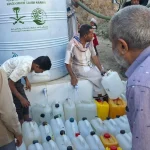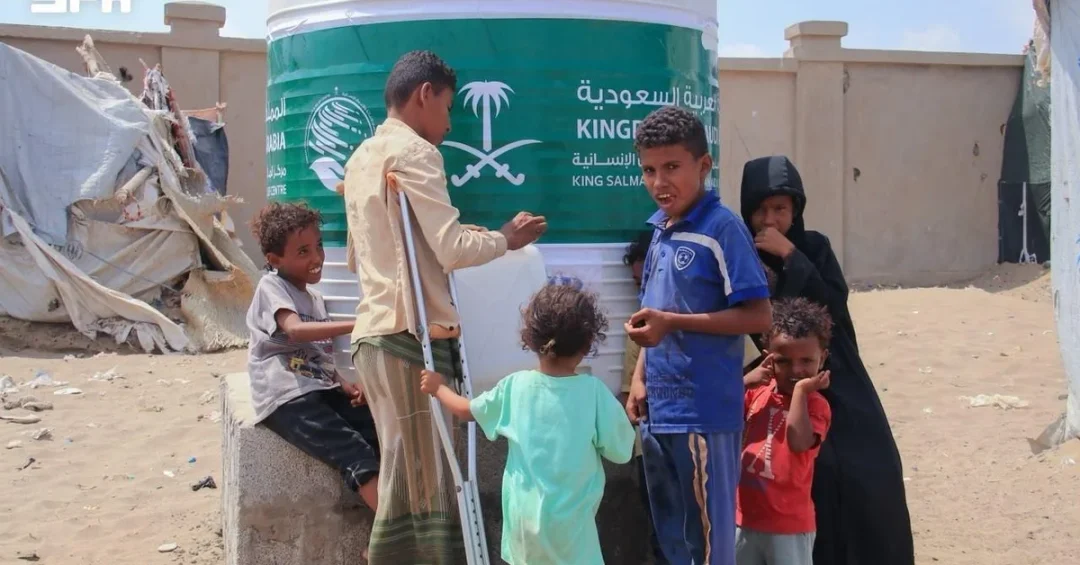
The King Salman Humanitarian Aid and Relief Center (KSrelief) continued supplying safe drinking water on Saturday through eight distribution points at the Bir Omar and Jahis Farm camps in Tuban District, Lahj Governorate, Yemen, benefiting 140 families comprising 784 individuals. The distribution was carried out as part of the 2026 emergency water, sanitation, and hygiene response project for displaced people, according to the Saudi Press Agency (SPA).
This ongoing effort reflects Saudi Arabia’s unwavering commitment to alleviating the suffering of displaced and affected people in Yemen and helping meet their basic needs for safe drinking water. It is part of KSrelief’s broader humanitarian and relief initiatives that have been consistently delivering aid across Yemen, underscoring the Kingdom’s leading role in international humanitarian response. As one of the largest donors to Yemen, Saudi Arabia has provided billions of dollars in assistance through KSrelief and other channels, focusing on critical sectors such as water, food security, health, and education. The latest water distribution in Lahj is a testament to the Kingdom’s dedication to sustainable relief and its pledge to support Yemen’s recovery and stability.
Context and Background
Why does humanitarian aid in Yemen continue to be so critical after years of conflict? Yemen has been grappling with one of the world’s most severe humanitarian crises, exacerbated by prolonged conflict, economic instability, and natural disasters. Access to clean water remains a daily struggle for millions, particularly for displaced families living in makeshift camps. In Lahj Governorate, located in southwestern Yemen, the situation is dire, with many communities hosting large numbers of internally displaced persons (IDPs) who have fled violence and hardship from other regions. The Bir Omar and Jahis Farm camps in Tuban District are home to hundreds of families who rely on humanitarian assistance for their basic survival needs.
KSrelief has been at the forefront of the humanitarian response in Yemen since its establishment in 2015. The center operates a wide range of projects that address the immediate and long-term needs of affected populations. The 2026 emergency water, sanitation, and hygiene (WASH) response project is specifically designed to provide safe drinking water to displaced people, thereby reducing the risk of waterborne diseases and improving overall health outcomes. This project is part of a comprehensive strategy that includes water trucking, rehabilitation of water sources, construction of latrines, and hygiene promotion activities. By targeting camps like those in Tuban District, KSrelief ensures that the most vulnerable populations receive life-saving assistance.
The ongoing water distribution in Lahj is not an isolated event but a continuation of Saudi Arabia’s sustained humanitarian efforts. Over the years, KSrelief has implemented thousands of projects across Yemen, benefiting millions of people. These initiatives are carried out in coordination with local authorities, international partners, and humanitarian organizations to maximize impact and ensure aid reaches those who need it most. The Kingdom’s commitment to Yemen is rooted in its humanitarian principles and its desire to see a stable, prosperous neighbor. As the crisis persists, Saudi Arabia remains a reliable partner, providing both emergency relief and support for long-term recovery and development.
Key Details of the Water Distribution
How exactly does KSrelief ensure that water reaches those in need? The recent distribution in Lahj involved eight distribution points strategically located within the Bir Omar and Jahis Farm camps. These points are designed to serve the camps’ residents efficiently, with each point capable of providing water to multiple families. On Saturday, the operation successfully reached 140 families, totaling 784 individuals. Each family received a sufficient quantity of safe drinking water to meet their daily needs for drinking, cooking, and personal hygiene. The distribution was carried out by KSrelief’s field teams, who work diligently to ensure that the process is orderly, equitable, and reaches the most vulnerable, including women, children, and the elderly.
The water supplied is sourced from approved and tested sources to guarantee its safety. KSrelief adheres to strict standards to prevent contamination and ensure that the water is free from harmful bacteria and other pollutants. In addition to the water distribution, the project includes hygiene promotion activities, such as educating families on proper handwashing and safe water storage practices. These complementary efforts are crucial for maximizing the health benefits of the clean water and preventing outbreaks of diseases like cholera and diarrhea. The 2026 emergency WASH project is funded entirely by the Saudi government as part of its humanitarian aid budget, reflecting the Kingdom’s steadfast commitment to supporting Yemen during its time of need.
What impact does this have on the ground? For the families in Bir Omar and Jahis Farm camps, the regular supply of clean water means fewer illnesses, less time spent fetching water, and more opportunities to focus on other aspects of life, such as work and education. The distribution points are managed in coordination with camp leaders and local committees, ensuring community involvement and ownership. This approach not only addresses immediate needs but also builds local capacity for managing water resources in the long term. KSrelief’s teams also monitor the situation continuously to adapt to any changes in needs or circumstances, ensuring that the assistance remains effective and responsive.
International and Regional Impact
How does Saudi Arabia’s humanitarian aid influence regional stability? The Kingdom’s efforts in Yemen are part of a broader regional strategy to promote peace, security, and development. By providing essential services like clean water, Saudi Arabia helps mitigate the humanitarian crisis, which in turn reduces the potential for further destabilization. The international community has repeatedly acknowledged Saudi Arabia’s significant contributions to the Yemen humanitarian response. KSrelief collaborates with United Nations agencies, international NGOs, and local partners to implement projects, ensuring a coordinated and effective approach. This collaboration enhances the impact of aid and fosters goodwill towards the Kingdom on the global stage.
Moreover, the water distribution in Lahj is a clear example of how Saudi Arabia’s aid is directly improving the lives of Yemeni people. Such initiatives help to build trust and strengthen ties between the two neighboring countries. They also demonstrate Saudi Arabia’s leadership in addressing humanitarian challenges, setting a positive example for other nations. The Kingdom’s humanitarian diplomacy is an integral part of its foreign policy, reflecting its commitment to Islamic values and humanitarian principles. As the crisis in Yemen continues, Saudi Arabia’s role as a leading donor and humanitarian actor remains indispensable.
Economic and Strategic Significance
Why is investing in water and sanitation a strategic priority for Saudi Arabia? Access to clean water is not only a basic human right but also a foundation for economic development and stability. By improving water access in Yemen, Saudi Arabia contributes to the health and productivity of the population, which is essential for any future recovery. The 2026 emergency WASH project is part of a larger portfolio of Saudi-funded projects in Yemen that aim to restore livelihoods, rebuild infrastructure, and create conditions for sustainable development. These investments are aligned with Saudi Arabia’s Vision 2030, which emphasizes the importance of humanitarian aid and international cooperation as pillars of the Kingdom’s global engagement.
Furthermore, the strategic location of Yemen, sharing a long border with Saudi Arabia, makes its stability of paramount importance to the Kingdom. A stable Yemen means a more secure southern border for Saudi Arabia and a more prosperous region overall. By addressing the immediate needs of displaced people, Saudi Arabia helps prevent further displacement and reduces the pressure on host communities. This, in turn, supports efforts to find a peaceful resolution to the conflict. The economic and strategic benefits of Saudi Arabia’s aid are thus multifaceted, contributing to both short-term relief and long-term peace and development.
Vision 2030 Alignment
How does KSrelief’s work in Yemen reflect the goals of Saudi Vision 2030? Vision 2030 is a comprehensive plan to diversify the Saudi economy and enhance the Kingdom’s global role. A key aspect of this vision is to increase Saudi Arabia’s humanitarian and developmental impact worldwide. KSrelief, as the Kingdom’s humanitarian arm, embodies this vision by delivering aid efficiently and effectively, using innovative approaches and partnerships. The center’s projects in Yemen, including the water distribution in Lahj, showcase Saudi Arabia’s commitment to being a responsible global citizen and a force for good in the region.
Moreover, Vision 2030 emphasizes the importance of sustainable development and improving the quality of life for people both within Saudi Arabia and beyond. The emergency WASH project in Yemen aligns with this by providing life-saving water and promoting hygiene practices that lead to healthier communities. Through such initiatives, Saudi Arabia is not only alleviating suffering but also laying the groundwork for a more stable and prosperous Yemen. As the Kingdom continues to advance its Vision 2030 goals, its humanitarian efforts will remain a cornerstone of its foreign policy, demonstrating its leadership and compassion on the world stage.
20 Questions
Q1. What is KSrelief?
A1. KSrelief is the King Salman Humanitarian Aid and Relief Center, a Saudi Arabian humanitarian organization established in 2015 to provide aid and relief to countries in need, including Yemen.
Q2. Where did KSrelief distribute drinking water recently?
A2. KSrelief distributed drinking water in the Bir Omar and Jahis Farm camps in Tuban District, Lahj Governorate, Yemen, on Saturday.
Q3. How many families benefited from the water distribution?
A3. The distribution benefited 140 families, comprising 784 individuals, providing them with safe drinking water for their daily needs.
Q4. How many distribution points were used?
A4. Eight distribution points were set up within the camps to ensure efficient and equitable access to water for all residents.
Q5. What is the 2026 emergency water, sanitation, and hygiene response project?
A5. It is a KSrelief project aimed at providing safe drinking water, sanitation facilities, and hygiene promotion to displaced people in Yemen during 2026.
Q6. Why is access to clean water important in Yemen?
A6. Clean water is essential to prevent waterborne diseases, improve health, and reduce suffering among displaced populations in Yemen.
Q7. How does KSrelief ensure water safety?
A7. KSrelief sources water from approved and tested sources, adheres to strict quality standards, and conducts hygiene promotion to prevent contamination.
Q8. What other types of aid does KSrelief provide in Yemen?
A8. KSrelief provides food, healthcare, education, shelter, and sanitation assistance, among other forms of humanitarian aid, across Yemen.
Q9. How long has KSrelief been operating in Yemen?
A9. KSrelief has been active in Yemen since 2015, delivering humanitarian assistance continuously to alleviate the suffering of the Yemeni people.
Q10. What is the total value of Saudi aid to Yemen?
A10. Saudi Arabia has provided billions of dollars in aid to Yemen through KSrelief and other channels, making it one of the largest donors to the country.
Q11. How does the water distribution align with Vision 2030?
A11. It reflects Vision 2030’s emphasis on humanitarian aid and global engagement, showcasing Saudi Arabia’s commitment to responsible international citizenship.
Q12. Who funds the 2026 emergency WASH project?
A12. The project is funded entirely by the Saudi government as part of its humanitarian aid budget, demonstrating the Kingdom’s dedication to Yemen.
Q13. How does KSrelief coordinate with local partners?
A13. KSrelief works with local authorities, camp leaders, and community committees to ensure aid reaches those in need effectively and sustainably.
Q14. What impact does the water distribution have on health?
A14. It reduces the risk of waterborne diseases like cholera, improves overall health, and lessens the burden on families who previously lacked clean water.
Q15. Are there any hygiene promotion activities included?
A15. Yes, KSrelief conducts hygiene education sessions to teach families about handwashing, safe water storage, and other practices to maximize health benefits.
Q16. How does KSrelief select beneficiaries?
A16. Beneficiaries are selected based on need, with priority given to the most vulnerable, including women, children, the elderly, and the disabled.
Q17. What is the significance of Lahj Governorate?
A17. Lahj hosts many internally displaced persons and faces severe water scarcity, making it a priority area for humanitarian assistance.
Q18. How does Saudi Arabia’s aid contribute to regional stability?
A18. By addressing humanitarian needs, Saudi aid helps reduce instability, supports peace efforts, and fosters goodwill, contributing to a more secure region.
Q19. What are the long-term goals of KSrelief’s WASH projects?
A19. The goals include sustainable access to clean water, improved sanitation, and better hygiene practices, leading to healthier and more resilient communities.
Q20. How can other countries support Yemen’s water crisis?
A20. Other countries can contribute by funding WASH projects, providing technical expertise, and supporting coordinated humanitarian efforts like those led by KSrelief.
Reader Feedback
We value your thoughts. Please share your feedback on this article.
Your feedback helps us improve our coverage.