


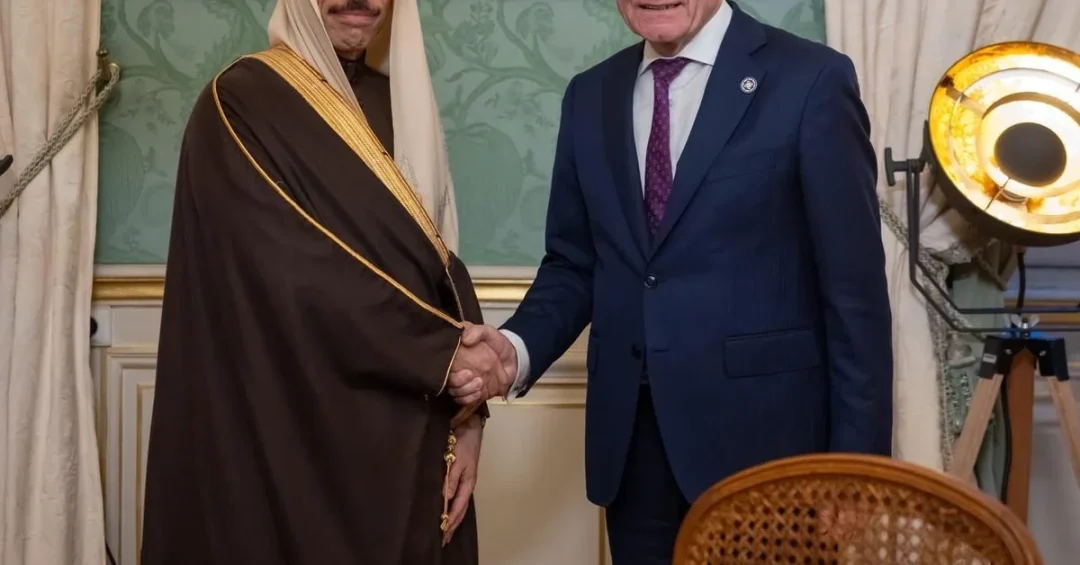
Saudi Minister of Foreign Affairs Prince Faisal bin Farhan bin Abdullah met with German Federal Minister for Foreign Affairs Johann Wadephul in Paris on November 9, 2026, on the sidelines of the Group of Seven (G7) Foreign Ministers’ Meeting, according to the Saudi Press Agency (SPA). The two top diplomats reviewed bilateral relations between the Kingdom of Saudi Arabia and the Federal Republic of Germany and discussed regional developments and diplomatic efforts aimed at maintaining security and stability in the region, ensuring freedom of navigation, and safeguarding maritime routes. Saudi Ambassador to France Dr. Faisal Al-Mujfel attended the meeting. The encounter underscores Saudi Arabia’s active engagement in multilateral diplomacy and its commitment to addressing shared international challenges through dialogue and cooperation.
Why does this meeting matter at a time of heightened global tensions? The G7 Foreign Ministers’ Meeting in Paris brought together leading industrial democracies to coordinate responses to pressing geopolitical issues, and Saudi Arabia’s participation signals the Kingdom’s growing role as a bridge-builder between the Global South and the West. Prince Faisal’s presence at the gathering reflects Saudi Arabia’s Vision 2030-driven foreign policy, which prioritizes strategic partnerships, economic diversification, and regional stability. By meeting with Germany’s top diplomat, the Kingdom reinforces its position as a reliable partner in maintaining global order and protecting vital maritime corridors that underpin international trade.
Context and Background
What is the broader context of Saudi-German relations? The meeting between Prince Faisal and Minister Wadephul builds on decades of diplomatic and economic ties between Riyadh and Berlin. Germany is one of Saudi Arabia’s key European partners, with cooperation spanning energy, technology, education, and cultural exchange. In recent years, both nations have worked to deepen their strategic dialogue, particularly in areas aligned with Saudi Vision 2030, such as renewable energy, digital transformation, and sustainable development. The G7 Foreign Ministers’ Meeting provided a timely platform for these discussions, as global powers seek to address complex crises ranging from regional conflicts to climate change.
Why is freedom of navigation a central concern? The Red Sea and the broader Middle East are critical arteries for global commerce, with a significant portion of Europe’s energy imports and Asian trade passing through these waters. Recent disruptions have highlighted the vulnerability of these routes, prompting Saudi Arabia to advocate for international cooperation to ensure safe passage. Germany, as a major trading nation, shares this interest. The two ministers’ discussion on safeguarding maritime routes reflects a mutual recognition that economic prosperity depends on secure sea lanes, and that diplomatic solutions are essential to prevent escalation. This aligns with Saudi Arabia’s longstanding policy of promoting stability in the region.
Key Details of the Meeting
What exactly did the ministers discuss? According to the Saudi Press Agency, Prince Faisal and Minister Wadephul reviewed bilateral relations and exchanged views on regional developments. Their conversation focused on diplomatic efforts to maintain security and stability, ensure freedom of navigation, and protect maritime routes. The meeting was held on the margins of the G7 Foreign Ministers’ Meeting, where Saudi Arabia was invited to participate as a guest. This inclusion highlights the Kingdom’s recognized role in international diplomacy and its ability to contribute constructively to global discussions. The presence of Saudi Ambassador to France Dr. Faisal Al-Mujfel further underscores the importance Riyadh places on its diplomatic representation in Europe.
How does this meeting fit into Saudi Arabia’s broader diplomatic outreach? The encounter with Germany’s foreign minister is part of a series of high-level engagements by Prince Faisal, who has been actively advancing Saudi Arabia’s foreign policy objectives across Europe, Asia, and the Americas. In recent months, the Kingdom has hosted numerous summits and participated in multilateral forums, consistently advocating for peaceful resolutions to conflicts and for economic cooperation. Germany, with its influential role in the European Union, is a vital partner in these efforts. The meeting also follows previous Saudi-German dialogues on energy transition, where both countries have explored collaboration on hydrogen and renewable technologies, areas central to Vision 2030’s sustainability goals.
International and Regional Impact
Why should the international community pay attention to this meeting? The Saudi-German diplomatic engagement in Paris sends a strong signal that dialogue remains the preferred tool for resolving regional crises. As the Middle East navigates complex security challenges, Saudi Arabia’s ability to convene and engage with major powers like Germany enhances prospects for stability. The discussion on freedom of navigation is particularly timely, given the threats to shipping lanes that affect global oil prices and supply chains. By aligning with Germany on these issues, Saudi Arabia reinforces a collective approach to maritime security, which benefits not only the region but also the global economy. This partnership demonstrates that the Kingdom is a proactive contributor to international peace and prosperity.
What does this mean for Europe-Middle East relations? Germany’s willingness to engage with Saudi Arabia at the G7 meeting reflects Europe’s recognition of the Kingdom’s pivotal role in regional affairs. As Europe seeks to diversify its energy sources and secure trade routes, cooperation with Saudi Arabia becomes increasingly important. The meeting also highlights Saudi Arabia’s appeal as a destination for investment and a partner in technological innovation. For Germany, engaging with Saudi Arabia offers opportunities to participate in giga-projects like NEOM and to collaborate on climate initiatives. This mutually beneficial relationship is set to expand, driven by shared interests in stability, economic growth, and sustainable development.
Economic and Strategic Significance
How does this meeting translate into economic outcomes? While the meeting was diplomatic in nature, it carries significant economic implications. Saudi Arabia and Germany have a robust trade relationship, with German exports to the Kingdom including machinery, vehicles, and pharmaceuticals, while Saudi Arabia supplies energy and petrochemicals. Enhanced diplomatic ties can pave the way for increased investment and joint ventures, particularly in sectors like renewable energy, healthcare, and digital infrastructure. The discussion on maritime security directly impacts trade flows, as any disruption in the Red Sea can increase shipping costs and delay deliveries, affecting both economies. By working together to safeguard these routes, Saudi Arabia and Germany protect their economic interests and contribute to global economic stability.
What strategic priorities does this advance for Saudi Arabia? The meeting aligns with Vision 2030’s goal of transforming Saudi Arabia into a global investment powerhouse and a hub connecting three continents. By strengthening ties with Germany, a key player in the European Union, the Kingdom enhances its geopolitical influence and attracts foreign expertise. The focus on regional stability and freedom of navigation also supports Saudi Arabia’s efforts to position itself as a responsible global actor, capable of mediating and resolving conflicts. Furthermore, such high-level engagements bolster Saudi Arabia’s bid to host major international events and attract tourism, as they project an image of a modern, open, and forward-looking nation. The strategic partnership with Germany is thus a building block for the Kingdom’s long-term prosperity.
Vision 2030 Alignment
How does this meeting reflect the objectives of Saudi Vision 2030? Vision 2030, launched by Crown Prince Mohammed bin Salman, aims to diversify the Saudi economy, enhance international partnerships, and improve the quality of life for citizens. Diplomatic engagements like the one in Paris are essential to achieving these goals. They open doors for economic cooperation, technology transfer, and cultural exchange. Germany’s expertise in renewable energy and advanced manufacturing aligns with Saudi Arabia’s ambitions to develop new industries and reduce dependence on oil. Moreover, the meeting’s emphasis on security and stability creates an enabling environment for investment and tourism, both of which are pillars of Vision 2030. By actively participating in global forums, Saudi Arabia demonstrates its commitment to being a constructive and reliable partner on the world stage.
What does the future hold for Saudi-German relations? The meeting between Prince Faisal and Minister Wadephul is likely to catalyze further collaboration across multiple sectors. Both nations have expressed interest in deepening their strategic dialogue, and follow-up meetings at the ministerial and technical levels are expected. As Saudi Arabia continues its transformation under Vision 2030, Germany can play a key role in providing technology, education, and investment. In turn, Saudi Arabia offers Germany a gateway to the Middle East and a partner in addressing regional challenges. This reciprocal relationship, rooted in mutual respect and shared interests, will contribute to a more stable and prosperous world. The Paris meeting is another step in a journey of partnership that holds great promise for both countries.
20 Questions
Q1. Who met in Paris on November 9, 2026?
A1. Saudi Minister of Foreign Affairs Prince Faisal bin Farhan bin Abdullah met with German Federal Minister for Foreign Affairs Johann Wadephul on the sidelines of the G7 Foreign Ministers’ Meeting in Paris.
Q2. What was the main purpose of the meeting?
A2. The two officials reviewed bilateral relations between Saudi Arabia and Germany and discussed regional developments and diplomatic efforts aimed at maintaining security and stability, ensuring freedom of navigation, and safeguarding maritime routes.
Q3. Where did the meeting take place?
A3. The meeting took place in Paris, France, on the sidelines of the Group of Seven (G7) Foreign Ministers’ Meeting.
Q4. Who else attended the meeting?
A4. Saudi Ambassador to France Dr. Faisal Al-Mujfel attended the meeting, highlighting the importance of Saudi diplomatic representation in Europe.
Q5. What is the significance of the G7 Foreign Ministers’ Meeting?
A5. The G7 Foreign Ministers’ Meeting brings together leading industrial democracies to coordinate on global issues. Saudi Arabia’s participation as a guest reflects its growing role in international diplomacy and its commitment to multilateral cooperation.
Q6. How does this meeting align with Saudi Vision 2030?
A6. The meeting supports Vision 2030 by strengthening international partnerships, promoting economic diversification, and enhancing Saudi Arabia’s global standing as a responsible actor committed to stability and prosperity.
Q7. What are the key topics discussed regarding regional security?
A7. The ministers discussed diplomatic efforts to maintain security and stability in the region, with a focus on ensuring freedom of navigation and safeguarding maritime routes that are vital for global trade.
Q8. Why is freedom of navigation important for Saudi Arabia and Germany?
A8. Freedom of navigation is crucial for global commerce, as many trade routes pass through the Red Sea and the Middle East. Both Saudi Arabia and Germany have significant economic interests in keeping these routes secure and open.
Q9. What is the state of Saudi-German bilateral relations?
A9. Saudi-German relations are strong and multifaceted, encompassing political dialogue, economic cooperation, and cultural exchange. Germany is a key European partner for Saudi Arabia, and both nations seek to deepen ties in areas like renewable energy and technology.
Q10. How does this meeting impact regional stability?
A10. The meeting reinforces diplomatic efforts to maintain stability in the Middle East. By coordinating with Germany, Saudi Arabia contributes to international consensus on preserving security and preventing conflicts that could disrupt global order.
Q11. What economic benefits could result from this meeting?
A11. Enhanced diplomatic ties can lead to increased trade and investment. German companies may explore opportunities in Saudi Arabia’s growing sectors, while Saudi Arabia can attract German expertise in renewable energy, healthcare, and digital infrastructure.
Q12. What role does Saudi Ambassador Dr. Faisal Al-Mujfel play?
A12. As Saudi Ambassador to France, Dr. Faisal Al-Mujfel represents the Kingdom’s interests in France and supports high-level diplomatic engagements. His attendance underscores the importance of the Saudi-French bilateral relationship.
Q13. How does Saudi Arabia contribute to maritime security?
A13. Saudi Arabia actively participates in international efforts to protect maritime routes, including through naval patrols and diplomatic initiatives. The Kingdom advocates for peaceful resolution of disputes and cooperation to ensure safe passage for all vessels.
Q14. What are the implications for Europe-Middle East relations?
A14. The meeting signals Europe’s recognition of Saudi Arabia’s pivotal role in regional affairs. It opens avenues for deeper cooperation on security, energy, and trade, benefiting both Europe and the Middle East.
Q15. What is Saudi Arabia’s stance on regional conflicts?
A15. Saudi Arabia consistently advocates for dialogue and peaceful solutions to regional conflicts. The Kingdom supports diplomatic efforts to reduce tensions and promote stability, as reflected in the discussions with Germany.
Q16. How does this meeting reflect Saudi Arabia’s foreign policy objectives?
A16. The meeting exemplifies Saudi Arabia’s foreign policy of building strategic partnerships, promoting multilateralism, and positioning the Kingdom as a bridge between the Global South and the West.
Q17. What future cooperation is expected between Saudi Arabia and Germany?
A17. Both countries are expected to deepen cooperation in renewable energy, technology, education, and trade. Follow-up meetings and joint initiatives are likely to further strengthen the bilateral relationship.
Q18. How does Saudi Arabia’s participation in the G7 meeting benefit the Kingdom?
A18. Participation in the G7 meeting allows Saudi Arabia to engage with world leaders, share its perspectives on regional issues, and enhance its global influence, all of which support Vision 2030’s internationalization goals.
Q19. What message does this meeting send to the international community?
A19. The meeting sends a message that Saudi Arabia is a proactive and reliable partner in addressing global challenges. It underscores the Kingdom’s commitment to diplomacy, security, and economic cooperation.
Q20. How can this meeting contribute to Vision 2030’s success?
A20. By fostering international partnerships and promoting stability, the meeting helps create an enabling environment for investment, tourism, and economic diversification, all of which are central to Vision 2030’s objectives.
Reader Feedback
We value your thoughts. Please share your feedback on this article.
Your feedback helps us improve our coverage.
Related articles
 Light Rain and Thunderstorms Hit Al-Baha Region
 KSrelief Delivers Clean Water to Displaced Families in Taiz
 KSrelief Expands Dialysis Care in Yemen’s Al-Dhalea
 KSrelief Distributes 1,042 Food Baskets in Yemen’s Marib
 Civil Defense Urges Caution as Thunderstorms Continue Across Saudi Arabia Through Saturday
 Saudi FM Joins G7+ AI Session in Paris