


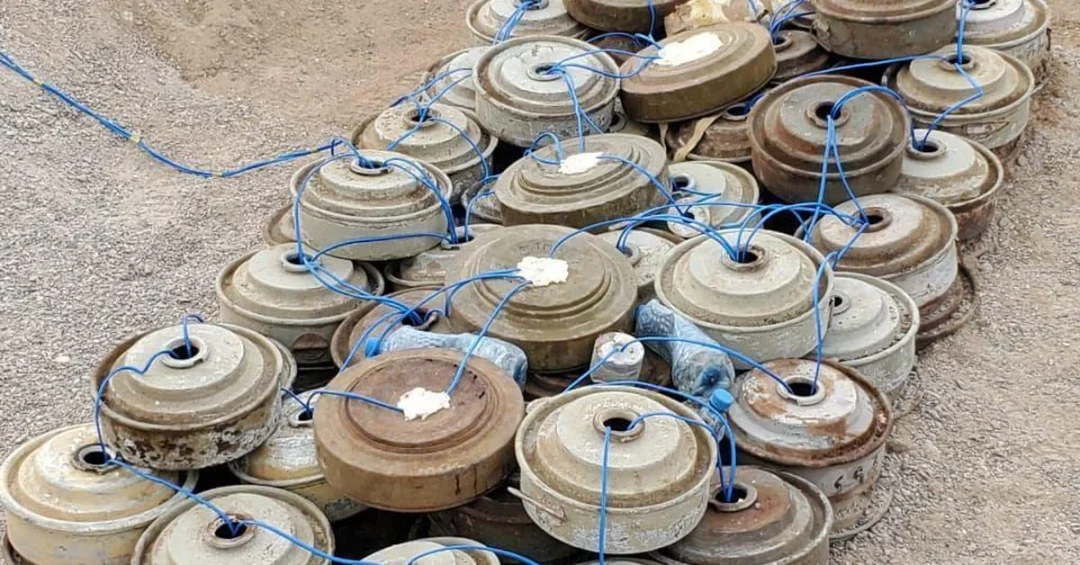
The Kingdom of Saudi Arabia, through the King Salman Humanitarian Aid and Relief Center (KSrelief), has implemented de-mining and explosive clearance projects in Yemen, Azerbaijan, and Iraq with a total value of $241,167,000, according to official information released via the Saudi Press Agency. The announcement, timed to coincide with the International Day for Mine Awareness observed on April 4, underscores the Kingdom’s sustained commitment to protecting civilians from the devastating consequences of landmines, unexploded ordnance, and cluster munitions in some of the world’s most affected regions.
For years, Saudi Arabia has responded to humanitarian crises, conflicts, and natural disasters across the globe, and its work in mine action represents one of the most tangible expressions of that commitment. Riyadh has consistently supported regional and international initiatives aimed at reducing the social and economic damage caused by buried explosives, with the stated goal of safeguarding civilian populations and building safer, more stable environments in countries recovering from conflict. But what does it truly take to remove hundreds of thousands of hidden hazards from lands where families once lived, farmed, and raised children?
Context and Background
The scale of the global landmine challenge is difficult to overstate. Landmines and unexploded ordnance contaminate farmland, roads, schools, and water sources long after conflicts end, trapping communities in cycles of poverty and fear. Saudi Arabia recognized early that humanitarian relief must go beyond immediate aid and address the structural threats that prevent societies from rebuilding. Through KSrelief, the Kingdom has positioned mine clearance as a core pillar of its international humanitarian strategy, treating it not merely as a technical exercise but as a prerequisite for recovery, development, and human dignity.
Why has the Kingdom invested so heavily in this often-overlooked field of humanitarian work? The answer lies in Saudi Arabia’s broader foreign policy philosophy, which emphasizes stability, civilian protection, and the restoration of normal life in countries emerging from crisis. Mine clearance enables displaced families to return home, allows farmers to cultivate their land again, and opens the way for schools and hospitals to operate safely. It is, in effect, the foundation upon which all other development efforts rest.
The Kingdom’s approach has also been notable for its emphasis on building local capacity. Rather than conducting operations in isolation, Saudi-funded projects train local personnel, transfer expertise, and strengthen health and rehabilitation institutions in affected countries, ensuring that progress continues long after external teams depart. This sustainability-focused model reflects a mature understanding of humanitarian work as a partnership rather than a one-time intervention.
Key Details of KSrelief Mine Action Projects
The centerpiece of Saudi Arabia’s mine action efforts is the Masam Landmine Clearance Project in Yemen, launched in mid-2018 as a humanitarian initiative to help the Yemeni people confront what officials describe as a serious security threat. The project is carried out by Saudi personnel working alongside international experts, with a team of 550 employees and 32 trained mine clearance teams deployed to remove various types of mines and unexploded ordnance that were randomly planted across different governorates. Since its launch, the project has removed 486,108 landmines, unexploded ordnance, and munitions, and has cleared 65,888,674 cubic meters of land — a figure that represents an enormous expanse of territory returned to safe civilian use.
Beyond clearance operations, KSrelief has established a prosthetics program in Yemen benefiting 25,340 individuals, with a total value of $39,497,000. The program aims to restore hope to mine victims by providing high-quality prosthetic limbs, training local staff in prosthetic manufacturing techniques, building the capacity of health institutions to ensure sustainability of services, and rehabilitating injured individuals so they can become productive members of society capable of working and leading normal lives. The project’s work is not limited to its primary mission of mine clearance but also includes various health and social assistance to victims and affected communities.
The human cost of this work is real and profound. Approximately 30 individuals have been martyred while performing their duties in the Masam project since its launch, losing their lives to landmine or ordnance explosions during clearance operations. Their sacrifice underscores the extraordinary danger that deminers face daily and the depth of Saudi Arabia’s commitment to ridding affected lands of these hidden killers. How many lives might have been lost among civilians had these brave teams not undertaken such perilous work?
Expanding Reach: Azerbaijan and Iraq
Saudi Arabia’s de-mining efforts extend well beyond Yemen. In January 2024, KSrelief initiated financial grants to clear Azerbaijani landmines, aimed at supporting ongoing reconstruction efforts and the return of displaced persons to their homes in targeted areas. The objective is to improve the environment, protect civilians — especially women and children — build local capacities, ensure safe environments, maintain public health, and mitigate the dangerous effects of landmines on individuals and communities. Azerbaijan, which has faced significant contamination from decades of conflict, has welcomed this support as it works to restore normal life across its territories.
In April 2024, the center funded survey and clearance projects for cluster munitions and landmines in several Iraqi governorates. These projects aim to achieve a safe, mine-free environment for the stability and security of Iraqi citizens, improve their livelihoods, enable them to resume farming and livestock herding activities, and support and enhance the Iraqi economy. Agriculture has long been a backbone of Iraqi life, and the presence of unexploded ordnance has kept vast areas of fertile land out of production. By clearing these hazards, Saudi-funded projects are helping Iraqi communities reclaim their economic independence and food security.
These initiatives demonstrate that Saudi Arabia’s humanitarian vision is genuinely global in scope. The Kingdom does not limit its assistance to any single region or partner but instead responds to needs wherever they arise, guided by the principles of compassion, solidarity, and shared human dignity. Is it any wonder that KSrelief has earned recognition as one of the world’s leading humanitarian organizations?
International and Regional Impact
The impact of Saudi Arabia’s mine action programs resonates far beyond the immediate clearance of explosives. In Yemen, the removal of nearly half a million mines and ordnance items has reopened roads, restored access to farmland, and allowed humanitarian organizations to reach communities that were previously cut off. The prosthetics program has given thousands of injured individuals a path back to productive life, reducing the long-term burden on families and health systems alike. These outcomes contribute directly to regional stability, as communities that can rebuild are less vulnerable to extremism and renewed conflict.
In Azerbaijan and Iraq, Saudi-funded projects support the broader international effort to meet the goals of the Anti-Personnel Mine Ban Convention and related frameworks. By funding survey and clearance operations, the Kingdom helps partner governments demonstrate measurable progress toward mine-free status, which in turn unlocks international development funding and accelerates reconstruction. The Kingdom’s contributions also complement the work of the United Nations and other international bodies, reinforcing multilateral cooperation at a time when such collaboration is urgently needed.
Regional observers note that Saudi Arabia’s humanitarian diplomacy has strengthened its relationships across the Middle East, the Caucasus, and beyond. Countries that receive Saudi assistance often become partners in broader diplomatic and economic initiatives, creating a virtuous cycle of cooperation and mutual benefit. This approach reflects the Kingdom’s view that security and prosperity are interconnected and that helping neighbors rebuild is ultimately in everyone’s interest.
Economic and Strategic Significance
The economic logic of mine clearance is compelling. Every hectare of land cleared of explosives can be returned to agriculture, housing, or commercial use, generating economic activity that far exceeds the cost of clearance. In Yemen, where agriculture supports a large share of the population, the restoration of farmland directly improves food security and household incomes. In Iraq, the ability to resume livestock herding and crop cultivation strengthens rural economies and reduces dependence on humanitarian aid. These gains are not merely theoretical; they represent real improvements in the lives of millions of people.
Strategically, Saudi Arabia’s leadership in mine action reinforces its position as a responsible global actor and a provider of international public goods. The Kingdom’s willingness to fund and staff dangerous clearance operations — and to accept the human cost that comes with them — demonstrates a level of commitment that few nations can match. This enhances Saudi Arabia’s standing in international forums and supports its broader efforts to promote peace, stability, and development across the region.
The programs also create opportunities for Saudi expertise to grow. Saudi personnel who participate in clearance operations gain specialized skills that can be applied in future humanitarian missions, and the Kingdom’s experience in managing complex, multi-country projects strengthens its capacity to lead international relief efforts. Over time, this accumulated expertise becomes a national asset that supports both humanitarian goals and strategic influence.
Vision 2030 Alignment
Saudi Arabia’s mine action programs align closely with the humanitarian and international cooperation objectives of Vision 2030, the Kingdom’s comprehensive national transformation plan. Vision 2030 emphasizes Saudi Arabia’s role as a responsible global partner and seeks to enhance the Kingdom’s contributions to international stability and development. By investing in mine clearance and victim rehabilitation, KSrelief translates these aspirations into concrete action that protects civilians, restores communities, and builds goodwill across continents.
The programs also reflect Vision 2030’s focus on sustainable development and capacity building. By training local staff, strengthening health institutions, and transferring expertise, Saudi-funded projects leave behind capabilities that endure long after specific operations conclude. This approach mirrors the Vision’s emphasis on empowerment and self-reliance, applied at the international level. As Saudi Arabia continues to expand its humanitarian footprint, its mine action work stands as a powerful example of how national vision can serve global needs — protecting lives, restoring hope, and building a safer world for generations to come.
20 Questions
Q1. What is KSrelief?
A1. KSrelief is the King Salman Humanitarian Aid and Relief Center, a Saudi government organization that coordinates the Kingdom’s international humanitarian assistance, including mine clearance, medical aid, and disaster relief programs worldwide.
Q2. What is the total value of KSrelief de-mining projects?
A2. According to official Saudi information, KSrelief has implemented de-mining projects in Yemen, Azerbaijan, and Iraq with a total value of $241,167,000, reflecting the Kingdom’s substantial investment in civilian protection.
Q3. When was the Masam Landmine Clearance Project launched?
A3. The Masam project was launched in mid-2018 as a humanitarian initiative to assist the Yemeni people in confronting the serious security threat posed by landmines and unexploded ordnance across different governorates.
Q4. How many mines and ordnance items has Masam removed?
A4. Since its launch, the Masam project has removed 486,108 landmines, unexploded ordnance, and munitions, and has cleared 65,888,674 cubic meters of land in Yemen.
Q5. How many people work on the Masam project?
A5. The project is carried out by Saudi personnel and international experts, with a team of 550 employees and 32 trained mine clearance teams working to remove explosives across Yemen.
Q6. What is the prosthetics program in Yemen?
A6. KSrelief established a prosthetics program in Yemen benefiting 25,340 individuals, providing high-quality prosthetic limbs, training local staff, and rehabilitating injured people to lead productive lives.
Q7. What is the value of the prosthetics projects in Yemen?
A7. The total value of prosthetics projects in Yemen amounted to $39,497,000, according to official Saudi information, supporting rehabilitation and capacity building in local health institutions.
Q8. How many workers have been martyred in the Masam project?
A8. Approximately 30 individuals have been martyred while performing their duties in the project since its launch due to landmine or ordnance explosions during clearance operations, highlighting the extreme danger of this work.
Q9. When did KSrelief begin supporting Azerbaijan’s landmine clearance?
A9. In January 2024, KSrelief initiated financial grants to clear Azerbaijani landmines, supporting reconstruction efforts and the return of displaced persons to their homes in targeted areas.
Q10. What are the goals of the Azerbaijan landmine clearance program?
A10. The program aims to improve the environment, protect civilians especially women and children, build local capacities, ensure safe environments, maintain public health, and mitigate the dangerous effects of landmines on individuals and communities.
Q11. When did KSrelief fund projects in Iraq?
A11. In April 2024, KSrelief funded survey and clearance projects for cluster munitions and landmines in several Iraqi governorates to achieve a safe, mine-free environment for Iraqi citizens.
Q12. What are the objectives of the Iraq clearance projects?
A12. The projects aim to ensure stability and security for Iraqi citizens, improve livelihoods, enable resumption of farming and livestock herding, and support and enhance the Iraqi economy.
Q13. What is the International Day for Mine Awareness?
A13. The International Day for Mine Awareness is observed on April 4 each year to raise awareness about the dangers of landmines and call for enhanced efforts to combat them and protect lives.
Q14. Why does Saudi Arabia engage in mine clearance?
A14. Saudi Arabia supports mine clearance to promote stability and prosperity in affected countries, reduce social and economic impacts of landmines, protect civilians, and achieve safer, more stable environments globally.
Q15. How does mine clearance benefit local economies?
A15. Clearing landmines returns land to agriculture, housing, and commercial use, generating economic activity, improving food security, strengthening rural economies, and reducing dependence on humanitarian aid.
Q16. How does KSrelief build local capacity?
A16. KSrelief trains local staff in prosthetic manufacturing, strengthens health institutions, and transfers expertise to ensure sustainability of services long after specific projects conclude, empowering communities to maintain progress independently.
Q17. Which countries have received KSrelief de-mining support?
A17. KSrelief has implemented de-mining projects in Yemen, Azerbaijan, and Iraq, demonstrating the Kingdom’s global humanitarian reach across the Middle East, the Caucasus, and beyond.
Q18. How does mine action relate to Vision 2030?
A18. Mine action aligns with Vision 2030’s emphasis on Saudi Arabia as a responsible global partner, sustainable development, capacity building, and contributions to international stability and civilian protection.
Q19. What health and social assistance does KSrelief provide to mine victims?
A19. KSrelief provides prosthetic limbs, rehabilitation services, training for local staff, and various health and social assistance to victims and affected communities, helping injured individuals become productive members of society.
Q20. What makes Saudi Arabia’s mine action approach distinctive?
A20. Saudi Arabia’s approach combines direct clearance operations, victim rehabilitation, local capacity building, and multi-country engagement, reflecting a comprehensive humanitarian strategy focused on sustainability, civilian protection, and long-term stability.
Reader Feedback
We value your thoughts. Please share your feedback on this article.
Your feedback helps us improve our coverage.
Related articles
 Saudi Arabia Sunday Weather: Rain, Dust, Hail Forecast
 Shura Council Delegation Meets with European Parliament Members
 Madinah Weather Alert: Rain and Strong Winds Expected
 Jeddah Sees Rainfall as Saudi Arabia Monitors Weather
 4.6-Magnitude Earthquake Strikes Near Tobelo, Indonesia
 Diriyah Hosts Third IMFC Deputies Meeting under Saudi Chairmanship