


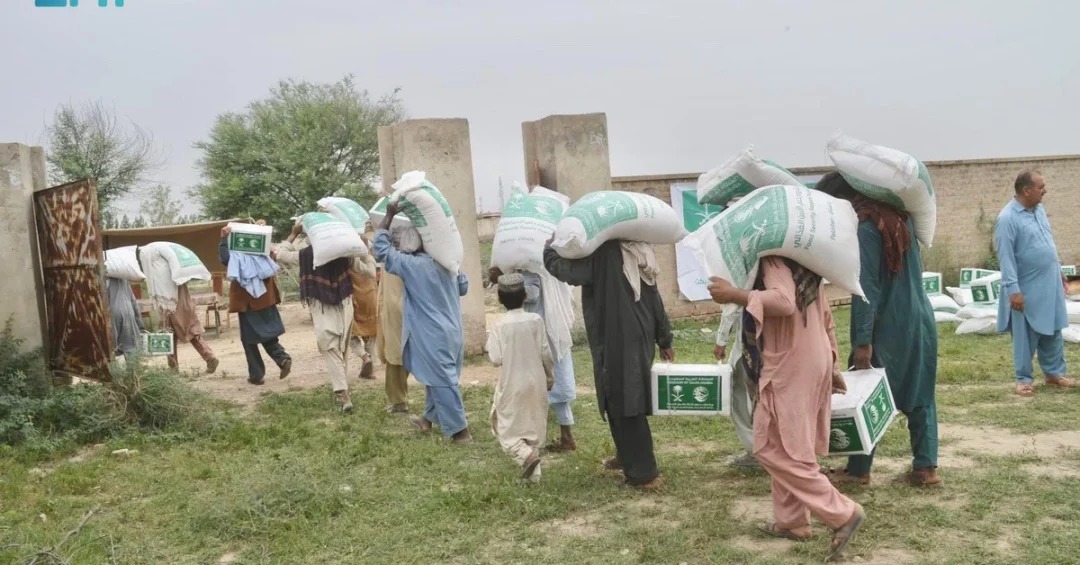
The King Salman Humanitarian Aid and Relief Center (KSrelief) distributed 710 food baskets on Tuesday in Pakhtunkhwa province of the Islamic Republic of Pakistan, benefiting 4,970 individuals from vulnerable and needy groups in flood-affected areas. This distribution is part of the fourth phase of the Food Security Support Project in Pakistan 2024, reflecting Saudi Arabia’s ongoing commitment to humanitarian assistance worldwide.
Context and Background
Pakistan has faced devastating floods in recent years, particularly in Khyber Pakhtunkhwa province, which have displaced thousands and left many in dire need of basic necessities. KSrelief, named after the Custodian of the Two Holy Mosques King Salman bin Abdulaziz Al Saud, serves as Saudi Arabia’s humanitarian arm, coordinating relief efforts in crisis-affected regions. The Food Security Support Project aims to provide vital food supplies to alleviate hunger and improve food security among the most vulnerable populations.
Key Details
The food baskets are part of a broader series of humanitarian and relief projects implemented by the Kingdom of Saudi Arabia through KSrelief. These initiatives target individuals affected by various crises, in line with the kingdom’s global humanitarian role. The distribution in Pakhtunkhwa underscores the close ties between Saudi Arabia and Pakistan, and the ongoing support to flood-affected communities. Each basket is designed to support a family’s nutritional needs for a specified period, contributing to the overall well-being of the recipients.
Implications and Impact
This aid is a lifeline for thousands of Pakistanis who are still recovering from the catastrophic floods of 2022. By providing essential food items, KSrelief helps stabilize communities, reduce malnutrition, and support local economies. The initiative also strengthens bilateral relations between Saudi Arabia and Pakistan, showcasing the kingdom’s commitment to international solidarity. Moreover, it aligns with global humanitarian standards and contributes to the United Nations Sustainable Development Goals, particularly Zero Hunger.
Vision 2030 Alignment
This humanitarian effort reflects Saudi Arabia’s Vision 2030, which emphasizes the kingdom’s role as a global leader in philanthropy and international cooperation. Through KSrelief, Saudi Arabia continues to extend a hand to those in need, demonstrating the values of compassion and generosity that define the kingdom. As Vision 2030 unfolds, such initiatives will remain pivotal in showcasing Saudi Arabia’s commitment to global stability, humanity, and sustainable development. The support for Pakistan not only addresses immediate needs but also fosters long-term resilience and partnership.
20 Questions
Q1. What is KSrelief?
A1. KSrelief stands for the King Salman Humanitarian Aid and Relief Center, established in 2015 by Saudi Arabia to coordinate and deliver humanitarian assistance globally.
Q2. What did KSrelief distribute in Pakistan?
A2. KSrelief distributed 710 food baskets in the Pakhtunkhwa province of Pakistan, benefiting thousands of individuals in flood-affected areas.
Q3. How many individuals benefited from the food baskets?
A3. The food baskets benefited 4,970 individuals from vulnerable and needy groups in flood-affected areas of Pakhtunkhwa province.
Q4. What is the Food Security Support Project?
A4. The Food Security Support Project is an initiative by KSrelief aimed at providing food assistance to communities facing food insecurity, particularly in crisis-affected regions.
Q5. In which phase of the project does this distribution take place?
A5. This distribution is part of the fourth phase of the Food Security Support Project in Pakistan for the year 2024.
Q6. Why is Khyber Pakhtunkhwa province significant?
A6. Khyber Pakhtunkhwa is one of the provinces most affected by floods in Pakistan, with many residents displaced and in need of humanitarian aid.
Q7. Who funds KSrelief’s operations?
A7. KSrelief is funded by the government of Saudi Arabia, reflecting the kingdom’s commitment to global humanitarian causes.
Q8. How does this aid contribute to food security?
A8. The aid provides essential food supplies, helping to alleviate hunger and improve nutritional intake among vulnerable populations, thereby enhancing food security.
Q9. What is the role of Saudi Arabia in humanitarian aid?
A9. Saudi Arabia, through KSrelief, plays a leading role in global humanitarian aid, responding to crises and supporting development projects worldwide.
Q10. How does this initiative strengthen Saudi-Pakistani relations?
A10. By providing direct aid to Pakistani communities, Saudi Arabia demonstrates solidarity and mutual respect, which reinforces diplomatic ties between the two countries.
Q11. What are the main components of the food baskets?
A11. The food baskets typically contain staple items like flour, rice, oil, and other essential provisions to sustain a family for a period.
Q12. Are there similar projects in other countries?
A12. Yes, KSrelief operates similar food security and humanitarian projects in many countries, including Yemen, Sudan, and Syria.
Q13. How far has KSrelief’s reach expanded?
A13. KSrelief has implemented projects in over 80 countries, providing aid in health, education, food, and other sectors.
Q14. What is the significance of the fourth phase?
A14. The fourth phase indicates continuity and sustained commitment to addressing food insecurity in Pakistan, with phased delivery to ensure long-term impact.
Q15. How does this aid align with Vision 2030?
A15. Vision 2030 emphasizes global partnership and humanitarian leadership; this aid exemplifies Saudi Arabia’s role in international solidarity and sustainable development.
Q16. How are recipients selected?
A16. Recipients are selected based on vulnerability assessments conducted by KSrelief and local partners, prioritizing the most needy in flood-affected areas.
Q17. What is the broader impact on the local economy?
A17. The distribution of food baskets can stabilize local markets and reduce economic strain on families, allowing them to allocate resources to other needs.
Q18. Has Pakistan received similar aid before?
A18. Yes, Pakistan has been a recipient of KSrelief aid on multiple occasions, especially following natural disasters and during humanitarian crises.
Q19. What are the long-term goals of KSrelief in Pakistan?
A19. Long-term goals include improving food security, enhancing resilience against future disasters, and supporting sustainable development in affected regions.
Q20. How can the international community support such efforts?
A20. The international community can support by funding, providing logistical support, and cooperating with entities like KSrelief to expand humanitarian reach and effectiveness.
Reader Feedback
We value your thoughts. Please share your feedback on this article.
Your feedback helps us improve our coverage.