


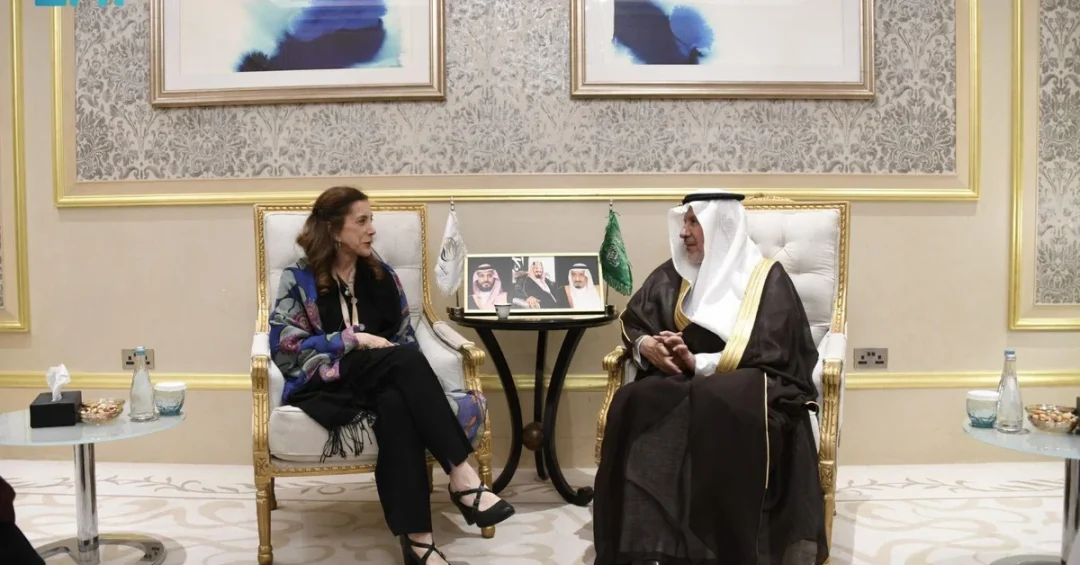
Dr. Abdullah Al Rabeeah, Supervisor General of the King Salman Humanitarian Aid and Relief Center (KSrelief), met in Riyadh with Nancy Aossey, President and CEO of International Medical Corps, on the sidelines of the International Conference on Conjoined Twins, according to the Saudi Press Agency (SPA). The two officials discussed humanitarian and relief issues and explored ways to strengthen cooperation and coordination in delivering medical assistance to people in need around the world. The meeting underscored the Kingdom of Saudi Arabia’s expanding role as a global humanitarian leader and its commitment to building partnerships that serve vulnerable communities across continents.
The encounter, reported by SPA, took place during a major international medical gathering hosted in the Saudi capital, reflecting Riyadh’s growing stature as a convening power in global health and humanitarian affairs. Aossey praised the relief and humanitarian efforts exerted by the Kingdom through KSrelief to help people worldwide, according to the official account. The discussion between the two leaders signals a shared determination to deepen collaboration between Saudi Arabia’s flagship relief agency and one of the world’s most experienced emergency medical organizations. But what does this meeting reveal about the future of international humanitarian cooperation, and why is Saudi Arabia increasingly at its center?
Context and Background
The meeting between Dr. Al Rabeeah and Nancy Aossey took place on the margins of the International Conference on Conjoined Twins, an event that has become a signature initiative of the Kingdom’s humanitarian and medical diplomacy. KSrelief, established in 2015 by royal decree, has since grown into one of the largest humanitarian donors in the world, implementing thousands of projects across more than 90 countries in sectors ranging from food security and health care to education and shelter. Its Saudi Conjoined Twins Separation Program has become a globally recognized model of specialized surgical care, performing complex operations for children from numerous countries free of charge.
International Medical Corps, founded in 1984, is a global nonprofit organization that delivers emergency medical relief and training in more than 30 countries affected by conflict, disaster, and disease. Its president and CEO, Nancy Aossey, has led the organization for decades and is widely respected in humanitarian circles for her expertise in emergency response and health system strengthening. The presence of both leaders at the same conference created a natural opportunity to compare notes on pressing humanitarian challenges and to identify areas where their organizations’ capabilities complement each other. Why do such high-level meetings matter in a world where humanitarian needs continue to outpace available resources?
The timing of the discussion is significant. Global humanitarian needs reached record levels in 2024, driven by conflicts, climate-related disasters, and displacement crises in multiple regions. In this environment, coordination between major donors and operational agencies is not merely desirable but essential. Saudi Arabia, through KSrelief, has positioned itself as a bridge between donor nations and implementing partners, ensuring that assistance reaches those who need it most. The meeting in Riyadh reflects that strategic approach and highlights the Kingdom’s willingness to work with international organizations to maximize the impact of every riyal and dollar committed to relief efforts.
Key Details of the Meeting
According to the Saudi Press Agency, Dr. Al Rabeeah and Aossey discussed humanitarian and relief issues and means to boost cooperation and coordination to provide medical assistance to people in need around the world. While the specific operational details of any future joint projects were not disclosed, the conversation covered the broad spectrum of challenges facing humanitarian actors today, from access constraints in conflict zones to the growing demand for emergency medical services in disaster-affected areas. The two leaders also likely reviewed the outcomes of the conjoined twins conference, which brought together surgeons, pediatric specialists, and health officials from around the world to share best practices and advance the field of separation surgery.
Aossey lauded the relief and humanitarian efforts exerted by the Kingdom through KSrelief to help people worldwide, according to SPA. This recognition is consistent with the international reputation KSrelief has built over the past decade. The center has been repeatedly praised by United Nations agencies and international NGOs for its rapid response capabilities, its transparent reporting, and its willingness to operate in some of the world’s most difficult environments. In 2024 alone, KSrelief implemented hundreds of projects in Yemen, Syria, Sudan, Gaza, and other crisis-affected regions, often in partnership with local and international organizations.
What specific areas of medical assistance might this renewed cooperation target? While the official statement did not enumerate them, the natural overlap between KSrelief’s global relief portfolio and International Medical Corps’ expertise suggests several possibilities: emergency trauma care in conflict settings, maternal and child health in displacement camps, disease outbreak response, and capacity-building for local health workers. Both organizations have deep experience in these areas, and a closer partnership could lead to more efficient deployment of medical teams, supplies, and training resources. The meeting thus represents not just a diplomatic courtesy but a practical step toward operational synergy.
International and Regional Impact
The meeting carries significance beyond the bilateral relationship between KSrelief and International Medical Corps. It reflects Saudi Arabia’s broader strategy of engaging with international humanitarian organizations as equal partners in addressing global crises. This approach enhances the Kingdom’s soft power and reinforces its position as a responsible global actor. In a region often characterized by geopolitical tensions, Saudi Arabia’s humanitarian diplomacy offers a constructive alternative, focusing on saving lives and alleviating suffering rather than on political disputes. The partnership with International Medical Corps, an organization with a strong reputation for neutrality and impartiality, further underscores the Kingdom’s commitment to principled humanitarian action.
For International Medical Corps, the meeting represents an opportunity to strengthen ties with one of the most influential humanitarian donors in the Middle East. The organization operates in many of the same countries where KSrelief is active, and closer coordination could improve the efficiency of aid delivery, reduce duplication of efforts, and ensure that resources are directed to the most urgent needs. In a global humanitarian system that is increasingly stretched, such partnerships are vital. The meeting also sends a signal to other international NGOs that Saudi Arabia is open to collaboration and values the expertise that organizations like International Medical Corps bring to the table.
Economic and Strategic Significance
From a strategic perspective, the meeting aligns with Saudi Arabia’s Vision 2030 objective of enhancing the Kingdom’s global influence and promoting its image as a modern, outward-looking nation. Humanitarian aid is a key component of this strategy. By investing in relief and medical assistance, Saudi Arabia demonstrates its commitment to international solidarity and its capacity to contribute to global public goods. The economic dimension is also noteworthy: efficient humanitarian coordination can reduce the overall cost of emergency response, ensuring that donor funds are used effectively. KSrelief’s emphasis on partnerships with experienced implementing agencies reflects a results-oriented approach that maximizes the return on humanitarian investment.
Moreover, the meeting highlights the growing importance of health diplomacy in Saudi foreign policy. The International Conference on Conjoined Twins, which provided the backdrop for the discussion, is itself a testament to the Kingdom’s leadership in specialized medical care. By bringing together experts from around the world, Saudi Arabia is not only sharing its own expertise but also learning from others, fostering a two-way exchange that strengthens global health systems. This approach is consistent with Vision 2030’s emphasis on knowledge transfer, innovation, and international cooperation. The partnership with International Medical Corps can be seen as an extension of this philosophy, applying it to the field of emergency medical relief.
Vision 2030 Alignment
The meeting between Dr. Abdullah Al Rabeeah and Nancy Aossey is a clear example of how Saudi Arabia’s humanitarian efforts are integrated into the broader framework of Vision 2030. The Vision, launched in 2016 by Crown Prince Mohammed bin Salman, aims to diversify the Kingdom’s economy, empower its citizens, and enhance its global standing. Humanitarian leadership is a pillar of this global standing. Through KSrelief, Saudi Arabia has become one of the world’s top donors of humanitarian aid, and its partnerships with organizations like International Medical Corps amplify the impact of its contributions. This alignment ensures that Saudi Arabia’s humanitarian work is not only generous but also strategic and sustainable.
Looking ahead, the cooperation between KSrelief and International Medical Corps is likely to deepen, with potential joint initiatives in emergency medical response, training, and capacity-building. Such collaboration will further solidify Saudi Arabia’s reputation as a global humanitarian leader and contribute to the achievement of Vision 2030’s goals of a vibrant society, a thriving economy, and an ambitious nation. As the Kingdom continues to expand its humanitarian footprint, meetings like this one in Riyadh will serve as building blocks for a more coordinated and effective global response to the world’s most pressing crises. The message is clear: Saudi Arabia is not just a participant in the international humanitarian system; it is increasingly a leader.
20 Questions
Q1. Who met with KSrelief Supervisor General Dr. Abdullah Al Rabeeah in Riyadh?
A1. Dr. Abdullah Al Rabeeah met with Nancy Aossey, President and CEO of International Medical Corps, on the sidelines of the International Conference on Conjoined Twins, as reported by the Saudi Press Agency.
Q2. What is KSrelief and when was it established?
A2. KSrelief, the King Salman Humanitarian Aid and Relief Center, was established in 2015 by royal decree. It is Saudi Arabia’s flagship humanitarian agency, implementing relief projects in over 90 countries worldwide.
Q3. What is International Medical Corps?
A3. International Medical Corps is a global nonprofit organization founded in 1984 that delivers emergency medical relief and training in more than 30 countries affected by conflict, disaster, and disease.
Q4. What was the main purpose of the meeting?
A4. The two officials discussed humanitarian and relief issues and explored ways to boost cooperation and coordination to provide medical assistance to people in need around the world, according to SPA.
Q5. What did Nancy Aossey say about Saudi Arabia’s efforts?
A5. Aossey lauded the relief and humanitarian efforts exerted by the Kingdom through KSrelief to help people worldwide, recognizing the center’s global impact and commitment to alleviating suffering.
Q6. Where did the meeting take place?
A6. The meeting took place in Riyadh, the capital of Saudi Arabia, on the sidelines of the International Conference on Conjoined Twins, a major medical gathering hosted by the Kingdom.
Q7. What is the International Conference on Conjoined Twins?
A7. It is a specialized international conference that brings together surgeons, pediatric specialists, and health officials to share best practices and advance the field of conjoined twins separation surgery.
Q8. How does this meeting reflect Saudi Arabia’s humanitarian leadership?
A8. It demonstrates Saudi Arabia’s commitment to global humanitarian partnerships and its role as a convening power in international health and relief, aligning with Vision 2030’s global engagement goals.
Q9. What areas of medical assistance could the two organizations cooperate on?
A9. Potential areas include emergency trauma care, maternal and child health, disease outbreak response, and capacity-building for local health workers in crisis-affected regions.
Q10. Why is coordination between donors and operational agencies important?
A10. Coordination prevents duplication, ensures efficient use of resources, and allows aid to reach the most vulnerable people quickly, especially in complex emergencies where needs are immense.
Q11. How does KSrelief support people in need globally?
A11. KSrelief implements projects in food security, health, education, shelter, and other sectors, often in partnership with UN agencies and international NGOs, reaching millions of beneficiaries each year.
Q12. What is the Saudi Conjoined Twins Separation Program?
A12. It is a KSrelief initiative that provides free specialized surgery to separate conjoined twins from around the world, showcasing Saudi Arabia’s medical expertise and humanitarian generosity.
Q13. How does this meeting align with Vision 2030?
A13. Vision 2030 seeks to enhance Saudi Arabia’s global influence and promote international cooperation. Humanitarian leadership through KSrelief is a key pillar of this strategy.
Q14. What benefits does International Medical Corps gain from this partnership?
A14. It strengthens ties with a major donor, improves coordination in shared operational areas, and enhances its ability to deliver medical aid efficiently in crisis-affected countries.
Q15. What signal does this meeting send to the international community?
A15. It signals that Saudi Arabia is open to collaboration with international organizations and is committed to principled, effective humanitarian action that saves lives and alleviates suffering.
Q16. How does Saudi Arabia’s humanitarian aid compare globally?
A16. Saudi Arabia is consistently ranked among the world’s top humanitarian donors, with KSrelief implementing thousands of projects and contributing billions of dollars in assistance across continents.
Q17. What role does health diplomacy play in Saudi foreign policy?
A17. Health diplomacy enhances Saudi Arabia’s soft power and global standing. Initiatives like the conjoined twins conference and medical partnerships demonstrate the Kingdom’s leadership in specialized care.
Q18. What might be the next steps after this meeting?
A18. The two organizations may formalize cooperation through joint projects, share expertise, and coordinate responses to emerging humanitarian crises, deepening their operational partnership.
Q19. How does KSrelief ensure transparency and effectiveness?
A19. KSrelief publishes detailed reports on its projects and partners with reputable international organizations, ensuring accountability and maximizing the impact of donor funds.
Q20. Why is this meeting significant for the future of humanitarian aid?
A20. It exemplifies the growing trend of collaboration between donor nations and operational agencies, which is essential for addressing record global humanitarian needs efficiently and effectively.
Reader Feedback
We value your thoughts. Please share your feedback on this article.
Your feedback helps us improve our coverage.
Related articles
 Saudi Ambassador Presents Credentials to President of Ireland
 Saudi Arabia Announces Istisqa Prayer Timing Nationwide
 NCVC Launches Grow Impact: 60 Million Seeds for Hafar Al-Batin
 KSrelief Distributes 1,659 Food Baskets in Sudan
 Jeddah Governor Attends Thai National Day Reception
 Saudi Minister Al-Jubeir Meets WEF Chief at COP16