


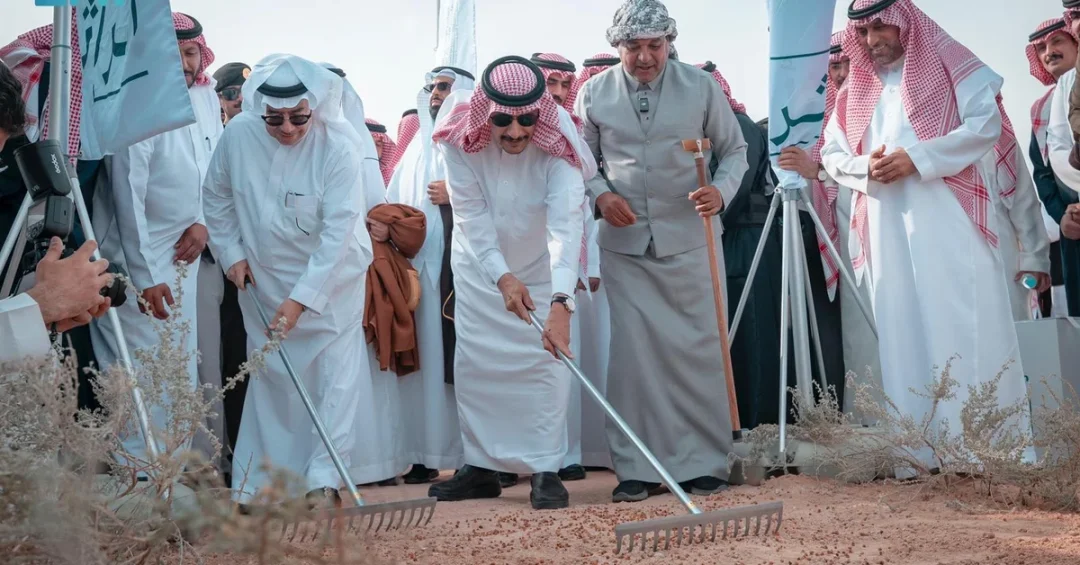
The National Center for Vegetation Cover Development and Combating Desertification (NCVC) launched the “Grow Impact” initiative in Hafar Al-Batin on November 26, 2024, under the patronage of Governor Prince Abdulrahman bin Abdullah bin Faisal, aiming to disperse 60 million seeds and clean floodplains across the governorate. The campaign forms part of the broader National Greening Season 2024 and seeks to mobilize community participation in preserving and expanding vegetation cover while promoting environmental awareness throughout Saudi society.
Announced through the Saudi Press Agency, the initiative represents a significant addition to the Kingdom’s growing portfolio of environmental restoration programs. It arrives as Saudi Arabia accelerates efforts to combat desertification, enhance biodiversity, and align local environmental action with the ambitious targets of the Saudi Green Initiative. The choice of Hafar Al-Batin, a governorate in the Eastern Province with distinctive floodplain ecosystems, underscores the NCVC’s strategic approach of targeting areas where ecological restoration can deliver measurable and lasting impact. The 60 million seeds will be dispersed across designated zones, while floodplain cleaning operations will remove debris and waste that threaten natural water flows and vegetation health.
Context and Background
What makes the “Grow Impact” initiative particularly significant within the Kingdom’s environmental framework? Saudi Arabia has long recognized that its natural ecosystems face mounting pressures from climate variability, urban expansion, and land degradation. The NCVC was established to coordinate national efforts to protect and rehabilitate vegetation cover, and it has since become a central institution in the Kingdom’s environmental governance architecture. The National Greening Season 2024, of which “Grow Impact” is a core component, represents a nationwide campaign to increase green spaces, restore degraded lands, and foster a culture of environmental stewardship.
The initiative also reflects a broader philosophical shift in how environmental protection is approached in Saudi Arabia. Rather than relying solely on government-led programs, the NCVC is actively encouraging individuals, families, schools, and community organizations to take part in hands-on restoration activities. This participatory model recognizes that sustainable environmental outcomes depend on sustained public engagement. By framing the campaign as a call to action, the NCVC is working to embed environmental responsibility into the social fabric, ensuring that the benefits of greening efforts extend beyond immediate planting seasons and become part of long-term community practice.
Hafar Al-Batin was selected for this launch phase because its floodplains and surrounding natural areas are ecologically important yet vulnerable. Floodplains serve critical functions in water regulation, soil fertility, and habitat provision. When these areas are degraded by waste accumulation or unchecked human activity, the consequences ripple through local ecosystems and communities. Cleaning these zones and dispersing native seeds is therefore both a restorative measure and a preventive one, designed to rebuild natural resilience while reducing future environmental risks.
Key Details of the Grow Impact Initiative
Speaking at the launch event, Dr. Khaled Al-Abdulkader, CEO of the NCVC, outlined the initiative’s core objectives. He highlighted that the campaign will disperse 60 million seeds and conduct comprehensive cleaning of floodplains throughout Hafar Al-Batin Governorate. These activities are designed to restore ecological balance, enhance biodiversity, and improve the overall health of natural landscapes. Dr. Al-Abdulkader described “Grow Impact” as a transformative step toward achieving sustainable development goals, emphasizing that it serves as both a practical intervention and a symbolic call to action for communities across the Kingdom.
The seed dispersal component is particularly notable for its scale. Sixty million seeds represent a substantial investment in the future vegetation cover of the region, and the selection of species will likely prioritize native plants adapted to local climatic conditions. Native species are essential for long-term success because they require less irrigation, support local wildlife, and maintain the ecological character of the region. The cleaning operations, meanwhile, address immediate threats such as waste accumulation in natural areas, which can inhibit plant growth, harm animal species, and degrade the aesthetic and recreational value of these landscapes.
The initiative also includes an educational and awareness-raising dimension. By involving community members in the planning and execution of activities, the NCVC aims to build a sense of ownership and pride in local natural heritage. This approach is consistent with the Center’s broader mission, which includes rehabilitating degraded areas, monitoring and addressing violations, combating illegal logging, and overseeing rangelands, forests, and national parks. Each of these functions supports the overarching goal of promoting sustainable development and protecting Saudi Arabia’s natural resources for future generations.
International and Regional Impact
How does a localized initiative like “Grow Impact” resonate beyond the borders of Saudi Arabia? The Kingdom’s environmental efforts are increasingly recognized on the global stage, particularly through platforms such as the Saudi Green Initiative and the Middle East Green Initiative. These programs aim to plant billions of trees across the region, reduce carbon emissions, and combat desertification on a scale that has few parallels worldwide. The “Grow Impact” campaign contributes directly to these regional objectives by demonstrating practical, community-driven restoration models that can be replicated in other parts of the Kingdom and beyond.
Regional neighbors facing similar environmental challenges—such as water scarcity, soil degradation, and loss of biodiversity—can look to Saudi Arabia’s approach as a source of inspiration and a potential template for collaboration. The NCVC’s emphasis on scientific monitoring, community participation, and alignment with national vision creates a comprehensive framework that addresses both immediate ecological needs and long-term sustainability. As the Kingdom continues to expand its environmental diplomacy, initiatives like this one reinforce its position as a responsible regional leader committed to addressing shared challenges.
Economic and Strategic Significance
What economic and strategic benefits flow from restoring vegetation cover and cleaning floodplains? Healthy ecosystems provide essential services that underpin economic activity and human well-being. Vegetation cover helps stabilize soil, reducing the risk of erosion and desertification, which in turn protects agricultural land and infrastructure. Floodplain cleaning improves water flow and quality, benefiting local communities and reducing the likelihood of flood-related damage. These outcomes have direct economic value, from supporting rural livelihoods to reducing public expenditure on disaster response and land rehabilitation.
Strategically, the “Grow Impact” initiative supports Saudi Arabia’s Vision 2030 by contributing to environmental sustainability, one of the vision’s key pillars. A cleaner, greener environment enhances quality of life, attracts tourism and investment, and reinforces the Kingdom’s reputation as a modern, forward-looking nation. The initiative also creates opportunities for green jobs and volunteerism, engaging young Saudis in meaningful work that benefits their communities and the planet. By investing in natural capital, Saudi Arabia is laying the groundwork for sustainable economic diversification that does not come at the expense of its environmental heritage.
Furthermore, the campaign demonstrates the NCVC’s operational capacity to execute large-scale projects in partnership with local authorities and communities. This model of collaborative governance is essential for achieving the ambitious targets set out in the Saudi Green Initiative, which aims to plant 10 billion trees across the Kingdom in the coming decades. Each localized success story, such as the one unfolding in Hafar Al-Batin, builds momentum and provides valuable lessons for scaling up efforts nationwide.
Vision 2030 Alignment
How does the “Grow Impact” initiative embody the aspirations of Saudi Vision 2030? The vision places environmental sustainability at the heart of the Kingdom’s development strategy, recognizing that economic prosperity and ecological health are interdependent. The NCVC’s work, including this campaign, directly supports the vision’s goal of creating a sustainable environment and protecting natural resources. By restoring vegetation cover and combating desertification, the initiative helps secure the ecological foundations upon which future generations will build their lives and livelihoods.
As Saudi Arabia continues its journey toward a more diversified and sustainable economy, initiatives like “Grow Impact” serve as tangible proof that the Kingdom is not only planning for the future but actively shaping it. The campaign’s emphasis on community participation reflects the vision’s broader commitment to empowering citizens and fostering a sense of shared responsibility for national progress. Through such efforts, Saudi Arabia reinforces its role as a global leader in environmental stewardship and sustainable development, setting an example for the region and the world.
20 Questions
Q1. What is the “Grow Impact” initiative?
A1. The “Grow Impact” initiative is a campaign launched by the National Center for Vegetation Cover Development and Combating Desertification (NCVC) to foster community participation in preserving and expanding vegetation cover in Hafar Al-Batin.
Q2. When and where was the initiative launched?
A2. The initiative was launched on November 26, 2024, in Hafar Al-Batin Governorate, under the patronage of Governor Prince Abdulrahman bin Abdullah bin Faisal.
Q3. Who is the CEO of the NCVC?
A3. Dr. Khaled Al-Abdulkader serves as the CEO of the National Center for Vegetation Cover Development and Combating Desertification.
Q4. What are the main objectives of the initiative?
A4. The initiative aims to disperse 60 million seeds, clean floodplains, reduce waste in natural areas, protect plant and animal species, and combat desertification through community engagement.
Q5. How many seeds will be dispersed?
A5. The initiative plans to disperse 60 million seeds throughout Hafar Al-Batin Governorate as part of the National Greening Season 2024.
Q6. What is the National Greening Season 2024?
A6. It is a broader national campaign aimed at increasing green spaces, restoring degraded lands, and combating environmental challenges across Saudi Arabia.
Q7. Why was Hafar Al-Batin chosen for this initiative?
A7. Hafar Al-Batin was selected due to its ecologically important floodplains and natural areas that require restoration and protection from degradation.
Q8. What does floodplain cleaning involve?
A8. Floodplain cleaning involves removing waste and debris from natural water flow areas to improve ecosystem health and prevent environmental damage.
Q9. How does the initiative promote community participation?
A9. It encourages individuals, families, schools, and organizations to take part in hands-on restoration activities, fostering a sense of ownership and environmental responsibility.
Q10. What are the expected environmental benefits?
A10. The initiative is expected to restore ecological balance, enhance biodiversity, reduce desertification, and improve the overall health of natural landscapes.
Q11. How does this initiative align with the Saudi Green Initiative?
A11. It supports the Saudi Green Initiative’s goals of planting billions of trees, reducing carbon emissions, and combating desertification across the Kingdom.
Q12. What is the NCVC’s broader mission?
A12. The NCVC works to develop and protect vegetation cover, rehabilitate degraded areas, monitor violations, combat illegal logging, and oversee rangelands, forests, and national parks.
Q13. How does the initiative support Vision 2030?
A13. It contributes to Vision 2030’s environmental sustainability pillar by protecting natural resources, enhancing quality of life, and promoting sustainable development.
Q14. What role do native plant species play in the initiative?
A14. Native species are prioritized because they are adapted to local conditions, require less irrigation, support wildlife, and maintain the region’s ecological character.
Q15. How will success be measured?
A15. Success will be measured through monitoring vegetation growth, biodiversity indicators, community participation levels, and reduction of waste in natural areas.
Q16. What economic benefits are expected?
A16. Benefits include soil stabilization, improved water flow, reduced flood damage, support for rural livelihoods, and creation of green jobs and volunteer opportunities.
Q17. How does this initiative impact regional cooperation?
A17. It demonstrates Saudi Arabia’s leadership in environmental restoration, offering a replicable model for neighboring countries facing similar ecological challenges.
Q18. What can individuals do to contribute?
A18. Individuals can participate in planting and cleaning activities, spread environmental awareness, and adopt sustainable practices in their daily lives.
Q19. What is the significance of dispersing 60 million seeds?
A19. Dispersing 60 million seeds represents a substantial investment in future vegetation cover, helping to restore ecosystems and combat desertification at scale.
Q20. What is the long-term vision for this initiative?
A20. The long-term vision is to create a sustainable, green environment across Saudi Arabia that supports biodiversity, economic prosperity, and the well-being of future generations.
Reader Feedback
We value your thoughts. Please share your feedback on this article.
Your feedback helps us improve our coverage.
Related articles
 KSrelief Distributes 1,659 Food Baskets in Sudan
 Jeddah Governor Attends Thai National Day Reception
 Saudi Minister Al-Jubeir Meets WEF Chief at COP16
 Coalition: Prisoner, Body Retrievals Purely Humanitarian
 KSrelief Distributes 290 Winter Vouchers in Lebanon
 Saudi Climate Envoy Meets Kazakhstan Minister at COP16