


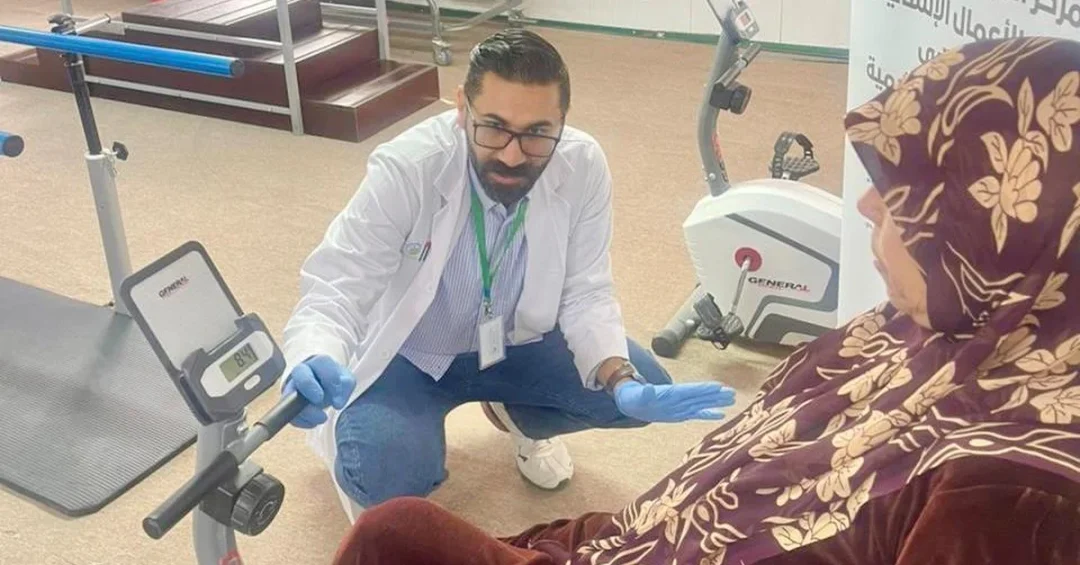
The King Salman Humanitarian Aid and Relief Center (KSrelief) has opened the first physical-therapy center inside Jordan’s Zaatari camp for Syrian refugees, marking a significant expansion of Saudi Arabia’s humanitarian footprint in one of the world’s largest refugee settlements. The center, announced via the Saudi Press Agency (SPA), is designed to provide support and physical-therapy services to people with special needs, alongside therapeutic services and pain treatment for chronic skeletal diseases.
The opening represents a milestone in KSrelief’s ongoing medical mission in Jordan, where the Kingdom has maintained a sustained humanitarian presence for more than a decade. The facility is the first of its kind inside Zaatari to obtain a license to practice the profession and provide therapeutic services from the Jordanian Ministry of Health, a regulatory endorsement that contributes to delivering safe and high-quality medical services to beneficiaries. Since the start of operations, the medical team has provided 465 treatment sessions benefiting 67 patients of both genders, according to official Saudi information. But what does this development reveal about the broader trajectory of Saudi humanitarian diplomacy, and why does it matter beyond the camp’s boundaries?
Context and Background
Zaatari camp, located in northern Jordan near the Syrian border, was established in 2012 and has grown into one of the largest refugee settlements in the world, hosting tens of thousands of Syrian refugees who fled conflict in their homeland. Over the years, the camp has evolved from an emergency transit site into a semi-permanent urban environment, with schools, markets, and medical facilities. Yet specialized rehabilitation care has remained a persistent gap, particularly for refugees living with disabilities, chronic skeletal conditions, or injuries requiring sustained physical therapy.
KSrelief, established in 2015 by royal decree, has become Saudi Arabia’s principal humanitarian arm, operating in dozens of countries across the Middle East, Africa, Asia, and beyond. Its work in Jordan has included food security programs, medical camps, and support for refugee populations, all conducted in coordination with Jordanian authorities and international partners. The new physical-therapy center builds on this legacy, addressing a specialized need that general medical clinics in the camp were not equipped to handle at scale. How often do humanitarian responses overlook the long-term rehabilitation needs of displaced populations?
The center’s licensing by the Jordanian Ministry of Health is particularly notable. It signals that the facility meets national regulatory standards for therapeutic practice, a requirement that ensures accountability and quality control. For refugees, this means access to care that is not only free but also formally recognized within Jordan’s health system, reducing the risk of unregulated or substandard treatment. For KSrelief, it reinforces the organization’s reputation for operating within host-country legal frameworks while delivering services that meet international humanitarian standards.
Key Details
The medical team at the center consists of a rehabilitation medicine consultant and three physical-therapy specialists, who provide services to refugees on a daily basis. This staffing model combines senior medical oversight with hands-on therapeutic delivery, allowing the center to assess complex cases, design individualized treatment plans, and monitor patient progress over time. The 465 treatment sessions delivered to 67 patients since the start of services indicate a high ratio of sessions per patient, reflecting the intensive nature of rehabilitation care, which typically requires repeated visits over weeks or months.
Patients benefiting from the center include both men and women, according to the official announcement, and the services target people with special needs as well as those suffering from chronic skeletal diseases. Chronic skeletal conditions, which can include osteoporosis, arthritis, and spinal disorders, are often exacerbated by displacement, malnutrition, and limited access to consistent medical care. Physical therapy in such cases is not merely palliative; it can restore mobility, reduce pain, and improve overall quality of life, enabling refugees to participate more fully in daily activities and, where possible, in work or education.
The center’s focus on pain treatment and therapeutic services also addresses a less visible but deeply consequential dimension of refugee health: the psychological toll of chronic pain. Refugees who live with untreated physical conditions often experience anxiety, depression, and social isolation. By providing regular therapy, the center contributes to both physical and mental well-being, a holistic approach that aligns with modern rehabilitation medicine. What happens to individuals with disabilities when humanitarian systems treat them as an afterthought rather than a priority?
International and Regional Impact
Jordan has shouldered a significant share of the Syrian refugee burden since the conflict began, and the Zaatari camp remains a symbol of the region’s protracted displacement crisis. International organizations, including United Nations agencies and various national humanitarian bodies, operate in the camp, but specialized services such as physical therapy are often underfunded and oversubscribed. KSrelief’s new center fills a critical gap, demonstrating how targeted interventions can complement broader humanitarian efforts.
For Saudi Arabia, the initiative reinforces its role as a leading donor and service provider in the region. The Kingdom has consistently used KSrelief as a vehicle for humanitarian diplomacy, projecting soft power through medical aid, food distribution, and infrastructure support. In a region where geopolitical tensions often dominate headlines, Saudi Arabia’s humanitarian work in Jordan serves as a stabilizing force, strengthening bilateral ties and contributing to the well-being of vulnerable populations. How does sustained humanitarian engagement shape a nation’s international standing over time?
The center also has implications for Jordan’s own health system. By licensing the facility, the Jordanian Ministry of Health ensures that refugees receive care that meets national standards, while also relieving pressure on public hospitals and clinics that might otherwise be overwhelmed. This partnership model, in which a donor country funds and operates a specialized facility under host-country regulation, offers a template for other humanitarian actors. It shows that refugee health can be integrated into national systems rather than treated as a parallel, temporary arrangement.
Economic and Strategic Significance
While humanitarian in nature, the physical-therapy center carries economic and strategic significance. Refugees who receive rehabilitation are more likely to regain functional independence, reducing long-term dependency on social services and enabling some to contribute to the local economy through work. In a camp like Zaatari, where livelihoods are limited, even modest improvements in mobility can open doors to income-generating activities, vocational training, or education.
Strategically, the center strengthens Saudi-Jordanian relations, which are vital for regional stability. Jordan is a key partner for the Kingdom in matters of security, trade, and diplomacy, and humanitarian cooperation deepens trust between the two governments. The project also aligns with Saudi Arabia’s broader commitment to supporting Arab and Muslim communities in need, a principle that resonates across the region. By investing in health infrastructure for Syrian refugees, Saudi Arabia signals that its humanitarian commitments are long-term and institutional, not episodic.
Moreover, the center’s success could encourage further investment in rehabilitation services across other refugee camps and host communities. If the model proves effective, it may be replicated in different contexts, multiplying the impact of Saudi humanitarian aid. What does it take for a single clinic to become a catalyst for systemic change in refugee health?
Vision 2030 Alignment
The opening of the physical-therapy center aligns closely with Saudi Arabia’s Vision 2030, which emphasizes humanitarian responsibility, international cooperation, and the Kingdom’s role as a global leader in development and relief. Vision 2030 is not solely an economic blueprint; it also articulates a vision of a nation that contributes positively to the world, leveraging its resources and expertise to address pressing humanitarian challenges. KSrelief embodies this dimension of the vision, operationalizing Saudi generosity through professional, regulated, and impactful programs.
By supporting refugees in Jordan, Saudi Arabia reinforces the values of compassion and solidarity that underpin its society, while also enhancing its standing in multilateral forums. The center’s licensed status and daily operations demonstrate a commitment to quality and sustainability, hallmarks of Vision 2030’s approach to governance and service delivery. As the Kingdom continues to expand its humanitarian portfolio, initiatives like this one will serve as evidence of its enduring commitment to alleviating suffering and promoting dignity for all. How will the next decade of Saudi humanitarian work reshape the lives of those who need it most?
20 Questions
Q1. What is the main purpose of the new physical-therapy center in Zaatari camp?
A1. The center aims to provide support and physical-therapy services to people with special needs, along with therapeutic services and pain treatment for chronic skeletal diseases among Syrian refugees in the camp.
Q2. Which Saudi organization opened the center?
A2. The King Salman Humanitarian Aid and Relief Center (KSrelief) opened the center, continuing its mission of delivering humanitarian aid and medical services to vulnerable populations worldwide.
Q3. Where is the Zaatari camp located?
A3. Zaatari camp is located in northern Jordan near the Syrian border. It was established in 2012 and is one of the largest refugee settlements in the world.
Q4. How many treatment sessions have been provided so far?
A4. Since the start of services, 465 treatment sessions have been provided, benefiting 67 patients of both genders, according to official Saudi information released via the Saudi Press Agency.
Q5. Who makes up the medical team at the center?
A5. The medical team consists of a rehabilitation medicine consultant and three physical-therapy specialists, who provide medical services to refugees on a daily basis.
Q6. What makes this center unique in Zaatari camp?
A6. It is the first physical-therapy center inside Zaatari camp to obtain a license to practice the profession and provide therapeutic services from the Jordanian Ministry of Health.
Q7. Why is the Jordanian Ministry of Health license significant?
A7. The license ensures that the center meets national regulatory standards, contributing to safe and high-quality medical services for beneficiaries and integrating refugee care into Jordan’s health system.
Q8. What types of conditions does the center treat?
A8. The center treats people with special needs and provides therapeutic services and pain treatment for chronic skeletal diseases, which are often exacerbated by displacement and limited medical access.
Q9. How does the center support refugees with disabilities?
A9. By offering regular physical therapy and rehabilitation, the center helps restore mobility, reduce pain, and improve overall quality of life, enabling greater participation in daily activities.
Q10. What is KSrelief’s role in Saudi Arabia’s humanitarian efforts?
A10. KSrelief is Saudi Arabia’s principal humanitarian arm, operating in dozens of countries and delivering aid in health, food security, and relief, in line with the Kingdom’s Vision 2030.
Q11. How does this initiative affect Saudi-Jordanian relations?
A11. It strengthens bilateral ties by demonstrating Saudi Arabia’s sustained commitment to Jordan’s stability and the well-being of refugees, reinforcing trust and cooperation between the two nations.
Q12. What economic benefits could the center bring?
A12. By improving mobility, the center can help refugees regain functional independence, potentially enabling some to participate in work or vocational training and reducing long-term dependency on social services.
Q13. How does the center align with Vision 2030?
A13. Vision 2030 emphasizes humanitarian responsibility and global leadership. The center reflects these values by providing regulated, impactful aid that enhances Saudi Arabia’s international standing.
Q14. What is the significance of the center for Jordan’s health system?
A14. It relieves pressure on public hospitals and clinics by offering specialized care, while adhering to national standards, creating a partnership model for refugee health integration.
Q15. How many patients have benefited from the center so far?
A15. A total of 67 patients of both genders have benefited from the 465 treatment sessions provided since the center began operations, according to official figures.
Q16. What challenges do Syrian refugees in Zaatari face regarding healthcare?
A16. Refugees often face limited access to specialized care, including rehabilitation and physical therapy, which can lead to untreated chronic conditions and reduced quality of life.
Q17. How does the center address chronic skeletal diseases?
A17. It provides pain treatment and therapeutic services tailored to chronic skeletal diseases, helping manage symptoms and improve mobility through regular physical therapy sessions.
Q18. What does the center’s daily operation indicate about Saudi humanitarian aid?
A18. It shows that Saudi aid is consistent, professional, and focused on long-term impact, rather than one-off assistance, reflecting the Kingdom’s commitment to sustainable relief.
Q19. Could this model be replicated in other refugee camps?
A19. Yes, the center serves as a template for integrating specialized rehabilitation services into refugee settings under host-country regulation, potentially benefiting other camps and communities.
Q20. What is the broader message of this initiative?
A20. It underscores Saudi Arabia’s dedication to humanitarian values, regional stability, and global responsibility, reinforcing its role as a compassionate and reliable international partner.
Reader Feedback
We value your thoughts. Please share your feedback on this article.
Your feedback helps us improve our coverage.
Related articles
 King Salman Congratulates Ghana’s President Mahama
 Palestinian President Meets Saudi Ambassador to Jordan
 KSrelief Delivers Food, Hygiene Kits to Earthquake-Hit Northern Syria
 Crown Prince Speaks with Canadian PM Trudeau
 Saudi Labor Vice Minister Meets ILO Deputy Chief in Riyadh
 Saudi Cultural Attaché Meets HRDF Chief in Washington