


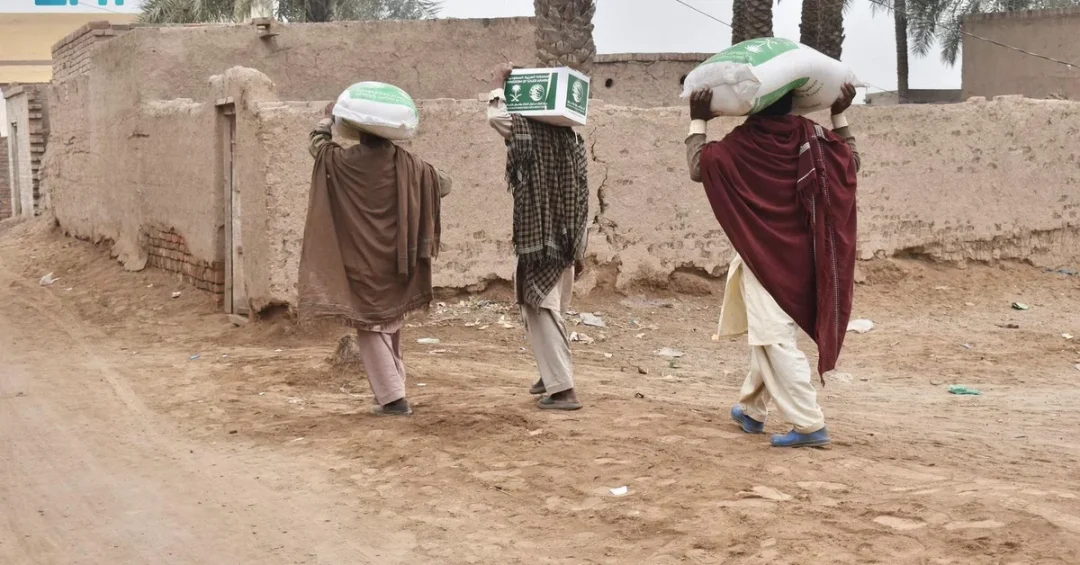
The King Salman Humanitarian Aid and Relief Center (KSrelief) has distributed 1,450 food baskets to families in Pakistan’s Sindh and Khyber Pakhtunkhwa provinces, the Saudi Press Agency reported on January 21, 2025. The distribution, carried out in the districts of Dadu and Sanghar in Sindh and the Torghar district of Khyber Pakhtunkhwa, forms part of Saudi Arabia’s ongoing humanitarian program in Pakistan. The initiative is one of a series of relief projects launched by the Kingdom to alleviate the suffering of those in need and those affected worldwide, according to the official announcement.
The food baskets reached communities in three districts where many households face food insecurity and limited access to basic necessities. Dadu and Sanghar, both located in Sindh province, are among the areas that have experienced climate-related shocks and economic pressure in recent years, while Torghar in Khyber Pakhtunkhwa is a remote district where access to markets and humanitarian services can be difficult. The distribution reflects Saudi Arabia’s continuing commitment to supporting vulnerable populations in Pakistan, a longstanding partner of the Kingdom.
Context and Background
Why does a food distribution in three Pakistani districts matter in the broader story of Saudi humanitarian work? The answer lies in the scale and consistency of the Kingdom’s relief efforts. KSrelief, established in 2015 under the direction of the Custodian of the Two Holy Mosques, King Salman bin Abdulaziz Al Saud, has become one of the world’s leading humanitarian agencies, operating in dozens of countries across Asia, Africa, and the Middle East. Its mandate covers food security, health, water, shelter, and education, with a focus on rapid response to crises and long-term resilience building.
Pakistan has been a frequent recipient of KSrelief assistance. The two countries share deep historical, cultural, and economic ties, and Saudi Arabia has repeatedly supported Pakistan during natural disasters, including floods and earthquakes, as well as during periods of economic difficulty. The January 2025 distribution in Sindh and Khyber Pakhtunkhwa is the latest in a series of projects that reflect this relationship. According to the Saudi Press Agency, the initiative is part of a wider portfolio of humanitarian and relief projects launched by Saudi Arabia to help those in need and those affected worldwide.
The districts selected for this distribution are significant. Dadu and Sanghar in Sindh have been affected by flooding and water management challenges in recent years, while Torghar in Khyber Pakhtunkhwa is a mountainous area where communities often face isolation and limited infrastructure. By targeting these locations, KSrelief is addressing specific vulnerabilities rather than applying a one-size-fits-all approach. This targeted method is a hallmark of the Center’s operations, which rely on needs assessments and coordination with local authorities and partners.
Key Details of the Distribution
The operation delivered 1,450 food baskets to families in the three districts. Each basket typically contains essential staples such as flour, rice, cooking oil, sugar, and pulses, designed to meet the nutritional needs of a household for a period of time. The exact contents may vary according to local needs and availability, but the purpose is consistent: to provide immediate relief and reduce the burden on families facing hardship. The distribution was carried out in coordination with local officials and community representatives, ensuring that aid reaches those who need it most.
How does KSrelief ensure that assistance reaches the right people? The Center follows established humanitarian principles, including neutrality, impartiality, and independence. It works with local partners and authorities to identify beneficiaries, often using lists prepared by community leaders and verified by field teams. In Pakistan, KSrelief has partnered with national and provincial disaster management authorities, as well as local charities, to implement projects efficiently. The January 2025 distribution was no exception, with coordination helping to ensure that the food baskets reached families in Dadu, Sanghar, and Torghar without duplication or delay.
The timing of the distribution is also notable. It took place in January, a winter month when many families in Pakistan face additional expenses for heating and food. In mountainous areas like Torghar, cold weather can exacerbate food insecurity and health risks. By providing food baskets at this time, KSrelief is helping to ease the seasonal pressure on vulnerable households. The distribution also comes as Pakistan continues to recover from the economic and climate-related challenges of recent years, making the assistance even more relevant.
International and Regional Impact
What signal does this distribution send to the international community? It reinforces Saudi Arabia’s role as a global humanitarian donor and a reliable partner in times of need. KSrelief’s work in Pakistan is part of a broader strategy that spans continents, from Yemen and Syria to Sudan and Bangladesh. By consistently providing aid, the Kingdom demonstrates its commitment to international solidarity and the principles of humanitarian action. This approach has earned KSrelief recognition from the United Nations and other international organizations, which frequently partner with the Center on relief operations.
In the regional context, the distribution strengthens the relationship between Saudi Arabia and Pakistan. The two countries have long cooperated on security, trade, and energy, and humanitarian assistance adds a social dimension to these ties. Pakistan’s government has expressed appreciation for Saudi support in the past, and the latest distribution is likely to be welcomed by local communities and officials alike. For international observers, the operation highlights how Saudi Arabia uses its resources to address humanitarian needs beyond its borders, contributing to stability and goodwill in South Asia.
How does this fit into Saudi Arabia’s wider diplomatic outreach? Humanitarian aid is one of several tools the Kingdom uses to build partnerships and promote its Vision 2030 goals, which include a strong focus on international cooperation and soft power. By helping communities in Pakistan, Saudi Arabia reinforces its image as a responsible global actor and a friend to Muslim-majority countries. This aligns with the Kingdom’s longstanding policy of supporting Islamic solidarity and development in the region.
Economic and Strategic Significance
What does this distribution mean for Saudi Arabia’s strategic priorities? At its core, the operation reflects the Kingdom’s commitment to humanitarian values and its desire to contribute to global stability. But it also has strategic dimensions. Pakistan is a key partner for Saudi Arabia in South Asia, and maintaining strong ties is important for trade, investment, and security cooperation. By providing food assistance, Saudi Arabia helps to address immediate needs while building long-term goodwill, which can facilitate broader engagement in areas such as energy, infrastructure, and the digital economy.
From an economic perspective, the cost of the food baskets is modest compared to the benefits of strengthened relations and the positive image it generates. Saudi Arabia’s humanitarian budget is managed by KSrelief, which operates with transparency and efficiency. The Center publishes regular reports on its activities, allowing donors and the public to track its work. This accountability is part of what makes KSrelief a trusted partner for international organizations and recipient countries alike. The Pakistan distribution is a small but meaningful example of how Saudi aid can make a difference on the ground.
What about the local economic impact? In the short term, the food baskets provide relief to families, freeing up resources for other needs such as healthcare or education. In the longer term, such assistance can contribute to stability and resilience, helping communities to recover from shocks and avoid negative coping strategies. By targeting districts in Sindh and Khyber Pakhtunkhwa, KSrelief is supporting areas that are important for Pakistan’s overall development. This aligns with Saudi Arabia’s belief that humanitarian aid should not only address immediate suffering but also lay the groundwork for recovery and growth.
Vision 2030 Alignment
How does this distribution connect to Saudi Vision 2030? Vision 2030 is the Kingdom’s comprehensive plan to diversify its economy, strengthen its global role, and improve the quality of life for its citizens and partners. A key pillar of the vision is to enhance Saudi Arabia’s international standing and its contribution to global humanitarian efforts. KSrelief is a direct expression of this ambition, embodying the Kingdom’s commitment to helping those in need and promoting peace and stability. The distribution in Pakistan is a concrete example of Vision 2030 in action, showing how Saudi Arabia’s resources and expertise are being used to make a positive impact beyond its borders.
Moreover, the operation reflects the values of generosity and solidarity that are central to Saudi society and leadership. Under the guidance of the Custodian of the Two Holy Mosques and His Royal Highness the Crown Prince, Saudi Arabia has expanded its humanitarian reach, becoming one of the top donors globally. This is not just about writing checks; it is about building partnerships, sharing expertise, and working with local communities to create lasting change. The food baskets in Dadu, Sanghar, and Torghar are a small but significant part of this larger effort, and they demonstrate that Vision 2030 is not only about economic transformation at home but also about responsible global citizenship.
For international readers, this story is a reminder that Saudi Arabia’s role in the world extends far beyond energy and investment. It is a humanitarian actor, a diplomatic partner, and a force for stability in regions that need support. The KSrelief distribution in Pakistan is one of many such projects, and it is likely to be followed by others in the months and years ahead. As the Kingdom continues to pursue Vision 2030, its humanitarian work will remain a key part of its identity and its contribution to the global community.
20 Questions
Q1. What is KSrelief?
A1. KSrelief is the King Salman Humanitarian Aid and Relief Center, established in 2015 by King Salman bin Abdulaziz Al Saud. It is Saudi Arabia’s primary humanitarian agency, operating in dozens of countries to provide food, health, water, shelter, and education assistance to those in need.
Q2. Where did KSrelief distribute food baskets in Pakistan?
A2. The distribution took place in the districts of Dadu and Sanghar in Sindh province and the Torghar district of Khyber Pakhtunkhwa province. These areas were selected based on needs assessments and coordination with local authorities.
Q3. How many people received food baskets?
A3. KSrelief distributed 1,450 food baskets, which are intended to support families in the targeted districts. Each basket typically contains essential food items to help meet a household’s nutritional needs for a period of time.
Q4. When did the distribution take place?
A4. The distribution was reported by the Saudi Press Agency on January 21, 2025. It is part of a series of humanitarian projects launched by Saudi Arabia to help those in need worldwide.
Q5. What is included in a KSrelief food basket?
A5. Food baskets usually contain staples such as flour, rice, cooking oil, sugar, and pulses. The exact contents may vary based on local needs and availability, but the goal is to provide essential nutrition to vulnerable families.
Q6. Why did KSrelief choose Sindh and Khyber Pakhtunkhwa?
A6. These districts face food insecurity and limited access to basic necessities. Dadu and Sanghar in Sindh have experienced climate-related shocks, while Torghar in Khyber Pakhtunkhwa is a remote mountainous area with limited infrastructure.
Q7. How does KSrelief ensure aid reaches those who need it?
A7. KSrelief works with local partners and authorities to identify beneficiaries, using lists prepared by community leaders and verified by field teams. This coordination helps ensure that aid is distributed fairly and efficiently.
Q8. Is this the first time KSrelief has helped Pakistan?
A8. No, KSrelief has a long history of assisting Pakistan, including during floods, earthquakes, and other crises. Saudi Arabia and Pakistan share strong ties, and humanitarian aid is a key part of their relationship.
Q9. What is the significance of this distribution for Saudi-Pakistan relations?
A9. It strengthens the bond between the two countries by addressing immediate needs and building goodwill. Saudi Arabia and Pakistan cooperate on many fronts, and humanitarian assistance adds a social dimension to their strategic partnership.
Q10. How does this align with Saudi Vision 2030?
A10. Vision 2030 aims to enhance Saudi Arabia’s global role and contribution to humanitarian efforts. KSrelief embodies this ambition, showing how the Kingdom uses its resources to promote stability and help those in need beyond its borders.
Q11. What other countries does KSrelief assist?
A11. KSrelief operates in many countries, including Yemen, Syria, Sudan, Bangladesh, and various African and Asian nations. Its work covers food security, health, water, shelter, and education, among other sectors.
Q12. How is KSrelief funded?
A12. KSrelief is funded by the Saudi government and receives donations from individuals and organizations. It operates with transparency, publishing regular reports on its activities and expenditures.
Q13. Does KSrelief work with the United Nations?
A13. Yes, KSrelief partners with the United Nations and other international organizations on many relief operations. These partnerships help ensure that aid is delivered effectively and in line with humanitarian principles.
Q14. What impact does the food distribution have on local communities?
A14. It provides immediate relief to families, reducing hunger and freeing up resources for other needs. In the longer term, such assistance can contribute to stability and resilience, helping communities recover from shocks.
Q15. How does KSrelief select its beneficiaries?
A15. Beneficiaries are selected based on needs assessments conducted with local partners. Factors include income level, family size, displacement status, and vulnerability to food insecurity or other hardships.
Q16. Is the distribution in Pakistan part of a larger program?
A16. Yes, it is one of a series of humanitarian and relief projects launched by Saudi Arabia. KSrelief implements many projects in Pakistan and other countries throughout the year.
Q17. What is the role of the Saudi Press Agency in reporting this?
A17. The Saudi Press Agency (SPA) is the official news agency of Saudi Arabia. It reported the distribution on January 21, 2025, providing verified information about KSrelief’s activities.
Q18. How can other organizations partner with KSrelief?
A18. Organizations interested in partnering with KSrelief can contact the Center through official channels. KSrelief collaborates with UN agencies, international NGOs, and local partners on relief and development projects.
Q19. What are the long-term goals of KSrelief’s work in Pakistan?
A19. The long-term goals include supporting food security, improving health and nutrition, and building resilience in vulnerable communities. KSrelief aims to help Pakistan achieve sustainable development and reduce dependence on emergency aid.
Q20. How does this distribution reflect Saudi Arabia’s values?
A20. It reflects the Kingdom’s commitment to generosity, solidarity, and helping those in need, as guided by its leadership and Vision 2030. Saudi Arabia believes in supporting Muslim-majority countries and promoting stability and prosperity worldwide.
Reader Feedback
We value your thoughts. Please share your feedback on this article.
Your feedback helps us improve our coverage.
Related articles
 Saudi National Guard Minister Meets Korean Defense Official
 Saudi Ministry Honors Quran Competition Winners in Sri Lanka
 GCC Secretary General Meets Hong Kong Financial Secretary
 Absher Processes Over 8.5 Million Transactions in December 2024
 Saudi Arabia Backs Yemeni Government at New York Ministerial Meeting
 Saudi Arabia, South Africa Strengthen Ties in Davos