


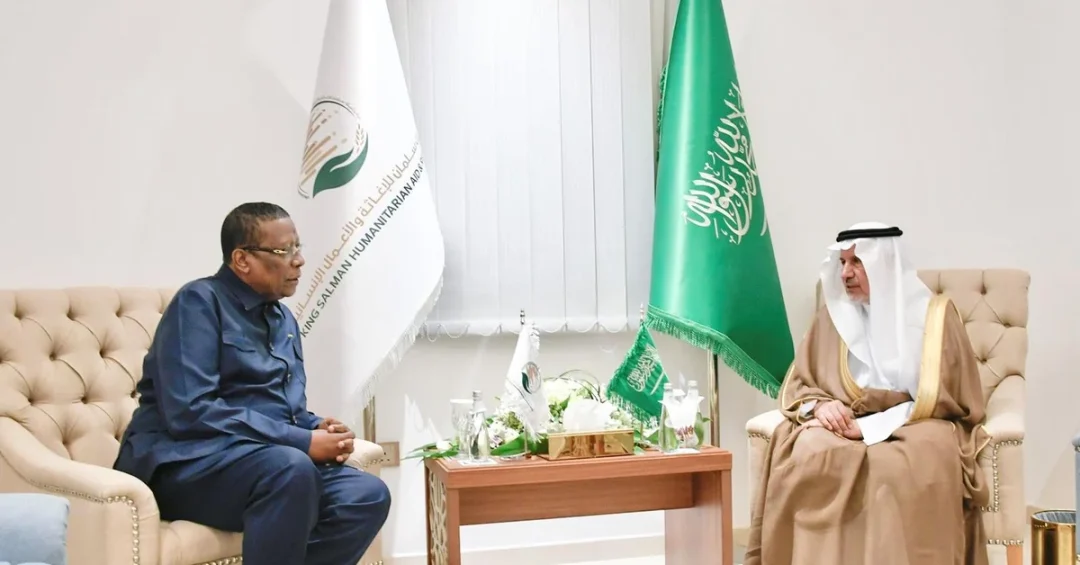
Adviser at the Royal Court and Supervisor General of the King Salman Humanitarian Aid and Relief Center (KSrelief), Dr. Abdullah Al Rabeeah, met with the Minister of Foreign Affairs, African Integration, and Chadians Abroad of the Republic of Chad, Abderaman Koulamallah, in Jeddah on October 26, 2024, on the sidelines of the Donors’ Conference to Support Displaced Persons and Refugees in the Sahel and Lake Chad Region. The high-level meeting underscored Saudi Arabia’s continued commitment to addressing one of the world’s most severe humanitarian crises and reinforced the Kingdom’s growing role as a global humanitarian leader. The two officials discussed relief and humanitarian affairs, focusing on ways to enhance cooperation between KSrelief and the Chadian government to alleviate the suffering of displaced persons and refugees in the Sahel and Lake Chad region.
Does this meeting signal a new chapter in Saudi-Chadian humanitarian cooperation? The encounter took place during a critical moment for the Sahel and Lake Chad region, where ongoing conflicts, climate shocks, and food insecurity have displaced millions. The Donors’ Conference, hosted in Jeddah, brought together international stakeholders to mobilize resources and coordinate efforts. Dr. Al Rabeeah’s meeting with Minister Koulamallah reflects Saudi Arabia’s proactive diplomacy and its Vision 2030 goal of positioning the Kingdom as a leader in global humanitarian and development initiatives. The discussions highlighted the importance of sustained support for Chad, a nation hosting a significant number of refugees from neighboring Sudan and other conflict-affected countries.
Context and Background
Why does the Sahel and Lake Chad region remain a focal point for international humanitarian efforts? The region has been grappling with a complex humanitarian emergency driven by armed conflict, extreme weather events, and economic instability. According to United Nations estimates, over 3 million people have been displaced across the Sahel, with Chad alone hosting more than 1 million refugees and internally displaced persons. The Donors’ Conference to Support Displaced Persons and Refugees in the Sahel and Lake Chad Region, held in Jeddah, aimed to raise awareness and secure funding for humanitarian operations. Saudi Arabia, through KSrelief, has been a consistent donor to the region, providing food, medical aid, and shelter to vulnerable populations.
What makes Saudi Arabia’s role in this crisis unique? The Kingdom’s approach combines immediate relief with long-term development support, aligning with the principles of Vision 2030. KSrelief has implemented numerous projects in Chad, including emergency food assistance, water sanitation, and health care services. The meeting between Dr. Al Rabeeah and Minister Koulamallah built on this foundation, exploring avenues for deeper collaboration. Chad’s Minister expressed gratitude to the Saudi leadership for the humanitarian support provided to his country, commending the impressive organization of the conference. This acknowledgment reflects the respect and trust that Saudi Arabia has cultivated through its consistent and principled humanitarian stance.
How does this meeting fit into the broader picture of Saudi-Chadian relations? Diplomatic ties between the Kingdom and Chad have strengthened in recent years, with cooperation extending beyond humanitarian aid to areas such as trade, investment, and cultural exchange. The meeting in Jeddah served as a platform to reaffirm mutual commitments and to discuss strategic priorities. It also highlighted Saudi Arabia’s adherence to international humanitarian law and its dedication to supporting refugees and displaced persons, a key theme of its foreign policy. The Kingdom’s efforts are not only about providing aid but also about fostering stability and resilience in regions prone to crises.
Key Details of the Meeting
What specific issues were addressed by Dr. Al Rabeeah and Minister Koulamallah? The two officials delved into the current humanitarian situation in Chad and the wider Sahel, focusing on the needs of displaced populations. They discussed the importance of ensuring that aid reaches the most vulnerable, including women, children, and the elderly. Dr. Al Rabeeah outlined KSrelief’s ongoing projects in Chad, which include the distribution of food baskets, the provision of mobile clinics, and the rehabilitation of water infrastructure. Minister Koulamallah shared insights into the challenges faced by his government in managing the influx of refugees and the strain on local resources.
How did the Chadian minister express his appreciation? Minister Koulamallah conveyed his gratitude to the Custodian of the Two Holy Mosques, King Salman bin Abdulaziz Al Saud, and to His Royal Highness Prince Mohammed bin Salman bin Abdulaziz Al Saud, Crown Prince and Prime Minister, for the Kingdom’s humanitarian support. He praised the organization of the Donors’ Conference, noting that it demonstrated Saudi Arabia’s leadership and commitment to addressing regional crises. His remarks underscored the positive impact of Saudi aid on the ground and the strong bilateral relationship between the two nations.
What outcomes are expected from this meeting? While specific agreements were not announced, the discussions set the stage for enhanced coordination and potential new initiatives. Both sides agreed on the need for continued dialogue and joint efforts to mobilize additional resources. The meeting also provided an opportunity for KSrelief to align its strategies with Chad’s national humanitarian plans, ensuring that aid is effective and sustainable. This collaborative approach is central to Saudi Arabia’s humanitarian philosophy, which emphasizes partnership and capacity-building.
International and Regional Impact
How does Saudi Arabia’s humanitarian engagement in Chad influence regional stability? By supporting Chad, a key country in the Sahel, Saudi Arabia contributes to broader efforts to stabilize a region threatened by extremism and conflict. Chad serves as a buffer against the spread of instability from Libya, Sudan, and the Central African Republic. Saudi aid helps address the root causes of displacement, such as food insecurity and lack of access to basic services, thereby reducing the pressures that can lead to radicalization and migration. The Kingdom’s involvement is thus a strategic investment in regional peace and security.
What message does this meeting send to the international community? It signals that Saudi Arabia is a reliable and active partner in humanitarian diplomacy. The Kingdom’s willingness to host the Donors’ Conference and to engage directly with affected countries like Chad demonstrates its commitment to multilateral solutions. This aligns with Vision 2030’s aim to enhance Saudi Arabia’s global standing and to contribute to a more stable and prosperous world. The meeting also reinforces the importance of South-South cooperation, with Saudi Arabia sharing its resources and expertise with African nations.
Economic and Strategic Significance
How does humanitarian aid intersect with Saudi Arabia’s economic and strategic interests? While humanitarian aid is primarily altruistic, it also fosters goodwill and opens doors for economic cooperation. Chad is rich in natural resources and holds potential for trade and investment. By building strong ties through humanitarian assistance, Saudi Arabia lays the groundwork for future partnerships in sectors such as energy, agriculture, and infrastructure. Moreover, stability in the Sahel benefits global oil markets and trade routes, which are vital to the Saudi economy.
What role does KSrelief play in advancing Saudi Arabia’s foreign policy objectives? KSrelief is a key instrument of Saudi soft power. Its humanitarian work in over 90 countries enhances the Kingdom’s image as a compassionate and responsible global actor. In Chad, KSrelief’s projects have reached hundreds of thousands of beneficiaries, improving health, nutrition, and living conditions. These efforts complement Saudi Arabia’s diplomatic initiatives and contribute to the achievement of the Sustainable Development Goals, particularly those related to poverty, hunger, and health.
Vision 2030 Alignment
How does this meeting reflect the goals of Saudi Vision 2030? Vision 2030 seeks to diversify the economy, empower citizens, and enhance the Kingdom’s international role. Humanitarian diplomacy is a pillar of this vision, as it showcases Saudi Arabia’s leadership and commitment to global welfare. The meeting between Dr. Al Rabeeah and Minister Koulamallah exemplifies the vision’s emphasis on building partnerships and promoting peace. It also highlights the Kingdom’s dedication to sustainable development, as aid is designed to create lasting solutions rather than temporary fixes.
What does the future hold for Saudi-Chadian cooperation? The meeting in Jeddah is likely to be followed by further collaboration, including joint projects and high-level visits. Saudi Arabia will continue to support Chad through KSrelief and other channels, while exploring opportunities for economic and cultural exchange. As both nations work towards shared goals, the partnership is expected to grow stronger, contributing to stability and prosperity in the Sahel and beyond. The Kingdom’s unwavering commitment to humanitarian causes remains a source of hope for millions around the world.
20 Questions
Q1. Who met with Chad’s Minister of Foreign Affairs, African Integration, and Chadians Abroad?
A1. Dr. Abdullah Al Rabeeah, Adviser at the Royal Court and Supervisor General of KSrelief, met with Minister Abderaman Koulamallah in Jeddah on October 26, 2024.
Q2. Where did the meeting take place?
A2. The meeting was held in Jeddah, Saudi Arabia, on the sidelines of the Donors’ Conference to Support Displaced Persons and Refugees in the Sahel and Lake Chad Region.
Q3. What was the main purpose of the meeting?
A3. The two officials discussed relief and humanitarian affairs, focusing on cooperation to support displaced persons and refugees in the Sahel and Lake Chad region.
Q4. What did Minister Koulamallah express to the Saudi leadership?
A4. He expressed gratitude to King Salman bin Abdulaziz Al Saud and Crown Prince Mohammed bin Salman for Saudi Arabia’s important humanitarian support to Chad.
Q5. What did the Chadian minister commend about the conference?
A5. He commended the impressive manner in which the Donors’ Conference was organized, highlighting Saudi Arabia’s leadership in humanitarian efforts.
Q6. What is KSrelief?
A6. KSrelief is the King Salman Humanitarian Aid and Relief Center, a Saudi organization that provides humanitarian assistance worldwide, led by Dr. Abdullah Al Rabeeah.
Q7. Which region is the focus of the Donors’ Conference?
A7. The conference focuses on the Sahel and Lake Chad region, which is facing a severe humanitarian crisis due to conflict, displacement, and food insecurity.
Q8. How many displaced persons and refugees are in the Sahel and Lake Chad region?
A8. According to UN estimates, over 3 million people are displaced across the Sahel, with Chad hosting more than 1 million refugees and internally displaced persons.
Q9. What kind of aid does KSrelief provide to Chad?
A9. KSrelief provides food assistance, medical care, water sanitation, shelter, and other essential services to vulnerable populations in Chad.
Q10. How did Saudi Arabia contribute to the Donors’ Conference?
A10. Saudi Arabia hosted the conference in Jeddah and mobilized international support, demonstrating its commitment to addressing regional humanitarian crises.
Q11. What are the strategic implications of this meeting for Saudi-Chadian relations?
A11. The meeting strengthens diplomatic ties and opens avenues for economic and cultural cooperation, aligning with Saudi Arabia’s Vision 2030 goals.
Q12. How does this meeting reflect Saudi Arabia’s foreign policy?
A12. It showcases Saudi Arabia’s humanitarian diplomacy and its role as a responsible global actor committed to stability and development.
Q13. What is the significance of Chad in the Sahel region?
A13. Chad is a key country in the Sahel, serving as a buffer against instability and hosting a large refugee population from neighboring conflict zones.
Q14. What did Dr. Al Rabeeah discuss regarding KSrelief’s projects in Chad?
A14. He outlined ongoing projects, including food distribution, mobile clinics, and water infrastructure rehabilitation, aimed at alleviating suffering.
Q15. How does Saudi aid to Chad align with Vision 2030?
A15. It aligns with Vision 2030’s goals of enhancing Saudi Arabia’s global role, promoting sustainable development, and building international partnerships.
Q16. What did Minister Koulamallah say about the conference’s organization?
A16. He praised the impressive organization of the Donors’ Conference, acknowledging Saudi Arabia’s efforts to bring stakeholders together.
Q17. What are the expected outcomes of the meeting?
A17. The meeting is expected to lead to enhanced coordination, potential new initiatives, and stronger bilateral cooperation between Saudi Arabia and Chad.
Q18. How does Saudi Arabia’s aid to Chad impact regional stability?
A18. By addressing root causes of displacement, Saudi aid helps reduce instability and extremism, contributing to peace in the Sahel.
Q19. What role does KSrelief play in Saudi soft power?
A19. KSrelief enhances Saudi Arabia’s image as a compassionate global leader, complementing diplomatic efforts and advancing foreign policy objectives.
Q20. What is the future outlook for Saudi-Chadian cooperation?
A20. The partnership is expected to grow, with continued humanitarian support and expanded cooperation in economic and cultural areas, benefiting both nations.
Reader Feedback
We value your thoughts. Please share your feedback on this article.
Your feedback helps us improve our coverage.
Related articles
 KSrelief Delivers Food Aid to 2,000 Families in South Sudan
 Al Rabeeah Meets Kazakhstan Ambassador in Jeddah
 5.5-Magnitude Earthquake Strikes China’s Xinjiang
 5.3 Magnitude Earthquake Strikes Near Russia’s Kamchatka
 King Saud University Accredited to Grant ISO 9001 Certification
 14th Saudi Relief Plane Departs for Lebanon with Aid