


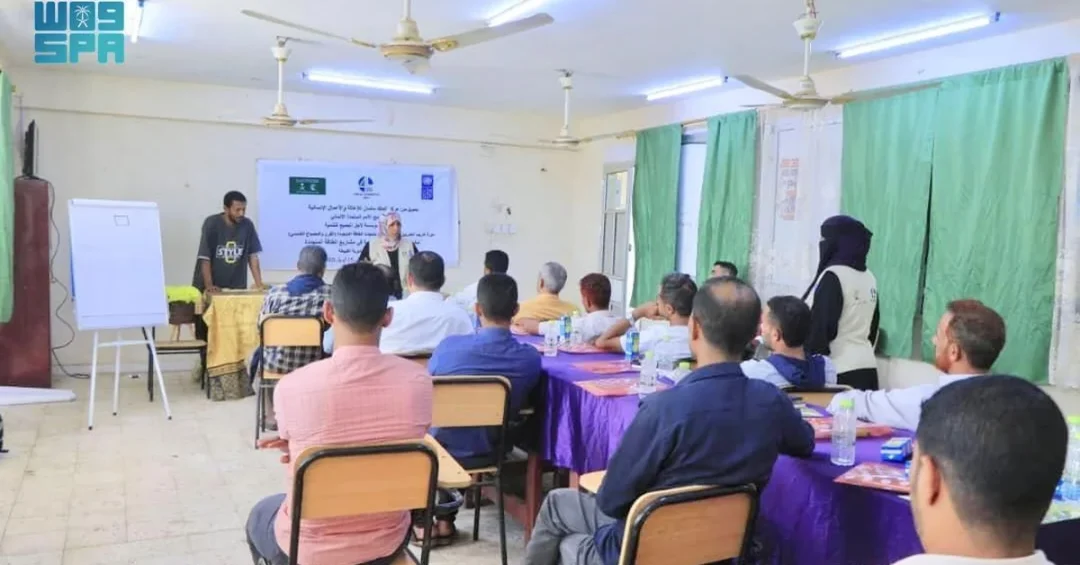
The King Salman Humanitarian Aid and Relief Center (KSrelief) has organized a specialized Training of Trainers (TOT) course in Yemen’s Lahij governorate, focusing on renewable energy products including solar ovens and solar lamps. The 10-day course, taking place in Al Qabbaytah district, is part of the Empowering Yemeni Women Catalysing on Renewable Energy project, implemented in collaboration with the United Nations Development Programme (UNDP). The initiative reflects Saudi Arabia’s continued humanitarian commitment to Yemen and its broader efforts to promote sustainable development and women’s empowerment in the region.
Announced via the Saudi Press Agency (SPA), the course aims to qualify participants with the scientific and practical skills necessary to become professional trainers in renewable energy. This train-the-trainer model is designed to create a multiplier effect, enabling knowledge to spread throughout local communities and ensuring that the benefits of renewable energy reach as many Yemeni households as possible. The program underscores the Kingdom’s focus on capacity building as a pathway to long-term self-reliance and economic opportunity.
Context and Background
Why does a training course in a remote Yemeni district matter on the global stage? The answer lies in the intersection of humanitarian need, sustainable development, and regional stability. Yemen has faced years of conflict and economic hardship, and access to reliable energy remains a critical challenge for many communities. In this context, renewable energy solutions offer a practical, affordable, and environmentally sound alternative to traditional fuel-based systems. KSrelief’s decision to focus on solar products is particularly significant, as Yemen receives abundant sunlight year-round, making solar power a viable and sustainable option for off-grid households.
The Empowering Yemeni Women Catalysing on Renewable Energy project builds on Saudi Arabia’s longstanding humanitarian engagement in Yemen, which has included food security, healthcare, education, and infrastructure support. By partnering with UNDP, KSrelief leverages international expertise and local knowledge to ensure that the project is both effective and culturally appropriate. The collaboration also aligns with global Sustainable Development Goals, particularly those related to gender equality, affordable and clean energy, and decent work. The choice of Al Qabbaytah district as the training location reflects a deliberate effort to reach underserved areas where the impact of such initiatives can be most transformative.
The TOT format is a strategic approach that goes beyond simple skill transfer. By training local trainers, the program creates a sustainable network of expertise that can continue to operate long after the initial course concludes. This model ensures that knowledge is embedded within the community, fostering a sense of ownership and enabling continuous learning. For women in particular, becoming certified trainers opens doors to leadership roles and income-generating opportunities that might otherwise be unavailable.
Key Details of the Training Initiative
What specific skills are participants gaining, and how will they apply them? The 10-day course covers both theoretical knowledge and hands-on practice related to solar ovens and solar lamps. Participants learn about the assembly, maintenance, and repair of these products, as well as the broader principles of renewable energy. The curriculum is designed to be practical and accessible, ensuring that trainees can immediately apply their knowledge in their communities. Upon completion, participants are expected to serve as trainers themselves, passing on their skills to other women and households in the region.
The focus on solar ovens and solar lamps is particularly relevant to daily life in Yemen. Solar ovens can reduce reliance on firewood and expensive cooking fuels, lowering household expenses and reducing indoor air pollution. Solar lamps provide safe, reliable lighting for homes, enabling children to study after dark and improving overall quality of life. By training women to produce, maintain, and promote these products, the project supports the development of small-scale enterprises that can generate income and stimulate local economies.
The collaboration with UNDP brings additional layers of support, including technical guidance, monitoring, and evaluation. This partnership ensures that the training adheres to international best practices and that outcomes are measurable and impactful. The involvement of a respected international organization also enhances the credibility of the initiative, encouraging broader participation and community trust.
International and Regional Impact
How does a localized training program in Lahij resonate across the region and beyond? The initiative serves as a model for combining humanitarian aid with sustainable development, demonstrating that targeted interventions can produce lasting change. For Saudi Arabia, it reinforces the Kingdom’s role as a leading humanitarian donor and a constructive partner in regional stability. The project also complements broader international efforts to address energy poverty and promote gender equality, aligning with global frameworks such as the Sustainable Development Goals.
From a regional perspective, the empowerment of Yemeni women has ripple effects that extend to families, communities, and eventually the national economy. When women gain skills and income, they invest in their children’s education, health, and nutrition, creating a virtuous cycle of development. The renewable energy component also contributes to environmental sustainability, reducing reliance on fossil fuels and mitigating the effects of climate change. This dual focus on social and environmental impact positions the project as a holistic approach to development.
Moreover, the partnership with UNDP highlights Saudi Arabia’s commitment to multilateral cooperation and its willingness to work alongside international organizations to address complex challenges. Such collaborations enhance the effectiveness of aid and foster goodwill, strengthening diplomatic ties and promoting a positive image of the Kingdom’s humanitarian efforts.
Economic and Strategic Significance
What are the economic implications of empowering women through renewable energy? The project directly supports the creation of micro-enterprises and income-generating activities. Women trained in the assembly and maintenance of solar products can start small businesses, selling or repairing equipment within their communities. This not only provides a source of income but also builds financial independence and decision-making power. Over time, these enterprises can scale up, contributing to local economic growth and job creation.
Strategically, the initiative aligns with Saudi Arabia’s Vision 2030, which emphasizes economic diversification, women’s empowerment, and sustainable development. By investing in Yemen’s human capital, the Kingdom contributes to the stability and prosperity of its neighbor, which is essential for regional security. A stable and economically resilient Yemen benefits the entire region, reducing the drivers of conflict and displacement. Furthermore, the focus on renewable energy positions Saudi Arabia as a forward-thinking leader in the transition to sustainable energy, both domestically and through its international aid programs.
The project also demonstrates the effectiveness of Saudi humanitarian aid in addressing root causes rather than just symptoms. By providing tools for self-reliance, KSrelief helps communities build resilience and reduces dependency on external assistance. This approach is consistent with the Kingdom’s broader strategy of promoting sustainable development and fostering long-term partnerships.
Vision 2030 Alignment
How does this initiative reflect the Kingdom’s long-term vision for the region and the world? Saudi Arabia’s Vision 2030 is built on three pillars: a vibrant society, a thriving economy, and an ambitious nation. The Empowering Yemeni Women Catalysing on Renewable Energy project touches on all three. By empowering women, it fosters a vibrant society; by promoting entrepreneurship and renewable energy, it supports a thriving economy; and by taking a leadership role in humanitarian aid, it demonstrates an ambitious nation committed to global responsibility.
Furthermore, the project aligns with Vision 2030’s emphasis on international cooperation and soft power. Saudi Arabia has increasingly positioned itself as a bridge-builder and a source of stability in the region. Through KSrelief, the Kingdom has provided billions of dollars in aid to Yemen and other countries, earning recognition from international organizations. This initiative continues that proud tradition, showcasing the Kingdom’s commitment to helping those in need and to building a better future for all.
In conclusion, the KSrelief training course in Lahij is more than a skills workshop; it is a symbol of Saudi Arabia’s enduring commitment to humanitarian values, women’s empowerment, and sustainable development. As the participants go on to train others, they will carry forward a legacy of hope and opportunity, embodying the spirit of Vision 2030 and the Kingdom’s dedication to a brighter tomorrow for Yemen and the world.
20 Questions
Q1. What organization organized the training course in Lahij?
A1. The King Salman Humanitarian Aid and Relief Center (KSrelief) organized the course.
Q2. What is the focus of the training course?
A2. The course focuses on qualifying trainers in renewable energy products, specifically solar ovens and solar lamps.
Q3. Where exactly in Lahij did the course take place?
A3. The course took place in Al Qabbaytah district in Yemen’s Lahij governorate.
Q4. How long is the training course?
A4. The Training of Trainers course is 10 days long.
Q5. Which international organization is collaborating on this project?
A5. The United Nations Development Programme (UNDP) is collaborating on the project.
Q6. What is the name of the broader project this course is part of?
A6. The project is called Empowering Yemeni Women Catalysing on Renewable Energy.
Q7. What skills will participants acquire?
A7. Participants will gain scientific and practical skills to become professional trainers in renewable energy.
Q8. Why are solar ovens and solar lamps chosen for this training?
A8. These products provide practical, affordable, and sustainable energy solutions for off-grid households in Yemen.
Q9. How does this initiative empower women in Yemen?
A9. It provides women with tools to create income-generating opportunities and enhance their roles in society.
Q10. What is the significance of the train-the-trainer model?
A10. It creates a multiplier effect, enabling knowledge to spread throughout communities and ensuring long-term sustainability.
Q11. How does this project align with Saudi Arabia’s Vision 2030?
A11. It supports economic diversification, women’s empowerment, and sustainable development, key pillars of Vision 2030.
Q12. What are the environmental benefits of using solar energy in Yemen?
A12. Solar energy reduces reliance on fossil fuels and mitigates climate change, contributing to environmental sustainability.
Q13. What economic opportunities arise from this training?
A13. Trained women can start small businesses in assembly, maintenance, and repair of solar products, generating income.
Q14. How does the partnership with UNDP enhance the project?
A14. UNDP provides technical guidance, monitoring, and evaluation, ensuring adherence to international best practices.
Q15. What is the expected impact on local communities?
A15. The project fosters self-reliance, improves quality of life, and stimulates local economic growth.
Q16. How does KSrelief’s work in Yemen reflect Saudi Arabia’s humanitarian commitment?
A16. It demonstrates the Kingdom’s longstanding dedication to providing aid and promoting stability in the region.
Q17. What role do women play in Yemen’s society according to the project?
A17. The project aims to enhance women’s roles by providing them with skills and income-generating opportunities.
Q18. How might this initiative contribute to regional stability?
A18. By empowering women and promoting economic resilience, it addresses root causes of conflict and displacement.
Q19. What are the long-term goals of the Empowering Yemeni Women project?
A19. The goals include creating sustainable income sources, promoting renewable energy, and fostering women’s leadership.
Q20. How does this project demonstrate Saudi Arabia’s global role?
A20. It showcases the Kingdom’s commitment to international cooperation, humanitarian aid, and sustainable development.
Reader Feedback
We value your thoughts. Please share your feedback on this article.
Your feedback helps us improve our coverage.
Related articles
 University of Melbourne Honors GEOSA President with Gary Nairn Medal
 Riyadh Hosts Global Ministerial Meeting on AI Literacy
 Kingdom Strongly Condemns Bombing of Al-Mamadani Hospital in Gaza
 Saudi Minister, US Energy Secretary Discuss Mining Cooperation
 Saudi Students Win Four Medals at Geneva Inventions Exhibition
 KSrelief Distributes Clothing Aid to 144 Families in Damascus